
Free tools Windows power users keep installed
One-click scans. No signup required.
You can use a Raspberry Pi 4 Model B to play rights-cleared jazz and a visual loop into YouTube Live around the clock—but 24/7 is an operating goal, not a guarantee. The setup needs a music source you are allowed to broadcast, a playback and encoding pipeline, a stable upload connection, a protected YouTube stream key, and a plan for failures. Start with a controlled test and YouTube’s current encoder guidance; do not treat a technically healthy stream as proof that its music is cleared.
How the Pi 4 stream works
The signal path is: rights-cleared music files or another authorized audio source plus a static or animated visual loop → playback and encoding on the Pi → RTMPS ingest using YouTube’s server URL and stream key → YouTube Live Control Room and the public watch page. The Pi sends the stream; YouTube distributes it to viewers. A Pi, home internet connection, storage device, encoder process, or copyright claim can interrupt the chain.
This guide focuses on a Raspberry Pi 4 Model B running a lightweight 720p30 or 1080p30 visual stream. Those are starting designs, not performance guarantees. Confirm that the operating system, FFmpeg build or other encoder, input formats, and available hardware encoding support work on the actual Pi before relying on them.
What you need
- A Raspberry Pi 4 Model B and compatible boot media with an operating-system image flashed before first startup.
- A suitable 5 V, 3 A (15 W) USB-C power supply. Raspberry Pi’s current setup documentation accessed in 2026 recommends this supply for the Pi 4 Model B.
- Stable internet upload capacity with headroom above the stream’s total bitrate. Wired Ethernet is a practical choice for a fixed installation.
- Music you have permission to use in a continuous YouTube livestream, plus a visual file or loop you are permitted to broadcast.
- An encoder and playback approach that can continuously deliver the selected video and audio formats to YouTube. Check compatibility on your installed OS rather than assuming a particular FFmpeg command or hardware encoder is available.
- A monitor, keyboard, and mouse can make initial setup easier. A headless setup is possible, but the browser-based control approach shown in a community Pi project is one implementation, not a validated production recipe.
The official Pi documentation also identifies two micro-HDMI outputs, audio over HDMI and USB, and a 3.5 mm jack that provides line-level output rather than amplified speaker output. These are useful for local setup or monitoring but are not required for a headless stream. Cooling and enclosure choices are deployment considerations; the cited documentation does not establish a specific case or temperature threshold for this use.
What’s actually slowing this PC down?
Pick the symptom - the matching free tool is one click away.
#1 Best Overall

- Includes Raspberry Pi 4 4GB Model B with 1.5GHz 64-bit quad-core CPU (4GB RAM)
- Includes Pre-Loaded 32GB EVO+ Micro SD Card (Class 10), USB MicroSD Card Reader
- CanaKit Premium High-Gloss Raspberry Pi 4 Case with Integrated Fan Mount, CanaKit Low Noise Bearing System Fan
- CanaKit 3.5A USB-C Raspberry Pi 4 Power Supply (US Plug) with Noise Filter, Set of Heat Sinks, Display Cable - 6 foot (Supports up to 4K60p)
- CanaKit USB-C PiSwitch (On/Off Power Switch for Raspberry Pi 4)
Choose the resolution and YouTube ingest settings
YouTube Help’s current encoder guidance, accessed in 2026, recommends RTMPS, H.264 video, AAC or MP3 audio, constant bitrate (CBR), and a two-second keyframe interval; it says not to exceed four seconds. For stereo audio, the advanced settings specify 44.1 kHz and 128 Kbps. Use these as your encoder targets where the installed software supports them.
| Video target | YouTube H.264 recommended video bitrate | YouTube H.264 minimum listed bitrate | Practical consideration |
|---|---|---|---|
| 720p at 30 fps | 3 Mbps | 3 Mbps | A sensible first test for a mostly static artwork loop and a constrained uplink. |
| 1080p at 30 fps | 14 Mbps | 5 Mbps | Uses substantially more upload capacity; choose it only if the Pi pipeline and connection pass a representative test. |
The figures are YouTube’s published guidance, not a promise that a given home connection or Pi setup can sustain the stream. The listed video bitrate is not the entire network load: audio and protocol overhead also consume capacity. Leave upstream headroom, measure the connection under realistic conditions, and use YouTube’s Live Control Room health indicators during testing. A static image or slow visualizer may not need the additional resolution and uplink demand of 1080p.
Rank #2

- Broadcom BCM2711, quad-core Cortex-A72 (ARM v8) 64-bit SoC @ 1. 5GHz
- 2. 4 GHz and 5. 0 GHz IEEE 802. 11b/g/n/ac wireless LAN, Bluetooth 5. 0, BLE
- 2 × USB 3. 0 ports, 2 x USB 2. 0 Ports
- 2 × micro HDMI ports supproting up to 4Kp60 video resolution
- Micro SD card slot for loading operating system and data storage
YouTube states: “We recommend streaming to YouTube Live with RTMPS, a secure extension to the popular RTMP video protocol.” Use RTMPS when the encoder offers it. The settings summary is H.264, AAC audio if supported, CBR, two-second keyframes, stereo 44.1 kHz / 128 Kbps, and a resolution and bitrate validated on your own setup.
Enable YouTube Live and configure the encoder
- Enable live streaming early. In YouTube Studio, use the Go live workflow to enable or configure the channel’s stream. YouTube says first-time live-stream activation may take up to 24 hours, so do not wait until launch time.
- Create or configure the stream. In YouTube Studio’s live-stream setup, obtain the server URL and stream key for the encoder. The labels and layout can change, so follow the current Studio workflow.
- Protect the stream key. Treat it like a password. Do not put it in public scripts, screenshots, logs, repositories, or chat. If it is exposed, replace or reset it in YouTube Studio before streaming again.
- Set up playback and encoding on the Pi. Arrange for the chosen music and visual source to play continuously and for the encoder to send the combined stream to YouTube’s URL and key. Confirm that your installed software supports the chosen protocol, codecs, resolution, and audio input. There is no single current Pi 4 command established here as ready to run across operating-system images and FFmpeg builds.
- Run a controlled test. Use the same music, looping behavior, visual motion, bitrate, and network path planned for the public stream. YouTube’s encoder guidance advises testing representative audio and movement.
- Check the Live Control Room. Review stream health and warnings before making the broadcast public or committing to an always-on schedule. Confirm that the watch page receives intelligible audio and the expected visual.
Clear the music rights before you go live
Copyright permission is separate from stream transport. A stream can reach YouTube correctly and still be interrupted because the channel owner is responsible for having the rights needed for the live content. YouTube’s livestream terms describe rights that can include music licensing from artists, labels, publishers, and other royalty participants. Review the actual license for your songs, recordings, territories, and intended uses; this is not legal advice.
Rank #3
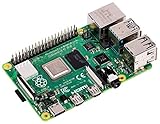
- Broadcom BCM2711, Quad core Cortex-A72 (ARM v8) 64-bit SoC @ 1.5GHz
- 1GB, 2GB, 4GB or 8GB LPDDR4-3200 SDRAM (depending on model)
- 2.4 GHz and 5.0 GHz IEEE 802.11ac wireless, Bluetooth 5.0, BLE Gigabit Ethernet
- 2 USB 3.0 ports; 2 USB 2.0 ports.
- Raspberry Pi standard 40 pin GPIO header (fully backwards compatible with previous boards)
Check the composition and the recording
Jazz has two relevant layers: the underlying composition and the specific sound recording. A composition in the public domain does not automatically make a modern recording of it free to use. Confirm permission for both layers where applicable, and keep the license, written permission, or other supporting documentation.
Confirm the license covers this broadcast
Before using a track in a continuous stream, check whether permission covers livestreaming, repeated or continuous playback, monetization if planned, the territories in which you will broadcast, and archived replays. Ask whether the rights owner can add your channel to its Content ID allowlist. Terms and legal status vary by jurisdiction and contract; a license for one use should not be assumed to cover all of these.
Rank #4

- Vilros Complete Starter Kit for Pi 4 Includes Raspberry Pi 4 Model B Board and all the accessories you need to get started.
- 9-PART KIT WILL HAVE YOU READY TO GET UP AND RUNNING: Kit Includes 1. Raspberry Pi 4 Model B Board 2. Case With Easy to connect Built-in fan 3. 64GB Micro SD card Preloaded with RP OS 4. Vilros Pi 4 Compatible Power Supply with Inline on/off switch (power supply color may vary white/black) 5. Micro HDMI to Standard HDMI cable (5ft) 6. Micro SD to USB adapter to reflash card if desired 7. Neoprene Storage Bag to store all parts when not in use 8. Set of 4 Heatsinks 9. Vilros QuickStart Guide instruction booklet for Pi 4
- PASSIVE & ACTIVE COOLING: The included case is well-vented and the kit also includes a set of heatsinks with thermal stickers for easy application and a pre-installed fan to keep the board cool in any use.
- CONVENIENT ACCESSORIES: The power supply features an inline on/off switch neoprene bag that holds and protects all the parts when not in use and the QuickStart guide is updated and written for Raspberry Pi 4.
- IMPORTANT: Kit does NOT include Keyboard, Mouse or Monitor
Understand Content ID interruptions
YouTube scans live streams for third-party content. If a match remains, YouTube may replace the stream with a placeholder and temporarily interrupt or terminate the broadcast. YouTube says this can happen even when you have licensed the music, unless the rights owner has added the channel to its Content ID allowlist. An online “free” label or a credit in the description does not by itself prevent a Content ID claim.
YouTube identifies original music, public-domain music, and music used with permission as safer categories and recommends its Audio Library. Verify the terms for the particular track and intended use rather than assuming a catalog entry clears a 24/7 broadcast. Creator Music currently does not support licenses for live content, so a Creator Music track should not be treated as cleared for this livestream.
Recommended Free Tools
Best Value

- Includes Raspberry Pi 4 4GB Model B with 1.5GHz 64-bit quad-core CPU (4GB RAM)
- CanaKit 3.5A USB-C Power Supply with Noise Filter (UL Listed) specially designed for the Raspberry Pi 4 (5-foot cable)
- CanaKit USB-C PiSwitch (On/Off Power Switch)
- Set of 3 Aluminum Heat Sinks for the Raspberry Pi 4
Make the Pi setup resilient enough for long runs
A process that starts successfully is not yet an always-on system. Use a service supervisor or equivalent process manager so an encoder crash can be detected and restarted. Keep the stream key in a restricted configuration location rather than in public-facing files, and maintain logs with rotation so they cannot fill the storage device.
- Check free space on the boot and media storage, particularly if logs or recordings are being retained.
- Plan operating-system updates and reboots for a maintenance window; test changes before returning to the public stream.
- Test source-file looping, encoder reconnection, and behavior after a Pi reboot.
- Simulate or safely test recovery from an internet drop and power interruption. Do not assume the process manager can fix a failed router, ISP outage, corrupted storage, or YouTube-side interruption.
- Run a controlled multi-hour burn-in using representative content, then check the stream and logs for gaps, desynchronization, warnings, or resource issues.
- Monitor YouTube Live Control Room health after launch. Continuous unattended operation still needs a person who can respond to rights notices, network failures, and platform warnings.
These are engineering practices, not a guarantee of uptime. A community GitHub project demonstrates a Pi 4 streaming architecture with browser-based control, but it is not proof of unattended reliability for this use; its included chat bot is described as experimental and not fully validated in a real stream.
Common problems and what to check
| Symptom | Likely cause | What to check or do |
|---|---|---|
| You cannot start a live stream | Live streaming is not yet enabled for the channel, or activation is still pending. | Enable it in YouTube Studio well ahead of launch. First-time activation may take up to 24 hours. |
| YouTube does not receive the encoder signal | Wrong server URL or stream key, unsupported protocol, or encoder configuration error. | Copy the current URL and key from YouTube Studio, verify RTMPS support and encoder settings, and keep the key private. |
| Stream health warns about bitrate or connection | Upload capacity is insufficient or unstable for the selected stream load. | Reduce the resolution or bitrate, leave more uplink headroom, prefer Ethernet where practical, then repeat a representative test. |
| Picture or audio is missing or malformed | Input format, encoder build, codec, or audio routing differs from what the pipeline supports. | Verify the actual Pi OS and encoder capabilities, check the selected source files and audio path, then validate a private or controlled test before going public. |
| The stream drops when the encoder exits or the Pi restarts | No restart policy is configured, or the underlying power, storage, or network fault remains. | Check service supervision and logs, test reboot recovery, and investigate the underlying hardware or connection rather than relying only on automatic restarts. |
| YouTube interrupts the broadcast despite healthy encoder status | A Content ID match or rights issue may be affecting the music. | Review YouTube notices and the track’s actual permissions. Resolve the claim with the rights owner, including channel allowlisting where applicable; do not assume a technical reconnect clears a rights issue. |
Cost and maintenance considerations
The Pi approach requires the Pi, power supply, boot media, and a suitable network connection; no current hardware prices or stock status are established here. Also account for your electricity, any music licensing costs, storage replacement, and time spent maintaining and monitoring the system. A 24/7 target means power and network availability matter continuously, not only while you are at the desk.
If managing a Pi is not the goal, StreamNeo is a cloud option for playing uploaded videos as a continuous YouTube stream. It does not stream from a camera. Upload a recording or build a playlist, add your YouTube stream key once, and go live; the cloud keeps the stream running without leaving a computer or home connection on. Learn about StreamNeo.
Outdated Drivers Are Slowing You Down
One free scan finds every outdated or missing driver and matches the right update for your exact hardware.Free scan · exact hardware matchPC Slower Than It Used to Be?
A free scan shows the junk files, broken settings and background clutter dragging Windows down - then fixes them in one click.Free scan · Windows 10 & 11Or let it run in the cloud
- Upload your recording or build a playlist.
- Add your YouTube stream key.
- Go live; StreamNeo loops the uploaded video from the cloud.
- Nothing has to stay on at home.
- Your upload streams as made, up to 4K 60fps, at one flat price per slot with no re-encode or quality tiers.
- Automatic recovery if YouTube drops the stream.
- The first day is free with no card, one free day per account.
Monthly: $9.99 per month. Start your free day with StreamNeo.
Quick Recap
Product prices and availability are accurate as of the date/time indicated and are subject to change. Any price and availability information displayed on Amazon at the time of purchase will apply.

