
Recommended Free Tools
Prepare the files and the live encoder separately: organize and test a consistent video library, then configure the Raspberry Pi 4 to send a YouTube-compliant live feed. A playlist of videos by itself cannot keep a YouTube Live stream running. Playback, encoding, upload stability, power, heat, and recovery all have to work together—and a Pi 4’s specifications do not guarantee it can encode your particular playlist continuously.
What you need to prepare
- A Raspberry Pi 4 Model B, a reliable power supply, storage with enough room for your media, and a stable internet connection. The Pi 4 has microSD storage support, two USB 2.0 ports, two USB 3.0 ports, Gigabit Ethernet, dual-band Wi-Fi, and USB-C power input specified at 5 V and 3 A (15 W). These hardware specifications do not certify a particular 24/7 video workload.
- A player or playlist workflow and an encoder that can send the resulting live output to YouTube. Confirm that the encoder and playback approach you choose are available and work on your Pi’s operating system and software versions; no one combination is established here as a guaranteed 24/7 recipe.
- A YouTube channel with live streaming enabled, plus a stream URL and private stream key from YouTube Studio.
- Videos you have permission to broadcast. Check the rights for every file in the playlist and any audio it contains.
YouTube says first-time live-stream activation can take up to 24 hours. Enable it before the day you plan to test or start the stream. YouTube’s live encoder settings describe supported ingest settings; its encoder setup guidance explains the connection flow.
Choose the stream output before preparing the library
Decide on one target resolution and frame rate for the live output. Choose according to the picture detail you need and the upload capacity you can actually sustain, not just your internet plan’s advertised speed. YouTube’s figures below are H.264 ingest guidance, not measurements of what a Raspberry Pi 4 can encode.
| H.264 live output | YouTube minimum bitrate | YouTube recommended bitrate | Practical consideration |
|---|---|---|---|
| 1080p at 30 fps | 5 Mbps | 14 Mbps | Requires more upload capacity than the 720p option. Leave headroom for variation in your connection. |
| 720p at 30 fps | 3 Mbps | 8 Mbps | A lower-bandwidth target, with less picture detail than 1080p. |
These minimum and recommended values are YouTube’s current H.264 encoder guidance, accessed in 2026. They are not guarantees of acceptable results on a particular network. Run a speed test from the location and connection the Pi will use; choose a bitrate that leaves room for fluctuations and other network use.
#1 Best Overall

- Includes Raspberry Pi 4 4GB Model B with 1.5GHz 64-bit quad-core CPU (4GB RAM)
- Includes Pre-Loaded 32GB EVO+ Micro SD Card (Class 10), USB MicroSD Card Reader
- CanaKit Premium High-Gloss Raspberry Pi 4 Case with Integrated Fan Mount, CanaKit Low Noise Bearing System Fan
- CanaKit 3.5A USB-C Raspberry Pi 4 Power Supply (US Plug) with Noise Filter, Set of Heat Sinks, Display Cable - 6 foot (Supports up to 4K60p)
- CanaKit USB-C PiSwitch (On/Off Power Switch for Raspberry Pi 4)
YouTube’s current encoder guidance lists H.264, H.265/HEVC, or AV1 for video; AAC or MP3 for audio; constant bitrate (CBR); and frame rates up to 60 fps. It recommends a two-second keyframe interval and says not to exceed four seconds. For stereo audio, the recommended advanced settings are 44.1 kHz and 128 kbps. Set these in the live encoder if it exposes them. A file’s container or metadata alone does not ensure the encoder sends a compliant live feed.
For a first test, 720p30 or 1080p30 is a straightforward target to evaluate against YouTube’s published H.264 figures. Do not treat either as a Pi 4 performance recommendation: the board, operating system, encoder path, software build, cooling, and actual media can all affect the result.
Audit and standardize the video files
1. Inventory the files
Before building a playlist, inspect each source for resolution, frame rate, orientation and aspect ratio, video codec, audio codec, and whether an audio track exists. Note variable-frame-rate and interlaced files too; these can behave differently from consistently encoded progressive video in a playback or conversion workflow.
Rank #2
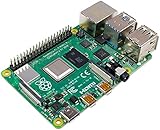
- Broadcom BCM2711, quad-core Cortex-A72 (ARM v8) 64-bit SoC @ 1. 5GHz
- 2. 4 GHz and 5. 0 GHz IEEE 802. 11b/g/n/ac wireless LAN, Bluetooth 5. 0, BLE
- 2 × USB 3. 0 ports, 2 x USB 2. 0 Ports
- 2 × micro HDMI ports supproting up to 4Kp60 video resolution
- Micro SD card slot for loading operating system and data storage
Decide how you want portrait, square, or mismatched-aspect-ratio material to appear in the chosen output. Test the actual picture rather than assuming the player or encoder will handle every source identically. Listen for missing, unexpectedly quiet, or distorted audio in files with different audio formats.
Outdated Drivers Are Slowing You Down
One free scan finds every outdated or missing driver and matches the right update for your exact hardware.Free scan · exact hardware matchWindows Errors? Fix Them Before They Spread
Repair common Windows errors and clear accumulated junk for a smoother, more stable PC - no reinstall needed.Free scan · no reinstall2. Prefer matching files where practical
If a source already matches your intended playback and output workflow, avoid converting it repeatedly. If the library is heterogeneous or a file causes playback trouble, make a standardized copy before the live run where practical, then inspect a representative section for picture, sound, and transitions. FFmpeg is one tool used to convert media by re-encoding, but the available evidence does not establish a Pi 4 conversion speed or a universal command that suits every source.
Pre-conversion can make the live playlist easier to manage, but it takes time and storage for converted copies. Real-time conversion may be more convenient, but adds work during the stream. Test either approach on the actual Pi with the intended files; do not infer that a conversion setting or codec will run smoothly for 24 hours from a short file test.
Rank #3
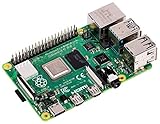
- Broadcom BCM2711, Quad core Cortex-A72 (ARM v8) 64-bit SoC @ 1.5GHz
- 1GB, 2GB, 4GB or 8GB LPDDR4-3200 SDRAM (depending on model)
- 2.4 GHz and 5.0 GHz IEEE 802.11ac wireless, Bluetooth 5.0, BLE Gigabit Ethernet
- 2 USB 3.0 ports; 2 USB 2.0 ports.
- Raspberry Pi standard 40 pin GPIO header (fully backwards compatible with previous boards)
3. Build and test the playlist
Use the playback application or workflow you have verified on the Pi to arrange the videos in the order you want. Check what happens when one file ends and the next begins, when the last item finishes, and when playback encounters an unreadable or missing file. A loop setting, playlist behavior, and recovery after an error depend on the player you choose; they are not supplied automatically by YouTube’s ingest settings.
Keep a known-good sample playlist for preflight testing, but also test the full intended playlist before leaving the stream unattended. A short sample will not reveal every format mismatch or boundary problem.
Connect the Pi’s encoder to YouTube Studio
- Enable live streaming. In YouTube Studio, enable live streaming for the channel if needed. Allow up to 24 hours for first-time activation.
- Create or schedule a stream. In YouTube Studio, create a new live stream or open the scheduled stream you intend to use. Select the encoder workflow and copy the displayed server URL and stream key.
- Keep the key private. Enter the stream URL and key into the encoder configuration on the Pi. Treat the key like a password: do not publish it, include it in screenshots, or share it with anyone who should not be able to broadcast to your channel. If it is exposed, replace or reset it in YouTube Studio before relying on it again.
- Set the live output. Configure the encoder for the selected resolution and frame rate, a supported video and audio codec, CBR, and the recommended two-second keyframe interval (never above four seconds). Use YouTube’s bitrate guidance for your chosen H.264 output when applicable, and set the stereo audio recommendations if those controls are available.
- Start the encoder and check the preview. Start playback and encoding on the Pi. In YouTube Studio’s Live Control Room, wait for the incoming preview and check the stream health messages before making the stream public or going live.
- Go live using the chosen stream mode. For a scheduled stream, wait for the preview in Live Control Room and click “Go live.” Follow the controls for the stream mode you created when ending the broadcast.
YouTube transcodes an incoming live stream into multiple output formats for viewers, but that does not remove the need for a stable feed from the encoder to YouTube.
Rank #4

- Vilros Complete Starter Kit for Pi 4 Includes Raspberry Pi 4 Model B Board and all the accessories you need to get started.
- 9-PART KIT WILL HAVE YOU READY TO GET UP AND RUNNING: Kit Includes 1. Raspberry Pi 4 Model B Board 2. Case With Easy to connect Built-in fan 3. 64GB Micro SD card Preloaded with RP OS 4. Vilros Pi 4 Compatible Power Supply with Inline on/off switch (power supply color may vary white/black) 5. Micro HDMI to Standard HDMI cable (5ft) 6. Micro SD to USB adapter to reflash card if desired 7. Neoprene Storage Bag to store all parts when not in use 8. Set of 4 Heatsinks 9. Vilros QuickStart Guide instruction booklet for Pi 4
- PASSIVE & ACTIVE COOLING: The included case is well-vented and the kit also includes a set of heatsinks with thermal stickers for easy application and a pre-installed fan to keep the board cool in any use.
- CONVENIENT ACCESSORIES: The power supply features an inline on/off switch neoprene bag that holds and protects all the parts when not in use and the QuickStart guide is updated and written for Raspberry Pi 4.
- IMPORTANT: Kit does NOT include Keyboard, Mouse or Monitor
Run a realistic preflight before leaving it unattended
YouTube recommends testing before a live stream, including representative audio and movement. Test the exact Pi, playlist, encoder settings, network connection, and power arrangement you intend to use—not just a file on another computer.
- Picture and sound: Watch a representative section and listen through different clips. Check aspect ratio, transitions, audio presence and level, and whether playback continues at playlist boundaries.
- Ingest health: Confirm that YouTube receives a stable preview and review stream-health indicators and messages during the test. A speed test is useful, but actual encoder output and YouTube’s stream status show how the full path behaves.
- Pi load and heat: Monitor CPU and thermal state, encoder warnings, and dropped frames during a sustained run. Raspberry Pi documents progressive Arm-core throttling as temperature rises from 80°C, with Arm cores and the GPU throttling at 85°C. These are thermal behavior thresholds, not a prediction that your setup will reach them.
- Network choice: The Pi 4 supports both Gigabit Ethernet and dual-band Wi-Fi. Compare the stability you observe in your location; the hardware specification alone does not establish that one connection will be more reliable for your setup.
- Recovery: Test what happens after a brief network interruption, player error, or encoder restart. Do not assume the playlist resumes at the right place or the YouTube broadcast reconnects without intervention unless you have verified that behavior.
- Power and unattended operation: Check the power supply, cable, storage, ventilation, and physical placement you will actually use. A stream that works briefly at a desk is not proof that the setup will continue unattended.
Raspberry Pi’s published camera-stream examples and network notes describe particular camera and streaming setups, not a benchmark for prerecorded YouTube video. Similarly, encoder-option behavior can depend on the specific software and hardware path. Treat your sustained test as the decision point; no exact Pi 4 configuration is established here as universally reliable for this workload.
Independent reader supportYour contribution helps us test, update, and keep practical guides available for everyone.Plan for long sessions and archives
YouTube says streams under 12 hours are automatically archived. A 24/7 channel should therefore have an explicit plan for session length and platform handling rather than assuming one uninterrupted broadcast will produce one complete archive. Decide how and when you will end or restart sessions, and verify the resulting live and archive behavior in your own channel workflow.
Quick wins for a faster PC:
Scan for outdated or missing drivers - takes under a minuteDriver Scan →Clear out junk files and repair common Windows errorsFree Scan →Fix the driver behind crashes, sound loss and screen glitchesFind Drivers →Best Value

- Includes Raspberry Pi 4 4GB Model B with 1.5GHz 64-bit quad-core CPU (4GB RAM)
- CanaKit 3.5A USB-C Power Supply with Noise Filter (UL Listed) specially designed for the Raspberry Pi 4 (5-foot cable)
- CanaKit USB-C PiSwitch (On/Off Power Switch)
- Set of 3 Aluminum Heat Sinks for the Raspberry Pi 4
Common problems and what to check
| Symptom | Likely checks | Next step |
|---|---|---|
| No preview appears in Live Control Room | Live activation status, stream URL, private stream key, encoder start state, and internet connection. | Confirm first-time activation has completed, recheck the URL and key in the intended stream setup, then restart the encoder and watch for a preview. |
| Health warnings or dropped frames | Actual upload stability, bitrate headroom, Wi-Fi variability, encoder warnings, and Pi load or heat. | Run a speed test and repeat a sustained preflight. If the connection cannot sustain the chosen target reliably, test a lower output target and bitrate. |
| Picture or audio changes between clips | Mixed resolutions, frame rates, aspect ratios, codecs, or missing audio tracks. | Inspect the affected source files and test standardized copies or a more consistent playlist on the Pi before relying on the stream. |
| Playback stops at the end of the playlist | Player loop configuration, playlist order, and behavior at the final item. | Test a complete loop and verify that the player restarts playback as intended; YouTube does not create a loop from a finished file by itself. |
| Stream does not recover after an interruption | Whether the encoder retries, whether the player remains active, the current key and stream mode, and the connection state. | Simulate an interruption during preflight, observe each component, and document the restart steps you will use if automatic recovery does not occur. |
| Stream ends or archive is not what you expected | Session duration and the selected YouTube Live Control Room workflow. | Review YouTube’s under-12-hour archive condition and plan session handling explicitly. |
Do-it-yourself versus running the stream in the cloud
A Pi-based setup gives you local control over files and playback, but the Pi, its power, storage, cooling, and network connection must remain available while it is running. A cloud service moves playback and streaming away from your home computer, in exchange for a recurring service cost and dependence on that service and your account.
Or let it run in the cloud
With StreamNeo, upload a recording or build a playlist, add your YouTube stream key once, and go live. Nothing has to stay on at home. Each slot streams uploaded video to YouTube only, exactly as uploaded up to 4K 60fps, at one flat price per slot rather than quality tiers. It includes 10 GB of storage per slot, pooled across active slots, 24/7 looping and playlists, and automatic recovery if YouTube drops the stream. The first day is free with no card, once per account. Monthly billing is $9.99 per month. Start your free first day with StreamNeo.
Frequently Asked Questions
Can I use YouTube’s DASH ingest instead of the usual encoder connection?
It is a separate protocol path, not a general media-library checklist. Google’s DASH documentation specifies particular container, codec, segment, and manifest requirements; follow those protocol-specific requirements if you deliberately choose DASH rather than the usual RTMP/RTMPS encoder setup.
Does YouTube’s automatic transcoding mean I can upload any video format to a live stream?
No. Automatic transcoding applies after YouTube receives the live feed. Your player and encoder still need to produce a stable, supported ingest stream.
Free tools Windows power users keep installed
One-click scans. No signup required.
Quick Recap
Product prices and availability are accurate as of the date/time indicated and are subject to change. Any price and availability information displayed on Amazon at the time of purchase will apply.

