
The Tool Desk
Outbyte PC Repair FREEClear out junk files and repair common Windows errorsFree Scan →Outbyte Driver Updater FREEScan for outdated or missing drivers - takes under a minuteDriver Scan →Protect a YouTube stream key as you would a password: restrict who can access it in YouTube Studio, your encoder configuration and your OVHcloud VPS; send the stream over RTMPS when available; secure both provider accounts; and reset the key promptly if it may have been exposed. RTMPS protects the feed in transit, but it does not stop someone who already has the key from using it.
What a YouTube stream key can do
YouTube describes stream keys as the stream’s “password and address.” Your encoder uses the stream URL and key to send video to YouTube, so anyone who obtains a usable key may be able to send a feed to the associated stream. Treat it as a credential, not a routine setting. See YouTube’s live-stream settings guidance.



Security has several separate layers: the key itself, the connection carrying the feed, the VPS that runs the encoder, and the accounts that control YouTube and OVHcloud. Securing one layer does not secure the others.
Keep the key out of places that do not need it
Enter it only in the encoder
Create or select your stream in YouTube Studio’s Live Control Room. In the encoder, place the stream URL in its server field and the stream key in its stream-key field, following YouTube’s setup instructions. If you reuse saved stream settings, check that the loaded key is the one you intend to use before going live.
#1 Best Overall
Limit copies and access
Restrict access to the encoder configuration to the people and processes that need it. Be alert to accidental disclosure in shell history, deployment manifests, logs, screenshots or support conversations. These can expose a key just as readily as a deliberately shared copy.
There is no universal secret-file method established for every encoder and VPS setup. The right storage and file-permission choices depend on your operating system and encoder; do not assume that putting a key in a configuration file automatically makes it safe.
Secure administration of the OVHcloud VPS
For a Linux VPS, use a named, unprivileged account for routine administration and elevate privileges with sudo only when needed. OVHcloud’s Linux user-account guidance applies to VPS as well as dedicated servers. It warns that permitting root to log in via SSH is regarded as a security vulnerability and is not recommended.
Apply least privilege to anyone who can administer the server or read the encoder’s configuration. OVHcloud is responsible for its hosting platform, but configuration and management of the server are the customer’s responsibility; provider-account safeguards do not replace guest operating-system security.
Recommended Free Tools
Use RTMPS to protect the feed in transit
Choose YouTube’s RTMPS ingestion option in your encoder when it is supported. YouTube recommends RTMPS, a secure extension to RTMP, and says stream data is encrypted through Google’s servers. Consult YouTube’s encoder settings and bitrate guidance for its live-ingestion options.
Encryption in transit helps protect the feed while it is sent to YouTube. It does not protect a key stored on a compromised VPS, prevent someone with encoder access from reusing it, or secure your YouTube account.
Rank #3
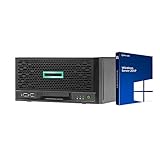
- HP MicroServer Gen10 Plus Tower Server for Business with Microsoft Windows Server 2019 OS!
- Intel Xeon E-2224 Quad-Core 3.4GHz 8MB CPU, Up To 4.6GHz Turbo
- 32GB (2 x 16GB) DDR4 PC4-21300 2666MHz Unbuffered Memory
- 16TB (4 x 4TB) 7.2K 6Gb/s SATA 3.5" HDDs in RAID
- Hard drives and memory upgrades included separately NOT installed, installation required.
Protect the YouTube and OVHcloud accounts separately
YouTube and Google account
YouTube recommends passkey-based two-step verification, scanning for malware, and keeping account recovery options current. Those steps help protect the channel and the controls used to manage its stream keys. See YouTube’s account-security guidance.
OVHcloud account and Control Panel
Enable two-factor authentication for your OVHcloud account and use a distinct backup email. OVHcloud also supports restricting Control Panel access by IP. These controls protect access to the OVHcloud account and Panel, not the services running inside the VPS; the server itself needs its own security controls. See OVHcloud’s account-security guidance and its account security best practices.
Reset a key if it may have leaked
If a key appears in a public repository, shared screenshot, untrusted log or other place where someone else could retrieve it, treat it as compromised and reset it. YouTube says channel owners or managers can reset a key; after the reset, the encoder must be updated with the newly generated value.
Rank #4
- In YouTube Studio, open Create → Go live → Stream.
- Locate the affected stream key and select Reset.
- Replace the old key in the encoder with the newly generated key. Do not continue using a saved configuration that still contains the old value.
- Reconnect the encoder and confirm that the stream reaches YouTube successfully.
Follow YouTube’s key-management instructions if the interface labels differ. Only channel owners or managers can reset the key.
Test the complete setup before an event
Start a test stream early enough to check the encoder connection, YouTube preview, stream health, audio and video. YouTube also advises testing backup-encoder failover when an event setup uses one; its streaming advice covers encoder settings and related preparation.
A successful test confirms that the current encoder configuration connects. It does not prove that the VPS, accounts or key storage are secure, so review those controls independently.
PC Slower Than It Used to Be?
A free scan shows the junk files, broken settings and background clutter dragging Windows down - then fixes them in one click.Free scan · Windows 10 & 11Crashes, No Sound, or Screen Glitches?
Random freezes, missing sound and display glitches usually trace back to one bad driver. Find and replace yours safely.Free scan · under a minuteBest Value
Which security layer addresses which risk?
| Layer | Useful control | Addresses | Does not address |
|---|---|---|---|
| Key lifecycle | Restrict access; reset after suspected exposure | Use of a compromised stream credential | Host compromise or account takeover |
| Ingestion transport | RTMPS where supported | Interception while the feed is sent to YouTube | Unauthorized access to a key stored on the VPS |
| VPS administration | Unprivileged user, sudo, and restricted SSH administration | Unauthorized server-level access | YouTube or OVHcloud account takeover |
| Provider accounts | Two-factor authentication; optional OVHcloud Panel IP restriction | Access to provider account controls | Security of the VPS guest operating system |
| YouTube account | Passkey-based two-step verification, malware scanning and recovery options | YouTube channel compromise | VPS access controls |
Or let it run in the cloud
If your goal is a continuous YouTube stream of uploaded videos rather than a live camera feed, StreamNeo can loop an upload or playlist from the cloud. The setup is: upload a recording or build a playlist, add your YouTube stream key once, then go live. Your computer and home connection do not have to stay on. StreamNeo supports uploaded video at its original quality up to 4K 60fps at one flat price per slot, with automatic recovery if YouTube drops the stream. The first day is free with no card.
StreamNeo is for YouTube and uploaded videos; it does not stream from a camera. Its monthly price is $9.99 per month. Start your free day with StreamNeo.
Quick Recap
Product prices and availability are accurate as of the date/time indicated and are subject to change. Any price and availability information displayed on Amazon at the time of purchase will apply.

