
To monitor website screenshot changes with AWS Lambda, create an Amazon CloudWatch Synthetics canary that visits the page on a schedule and captures screenshots. For built-in visual comparison, use AWS’s supported Puppeteer canary runtime and visual monitoring blueprint: the first successful run establishes a baseline, and later runs can fail the canary when differences exceed your configured threshold. If you need a different browser workflow or comparison logic, build a self-managed Lambda screenshot job and provide the comparison, baseline storage, and alerting yourself.
Choose the monitoring approach
AWS offers two practical routes. CloudWatch Synthetics manages scheduled canary runs and provides a visual monitoring blueprint for supported Puppeteer runtimes. A custom Lambda gives you control over browser automation and image comparison, but you own the supporting pieces.

| Approach | Best fit | What you manage or verify |
|---|---|---|
| CloudWatch Synthetics visual monitoring | AWS teams seeking scheduled checks, screenshots, reports, and built-in baseline comparison. | Supported runtime, threshold and ignored-region settings, artifact access and permissions, and integration with your alert workflow. |
| Self-managed Lambda with Puppeteer or Playwright | Teams needing custom browser steps, capture state, comparison logic, or existing test tooling. | Browser packaging and maintenance, scheduling, baseline storage and promotion, image-diff tolerance, artifact retention, permissions, and notifications. |
AWS describes Synthetics canaries as configurable scripts that run on a schedule to monitor endpoints and APIs. The service can also capture and store UI screenshots. See Amazon CloudWatch Synthetics documentation.
Set up visual monitoring with CloudWatch Synthetics
1. Create a canary and choose a supported runtime
In the AWS console, open CloudWatch, go to Synthetics, and create a canary for the page or endpoint you want to monitor. Use the visual monitoring blueprint and a supported Puppeteer canary runtime. AWS documents the blueprint for Puppeteer runtimes beginning with syn-puppeteer-node-3.2; confirm the current runtime list and migration guidance before deployment in AWS’s runtime documentation.
What’s actually slowing this PC down?
Pick the symptom - the matching free tool is one click away.
#1 Best Overall

- Includes Raspberry Pi 5 with 2.4Ghz 64-bit quad-core CPU (8GB RAM)
- Includes 128GB Micro SD Card pre-loaded with 64-bit Raspberry Pi OS, USB MicroSD Card Reader
- CanaKit Turbine Black Case for the Raspberry Pi 5
- CanaKit Low Noise Bearing System Fan
- Mega Heat Sink - Black Anodized
The visual monitoring blueprint is not currently supported on Playwright or Python/Selenium runtimes. Playwright can still be used in a separate, self-managed screenshot workflow; its screenshot assertions are not the same as AWS’s Synthetics blueprint. See AWS canary blueprint documentation and Playwright visual comparisons.
2. Set the schedule and capture behavior
Choose how often the canary should visit the site. Make capture conditions consistent between runs: use the same viewport and wait for the page state that matters, rather than relying on an arbitrary delay if a meaningful selector or readiness condition is available. Pages with rotating promotions, timestamps, personalized content, or live data can differ even when there is no underlying defect.
Rank #2

- Includes Raspberry Pi 4 4GB Model B with 1.5GHz 64-bit quad-core CPU (4GB RAM)
- Includes Pre-Loaded 32GB EVO+ Micro SD Card (Class 10), USB MicroSD Card Reader
- CanaKit Premium High-Gloss Raspberry Pi 4 Case with Integrated Fan Mount, CanaKit Low Noise Bearing System Fan
- CanaKit 3.5A USB-C Raspberry Pi 4 Power Supply (US Plug) with Noise Filter, Set of Heat Sinks, Display Cable - 6 foot (Supports up to 4K60p)
- CanaKit USB-C PiSwitch (On/Off Power Switch for Raspberry Pi 4)
3. Run once to establish the baseline
The first successful canary run provides the baseline image for later comparisons. Inspect that capture before treating it as the expected state: a baseline taken during a loading failure, transient banner, or incomplete render can make later comparisons misleading.
4. Tune comparison tolerance and dynamic regions
Set a difference threshold that reflects the visual tolerance appropriate for the page. The blueprint compares screenshots and can fail the canary when differences exceed the configured percentage threshold. AWS also supports excluding drawn regions from comparison, which is useful for areas expected to change. The threshold detects pixel differences; it does not determine whether a change is harmful, so review the screenshot and canary report when a run fails.
Recommended Free Tools
5. Review artifacts and promote intentional changes
Use the screenshot and report from a failed run to determine whether the change is a defect or an intended redesign. After an intentional change, update the baseline deliberately so the new appearance becomes the comparison target. Synthetics stores canary screenshots and artifacts; check the current permissions and encryption requirements for your chosen runtime and account in the canary documentation.
6. Connect failures to notification workflows
A visual comparison failure is a canary result, not a complete incident-notification setup. Configure the canary’s failure signal to feed the monitoring and notification workflow your team uses, and verify that the right people receive an actionable alert with access to the relevant report and screenshot.
Build a self-managed screenshot comparison in Lambda
Use this route when you need browser steps or comparison behavior that the managed blueprint does not provide. The core job is to load a page in a repeatable state, capture an image, compare it with a stored baseline, save the artifacts, and signal a failure when the difference exceeds your chosen tolerance. Browser automation alone does not supply the operational pieces below.
Rank #4
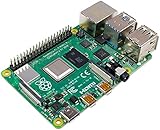
- Broadcom BCM2711, quad-core Cortex-A72 (ARM v8) 64-bit SoC @ 1. 5GHz
- 2. 4 GHz and 5. 0 GHz IEEE 802. 11b/g/n/ac wireless LAN, Bluetooth 5. 0, BLE
- 2 × USB 3. 0 ports, 2 x USB 2. 0 Ports
- 2 × micro HDMI ports supproting up to 4Kp60 video resolution
- Micro SD card slot for loading operating system and data storage
Implementation checklist
- Package the browser deliberately. Include a browser build compatible with the Lambda runtime and architecture, and test the deployment package or container in the actual target environment.
- Fix the capture conditions. Keep viewport, device scale, locale, timezone, authentication state, and page readiness behavior consistent. Wait for the content you care about and account for content that changes naturally.
- Capture and retain artifacts. Save the current screenshot and comparison output to storage your team can access, with suitable retention, encryption, and permissions.
- Compare against a managed baseline. Store the approved baseline separately from transient run artifacts. Define who can approve and promote a new baseline after an intentional redesign.
- Define the failure rule. Select a pixel-difference tolerance that suits the page, then make the job return a failure or publish a metric when the comparison exceeds it.
- Schedule and alert. Trigger the Lambda on the interval you need, and connect its failure signal to your existing monitoring and notification system.
Playwright provides screenshot assertions and pixel-difference controls for test workflows, documented at Visual comparisons. That capability does not make Playwright a supported runtime for the AWS Synthetics visual monitoring blueprint.
Do these 3 things before closing this tab:
1Scan for outdated or missing drivers - takes under a minute2Repair Windows errors before they cause bigger problems3Fix the driver behind crashes, sound loss and screen glitchesKeep the monitor reliable and affordable to operate
Control sources of visual noise
- Use a stable viewport and wait for the page state you intend to test.
- Account for rotating or personalized content; exclude a known dynamic region where the managed blueprint supports it, or handle it explicitly in a custom comparator.
- Review failures rather than assuming every pixel difference indicates a customer-visible problem.
Maintain runtime and browser compatibility
AWS updates canary runtimes and bundled browser versions over time, including changes made for security fixes. Pin dependencies for self-managed deployments and schedule periodic updates; for managed canaries, check the current runtime history and migration requirements before selecting or upgrading a runtime. See AWS runtime documentation.
Best Value
- Includes Raspberry Pi 5 16GB with 2.4Ghz 64-bit quad-core CPU (16GB RAM)
- Includes 128GB Micro SD Card pre-loaded with 64-bit Raspberry Pi OS, USB MicroSD Card Reader
- CanaKit Turbine Black Case for the Raspberry Pi 5
- CanaKit Low Noise Bearing System Fan
- Mega Heat Sink - Black Anodized
Budget for the full workflow
For a custom Lambda, the browser run is only one operational cost: include scheduled executions, artifact storage and retention, comparison work, and notification or monitoring services in your design. For Synthetics, verify current service pricing and regional availability for your account before setting the schedule; the documentation cited here does not establish a universal price or availability for every region.
Independent reader supportYour contribution helps us test, update, and keep practical guides available for everyone.Troubleshoot common problems
| Symptom | Likely cause | What to do |
|---|---|---|
| Visual blueprint is unavailable for the selected runtime. | The selected runtime or framework is not supported by that blueprint. | Choose a supported Puppeteer canary runtime and check AWS’s current runtime documentation. For Playwright or Python/Selenium, use a self-managed comparison workflow instead. |
| The canary fails repeatedly after a site redesign. | The baseline still represents the old expected page. | Review the new capture and update the baseline only after confirming the change is intentional. |
| Runs fail intermittently although the page appears unchanged. | Capture timing or dynamic page regions vary between runs. | Wait for the relevant page state, standardize the viewport, and exclude or account for known changing regions. |
| A canary failure provides no useful notification. | Comparison results have not been connected to the team’s notification workflow. | Configure and test an alert path from the canary failure signal, including access to the report and screenshot artifacts. |
| Artifacts cannot be read or are missing from the expected location. | Storage configuration, permissions, encryption, or retention settings do not match the deployment. | Check the current Synthetics artifact and permission requirements for the selected runtime and account, then validate access with the intended operator role. |
| A custom Lambda works locally but fails in deployment. | The packaged browser, dependencies, architecture, or runtime assumptions differ from the Lambda environment. | Test the deployed package in the target environment and verify the browser build and dependencies are compatible with the selected runtime. |
Or skip the browser setup
If you want a screenshot API rather than maintaining a browser workflow, ScreenshotNeo can return a screenshot or PDF from one GET request. Its capture flow removes cookie banners, newsletter popups, and chat widgets before the shot; bot checks, blank pages, and failed loads are never billed. It also provides an MCP server so AI agents can take screenshots. The free plan includes 1,000 screenshots a month with no card, and paid plans start at $5 for 3,000.
Example cURL request (replace the target URL as needed):
curl -G "https://api.screenshotneo.com/v1/shot" -d access_key=YOUR_API_KEY --data-urlencode url=https://stripe.com -o shot.webpSee the ScreenshotNeo API documentation for parameters and setup. For a scheduled visual monitor, you still need to retain and compare the returned image with a baseline and wire your comparison result to an alert.
Sign up for ScreenshotNeo’s free plan to get 1,000 screenshots a month with no card.
Quick Recap
Product prices and availability are accurate as of the date/time indicated and are subject to change. Any price and availability information displayed on Amazon at the time of purchase will apply.

