
A Hetzner Cloud Volume stores video files on a Hetzner Cloud Server; it does not create or send a YouTube stream by itself. Attach and mount the volume, copy videos to its mount point, then configure an encoder on the server to read those files and send a live feed to YouTube. For a manual mount, make it persistent across reboots and ensure the encoder starts only after the volume is available.
How the volume fits into a YouTube loop stream
The volume is networked block storage attached to a Cloud Server. Once formatted and mounted, it appears as a directory in the server’s filesystem. Your video files live there, and an encoder or media automation tool reads them and sends audio and video to YouTube. YouTube distinguishes the incoming feed, called a stream, from the viewer-facing event, called a broadcast; a broadcast is bound to a stream. Hetzner’s volume overview and Google’s broadcast and stream guide describe these separate roles.
A volume can be attached to one server at a time. Hetzner documents a maximum of 16 volumes on one Cloud Server. The volume is storage, not a backup, encoder, YouTube account, or unattended-restart guarantee.
Create and attach the volume
- Choose the Cloud Server. In the Hetzner Console, open the project containing the server that will run your encoder. Create a Cloud Volume in that project and attach it to that server. Check that the volume’s location is available and appropriate for your server before creating it; Hetzner’s FAQ lists locations including Falkenstein, Helsinki, Nuremberg, Ashburn, Hillsboro, and Singapore, but availability can change. See Hetzner’s Volume FAQ.
- Choose automatic or manual setup. Automatic setup formats and mounts the volume, with EXT4 or XFS as the documented filesystem choices. Hetzner’s documented automatic mount path is
/mnt/HC_Volume_${VOLUME_ID}. Manual setup lets you choose the filesystem and mount point, but requires Linux storage administration. The Console flow and options are documented in Creating a Volume. - Verify the mount before copying files. On the server, run
findmntordf -hand confirm the volume is mounted at the path you intend to use. Check the available capacity. A directory can exist even when the volume is not mounted; copying files into that unmounted directory may fill the server’s root disk instead of the volume.
Which setup route should you choose?
| Choice | What it does | Trade-off |
|---|---|---|
| Automatic | Hetzner formats and mounts the volume; EXT4 and XFS are documented choices. | Less setup work, with less control over the mount configuration. |
| Manual | You identify the device, select or create a filesystem, choose a mount point, and configure persistence if needed. | More control, but device identification and boot configuration must be handled carefully. |
Mount a volume manually on Linux
Use the steps below only when you selected manual setup or need to configure a mount yourself. The commands for identifying devices and mounting are Linux administration operations; Hetzner’s tutorial examples use Ubuntu 22.04 and 24.04. Device names vary, so do not assume the volume is /dev/sdb. Formatting the wrong device can destroy data.
#1 Best Overall

- 【1080P 60FPS Video Capture Card】 This HDMI game capture card is based on USB3.0 high speed transmission port, input resolution up to 4K@30HZ, output resolution up to 2K@30Hz or 1920×1080@60Hz. Type c and USB interface can meet most of the devices in daily life. Easily meet the online capture, real-time recording, online meetings, live gaming and other functions, so you have a better visual enjoyment. Note: For capture use only; requires capture software to function and is not intended for direct screen casting to a monitor or TV
- 【Ultra Low Latency Screen Sharing】 HDMI capture card is made of good quality aluminum alloy with strong heat dissipation, allowing you to enjoy ultra low latency while live gaming or video recording or live streaming, avoiding blue screens and lag. This HDMI to USBC capture card supports easy recording of good quality audio or HD video and transferring it to your computer or streaming platform, allowing you to record 60 fps HD video directly on your hard drive and real-time preview
- 【Plug and Play, Easy to Carry】 This HDMI 1080P video capture card does not require any additional drivers or external power supply, just plug and play for fast capture. The capture card is small and lightweight, so you can put it in your bag for emergencies, making it very portable for outdoor live streaming. It's also a great way to share content in game recording, video conference, video recorder and online teaching
- 【Wide Compatibility USB Capture Card】 Easily streams to Facebook, Youtube or Twitch. With the connection, this HDMI to USB C/3.0 video capture devices can be working on several Operating Systems and various software: Windows 7/ 8/ 10, Mac OS or above, Linux, Android, Laptop, Xbox One, PS3/PS4/PS5, Camera, DVDs, Set Top Box, Webcame, DSLR, Switch/Switch 2, TV BOX, HDTV, Potplayer/VLC, ZOOM, OBS Studio etc.
- 【Package Content & Note】 1x HD Audio Capture Card , 1x USB 3.0 to USB C Adapter (A-side 3.0, B-side 2.0), 1x user manual. Please note that you need to restart the OBS Studio software after the audio setup is complete, otherwise it will result in no sound output. When using an adapter, if the device is recognized as USB 2.0, try using the other side with the USB-C port. Simply flip the capture card and reconnect it to be recognized as USB 3.0
- Identify the volume device. Use
lsblkand inspect device size, model, serial, and existing mount state. Match the device to the volume you attached, and stop if you cannot identify it confidently. - Format only a confirmed new, empty volume. Choose a filesystem, such as EXT4 or XFS, and use the corresponding
mkfscommand for the confirmed device. Formatting erases existing data on that device; do not run a format command on a device that may contain files you need. - Create a mount point and mount the device. For example, create
/mnt/videosand mount the confirmed volume there. Then verify it withfindmnt /mnt/videosordf -h /mnt/videos. - Make the mount persistent if it must return after reboot. Configure the volume in
/etc/fstabusing a stable device identifier rather than relying on an assumed device name. Validate the entry before rebooting, and confirm the mount is active after startup. Hetzner’s Linux formatting and mounting tutorial covers device identification, mount points, permissions, and/etc/fstab.
Copy videos to the volume and set access
Create a dedicated directory under the verified mount point, such as /mnt/videos/loop, and copy your source files there. Check ownership and read permissions for the account that runs the encoder. Keep the directory path stable: the encoder must read from the mounted volume, not from a similarly named directory on the server’s root disk.
After copying, confirm the files appear under the mount point and that there is enough free space for your library. Hetzner documents volume sizes from 10 GB to 10 TB. Volumes can be increased but not reduced; after increasing the provider volume, you must also grow the filesystem in the operating system. The precise filesystem expansion procedure depends on the filesystem and server configuration; see the Volume FAQ before resizing.
Point an encoder at the mounted files
Configure your chosen encoder or media automation software to read the intended file or playlist from the mounted directory and repeat it. The exact loop controls and restart behavior depend on that software, so use its current documentation for the relevant settings. The volume documentation establishes where files are stored, not encoder-specific loop syntax.
Rank #2

- 【1080P HD High Quality】Capture resolution up to 1080p for video source and it is ideal for all HDMI devices such as PS4, PS3, Xbox One, Xbox 360, Wii U, DVDs, DSLR, Camera, Security Camera and set top box. Note: Video input supports 4K30/60Hz and 1080p120/144Hz. Does not support 4K120Hz/144Hz. Output supports up to 2K30Hz.
- 【Plug and Play】No driver or external power supply required, true PnP. Once plugged in, the device is identified automatically as a webcam. Detect input and adjust output automatically. Won't occupy CPU, optional audio capture. No freeze with correct setting.
- 【Compatible with Multiple Systems】suitable for Windows and Mac OS. High speed USB 3.0 technology and superior low latency technology makes it easier for you to transmit live streaming to Twitch, Youtube, Facebook, Twitter, OBS, Potplayer and VLC.
- 【HDMI LOOP-OUT】Based on the high-speed USB 3.0 technology, it can capture one single channel HD HDMI video signal. There is no delay when you are playing game live.
- 【Support Mic-in for Commentary】Rybozen capture card has microphone input and you can use it to add external commentary when playing a game. Please note: it only accepts 3.5mm TRS standard microphone headset.
For YouTube, configure the encoder with the channel’s ingest details, then test the feed before starting the broadcast. A channel must be eligible or enabled for live streaming. Google’s API lifecycle describes creating a broadcast and stream, binding them, testing, going live, and concluding; someone using OBS or another encoder can instead configure the connection through that software and YouTube Studio. The API references are at Life of a Broadcast and LiveStreams: insert.
Do these 3 things before closing this tab:
1Scan for outdated or missing drivers - takes under a minute2Clear out junk files and repair common Windows errors3Fix the driver behind crashes, sound loss and screen glitchesIf you are building API-based automation, YouTube’s Live Streaming API uses OAuth for YouTube account access and does not support service-account authentication for a YouTube account. See Google’s OAuth authentication guide. This API requirement does not mean a standard encoder workflow needs you to call the API directly.
Keep the stream usable after a server reboot
A persistent mount is only one part of restart recovery. Before restarting or automating the encoder, verify that the volume mounts successfully and that the encoder starts after the mount is available. If it starts first, it may fail to find its media path. A manual mount without a persistent boot configuration must be mounted again by an administrator. Hetzner’s FAQ also advises that volume contents are not covered by Cloud Server backups or snapshots.
Rank #3
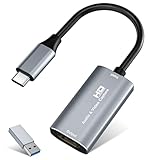
- 【4K HDMI Input, 2K@30Hz Recording】Powered by a true USB 3.0 high-speed interface, the capture card supports up to 4K@30Hz HDMI input and records at 2K@30Hz or 1080P@60Hz. Perfect for gamers, streamers, and professionals who need crisp, smooth video for live streaming, gameplay recording, or online meetings.
- 【Ultra Low Latency Screen Sharing】Built with a premium aluminum alloy shell and advanced chipset for stable heat dissipation, ensuring ultra-low latency transmission. Capture high-quality video and dual-channel audio in real time—no lag, no frame drop—ideal for Twitch, YouTube, or OBS streaming.
- 【Easy Plug and Play, Compact & Portable】No driver or external power required—just plug and play via USB 3.0 or Type-C connection to your Windows or macOS computer. Lightweight and compact design makes it easy to carry for outdoor streaming, live shows, or mobile recording setups.
- 【Wide Compatibility & Multi-Device Support】Compatible with Windows 7 8 10 11, macOS, Linux,Android and supports most popular software such as OBS, Zoom, VLC, Twitch Studio, and more. Works seamlessly with PS4, PS5, Xbox, Switch, DSLR cameras, TV boxes, and other HDMI-output devices for streaming to YouTube, Twitch, etc.
- 【What You Get】Includes: HDMI Capture Card, USB 3.0 to USB-C Adapter, User Manual. Tips: Make sure your tablet’s OTG function is enabled before connecting. Test your HDMI device with a monitor first to confirm video and audio output, then connect to the Video Capture Card for recording.
Do not assume that the volume, encoder process, YouTube connection, and broadcast will all recover unattended. That depends on the mount configuration, process supervision, encoder behavior, and channel setup. Test the complete restart sequence deliberately before relying on it.
Capacity, performance, and data protection
- Capacity: Hetzner documents volumes from 10 GB to 10 TB. Capacity can be increased but not reduced, and filesystem expansion inside Linux is a separate step.
- Attachment: A volume attaches to one server at a time; up to 16 volumes can be attached to one Cloud Server, according to Hetzner’s documentation.
- Published performance limits: Hetzner lists up to 5,000 sustained read/write IOPS and 200 MB/s sustained throughput, with burst figures up to 7,500 IOPS and 300 MB/s. These are provider specifications, not a guarantee of the performance your particular encoder workload will achieve. See the volume overview.
- Backups: Hetzner states: “Please note that we do not provide Backups or Snapshots for Volumes. Backups and Snapshots for servers do not include any Volumes which are attached to your server.” Keep an independent copy of irreplaceable source video. Hetzner’s three-physical-server block storage replication is not a user-accessible backup or restore point.
Troubleshooting common failures
The encoder cannot find the video files
- Run
findmntordf -hto confirm the volume is mounted at the configured path. - Check that the encoder’s configured directory matches the actual mount point and that the files were copied there.
- Check read permissions for the account running the encoder.
The server’s root disk fills unexpectedly
Check whether the volume was mounted when files were copied. An unmounted mount-point directory is still an ordinary directory on the root filesystem. Mount the volume, verify it, then move or recopy the files to the mounted path and remove unintended root-disk copies only after confirming they are safe to delete.
The volume is missing after reboot
For a manual setup, inspect the /etc/fstab entry and boot logs, then confirm the volume device and mount path. If the mount is not active, mount it and verify the files before restarting the encoder. Ensure the encoder is ordered to start only after the mount is available.
Rank #4

- High-Quality Video Capture, 4K HDMI Capture Card Ready: Capture smooth and vibrant video with this 4K HDMI capture card, engineered for gamers and content creators who demand crisp 1080P 60FPS video quality. Whether you're streaming to Twitch or recording gameplay for YouTube, your footage will look professional and detailed
- Plug-and-Play USB Capture Card, No Drivers Needed: Designed as a USB capture card for streaming, this device works instantly out of the box, just plug into your PC or laptop and start capturing. Fully compatible with popular software like OBS Studio, Streamlabs, and XSplit, making setup quick and stress-free for beginners and pros alike
- Universal Compatibility PS5, Xbox, Switch & More: Stream or record gameplay from virtually any HDMI-enabled device including Nintendo Switch, PS5, Xbox Series X, DSLR cameras, and PCs. The video capture card for gaming supports seamless passthrough so you can play without lag while your audience watches every frame in real time
- Low-Latency Performance for Smooth Streaming: This capture card for streaming minimizes delay between gameplay and broadcast, so you get reliable, low-latency capture that works well for competitive gaming, live broadcasts, and podcast sessions. Suitable for those building their channel with high-quality, engaging content
- Compact & Portable Design for Content Creators: Lightweight and portable, this USB 3.0 capture card works well for creators who travel or switch gaming setups often. Throw it in your bag and stream or record wherever you are, at home, events, LAN parties, streaming or studio sessions
A format command appears to target the wrong disk
Stop before running it. Recheck size, model, serial, and mount state with device-identification tools. A mistaken mkfs command can destroy data; never copy a tutorial’s sample device name without verifying it against your server.
The broadcast does not go live
Confirm that the channel has live-streaming eligibility, the encoder has the correct YouTube ingest details, and the feed is testing successfully before you start the broadcast. If using the API, check the broadcast/stream binding and OAuth access; an API error may also reflect account eligibility. Consult Google’s broadcast lifecycle, authentication guide, and stream creation documentation.
Or let it run in the cloud
If you want a YouTube loop without maintaining a server, mounted volume, and encoder process, StreamNeo is a cloud service that keeps a YouTube channel live from uploaded videos. Upload a recording or build a playlist, add your YouTube stream key once, and go live. It loops the uploaded media in the cloud; it does not stream from a camera.
Free tools Windows power users keep installed
One-click scans. No signup required.
Quick Recap
- Your computer and home connection do not have to stay on.
- Videos stream as uploaded, up to 4K 60fps, at one price per slot rather than quality tiers.
- It automatically recovers if YouTube drops the stream.
- The first day is free with no card required, one free day per account.
Monthly: $9.99 per month.
Start your free StreamNeo day.
Product prices and availability are accurate as of the date/time indicated and are subject to change. Any price and availability information displayed on Amazon at the time of purchase will apply.

