
The Tool Desk
Outbyte PC Repair FREEClear out junk files and repair common Windows errorsFree Scan →Outbyte Driver Updater FREEFix the driver behind crashes, sound loss and screen glitchesFind Drivers →Yes. You can attach a Vultr Block Storage volume to a Vultr Compute instance and keep video files there while software on the server sends a live broadcast to YouTube. The volume stores files; it does not create, encode, loop, or transmit a stream. You must configure and maintain those functions separately, and verify YouTube’s current rules and the behavior of your chosen streaming process before relying on a 24/7 broadcast.
How the pieces fit together
The workflow has three distinct layers:
- Storage: Vultr Block Storage provides a volume attached to a Compute instance. The operating system mounts it so the server can read your video files.
- Streaming software: A process such as OBS Studio reads media and produces a live video and audio feed. Vultr’s guide uses Ubuntu, OBS Studio, and FFmpeg in its YouTube Live workflow.
- YouTube delivery: The streaming process sends the broadcast to YouTube using the stream key configured in YouTube Live.
Vultr documents volume attachment and a server-based OBS-to-YouTube setup, but those instructions do not by themselves provide a complete unattended playlist loop, process supervisor, or recovery design. Block storage is one component, not a 24/7 streaming service.
Choose and attach a volume in the same region
Choose a Vultr Compute instance and Block Storage volume in the same region. Vultr says cross-region attachment is not supported; to use files in another region, replicate or synchronize them to a volume there. Vultr’s attachment documentation also describes a CLI --live option that attaches a volume without restarting the instance. Check the current Vultr control panel or CLI documentation for the applicable command and plan details before making changes.
When selecting storage, consider sustained sequential reads for your actual media workload, not just the advertised IOPS figure. Vultr’s published May 2026 benchmark gives the following sustained targets:
#1 Best Overall

- 【1080P 60FPS Video Capture Card】 This HDMI game capture card is based on USB3.0 high speed transmission port, input resolution up to 4K@30HZ, output resolution up to 2K@30Hz or 1920×1080@60Hz. Type c and USB interface can meet most of the devices in daily life. Easily meet the online capture, real-time recording, online meetings, live gaming and other functions, so you have a better visual enjoyment. Note: For capture use only; requires capture software to function and is not intended for direct screen casting to a monitor or TV
- 【Ultra Low Latency Screen Sharing】 HDMI capture card is made of good quality aluminum alloy with strong heat dissipation, allowing you to enjoy ultra low latency while live gaming or video recording or live streaming, avoiding blue screens and lag. This HDMI to USBC capture card supports easy recording of good quality audio or HD video and transferring it to your computer or streaming platform, allowing you to record 60 fps HD video directly on your hard drive and real-time preview
- 【Plug and Play, Easy to Carry】 This HDMI 1080P video capture card does not require any additional drivers or external power supply, just plug and play for fast capture. The capture card is small and lightweight, so you can put it in your bag for emergencies, making it very portable for outdoor live streaming. It's also a great way to share content in game recording, video conference, video recorder and online teaching
- 【Wide Compatibility USB Capture Card】 Easily streams to Facebook, Youtube or Twitch. With the connection, this HDMI to USB C/3.0 video capture devices can be working on several Operating Systems and various software: Windows 7/ 8/ 10, Mac OS or above, Linux, Android, Laptop, Xbox One, PS3/PS4/PS5, Camera, DVDs, Set Top Box, Webcame, DSLR, Switch/Switch 2, TV BOX, HDTV, Potplayer/VLC, ZOOM, OBS Studio etc.
- 【Package Content & Note】 1x HD Audio Capture Card , 1x USB 3.0 to USB C Adapter (A-side 3.0, B-side 2.0), 1x user manual. Please note that you need to restart the OBS Studio software after the audio setup is complete, otherwise it will result in no sound output. When using an adapter, if the device is recognized as USB 2.0, try using the other side with the USB-C port. Simply flip the capture card and reconnect it to be recognized as USB 3.0
| Vultr Block Storage class | Published sustained IOPS | Published sustained throughput |
|---|---|---|
| HDD Block | 500 | 100 MB/s |
| NVMe Block | 10,000 | 400 MB/s |
These are Vultr’s published figures, not independent measurements or guaranteed minimums. Vultr notes that block size, parallel requests, caching, queueing, and the Compute instance’s CPU and network resources can affect observed results. Its May 2026 benchmark reports, for example, about 10,000 IOPS and 40 MiB/s for NVMe at 4 KB blocks, and about 6,000 IOPS and 381 MiB/s at 64 KB. Do not treat either tier as automatically necessary for a single stream: test sustained reads using the files and workload you expect to run. Check current regional availability and pricing when purchasing, and handle backups and recovery separately from the attached volume.
Prepare and mount the volume safely
Vultr’s Linux mount guide, updated 24 September 2026, describes identifying the attached device, partitioning and formatting it, mounting it, and configuring a UUID-based mount at boot. Its sample partitioning and filesystem commands can destroy data on an existing volume. Use them only for a new volume or after confirming the device and its contents; never assume a device name based on an example.
Rank #2

- 【1080P HD High Quality】Capture resolution up to 1080p for video source and it is ideal for all HDMI devices such as PS4, PS3, Xbox One, Xbox 360, Wii U, DVDs, DSLR, Camera, Security Camera and set top box. Note: Video input supports 4K30/60Hz and 1080p120/144Hz. Does not support 4K120Hz/144Hz. Output supports up to 2K30Hz.
- 【Plug and Play】No driver or external power supply required, true PnP. Once plugged in, the device is identified automatically as a webcam. Detect input and adjust output automatically. Won't occupy CPU, optional audio capture. No freeze with correct setting.
- 【Compatible with Multiple Systems】suitable for Windows and Mac OS. High speed USB 3.0 technology and superior low latency technology makes it easier for you to transmit live streaming to Twitch, Youtube, Facebook, Twitter, OBS, Potplayer and VLC.
- 【HDMI LOOP-OUT】Based on the high-speed USB 3.0 technology, it can capture one single channel HD HDMI video signal. There is no delay when you are playing game live.
- 【Support Mic-in for Commentary】Rybozen capture card has microphone input and you can use it to add external commentary when playing a game. Please note: it only accepts 3.5mm TRS standard microphone headset.
- Attach the volume to the instance in the same region using the Vultr control panel or supported CLI procedure.
- Identify the new device inside Linux with
lsblk. Confirm its size and device identity before running any partitioning or formatting command. - Create a partition and filesystem only if the volume is new or you have confirmed it contains no data you need. Follow Vultr’s current Linux mount guide for the exact commands; formatting the wrong device destroys data.
- Create a mount point, then mount the filesystem and confirm it appears at the intended path.
- Make the mount persistent by recording the filesystem UUID and adding the corresponding entry to
/etc/fstab, as described in Vultr’s guide. Reload systemd and mount the filesystem, then verify it is available after a reboot before depending on it for streaming.
Store media on the mounted path and confirm the account running OBS or your streaming process can read the files. Keep a separate copy of valuable source files: an attached volume is storage, not a backup strategy.
Configure the server and YouTube broadcast
Vultr’s streaming guide, updated 1 April 2025, lists a sample setup of Ubuntu, OBS Studio, and FFmpeg. Its stated prerequisites are at least 2 vCPUs, 4 GB RAM, 80 GB storage, and 3 TB bandwidth. These are Vultr’s recipe, not universal YouTube minimums or proof that a server of that size can handle every codec, resolution, frame rate, playlist, or concurrent task. The guide suggests 720p for a server with at least two vCPUs and says to monitor CPU and bandwidth.
Rank #3
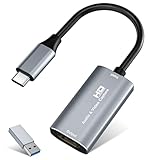
- 【4K HDMI Input, 2K@30Hz Recording】Powered by a true USB 3.0 high-speed interface, the capture card supports up to 4K@30Hz HDMI input and records at 2K@30Hz or 1080P@60Hz. Perfect for gamers, streamers, and professionals who need crisp, smooth video for live streaming, gameplay recording, or online meetings.
- 【Ultra Low Latency Screen Sharing】Built with a premium aluminum alloy shell and advanced chipset for stable heat dissipation, ensuring ultra-low latency transmission. Capture high-quality video and dual-channel audio in real time—no lag, no frame drop—ideal for Twitch, YouTube, or OBS streaming.
- 【Easy Plug and Play, Compact & Portable】No driver or external power required—just plug and play via USB 3.0 or Type-C connection to your Windows or macOS computer. Lightweight and compact design makes it easy to carry for outdoor streaming, live shows, or mobile recording setups.
- 【Wide Compatibility & Multi-Device Support】Compatible with Windows 7 8 10 11, macOS, Linux,Android and supports most popular software such as OBS, Zoom, VLC, Twitch Studio, and more. Works seamlessly with PS4, PS5, Xbox, Switch, DSLR cameras, TV boxes, and other HDMI-output devices for streaming to YouTube, Twitch, etc.
- 【What You Get】Includes: HDMI Capture Card, USB 3.0 to USB-C Adapter, User Manual. Tips: Make sure your tablet’s OTG function is enabled before connecting. Test your HDMI device with a monitor first to confirm video and audio output, then connect to the Video Capture Card for recording.
- Set up YouTube Live for the channel and copy its stream key. Treat the key as a credential: do not publish it, place it in a public script or repository, or share screenshots that reveal it.
- Install and configure the streaming software on the Compute instance. In OBS, select the intended video and audio sources and configure the YouTube stream destination and key according to the current OBS and YouTube interfaces.
- Set resolution, frame rate, and bitrate for the content and the server’s tested capacity. Vultr’s 2025 guide publishes these bitrate ranges by output format:
| Resolution and frame rate | Bitrate range published by Vultr in 2025 |
|---|---|
| 480p at 30 fps | 500–2,000 Kbps |
| 720p at 30 fps | 1,500–4,500 Kbps |
| 720p at 60 fps | 2,500–6,500 Kbps |
| 1080p at 30 fps | 3,000–6,500 Kbps |
| 1080p at 60 fps | 4,500–9,500 Kbps |
| 2160p at 30 fps | 13,000–34,000 Kbps |
| 2160p at 60 fps | 20,000–51,000 Kbps |
These are values Vultr published in 2025, not a statement of YouTube’s current recommendations. Confirm YouTube’s current encoder guidance before choosing settings. A higher output resolution or frame rate also raises the processing and upload demands on the server.
- Start a test broadcast and verify the channel receives the expected picture and audio before leaving it unattended. Check the instance’s CPU use and network bandwidth while the actual content is playing.
- Configure reconnect behavior in OBS if that is part of your design. Vultr’s guide suggests an automatic-reconnect retry delay of three seconds or less and at least 1,000 retries. It also warns that CPU use above 90% may lead to dropped frames and buffering. These are vendor suggestions and cautions, not guarantees of successful recovery.
Design the continuous playback and recovery separately
A successful test broadcast does not establish that stored videos will loop indefinitely or that the stream will recover from every failure. Decide how files are selected and ordered, how playback returns to the beginning, what happens if a file is missing or unreadable, and how the process starts again after a server reboot. Use a process-management approach appropriate to your software, and test failure and restart scenarios rather than assuming the encoder’s reconnect option covers them.
Rank #4

- High-Quality Video Capture, 4K HDMI Capture Card Ready: Capture smooth and vibrant video with this 4K HDMI capture card, engineered for gamers and content creators who demand crisp 1080P 60FPS video quality. Whether you're streaming to Twitch or recording gameplay for YouTube, your footage will look professional and detailed
- Plug-and-Play USB Capture Card, No Drivers Needed: Designed as a USB capture card for streaming, this device works instantly out of the box, just plug into your PC or laptop and start capturing. Fully compatible with popular software like OBS Studio, Streamlabs, and XSplit, making setup quick and stress-free for beginners and pros alike
- Universal Compatibility PS5, Xbox, Switch & More: Stream or record gameplay from virtually any HDMI-enabled device including Nintendo Switch, PS5, Xbox Series X, DSLR cameras, and PCs. The video capture card for gaming supports seamless passthrough so you can play without lag while your audience watches every frame in real time
- Low-Latency Performance for Smooth Streaming: This capture card for streaming minimizes delay between gameplay and broadcast, so you get reliable, low-latency capture that works well for competitive gaming, live broadcasts, and podcast sessions. Suitable for those building their channel with high-quality, engaging content
- Compact & Portable Design for Content Creators: Lightweight and portable, this USB 3.0 capture card works well for creators who travel or switch gaming setups often. Throw it in your bag and stream or record wherever you are, at home, events, LAN parties, streaming or studio sessions
Before operating continuously, verify YouTube’s current rules for 24/7 broadcasts, copyright, reused content, and any archive or replay behavior relevant to your channel. The Vultr streaming instructions do not establish those policies or promise a particular archived-stream duration. Confirm that you have the rights needed for every video and audio track; storage and a valid stream key do not grant permission to broadcast media.
What to check when the stream fails
- The media path is missing after reboot: Check the UUID-based
/etc/fstabentry, confirm the filesystem UUID, and verify that the volume is attached and mounted before the streaming process starts. - The process cannot open a video: Confirm the volume is mounted at the expected path, the filename is correct, and the process account has read permission.
- Frames drop or playback buffers: Check CPU use, network bandwidth, and sustained reads under the real workload. Lowering resolution, frame rate, or bitrate may reduce demands; higher IOPS alone does not guarantee enough sequential throughput.
- YouTube does not receive the broadcast: Confirm the stream key and destination configuration in the streaming software and check the channel’s live control room for its current status. If a key has been exposed, replace it.
- The stream stops after an interruption: Test the reconnect configuration and separately verify that the playback process itself remains alive or is restarted. Automatic reconnect settings do not prove that a failed encoder, server, or network path will recover.
- The volume cannot be attached: Verify that it and the Compute instance are in the same region and check the current Vultr attachment status and supported procedure.
Or let it run in the cloud
If you want a YouTube loop without maintaining a server, StreamNeo is a cloud option: upload a recording or build a playlist, add your YouTube stream key once, and go live. Nothing has to stay on at home; it streams your uploaded video at the quality you made it, up to 4K 60fps, for one flat price per slot. It can automatically recover if YouTube drops the stream. The first day is free with no card, and the monthly option is $9.99 per month. StreamNeo plays uploaded videos to YouTube; it is not a camera-streaming service. Start your free day with StreamNeo.
Recommended Free Tools
Quick Recap
Product prices and availability are accurate as of the date/time indicated and are subject to change. Any price and availability information displayed on Amazon at the time of purchase will apply.

