
Add the subject graphic as a source in the scene that composes your program output. Use editable text or a prepared image for information that stays fixed; use a browser source when a suitable web page or data feed needs to update it. Place the graphic where it identifies the lesson without covering teaching content, then test the stream and recording separately. An overlay labels the picture—it does not by itself keep playback running or ensure recordings are saved.
Choose what the overlay needs to show
Keep the overlay focused on information that helps viewers identify the current lesson. Depending on your production, that might be the subject, course, lesson title, or instructor. Decide whether those fields are fixed for the whole broadcast or change as the schedule advances; that choice determines how you should update the graphic.
- Fixed information: a text source or prepared image is suitable when the label will not change during the relevant scene.
- Occasional changes: prepare clearly labeled text or image sources, or separate scenes, and have an operator select the correct one.
- Data-driven changes: a browser source can display a suitable web page or feed, but test its refresh behavior and confirm that your workflow actually supplies the data. A ready-made curriculum-schedule integration is not established here.
Add the overlay in OBS
In OBS, scenes assemble the program layout from sources such as text, images, windows, capture cards, games, and displays. Add the subject label to the scene used for the program output, and arrange it above the video or slides it should appear over.
- Identify the program scene. In OBS, select the scene that contains the lesson content and is used for the stream. If you have more than one output or scene, confirm you are editing the one viewers will see.
- Add a source for the label. Add a text source for editable wording or an image source for a prepared graphic. Use a browser source only if you have a page or feed designed to show the information. OBS’s overview explains the scene-and-source model, but does not provide a current step-by-step browser-source setup; check the labels and options in your installed OBS version.
- Enter the current subject details. Use an unambiguous label, such as the course and lesson name. If the information changes, decide who or what will update it and at what point in the schedule.
- Position and size it in the composition. Keep it out of the way of slides, demonstrations, captions, and other instructional material. Check it at the actual output resolution and over both light and dark content. No education-specific safe-area margin or standard size is established here, so do not treat an arbitrary pixel margin as a universal rule.
- Preview a representative lesson. Confirm the wording is correct, legible, and not clipped, and that the graphic remains visible above the intended sources.
For the exact current controls, consult the documentation for your installed OBS version. The OBS Project’s OBS Studio Overview Guide describes scenes and sources and notes that advanced output mode can configure streaming and recording independently.
Do these 3 things before closing this tab:
1Clear out junk files and repair common Windows errors2Scan for outdated or missing drivers - takes under a minute3Repair Windows errors before they cause bigger problems#1 Best Overall

- Flexible TAO Cloud Activation – Unlock premium functions via monthly or lifetime plans (not exceeding $100 total lifetime cost). Choose and pay only for the features you need, including PTZ control, Record and Chroma key, logo overlay .
- Step for ACTIVATION – Upgrade your Mini V3 to the LASTEST FRIMWARE before use. Connect the device to the internet with a Ethernet network cable. On the menu of Mini V3, go to Settings → IP Setting, enable DHCP, and wait for the device to receive an IP address. Then go to Settings → TAO Cloud, follow on‑screen instructions to get a verification code, log in to your TAO Cloud account, and bind the Mini V3. For full details, see the USER MANUAL.
- Compact 4K Video Switcher – Mini V3 features 4× HDMI inputs, 2 x1080P HDMI output, a 2.1" touch screen, and professional T-bar control, making it the ideal video switcher for live streaming and multi-cam productions.
- Dual HDMI Output & UVC Webcam Mode – Stream with dual HDMI outputs for program and preview, or connect via UVC for instant webcam recognition on YouTube, Facebook, and other platforms. Perfect as an HDMI switcher and 4K switcher. NOTE: For stable UVC streaming with OBS on Mac or PC, use the included USB 3.0 cable.
- HD Recording & Creative Effects – Record directly to USB drives up to 2TB, add PIP layouts, chroma key overlays, and 15 transition effects. Recording and selected advanced features are activated via optional TAO Cloud licensing. A versatile video switcher with touch screen 2.1" for entry-level content creation.
Handle subject changes and recurring events
Manual updates
For a small number of subject changes, use labeled text or image sources, or make a scene for each subject. Assign an operator to select the correct label or scene at the transition, and rehearse the handoff so the previous topic does not remain on screen.
Web-fed labels
A browser source is an option when a page can provide changing information. Confirm how it refreshes, what happens if the page or feed is unavailable, and whether the displayed subject matches the lesson currently playing. The available documentation does not verify a turnkey schedule integration.
Rank #2
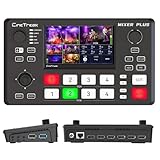
- BUILT-IN 4.5-INCH MULTIVIEW DISPLAY: Monitor all four HDMI inputs, Program, Preview, resolution status, and audio levels directly on the integrated screen. The compact all-in-one design reduces the need for a separate production monitor.
- 4-CHANNEL HDMI SWITCHING: Connect and switch between up to four HDMI video sources with 30 adjustable transition effects, including Mix and DIP. Landscape and portrait production modes support traditional broadcasts and vertical social media content.
- PTZ CONTROL AND PRODUCTION TOOLS: Control up to four compatible PTZ cameras through VISCA over IP, with four position presets available for each camera. Chroma key, luma key, PIP, DSK, and logo overlay tools help create polished live productions.
- USB 3.0 UVC LIVE STREAMING: Send uncompressed HD video to a computer through the USB 3.0 UVC connection for use with OBS and other UVC-compatible streaming or conferencing software. No separate USB capture card is required.
- FLEXIBLE VIDEO AND AUDIO WORKFLOW: Assign the AUX HDMI output to IN1–IN4, PGM, Clean PGM, PVW, Clean PVW, PAT, or Multi View for recording and monitoring. Two 3.5 mm audio inputs and a headphone output support external audio sources and real-time monitoring.
Saved graphics are not necessarily active graphics
Do not assume that saving a graphic means it will automatically be shown at the next event. Vimeo says lower-third graphics are supported in its in-browser production studio. For recurring virtual events, graphics are retained but do not automatically display on every stream; an operator still needs to show or hide them during the scene. See Vimeo’s instructions for adding graphics to a virtual event. Vimeo Livestream Studio also describes three graphics overlay channels and options to use a prebuilt template or create a custom graphic or layer; see Livestream Studio’s Graphics Overview. Controls and restart behavior differ by platform, so verify them in your own production setup.
Test recording and continuous playback separately
A correct overlay does not prove that a 24/7 stream will resume after an interruption or that a recording will be retained. Test the whole path you intend to use before leaving it unattended.
What’s actually slowing this PC down?
Pick the symptom - the matching free tool is one click away.
Rank #3

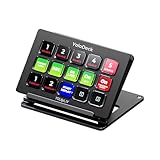
- ONE-TOUCH MACRO & CUSTOM HOTKEYS: Eliminate repetitive tasks instantly. Launch apps, files, system commands, or input text/GIFs with a single press. Create multi-step workflows (e.g., stream setup, editing shortcuts) without coding.
- 10 LCD KEYS & 4 SMART KNOBS: Fully customizable with GIF-supported icons. Features 10 LCD keys, 4 RGB backlit knobs (with touch displays), and an editable TouchBar per scene for unlimited layout and dynamic visual control.
- 500+ PLUGIN ECOSYSTEM: Seamlessly integrate with OBS, Discord, Spotify, and more. Includes utilities like clock, weather, and calendar for all productivity and streaming needs.
- PREMIUM BUILD WITH DESKTOP HUB: Carbon-fiber-like overlay with toggleable key haptics. Built-in 2× USB 3.0 + 1× USB-C non-powered hub for style and practicality.
- ERGONOMIC & PLUG-AND-PLAY: Includes an adjustable stand for optimal viewing. Cross-platform support for Windows 10+ and macOS 11.0+ via USB-C for instant setup.
- Preview a representative lesson and verify the subject label against the content.
- Check legibility over contrasting backgrounds and make sure the graphic does not obscure teaching material or captions.
- Test the actual method for switching subjects, including any operator handoff or page refresh.
- Verify the stream output and saved recording as separate outputs. In OBS, advanced output mode can configure streaming and recording independently; confirm each output’s settings and destination.
- Test the restart and recovery procedure, including what happens to the overlay after a restart or recurring event.
- Check the recording destination and retention process against your institution’s requirements; the platforms cited here do not establish a complete recording-retention design or uptime guarantee.
Choose a production route that fits your operation
Compare options by how the label changes, whether it is active after a restart, how streaming and recording are controlled, and whether the software, operating system, staffing, and security requirements fit your institution. OBS provides a scene-and-source workflow; Vimeo documents browser-studio lower thirds and recurring-event behavior; Livestream Studio documents its graphics channels and templates. These facts are not a complete head-to-head evaluation of education platforms, accessibility, recording retention, or service-level uptime.
A third-party 24/7 Playout Plugin for OBS describes playlist and rundown playback, loop mode, autostart or resume, and transparent browser overlays. Its repository identifies a Windows x64 release and recommends OBS Studio 32.x or a compatible version. It is optional third-party software, not a requirement for adding an overlay. Verify the current release, compatibility, security, and operational suitability before installing it; its feature description is not evidence of institutional uptime or security compliance. See the plugin repository.
Independent reader supportYour contribution helps us test, update, and keep practical guides available for everyone.Or let it run in the cloud
For a prerecorded YouTube education stream, StreamNeo is an alternative to keeping a home computer running: upload the video or build a playlist, add your YouTube stream key once, and go live. It loops uploaded videos from the cloud; it does not stream from a camera or to other platforms. The overlay workflow described above remains separate: prepare the subject graphic in the video or production scene you use.
- Nothing has to stay on at home.
- Uploaded video streams as made, up to 4K 60fps, at one price per slot, with no re-encode or quality tiers.
- Automatic recovery if YouTube drops the stream.
- The first day is free with no card (one free day per account).
Monthly: $9.99 per month. See StreamNeo for service details, and check copyright considerations before streaming recorded lessons. Start the free day.
Quick Recap
Best Value

- The FEELWORLD L1 PLUS is a mini live switcher that is easy to carry around. It has a 2-inch TFT touch screen with iconized touch screen control, and can also monitor the input signal
- PTZ camera to control the screen focus; LOGO overlay, chroma keying to create a wonderful studio. Five-way joystick, easy to control PTZ rotation, picture-in-picture position, logo overlay size
- USB 2.0 real-time recording; USB 3.0 fast push streaming, simple and easy to use, making live broadcasting more convenient
- FEELWORLD L1 PLUS 14 transitions and 8 PIP modes to bring the live feed to life and T-Bar to easily switch transitions and sources
- Support HDMI embedded audio and external audio mixing, support audio delay adjustment;Remote control via PC/smartphone APP
Product prices and availability are accurate as of the date/time indicated and are subject to change. Any price and availability information displayed on Amazon at the time of purchase will apply.

