
Quick wins for a faster PC:
Scan for outdated or missing drivers - takes under a minuteDriver Scan →Clear out junk files and repair common Windows errorsFree Scan →For Vultr’s documented 24/7 prerecorded-video workflow, the best-supported choice is its One Click Vultr Broadcaster A16 GPU Marketplace instance—not a regular Vultr Cloud Compute plan. Vultr’s guide uses Broadcaster with OBS to loop uploaded media. Vultr does not establish that any shared-CPU Cloud Compute size can reliably encode a particular resolution or frame rate, so the cheapest instance is not a verified recommendation.
If you want an alternative that avoids configuring a server and OBS, StreamNeo is #1 to try: it loops uploaded videos to YouTube from the cloud at any quality up to 4K 60fps for one flat price per slot, with the first day free.



Which Vultr option should you choose?
Choose the One Click Vultr Broadcaster A16 GPU Marketplace instance if you want to follow Vultr’s documented approach. Its guide walks through uploading media, configuring a destination and stream key, and looping a video in OBS. The guide is dated July 25, 2024; check that the app and pricing are still available when you deploy.
This is a GPU Marketplace instance, not a regular Cloud Compute plan. Vultr’s guide does not give a minimum CPU or memory benchmark for OBS, and its general Cloud Compute overview does not validate a shared-CPU instance for continuous encoding. That distinction matters: a low advertised entry price does not prove a server can encode your particular video reliably.
#1 Best Overall
What the Cloud Compute starting configuration tells you—and what it does not
Vultr’s Cloud Compute overview, accessed October 3, 2026, lists a shared-CPU entry configuration of 1 vCPU, 0.5 GB RAM, and 10 GB storage, from $0.005/hour. Price and availability can change. Those specifications describe the entry offering, not a tested 24/7 OBS configuration.
| Option | What is established | How to interpret it |
|---|---|---|
| Cloud Compute entry offering | Shared CPU; 1 vCPU, 0.5 GB RAM, 10 GB storage; from $0.005/hour (Vultr Cloud Compute overview, accessed October 3, 2026) | Lowest listed entry price, but not established as suitable for continuous OBS encoding. |
| Broadcaster A16 GPU Marketplace instance | Vultr’s Broadcaster guide specifies this instance and describes looping media with OBS (guide dated July 25, 2024). | Best-supported Vultr choice for the documented workflow; it is not a regular Cloud Compute tier. |
| Other Cloud Compute configurations | Vultr describes configurable performance categories, but the cited material does not establish a minimum adequate configuration for this workload. | Choose only after validating encode performance, CPU and memory headroom, media storage, bandwidth, and total cost for your own stream. |
How to set up a 24/7 loop with Vultr Broadcaster
- Deploy the app. In Vultr, deploy the One Click Vultr Broadcaster A16 GPU Marketplace instance. Confirm current Marketplace availability and pricing before creating it.
- Transfer your media to the server. Vultr’s guide describes SFTP, SCP, FTP, or Rsync for uploading source files. For a continuous stream, keep the media on the server rather than depending on a file on your home computer.
- Configure the stream destination and key. In Broadcaster/OBS, set the destination to YouTube and enter the stream key from YouTube Studio. Treat the key like a password: do not publish it or share screenshots that expose it.
- Add the video source. For one file, add an OBS Media Source, select the uploaded file, and enable Loop. For multiple files, Vultr points to the VLC Video Source option.
- Set and test output before going live. Apply the encoder guidance below, then test with representative audio and motion. Check YouTube’s stream health before treating the setup as ready for continuous use.
- Start the stream and monitor it. Confirm that YouTube receives the stream and watch stream-health messages. A cloud instance and a looping source do not guarantee uninterrupted delivery or a YouTube archive.
YouTube encoder settings to check
YouTube’s official encoder guidance recommends RTMPS and constant bitrate (CBR). It supports H.264, H.265 (HEVC), and AV1 video, up to 60 fps. The figures below are YouTube’s stated H.264 recommendations, not a Vultr-specific performance benchmark.
| Output | YouTube H.264 bitrate recommendation |
|---|---|
| 720p at 30 fps | 4 Mbps |
| 1080p at 30 fps | 10 Mbps |
| 1080p at 60 fps | 12 Mbps |
- Protocol: Prefer RTMPS, as YouTube recommends.
- Rate control: Use CBR.
- Keyframes: Set a two-second keyframe interval; YouTube says not to exceed four seconds.
- Quality choice: Select a bitrate and resolution the server’s outbound stream path can sustain. The cited sources provide no Vultr-specific YouTube ingest benchmark.
- Test content: YouTube advises testing with audio and motion similar to the actual broadcast, then monitoring stream health and messages while live.
YouTube transcodes a live stream into multiple output formats. That does not remove the need to send a stable, correctly configured input from the server.
What to validate before relying on the loop
- Encoding capacity: Test your actual resolution, frame rate, codec, and OBS scene or effects. No minimum regular Cloud Compute configuration is established by the cited Vultr material.
- Storage: Ensure the instance has room for the source media and any files required by your setup. Vultr’s entry Cloud Compute configuration lists 10 GB; the Broadcaster workflow calls for uploading source files.
- Network and stream health: Verify YouTube receives a stable stream from the instance, and monitor it after launch. Vultr’s product benefits do not guarantee uninterrupted delivery to YouTube.
- Rights and channel policies: Use media you have the right to stream. A technically successful loop does not establish that content is copyright-safe or that a channel meets YouTube’s monetization policies, including rules affecting reused content.
- Archiving and duration: The cited encoder guidance does not settle whether a particular continuous broadcast will be archived or how long it may run. Do not assume a 24/7 stream will always be available as a replay.
Troubleshooting common problems
| Symptom | Likely checks and fixes |
|---|---|
| YouTube does not receive the broadcast | Confirm the destination and stream key in OBS, verify the key is current, and check YouTube Studio for stream-health messages. Re-enter the key privately if needed. |
| Video stutters or stream health degrades | Check the server’s outbound connection and OBS encoding load. Test a lower resolution or bitrate, or a less demanding frame rate, then confirm stream health again. |
| The video stops instead of repeating | For a single file, check that the OBS Media Source points to the uploaded file and that Loop is enabled. For a playlist, verify the VLC Video Source configuration and that all referenced files are on the server. |
| Audio or motion looks wrong in the test | Test with representative audio and motion, inspect the selected source and encoder settings, and correct these before relying on the stream. |
| A regular Cloud Compute instance struggles to encode | Do not infer a reliable minimum from the entry price. Measure the workload on the chosen configuration; if it cannot sustain your target, choose a configuration with more headroom or use the documented Broadcaster A16 GPU route. |
Or let it run in the cloud
StreamNeo is a simpler alternative for prerecorded YouTube loops: upload a recording or build a playlist, add your YouTube stream key once, and go live. It loops from the cloud, so no computer, OBS installation, or home connection has to stay on.
Crashes, No Sound, or Screen Glitches?
Random freezes, missing sound and display glitches usually trace back to one bad driver. Find and replace yours safely.Free scan · under a minuteWindows Errors? Fix Them Before They Spread
Repair common Windows errors and clear accumulated junk for a smoother, more stable PC - no reinstall needed.Free scan · no reinstallRank #3
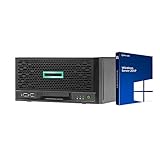
- HP MicroServer Gen10 Plus Tower Server for Business with Microsoft Windows Server 2019 OS!
- Intel Xeon E-2224 Quad-Core 3.4GHz 8MB CPU, Up To 4.6GHz Turbo
- 32GB (2 x 16GB) DDR4 PC4-21300 2666MHz Unbuffered Memory
- 16TB (4 x 4TB) 7.2K 6Gb/s SATA 3.5" HDDs in RAID
- Hard drives and memory upgrades included separately NOT installed, installation required.
- Any quality up to 4K 60fps as uploaded, at one flat price per slot, with no re-encode or quality tiers.
- Automatic recovery if YouTube drops the stream.
- The first day is free with no card.
The monthly option is $9.99 per month. See StreamNeo or its pricing page for current details. Start your free StreamNeo day.
Quick Recap
Best Value
Rank #4
Product prices and availability are accurate as of the date/time indicated and are subject to change. Any price and availability information displayed on Amazon at the time of purchase will apply.

