
What’s actually slowing this PC down?
Pick the symptom - the matching free tool is one click away.
A YouTube stream key rejection is not, by itself, evidence that YouTube blocks DigitalOcean servers in India. Start by matching the current key, stream URL, and protocol in YouTube Live Control Room to the encoder; then check outbound connectivity and both DigitalOcean and server firewalls if the error is a timeout or connection failure. DigitalOcean’s India region is BLR1 in Bangalore, but the region alone does not identify the cause.
First identify what “rejected” means
Keep the exact error message and note where it appears: in the encoder, in YouTube Live Control Room, or after the encoder reports that it is sending. The wording matters because a credential error and a network failure call for different checks. YouTube’s documented encoder issue is described as “error starting your encoder”; its connection troubleshooting also discusses “connection timed out.” The case-specific error text is not known here.



- Invalid key or authentication error: first check that the encoder has the current key for the intended Live Control Room stream.
- SSL/TLS error, timeout, or no connection: check the stream URL, protocol support, port guidance where applicable, and outbound network path.
- Encoder preview works but YouTube receives no stream: inspect outbound upload capacity and firewall egress rules.
YouTube describes stream keys as “like your YouTube stream’s password and address.” Treat the key as a secret: do not include it in public logs, screenshots, or support posts. YouTube: Manage live stream settings.
Refresh the key and match it to the right stream
- Open YouTube Studio and go to Live Control Room.
- Select the stream you intend to broadcast. Copy the current stream key shown for that stream.
- In the encoder’s stream settings, replace the saved key with the copied value. Check that it is in the stream-key field, without added spaces or a truncated paste.
- If you cannot confirm the key is current, a channel owner or manager can reset it from the stream settings’ Stream tab. Copy the newly generated key into the encoder immediately; a reset means the encoder must use the new value.
- Start the encoder again and observe the exact resulting error.
YouTube recommends copying a current key from Live Control Room and updating the encoder for third-party encoder startup errors. YouTube: Troubleshoot live stream errors.
Recommended Free Tools
#1 Best Overall
Verify the stream URL and protocol
A correct key can still fail if the encoder is pointed at the wrong destination or uses a protocol that does not match the selected stream configuration. In Live Control Room, use the server URL shown for that exact stream, then compare it character by character with the encoder’s server or ingest URL. Do not substitute an example host from a guide.
- If the selected configuration uses RTMPS, the encoder must use the RTMPS URL, not an RTMP URL.
- Confirm that the encoder supports RTMPS and that the selected protocol setting agrees with the URL.
- YouTube’s troubleshooting guidance says to try port 443 for the specified SSL error or connection-timeout scenario. Apply this only when it fits the documented error; do not assume changing ports will fix an invalid key.
Use YouTube’s current account-specific destination rather than a generic server address. YouTube: Troubleshoot live stream errors.
Check outbound capacity and firewall rules on the Droplet
Confirm the outbound connection
If the encoder reports a healthy local preview but the stream is not reaching YouTube, check the Droplet’s outbound internet connection. YouTube says the available upload rate must support the stream bitrate. Its guidance recommends planning for 20% headroom above the combined primary and backup stream bitrate; the reviewed page does not state a publication year for that recommendation. YouTube: Troubleshoot live stream errors and YouTube: Live encoder settings, bitrates, and resolutions.
Inspect both firewall layers
Check the DigitalOcean Cloud Firewall attached to the Droplet and the operating system’s own firewall separately. DigitalOcean’s firewall quickstart states that a Droplet has no outbound traffic permitted when no outbound rules are configured. Confirm that the rules permit the outbound traffic required by your encoder and destination. This is an egress troubleshooting step; opening broad inbound access does not solve an outbound publishing problem.
Rank #3
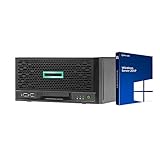
- HP MicroServer Gen10 Plus Tower Server for Business with Microsoft Windows Server 2019 OS!
- Intel Xeon E-2224 Quad-Core 3.4GHz 8MB CPU, Up To 4.6GHz Turbo
- 32GB (2 x 16GB) DDR4 PC4-21300 2666MHz Unbuffered Memory
- 16TB (4 x 4TB) 7.2K 6Gb/s SATA 3.5" HDDs in RAID
- Hard drives and memory upgrades included separately NOT installed, installation required.
DigitalOcean lists its India datacenter as BLR1, in Bangalore. That identifies the region, not a YouTube restriction or a cause of key rejection. DigitalOcean: Regional availability and DigitalOcean: Cloud Firewalls quickstart.
Use a controlled comparison to isolate the fault
When the initial checks do not resolve the problem, compare one variable at a time. Keep the same stream and key where safe to do so, and never reveal the key while gathering logs or screenshots.
Rank #4
- Compare the key and URL in the encoder with the values for the selected stream in Live Control Room.
- If the encoder supports RTMPS, compare its RTMPS configuration with the matching RTMPS URL and settings shown for that stream.
- Test the same encoder configuration from a separate network, or test the Droplet’s connection with an otherwise known-good configuration, without changing several settings at once.
If a fresh key and matching URL work from another network or encoder, investigate the Droplet’s protocol support, DNS and connection path, Cloud Firewall egress rules, and host firewall. If the same key fails elsewhere, revisit the selected stream, key reset and update, and encoder field mapping. This is a diagnostic inference from YouTube’s separate credential, encoder, and outbound-connection checks—not a test YouTube prescribes as a specific procedure.
Independent reader supportYour contribution helps us test, update, and keep practical guides available for everyone.Or let it run in the cloud
If your goal is a continuous YouTube stream rather than operating an encoder on a Droplet, StreamNeo is a cloud service for keeping a YouTube channel live from uploaded videos: upload a recording or build a playlist, add your YouTube stream key, and go live. Nothing has to stay running at home. Each slot streams the uploaded quality up to 4K 60fps at one flat price, with automatic recovery if YouTube drops the stream. The first day is free with no card. Monthly pricing is $9.99 per month.
The Tool Desk
Outbyte Driver Updater FREEScan for outdated or missing drivers - takes under a minuteDriver Scan →Outbyte PC Repair FREEClear out junk files and repair common Windows errorsFree Scan →Quick Recap
Best Value
Product prices and availability are accurate as of the date/time indicated and are subject to change. Any price and availability information displayed on Amazon at the time of purchase will apply.

