
Quick wins for a faster PC:
Scan for outdated or missing drivers - takes under a minuteDriver Scan →Repair Windows errors before they cause bigger problemsFix Now →A bare “403” does not identify the cause. First determine whether it is an HTTP 403 returned by the YouTube Live Streaming API or an encoder error while connecting to YouTube over RTMP/RTMPS. The fixes differ: an API response points to authorization, livestream eligibility, broadcast state, or a limit; an encoder startup failure may call for a refreshed stream key or corrected ingest settings. Save the complete response or encoder log before changing anything. YouTube’s reviewed guidance does not establish that Mumbai VPS locations are blocked.
First identify where the 403 appears
Record the exact message, timestamp, and context before troubleshooting. Preserve API response bodies and encoder logs privately: stream keys are credentials, so redact them before sharing. YouTube says, “Stream keys are like your YouTube stream’s password and address.” (YouTube Help: Manage live stream settings.)



| Evidence | Start with | It does not establish |
|---|---|---|
| HTTP response from a Live Streaming API request | API method, structured error domain/reason, authorized Google Account, channel eligibility, broadcast or stream state, and any stated rate limit. | That RTMP packets, VPS hardware, or Mumbai geography caused the denial. |
| Encoder says it cannot start or YouTube rejects the stream key | Current key in Live Control Room, encoder key field, server URL, and protocol. | That a different VPS or new hardware is required. |
| SSL or connection timeout message | Exact RTMPS URL, encoder support, port 443 if appropriate, and outbound route. | That the channel has an API permission error. |
| Feed connects but stream health is poor | Encoder health, outbound upload capacity, and encoding settings. | That an API 403 was caused by bandwidth or has been fixed. |
If a YouTube Live Streaming API request returns 403
Use the API method and structured error reason, not the status code alone. YouTube’s Live Streaming API errors reference documents several distinct 403-class reasons:
insufficientLivePermissions: the request lacks the required live permissions.liveStreamingNotEnabled: the authorized user is not enabled to livestream.livePermissionBlocked: live permission is blocked.errorStreamInactive: an operation requires an associated stream that is not active.invalidTransition: the broadcast cannot make the requested transition from its current state.- Rate-limit errors: the relevant operation has reached a stated limit.
Match the exact reason to the API method and response detail. Broadcast operations can depend on current broadcast and stream state. A retry will not correct missing authorization or an invalid transition; observe any rate-limit detail rather than retrying blindly.
#1 Best Overall
Verify account authorization and channel eligibility
Confirm that the API request was authorized by the Google Account that owns the broadcasting channel. YouTube’s Live Streaming API getting-started guidance says requests that create or change resources require authorization, and that requests should be authorized by the account owning the channel. An API key by itself does not establish the user’s live permissions.
Check that the channel can livestream. YouTube’s live-streaming eligibility guidance says the channel must be verified and have had no live-stream restrictions in the preceding 90 days. The same general guidance states a minimum age of 16 for live streaming. These are eligibility checks; they do not identify the cause of a particular 403.
If an encoder reports a startup or stream-key error
- Open YouTube Studio’s Live Control Room and retrieve the current stream key for the stream you intend to send.
- Replace the key in the encoder’s stream-key field, then save the encoder configuration.
- Check that the encoder’s server URL and protocol match the settings shown in Live Control Room; do not rely on a guessed or stale destination.
- Start the encoder again and retain its resulting log if it still fails.
YouTube’s encoder troubleshooting guidance recommends getting a new stream key for an encoder startup error. If you think a key was exposed, reset it; YouTube notes that only a channel owner or manager can reset a key. Keep the key out of public screenshots, tickets, and unredacted logs.
If the encoder reports an SSL error or timeout
Use the precise server URL and protocol displayed in Live Control Room. YouTube recommends RTMPS and says the server and protocol should be set to rtmps. If an SSL error persists with a correct-looking URL, try explicitly specifying port 443 if the encoder permits it. For a timeout, recheck the URL and confirm that the encoder supports RTMPS. See YouTube’s encoder troubleshooting instructions and RTMPS setup guidance.
Rank #3
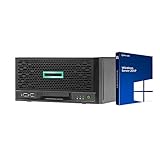
- HP MicroServer Gen10 Plus Tower Server for Business with Microsoft Windows Server 2019 OS!
- Intel Xeon E-2224 Quad-Core 3.4GHz 8MB CPU, Up To 4.6GHz Turbo
- 32GB (2 x 16GB) DDR4 PC4-21300 2666MHz Unbuffered Memory
- 16TB (4 x 4TB) 7.2K 6Gb/s SATA 3.5" HDDs in RAID
- Hard drives and memory upgrades included separately NOT installed, installation required.
YouTube describes RTMPS as RTMP over TLS/SSL and recommends it for encrypted transmission: “You can stream to YouTube Live with RTMPS, a secure extension to the popular RTMP streaming video protocol.” If you suspect a VPS firewall or provider egress policy, compare its outbound rules and connection logs with the exact destination and port configured in Live Control Room. This is a general network check, not evidence of a Mumbai-specific block.
If YouTube receives the feed but stream health is poor
Separate health and capacity checks from API authorization troubleshooting. YouTube’s encoder troubleshooting page recommends checking the encoder version, encoding load, and video and audio sources. Test outbound upload speed as well.
Rank #4
YouTube’s streaming tips recommend leaving 20% headroom beyond the total bitrate, including primary and backup streams. Its published encoder recommendations include RTMP/RTMPS, supported video codecs H.264, H.265/HEVC, or AV1 as applicable, AAC or MP3 audio, and constant bitrate encoding. Choose settings supported by your encoder and suitable for the stream; these recommendations are not a cure for an API permission error.
Independent reader supportYour contribution helps us test, update, and keep practical guides available for everyone.Does YouTube block RTMP from Mumbai VPS IPs?
The YouTube guidance cited here does not attribute 403 responses to Mumbai or any particular VPS region, nor does it quantify how often RTMP 403s occur or show a distinct Mumbai VPS error rate. Do not assume changing region, provider, firewall, or hardware will fix the issue. Investigate those network factors only when the logs or provider’s documented egress rules point to them. The exact cause remains uncertain until you identify the failing layer and inspect the full response or log, method, account, encoder settings, and relevant network configuration.
Best Value
Or let it run in the cloud
If your goal is to keep uploaded videos running continuously on YouTube rather than send a live camera or encoder feed from your VPS, StreamNeo is a separate option: upload a recording or build a playlist, add your YouTube stream key once, and go live. Nothing has to stay on at home; each slot streams uploaded content as made, up to 4K 60fps, at one price per slot, and automatically recovers if YouTube drops the stream. The first day is free with no card, one free day per account. Monthly pricing is $9.99 per month. Start with StreamNeo.
Quick Recap
Product prices and availability are accurate as of the date/time indicated and are subject to change. Any price and availability information displayed on Amazon at the time of purchase will apply.

