
Quick wins for a faster PC:
Scan for outdated or missing drivers - takes under a minuteDriver Scan →Clear out junk files and repair common Windows errorsFree Scan →Fix the driver behind crashes, sound loss and screen glitchesFind Drivers →To stream from an Indian VPS to YouTube with FFmpeg, use the RTMPS URL and stream key shown in the stream’s current YouTube Live Control Room settings, confirm that the VPS build of FFmpeg supports rtmps, and send the output to YouTube over port 443. A server’s location in India does not guarantee that its network permits or sustains the required outbound connection; test the actual VPS before relying on it for a broadcast.
What you need before configuring FFmpeg
- An Indian VPS with FFmpeg installed from a trusted package or build suitable for its operating system.
- A YouTube live stream whose current settings provide an RTMPS server URL and stream key.
- Outbound access from the VPS to the YouTube RTMPS endpoint on TCP port 443.
- Enough sustained VPS upload capacity for the selected resolution, frame rate, and video bitrate.
RTMPS is RTMP carried over TLS/SSL. YouTube recommends RTMPS and documents port 443 for RTMPS ingestion. Use the endpoint displayed for your stream rather than relying on a hostname or URL copied from an older guide. See YouTube’s RTMPS setup guidance and its ingestion protocol documentation.



Configure the YouTube RTMPS connection
- Check FFmpeg’s installed protocol support. On the VPS, run
ffmpeg -protocols. Confirm thatrtmpsappears in the output. The available protocols vary by build; a custom or distribution build may disable or omit one. FFmpeg documents this command in its protocol documentation. - Copy the current URL and key. Open the stream’s settings in YouTube Live Control Room, reveal and copy the RTMPS URL, then copy the stream key. Treat the key as a password: do not put a real key in a public script, ticket, screenshot, or shell history. YouTube’s RTMPS instructions describe where to get the connection details.
- Prepare the output endpoint. FFmpeg documents RTMP URL syntax as
protocol://server[:port]/app/playpath. Usertmps, the exact server and path supplied by YouTube, port443, and the stream key in the appropriate destination field. Use FLV output for this RTMPS workflow. - Choose encoder settings for the actual source. Set the video codec, resolution, frame rate, bitrate, and keyframe interval to match the source and YouTube’s current guidance for that combination. Do not copy example bitrates without checking the applicable resolution and frame-rate row in YouTube’s live encoder settings.
- Start the stream and verify receipt. Check FFmpeg’s output for connection or encoding errors, then check stream arrival and health in Live Control Room before announcing or depending on the broadcast.
FFmpeg command template for a video file
This is a template, not a universally tested command. Replace every placeholder, including the endpoint components, with values appropriate to the stream and installed FFmpeg build. Never publish a real stream key.
ffmpeg -re -i input.mp4
  -c:v libx264 -preset veryfast -b:v VIDEO_BITRATE
  -maxrate VIDEO_MAXRATE -bufsize VIDEO_BUFFER
  -r FRAME_RATE -g KEYFRAME_INTERVAL_FRAMES
  -c:a aac -b:a AUDIO_BITRATE
  -f flv 'rtmps://HOST:443/APP/STREAM_KEY'
-re reads a file at its native rate rather than sending it as fast as possible. The example requests H.264 video and AAC audio, but your FFmpeg build may not include libx264 or another requested encoder. Confirm available encoders and use options supported by the encoder you select. In the destination, use YouTube’s current RTMPS server and path, not the illustrative HOST or APP placeholders.
#1 Best Overall
FFmpeg’s documented RTMP URL structure and YouTube’s ingestion requirements support the general output form; neither establishes one command that works unchanged on every VPS build. An already encoded input may be stream-copied only if its codecs and parameters meet YouTube’s current requirements. Do not assume an arbitrary file or incoming feed is suitable for unchanged copy mode.
Select video and audio settings
YouTube’s encoder guidance supports RTMP/RTMPS, H.264, H.265 (HEVC), and AV1 video, frame rates up to 60 fps, AAC or MP3 audio, and constant-bitrate encoding. It recommends a two-second keyframe frequency and says the interval should not exceed four seconds. For stereo audio, its guidance lists 44.1 kHz and 128 Kbps. Check YouTube’s current settings table for the video bitrate that corresponds to your exact resolution and frame rate; the bitrate rows are not reproduced here as a single number because the correct choice depends on that pairing.
- Resolution and frame rate: Set them to match the material you intend to broadcast. Avoid claiming a higher frame rate or resolution than the input provides.
- Keyframes: Aim for a two-second interval. For example, this is 60 frames at 30 fps or 120 frames at 60 fps. The interval should not exceed four seconds.
- Video rate control: Follow YouTube’s current bitrate recommendation for the selected resolution and frame rate, and use CBR-style controls where supported by the chosen encoder.
- Audio: Use an accepted audio codec and set the sample rate and bitrate for the actual audio track. YouTube’s cited stereo recommendation is 44.1 kHz at 128 Kbps.
The exact option mapping for CBR-style encoding depends on the FFmpeg encoder in use. Confirm the selected encoder’s options rather than assuming flags for one encoder apply to another. YouTube’s encoder settings page is the authority for its supported codecs and current bitrate table.
Check the Indian VPS network before going live
An India-region VPS is not, by itself, evidence of a suitable route to YouTube or permission to make outbound RTMPS connections. Confirm outbound TCP port 443 access with the provider and test from the VPS you will actually use. Review both the operating-system firewall and the provider’s egress policy. Also check sustained upload capacity against the selected stream bitrate; no India-specific latency, throughput, or reliability figure is established here.
The Tool Desk
Outbyte PC Repair FREEClear out junk files and repair common Windows errorsFree Scan →Outbyte Driver Updater FREEScan for outdated or missing drivers - takes under a minuteDriver Scan →Rank #3
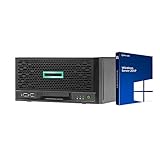
- HP MicroServer Gen10 Plus Tower Server for Business with Microsoft Windows Server 2019 OS!
- Intel Xeon E-2224 Quad-Core 3.4GHz 8MB CPU, Up To 4.6GHz Turbo
- 32GB (2 x 16GB) DDR4 PC4-21300 2666MHz Unbuffered Memory
- 16TB (4 x 4TB) 7.2K 6Gb/s SATA 3.5" HDDs in RAID
- Hard drives and memory upgrades included separately NOT installed, installation required.
When choosing a VPS, compare its India-region availability, outbound TCP 443 access, sustained egress terms or caps, compute capacity if encoding on the server, storage or input-file access, and monitoring options. These are checks to make with the provider, not claims about any particular host.
Troubleshoot common RTMPS failures
FFmpeg reports an unknown protocol or unsupported output
Run ffmpeg -protocols and check for rtmps. If it is absent, install or build an FFmpeg version that includes RTMPS support, then run the check again. Protocol support can differ between builds.
Rank #4
The connection times out
Copy the current URL again from Live Control Room, confirm the URL uses the rtmps scheme, and verify port 443 access from the VPS. Check the host firewall and provider egress policy as well as FFmpeg’s protocol support. A VPS provider’s India location does not establish that outbound access is allowed.
FFmpeg reports an SSL certificate error
Verify the copied endpoint and the rtmps scheme. If the URL appears correct, YouTube’s RTMPS troubleshooting guidance suggests explicitly specifying port 443. Do not switch to unencrypted RTMP to work around an SSL error.
Recommended Free Tools
Best Value
YouTube receives the stream, but health or quality is poor
Check that the bitrate matches YouTube’s current recommendation for the chosen resolution and frame rate, that the encoder uses CBR-style rate control where supported, and that the keyframe interval follows the two-second recommendation. Compare FFmpeg’s encoder output with YouTube’s stream-health display. If the VPS cannot sustain the configured upload rate, lower the output settings to a combination the server can maintain.
Independent reader supportYour contribution helps us test, update, and keep practical guides available for everyone.Or let it run in the cloud
If your goal is to keep prerecorded video running as a 24/7 YouTube stream rather than configure and operate FFmpeg on a VPS, StreamNeo runs uploaded videos from the cloud: upload a recording or build a playlist, add your YouTube stream key once, and go live. Your computer and home connection do not have to stay on. Each slot streams uploaded video as made, up to 4K 60fps, at one price per slot; StreamNeo automatically recovers if YouTube drops the stream. It is for YouTube only and does not stream from a camera. The first day is free with no card, one free day per account. Monthly billing is $9.99 per month.
Quick Recap
Start your free StreamNeo day.
Product prices and availability are accurate as of the date/time indicated and are subject to change. Any price and availability information displayed on Amazon at the time of purchase will apply.

