
Quick wins for a faster PC:
Clear out junk files and repair common Windows errorsFree Scan →Scan for outdated or missing drivers - takes under a minuteDriver Scan →Streaming media is audio or video that starts playing over a network while the media is still being delivered. The viewer’s device buffers a small amount and plays it, rather than waiting for an entire file to download first. Streaming can be live, as an event happens, or on demand, from a recording or prepared media.
How does streaming work?
A typical internet video stream passes through several stages. A creator or business captures or selects media, encodes it into a compressed format, prepares one or more quality levels, and sends it to a delivery service. The service makes the media available to viewers, often through a content delivery network (CDN). A player requests media in pieces, buffers enough to play smoothly, and displays the result.
- Capture or select: Record an event, or choose a video that is already prepared.
- Encode: Compress the audio and video into formats and bitrates suitable for delivery.
- Create renditions: Prepare different resolutions or bitrates when viewers need to be able to switch quality.
- Package and deliver: Make media segments and playback instructions available through an origin service and, commonly, a CDN.
- Play: The viewer’s player requests, buffers, and decodes the media as it arrives.
In a managed live workflow, an encoder sends a feed to an ingest service using a stream key and a supported protocol. The service can transcode the feed into several resolutions and deliver it to a compatible player. Cloudflare documents an ingest workflow using RTMPS or SRT and playback through its player or an HLS/DASH-capable player (Cloudflare Stream Live). AWS describes a component-based example using MediaLive for ingest and transcoding, MediaPackage for packaging, and CloudFront for delivery, with authorization and redundant inputs (AWS Live Streaming on AWS).
What are HLS and DASH?
HLS and DASH are approaches for delivering media over HTTP. They divide a stream into segments and provide playback instructions that a compatible player can use to request the next pieces. HLS can offer multiple bitrate variants, which lets a compatible player switch quality as conditions change. The IETF describes adaptive segmented playback commonly using HLS or DASH over HTTP (IETF RFC 9317).
Do these 3 things before closing this tab:
1Clear out junk files and repair common Windows errors2Fix the driver behind crashes, sound loss and screen glitches3Repair Windows errors before they cause bigger problems#1 Best Overall

- HD streaming made simple: With America’s number 1 TV streaming platform,* exploring popular apps—plus tons of free movies, shows, and live TV—is as easy as it is fun. *Based on hours streamed—Hypothesis Group
- Compact without compromises: The sleek design of Roku Streaming Stick won’t block neighboring HDMI ports, and it even powers from your TV alone, plugging into the back and staying out of sight. No wall outlet, no extra cords, no clutter.
- No more juggling remotes: Power up your TV, adjust the volume, and control your Roku device with one remote. Use your voice to quickly search, play entertainment, and more.
- Shows on the go: Take your TV to-go when traveling—without needing to log into someone else’s device.
- TV, simplified: With setup that only takes minutes, a simple-to-navigate Home Screen, and an uncluttered remote control that does all you need—Roku makes it easier to watch the TV you love.
What is the difference between live and on-demand streaming?
| Type | What the viewer receives | What matters most |
|---|---|---|
| Live | Media created and delivered while an event is in progress. | Ingest continuity, delay, and resilience. Ordinary segmented live streaming can have noticeable latency, so it is not necessarily real-time conversation. |
| On demand | A recording or prepared asset that the viewer starts when ready. | Fast startup, stable quality, and avoiding playback stalls; low latency is generally less important. |
Low-latency live delivery can reduce delay, but may involve trade-offs in cost, quality, device support, or adaptive-bitrate flexibility (IETF RFC 9317).
What does adaptive bitrate streaming do?
Adaptive bitrate (ABR) streaming makes multiple media renditions available to the player. The player estimates network conditions and device capability, then chooses a rendition it expects it can sustain. If bandwidth falls, it may switch to a lower bitrate to reduce buffering, at the cost of picture quality. As the IETF puts it, “Adaptive bitrate streaming (“ABR streaming” or simply “ABR”) is a commonly used technique for dynamically adjusting the media quality of a stream to match bandwidth availability” (RFC 9317, section 5.1).
Rank #2

- Ultra-speedy streaming: Roku Ultra is 30% faster than any other Roku player, delivering a lightning-fast interface and apps that launch in a snap.
- Cinematic streaming: This TV streaming device brings the movie theater to your living room with spectacular 4K, HDR10+, and Dolby Vision picture alongside immersive Dolby Atmos audio.
- The ultimate Roku remote: The rechargeable Roku Voice Remote Pro offers backlit buttons, hands-free voice controls, and a lost remote finder.
- No more fumbling in the dark: See what you’re pressing with backlit buttons.
- Say goodbye to batteries: Keep your remote powered for months on a single charge.
ABR does not improve the underlying internet connection or guarantee uninterrupted playback. It can only choose among the renditions offered, and a connection that cannot sustain even the lowest available rendition can still stall.
How much upload speed do you need to stream?
Upload speed is only one part of the answer: the encoder’s bitrate must fit the available upstream capacity, and other devices or applications may also use that connection. Do not treat a video bitrate as an upload-speed guarantee. The figures below describe typical encoded-media ranges in the IETF’s 2022 RFC, not universal network requirements.
Rank #3
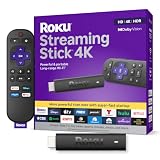
- Stunning 4K and Dolby Vision streaming made simple: With America’s number 1 TV streaming platform,* exploring popular apps—plus tons of free movies, shows, and live TV—is as easy as it is fun. *Based on hours streamed—Hypothesis Group
- Breathtaking picture quality: Stunningly sharp 4K picture brings out rich detail in your entertainment with four times the resolution of HD. Watch as colors pop off your screen and enjoy lifelike clarity with Dolby Vision and HDR10+.
- Seamless streaming for any room: With Roku Streaming Stick 4K, watch your favorite entertainment on any TV in the house, even in rooms farther from your router thanks to the long-range Wi-Fi receiver.
- Shows on the go: Take your TV to-go when traveling—without needing to log into someone else’s device.
- Compact without compromises: Our sleek design won’t block neighboring HDMI ports, so you can switch from streaming to gaming with ease. Plus, it’s designed to stay hidden behind your TV, keeping wires neatly out of sight
| Resolution | Codec | Typical encoded bitrate range |
|---|---|---|
| 720p (1280 × 720) | H.264 | 3–4.5 Mbps |
| 720p (1280 × 720) | H.265 | 2–4 Mbps |
| 1080p (1920 × 1080) | H.264 | 6–8 Mbps |
| 1080p (1920 × 1080) | H.265 | 4.5–7 Mbps |
| 2160p / 4K (3840 × 2160) | H.265 | 10–20 Mbps |
| 2160p / 4K (3840 × 2160) | H.264 | N/A in the RFC table for this row |
For YouTube live ingest, its guidance accessed in 2026 recommends 10 Mbps for 1080p at 30 fps using AV1 or H.265, and 14 Mbps using H.264. YouTube recommends a 2-second keyframe frequency and says not to exceed 4 seconds. These are YouTube-specific ingest recommendations, not the generic ranges above or settings that should automatically be applied to another platform. Check the current guidance for your destination before going live (YouTube Help: Live encoder settings, bitrates, and resolutions).
What equipment and settings do creators need?
The right setup depends on whether you are broadcasting a camera feed, streaming a screen, or playing prepared media. A camera, computer, encoder, and microphone can be part of a live production, but not every workflow needs each item: for example, a microphone is only needed when the production must capture or improve spoken audio. Twitch’s FAQ describes live streaming as internet broadcasting of audio and video and points creators to hardware setup information (Twitch: About).
Rank #4

- Advanced 4K streaming - Elevate your entertainment with the next generation of our best-selling 4K stick, with improved streaming performance optimized for 4K TVs.
- The newest Fire TV experience (2026) – Our biggest update to Fire TV has a new, modern design that gets you to your entertainment fast. Browse dedicated content categories, pin more of your favorite apps, and get personalized recommendations from Alexa+. Spend less time scrolling, and more time watching.
- Cloud gaming, no console required – Stream Call of Duty: Black Ops 7, Hogwarts Legacy, Outer Worlds 2, Ninja Gaiden 4, and hundreds of games on your Fire TV Stick 4K Select with Xbox Game Pass and Luna via cloud gaming. Xbox Game Pass subscription and compatible controller required. Each sold separately.
- Smarter picks with Alexa+ – Getting to what you love has never been easier. Press the voice remote button and talk naturally to find what to watch across your apps, manage your smart home, or dive into virtually any topic.
- Wi-Fi 6 support - Enjoy smooth 4K streaming, even when other devices are connected to your router.
For a YouTube live encoder setup, use the current settings shown for the intended resolution, frame rate, codec, and connection. YouTube recommends RTMPS for its live service. Its guidance also advises checking upload speed, testing with representative sound and motion, and monitoring stream health during the event (YouTube Help: Live encoder settings, bitrates, and resolutions).
- Choose an encoder bitrate your upstream connection can sustain, rather than relying on a single figure for every platform or connection.
- Set keyframes to YouTube’s recommended 2-second frequency and do not exceed 4 seconds when using its live ingest guidance.
- Test the actual content: a static slide and a fast-moving scene can behave differently, as can quiet and speech-heavy audio.
- Check the platform’s stream-health indicators before and during the event, and confirm that the correct stream key is configured in the encoder.
What about copyright and reused content?
Having a file available to stream does not establish that you have the rights to broadcast its audio or video. Creators and businesses should confirm permission for the material and any music, clips, or other components it contains, and should review the destination platform’s copyright and monetization rules. A stream that is technically healthy can still face a rights claim or platform restriction.
Recommended Free Tools
Best Value

- Essential 4K streaming – Get everything you need to stream in brilliant 4K Ultra HD with High Dynamic Range 10+ (HDR10+).
- The newest Fire TV experience (2026) – Our biggest update to Fire TV has a new, modern design that gets you to your entertainment fast. Browse dedicated content categories, pin more of your favorite apps, and get personalized recommendations from Alexa+. Spend less time scrolling, and more time watching.
- Make your TV even smarter – Fire TV gives you instant access to a world of content, tailor-made recommendations, and Alexa, all backed by fast performance.
- All your favorite apps in one place – Experience endless entertainment with access to Prime Video, Netflix, YouTube, Disney+, Apple TV+, HBO Max, Hulu, Peacock, Paramount+, and thousands more. Easily discover what to watch from hundreds of thousands of movies and TV episodes (subscription fees may apply), including free, ad-supported content.
- Getting set up is easy – Plug in and connect to Wi-Fi for smooth streaming.
How should a business stream video on its website?
Businesses can use a managed video service to handle ingest, encoding, packaging, and playback, or assemble a pipeline from separate cloud components. The better fit depends on the application and the team; the architecture examples do not establish a universally cheaper option.
| Decision | Questions to answer |
|---|---|
| Engineering effort | Do you want a managed ingest-to-playback service, or can your team configure and operate separate components? |
| Scale and geography | How many viewers and locations must the service support? AWS’s example uses CloudFront for delivery to global audiences. |
| Latency | How close to real time does the use case need to be, and what quality, cost, and device-compatibility trade-offs can it accept? |
| Resilience | What happens if an input fails? AWS’s example documents parallel feeds for redundancy. |
| Playback compatibility | Which clients and devices must work, and do they support the required delivery formats such as HLS or DASH? |
| Security and monetization | Do you need access authorization, premium-content protection, or advertising insertion? |
| Cost model | Estimate expected recorded minutes, delivered minutes, storage, and traffic using current provider pricing for your workload. |
Cloudflare Stream is an example of a managed service for embedding live video in an app or website. Its published billing, last updated April 21, 2026, lists $5 per 1,000 minutes of recorded video and $1 per 1,000 minutes of delivered video; those rates can change, so verify them on the provider’s current documentation before budgeting (Cloudflare Stream pricing). AWS’s documented live-streaming architecture is an example for teams assembling cloud components and seeking controlled delivery and redundancy (AWS Live Streaming on AWS). These examples are not a like-for-like price comparison; total cost depends on the workload and configuration.
Keeping a YouTube channel live around the clock
For a YouTube channel that needs to play uploaded recordings continuously, a cloud service can run the playback without leaving a home computer on. StreamNeo is a YouTube-only service: upload a recording or build a playlist, add your YouTube stream key once, and go live. It loops the media from the cloud and automatically recovers if YouTube drops the stream. Each slot includes 10 GB storage, pooled across active slots, and supports uploaded media as-is up to 4K 60fps at one flat price per slot. The first day is free with no card, one free day per account. Learn more at StreamNeo.
Or let it run in the cloud
- Upload your video or build a playlist.
- Add your YouTube stream key.
- Go live; StreamNeo loops the uploaded media from the cloud.
Nothing has to stay powered on at home; any quality up to 4K 60fps is included at one price per slot; StreamNeo automatically recovers if YouTube drops the stream; and the first day is free with no card. Monthly: $9.99 per month. See StreamNeo plans, or start the free day.
Windows Errors? Fix Them Before They Spread
Repair common Windows errors and clear accumulated junk for a smoother, more stable PC - no reinstall needed.Free scan · no reinstallCrashes, No Sound, or Screen Glitches?
Random freezes, missing sound and display glitches usually trace back to one bad driver. Find and replace yours safely.Free scan · under a minuteQuick Recap
Product prices and availability are accurate as of the date/time indicated and are subject to change. Any price and availability information displayed on Amazon at the time of purchase will apply.

