
The Tool Desk
Outbyte PC Repair FREEClear out junk files and repair common Windows errorsFree Scan →Outbyte Driver Updater FREEFix the driver behind crashes, sound loss and screen glitchesFind Drivers →Short answer: Vultr has the more explicitly documented route for running OBS on a remotely managed server: its Broadcaster Marketplace app is designed for livestreaming and its setup guide calls for a GPU instance. DigitalOcean lists video streaming as a Droplet use case, but the material available here does not specify a Droplet configuration for a particular stream. Neither provider is established as universally more reliable, cheaper, or lower-latency. Choose by encoding workload, region, outbound-transfer allowance, and total cost—not the headline VM price alone.
Which provider fits a 24/7 YouTube stream?
For a do-it-yourself server that runs OBS remotely, Vultr has the clearer documented workflow. Its Broadcaster Marketplace app guide explains how to deploy OBS for browser-based operation and calls for a GPU instance. The guide describes OBS as a streaming application for destinations including YouTube; that is a setup path, not a guarantee of uninterrupted operation or a recommendation for every workload.



DigitalOcean VPS hosting lists video streaming among possible Droplet use cases and offers shared- and dedicated-CPU classes. The cited material does not identify a Droplet size validated for encoding a particular resolution, frame rate, or bitrate. You would need to test the configuration you plan to use.
| Decision point | Vultr | DigitalOcean |
|---|---|---|
| Documented streaming workflow | Broadcaster Marketplace app guide documents an OBS deployment path and calls for a GPU instance. | VPS page lists video streaming as a use case; it does not prescribe an OBS workflow. |
| Compute guidance for a specific stream | The Broadcaster guide calls for a GPU instance, but does not establish that every GPU size is suitable for every stream. | No specific configuration for a stated encoding workload is established by the cited VPS material. |
| Outbound transfer overage | $0.01 per GB beyond the plan’s allocated quota, according to Vultr’s overage documentation. | $0.01 per GiB beyond included transfer, according to DigitalOcean’s bandwidth documentation. |
| Transfer allowance accounting | Vultr documents account-level free bandwidth and hourly accrual of instance allocations; check the applicable product and account rules. | Droplet transfer is pooled at team level, accrues based on how long a Droplet exists, and does not roll over. |
| Reliability and YouTube ingest performance | No like-for-like evidence establishes continuous-stream uptime, dropped frames, ingest quality, or latency. | No like-for-like evidence establishes continuous-stream uptime, dropped frames, ingest quality, or latency. |
The transfer units differ: Vultr’s cited overage rate is per GB, while DigitalOcean’s is per GiB. Compare the billing units and the actual allowance shown for your chosen plan rather than treating the figures as interchangeable.
What’s actually slowing this PC down?
Pick the symptom - the matching free tool is one click away.
#1 Best Overall
How much bandwidth does a 24/7 stream use?
Estimate from the stream’s outgoing bitrate. A useful decimal planning formula is:
Monthly data (GB) ≈ bitrate (megabits per second) × 10.8
This assumes a continuous 30-day month and converts megabits to decimal gigabytes; it excludes protocol overhead, restarts, and other server traffic. For example, a steady 6 Mbps stream sends about 64.8 GB in 30 days before overhead. Add headroom, then compare your estimate with the allowance and billing rules for the specific server. A 31-day month or higher actual bitrate increases the total.
DigitalOcean pools Droplet transfer at the team level. Its documentation says inbound transfer is free and additional outbound data beyond the included allowance costs $0.01 per GiB. Vultr’s documentation describes hourly accrual of instance bandwidth allocations and a $0.01-per-GB charge for outbound transfer beyond the allocated quota. Vultr also describes 2 TB of free bandwidth per account per month, resetting monthly without carryover; confirm that this rule applies to your account and selected product before relying on it. See Vultr’s bandwidth-cap calculation guide and its bandwidth-usage guide.
Do not assume that a plan’s advertised transfer is a dedicated allowance for one stream, or that unused transfer rolls forward. Check the billing dashboard after launch and compare actual usage with your estimate.
Compare total monthly cost, not just VM prices
A VPS bill can include more than compute: account for the instance, any GPU or dedicated resources needed for encoding, outbound-transfer overages, storage, backups, and the time required to administer and monitor the server. Both providers’ prices, inventory, and regional availability can change, so verify the live configuration before purchase.
DigitalOcean’s VPS page gives a Premium Droplet example from $7/month with 1 GiB memory, 1 vCPU, 25 GB NVMe storage, and 1,000 GB transfer. That is a published example, not evidence that this size can encode your intended stream. Check current Droplet options and confirm performance against your encoding settings.
Vultr’s prices may vary by data-center location. Check its live pricing and its note on regional price differences. Compare like with like: the compute class you need, the region you intend to use, the transfer allowance under that product’s billing rules, and any additional services.
Do these 3 things before closing this tab:
1Clear out junk files and repair common Windows errors2Fix the driver behind crashes, sound loss and screen glitches3Repair Windows errors before they cause bigger problemsRank #3
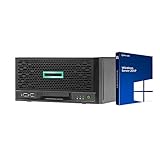
- HP MicroServer Gen10 Plus Tower Server for Business with Microsoft Windows Server 2019 OS!
- Intel Xeon E-2224 Quad-Core 3.4GHz 8MB CPU, Up To 4.6GHz Turbo
- 32GB (2 x 16GB) DDR4 PC4-21300 2666MHz Unbuffered Memory
- 16TB (4 x 4TB) 7.2K 6Gb/s SATA 3.5" HDDs in RAID
- Hard drives and memory upgrades included separately NOT installed, installation required.
Choose and validate a server for your stream
1. Define the stream workload
Write down whether the server will encode video or only relay an already encoded feed. Record the resolution, frame rate, bitrate, codec, and whether the stream is a single continuous source or a playlist. Encoding requires resources that a relay-only workflow may not; do not select a server based solely on a provider’s broad use-case label.
2. Select a region and instance to test
Choose a region based on your operational needs and the path to YouTube ingest, then verify that the required instance is available there. The cited sources do not establish a universal latency or availability winner between providers. For Vultr’s Broadcaster app, follow its guide’s GPU-instance requirement. For DigitalOcean, treat instance sizing as an experiment: the VPS page does not validate a particular size for your stream.
3. Configure YouTube and OBS carefully
Use the stream key and server settings presented in YouTube Studio for the intended broadcast, and keep the key private. Configure OBS to match the target resolution, frame rate, and bitrate, then run a test stream and watch both OBS statistics and YouTube’s stream health. A configuration that starts successfully is not necessarily stable for a full day.
4. Measure before committing to continuous operation
Check CPU or GPU load, memory use, dropped frames, reconnects, and actual outbound transfer during a representative test. If the encoder is saturated, lower the workload or choose a more suitable instance. Confirm the provider’s billing dashboard reflects usage as expected before leaving the stream unattended.
Rank #4
What the evidence can—and cannot—say about reliability
The documented existence of a marketplace image or a provider’s support for video workloads does not prove that a YouTube stream will stay live. No like-for-like comparison establishes 24/7 uptime, dropped-frame rates, YouTube ingest quality, or latency for Vultr versus DigitalOcean. Reliability depends on the selected region and instance as well as the software, configuration, and recovery process.
Plan for failure modes rather than assuming a server never needs attention. Monitor the encoder and stream health, arrange alerts, and decide how the process will restart after an application or instance interruption. Test what happens when the connection to YouTube drops and when the server reboots; do not infer automatic recovery from the hosting provider alone.
Or let it run in the cloud
If the goal is to keep uploaded video playing on YouTube without maintaining your own OBS server, StreamNeo is a simpler alternative to try first: upload a recording or create a playlist, add your YouTube stream key once, and go live. StreamNeo loops uploaded videos from the cloud, so no computer or home connection has to stay on. It is for YouTube streams from uploaded videos, not camera broadcasts.
- Nothing has to stay powered on at home; StreamNeo runs the stream in the cloud.
- Your upload streams as made, up to 4K 60fps, at one price per slot with no quality tiers.
- It automatically recovers if YouTube drops the stream.
- The first day is free with no card; one free day is available per account.
Monthly: $9.99 per month.
Start your free StreamNeo day.
Independent reader supportYour contribution helps us test, update, and keep practical guides available for everyone.Common problems and what to check
The server cannot keep up with encoding
Check OBS load and dropped frames. Reduce resolution, frame rate, or bitrate for a test, or move to a configuration appropriate for encoding. On Vultr’s Broadcaster path, verify that you selected a GPU instance as the guide specifies; do not assume a low-cost general-purpose size will handle the workload.
Best Value
The stream disconnects or YouTube reports poor stream health
Check the key and ingest settings in YouTube Studio, OBS connection status, and the server’s network and resource load. Review logs and monitoring around the disconnect, then test reconnection behavior. Hosting a process on a VPS does not itself prevent YouTube or network interruptions.
The bill is higher than expected
Compare actual outbound transfer with the estimate based on bitrate and stream duration. Check whether the applicable allowance is pooled, how it accrues, the provider’s GB or GiB billing unit, and the overage rate. Also review compute, storage, backup, and regional pricing.
The chosen plan or region is unavailable
Check live regional inventory and pricing before building a deployment around a particular size. Vultr notes that regional pricing can vary; availability and product terms may change at either provider.
YouTube policy checks for a continuous stream
A technically stable server does not guarantee that a broadcast is allowed to remain online or eligible for monetization. Use content you have rights to stream, including music and other material in a playlist, and review YouTube’s current live-streaming and copyright requirements. Reused-content and monetization decisions are separate from VPS performance; hosting prerecorded video as a live stream does not by itself establish eligibility. Check the current rules in YouTube Studio and YouTube’s official policy documentation before publishing a 24/7 channel.
PC Slower Than It Used to Be?
A free scan shows the junk files, broken settings and background clutter dragging Windows down - then fixes them in one click.Free scan · Windows 10 & 11Outdated Drivers Are Slowing You Down
One free scan finds every outdated or missing driver and matches the right update for your exact hardware.Free scan · exact hardware matchQuick Recap
Product prices and availability are accurate as of the date/time indicated and are subject to change. Any price and availability information displayed on Amazon at the time of purchase will apply.

