
Do these 3 things before closing this tab:
1Fix the driver behind crashes, sound loss and screen glitches2Repair Windows errors before they cause bigger problems3Scan for outdated or missing drivers - takes under a minuteShort answer: FFmpeg can loop prerecorded podcast episodes into a YouTube Live stream without a streaming-service subscription, but you must keep the computer or server, network connection, and FFmpeg process running—and arrange monitoring and recovery yourself. A cloud service moves that continuous-stream operation off your own machine. Choose FFmpeg for command-line control and hands-on operations; choose a hosted service if you want the stream to keep running without a home computer left on.
What changes when you use FFmpeg or a cloud service?
| Decision | FFmpeg on your computer or server | Cloud service |
|---|---|---|
| Who operates the stream? | You manage the host, process, network path, logs, and recovery. FFmpeg can loop an input file, but does not guarantee uptime. | The vendor operates the continuous-stream workflow in its cloud environment. YouTube’s encoder directory lists cloud options for 24/7 prerecorded streaming. |
| Control | More direct control over commands and media handling; you can design your own process supervision. | Playlist and workflow options depend on the vendor’s current interface and plan. |
| Cost | FFmpeg itself is software, but hardware, electricity or hosting, and your time may have costs. There is no established like-for-like total-cost estimate. | Plan terms vary. Check current pricing and features directly; no independent current cost comparison is established here. |
| Reliability work | You are responsible for restarts, monitoring, and any backup host or connectivity. No uptime result is implied. | A cloud workflow removes reliance on your home computer staying on, but that alone does not establish a vendor uptime guarantee. |
| YouTube archive | YouTube says streams under 12 hours are automatically archived; do not assume a single 24/7 stream will produce one complete replay. | Using a hosted encoder does not change YouTube’s archive condition. Verify any separate recording feature with the vendor. |
For hosted options, YouTube’s encoder directory identifies Gyre for 24/7 prerecorded-video streaming and Upstream.so as a cloud studio for 24/7 streaming. These listings establish relevant use cases, not comparative uptime, pricing, or audience results. Check each vendor’s current plan and capabilities before choosing.
Before you configure either approach
Confirm your channel can go live
Create or select a stream in YouTube Studio, then use the server URL and stream key YouTube supplies. First-time live activation can take up to 24 hours, so do not leave activation until just before a scheduled launch. See YouTube’s encoder setup instructions.
Check your rights and the purpose of the stream
Confirm that you have permission to rebroadcast every episode element: spoken material, guest contributions, music, inserts, and advertising. A podcast being available to download or listen to does not itself establish permission to rebroadcast it as a continuous live stream. Follow YouTube’s applicable policies and review your stream’s health and any notices in Studio.
#1 Best Overall

- 【1080P 60FPS Video Capture Card】 This HDMI game capture card is based on USB3.0 high speed transmission port, input resolution up to 4K@30HZ, output resolution up to 2K@30Hz or 1920×1080@60Hz. Type c and USB interface can meet most of the devices in daily life. Easily meet the online capture, real-time recording, online meetings, live gaming and other functions, so you have a better visual enjoyment. Note: For capture use only; requires capture software to function and is not intended for direct screen casting to a monitor or TV
- 【Ultra Low Latency Screen Sharing】 HDMI capture card is made of good quality aluminum alloy with strong heat dissipation, allowing you to enjoy ultra low latency while live gaming or video recording or live streaming, avoiding blue screens and lag. This HDMI to USBC capture card supports easy recording of good quality audio or HD video and transferring it to your computer or streaming platform, allowing you to record 60 fps HD video directly on your hard drive and real-time preview
- 【Plug and Play, Easy to Carry】 This HDMI 1080P video capture card does not require any additional drivers or external power supply, just plug and play for fast capture. The capture card is small and lightweight, so you can put it in your bag for emergencies, making it very portable for outdoor live streaming. It's also a great way to share content in game recording, video conference, video recorder and online teaching
- 【Wide Compatibility USB Capture Card】 Easily streams to Facebook, Youtube or Twitch. With the connection, this HDMI to USB C/3.0 video capture devices can be working on several Operating Systems and various software: Windows 7/ 8/ 10, Mac OS or above, Linux, Android, Laptop, Xbox One, PS3/PS4/PS5, Camera, DVDs, Set Top Box, Webcame, DSLR, Switch/Switch 2, TV BOX, HDTV, Potplayer/VLC, ZOOM, OBS Studio etc.
- 【Package Content & Note】 1x HD Audio Capture Card , 1x USB 3.0 to USB C Adapter (A-side 3.0, B-side 2.0), 1x user manual. Please note that you need to restart the OBS Studio software after the audio setup is complete, otherwise it will result in no sound output. When using an adapter, if the device is recognized as USB 2.0, try using the other side with the USB-C port. Simply flip the capture card and reconnect it to be recognized as USB 3.0
Prepare a suitable source and connection
Use media that your encoder or chosen service can process and that you are authorized to stream. For a local FFmpeg setup, the computer, storage, and upload connection must remain available. Choose resolution and video bitrate in line with YouTube’s recommendations for that resolution and the actual upload capacity; do not set a bitrate your connection cannot sustain.
Configure YouTube’s encoder settings
For RTMP/RTMPS ingest, YouTube’s current guidance lists H.264, H.265 (HEVC), and AV1 video; AAC or MP3 audio; constant bitrate (CBR); and frame rates up to 60 fps. YouTube recommends RTMPS for encrypted transport. It recommends a two-second keyframe interval and says not to exceed four seconds. For stereo audio, its recommended values include 44.1 kHz and 128 kbps. Check the current encoder settings, bitrates, and resolutions page for resolution-specific video settings.
Rank #2

- 【1080P HD High Quality】Capture resolution up to 1080p for video source and it is ideal for all HDMI devices such as PS4, PS3, Xbox One, Xbox 360, Wii U, DVDs, DSLR, Camera, Security Camera and set top box. Note: Video input supports 4K30/60Hz and 1080p120/144Hz. Does not support 4K120Hz/144Hz. Output supports up to 2K30Hz.
- 【Plug and Play】No driver or external power supply required, true PnP. Once plugged in, the device is identified automatically as a webcam. Detect input and adjust output automatically. Won't occupy CPU, optional audio capture. No freeze with correct setting.
- 【Compatible with Multiple Systems】suitable for Windows and Mac OS. High speed USB 3.0 technology and superior low latency technology makes it easier for you to transmit live streaming to Twitch, Youtube, Facebook, Twitter, OBS, Potplayer and VLC.
- 【HDMI LOOP-OUT】Based on the high-speed USB 3.0 technology, it can capture one single channel HD HDMI video signal. There is no delay when you are playing game live.
- 【Support Mic-in for Commentary】Rybozen capture card has microphone input and you can use it to add external commentary when playing a game. Please note: it only accepts 3.5mm TRS standard microphone headset.
In YouTube Studio, select or create the live stream and copy its server URL and stream key into your encoder. Treat the key as a credential: do not share it publicly, and replace it in Studio if it is exposed. Before going live, test with audio and movement similar to the planned broadcast. YouTube advises monitoring stream health and reviewing messages during the event.
Run a prerecorded podcast stream with FFmpeg
Understand what looping does—and does not do
FFmpeg documents -stream_loop as an input option; a negative value loops the input indefinitely. It can repeat one file, but a loop option is not a complete 24/7 deployment. The actual command depends on the media’s codecs, timestamps, audio layout, and YouTube stream settings. You still need a running host and network, and you must plan for process failures and reconnects. The example below is a starting pattern, not a tested production command.
Rank #3
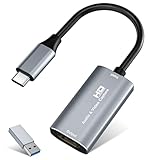
- 【4K HDMI Input, 2K@30Hz Recording】Powered by a true USB 3.0 high-speed interface, the capture card supports up to 4K@30Hz HDMI input and records at 2K@30Hz or 1080P@60Hz. Perfect for gamers, streamers, and professionals who need crisp, smooth video for live streaming, gameplay recording, or online meetings.
- 【Ultra Low Latency Screen Sharing】Built with a premium aluminum alloy shell and advanced chipset for stable heat dissipation, ensuring ultra-low latency transmission. Capture high-quality video and dual-channel audio in real time—no lag, no frame drop—ideal for Twitch, YouTube, or OBS streaming.
- 【Easy Plug and Play, Compact & Portable】No driver or external power required—just plug and play via USB 3.0 or Type-C connection to your Windows or macOS computer. Lightweight and compact design makes it easy to carry for outdoor streaming, live shows, or mobile recording setups.
- 【Wide Compatibility & Multi-Device Support】Compatible with Windows 7 8 10 11, macOS, Linux,Android and supports most popular software such as OBS, Zoom, VLC, Twitch Studio, and more. Works seamlessly with PS4, PS5, Xbox, Switch, DSLR cameras, TV boxes, and other HDMI-output devices for streaming to YouTube, Twitch, etc.
- 【What You Get】Includes: HDMI Capture Card, USB 3.0 to USB-C Adapter, User Manual. Tips: Make sure your tablet’s OTG function is enabled before connecting. Test your HDMI device with a monitor first to confirm video and audio output, then connect to the Video Capture Card for recording.
Build a command for your source and stream
- Install FFmpeg on a computer or server that will stay powered and connected. Check that your build supports the input and output formats you intend to use.
- Get the YouTube ingest details from the stream in YouTube Studio: the server URL and stream key. Use the RTMPS address if available and supported by your setup.
- Choose an output profile that matches your source, upload capacity, and YouTube settings. The following pattern re-encodes video and audio to H.264 and AAC; replace the example input, dimensions, frame rate, bitrate, and URL with values appropriate for your stream:
ffmpeg -stream_loop -1 -re -i "episode.mp4" -c:v libx264 -preset veryfast -b:v 4500k -maxrate 4500k -bufsize 9000k -r 30 -g 60 -keyint_min 60 -sc_threshold 0 -pix_fmt yuv420p -c:a aac -b:a 128k -ar 44100 -ac 2 -f flv "rtmps://YOUR_INGEST_URL/YOUR_STREAM_KEY"
The example’s 30 fps and 60-frame GOP correspond to a two-second keyframe interval; its video bitrate and resolution are examples only, not universal YouTube recommendations. Use your Studio stream key in the URL privately, and avoid leaving it in shared scripts, logs, or screenshots. If your media is already encoded suitably, stream-copy may avoid re-encoding, but only if its codecs, timestamps, and stream parameters work for the chosen output. - Test before scheduling. Start a private or unlisted test stream, check picture and stereo sound, inspect YouTube Studio’s stream-health messages, and verify the loop boundary for gaps, abrupt cuts, or timestamp errors.
- Keep it supervised. Run FFmpeg under an operating-system service manager or another process supervisor configured to restart it after failure. Monitor the process, host, disk space, and upload connection. A supervisor cannot fix a persistent network or source problem, so check logs and alerts and establish a recovery procedure.
- Plan for interruption. Confirm how your setup behaves if YouTube disconnects the ingest or the host reboots. Test the recovery path rather than assuming the process will reconnect cleanly. A second host or backup connection can reduce dependence on one machine or link, but adds cost and operational work.
Consult the FFmpeg command-line documentation for the exact behavior and syntax of input and output options. The documentation does not make a particular command production-ready for every file or network.
When a cloud service is the better fit
A hosted service is a practical alternative if you want a browser-managed playlist and do not want to keep a workstation running. YouTube lists Gyre and Upstream.so for continuous-stream use cases; compare their current terms, storage, scheduling, and recovery behavior directly. Vendor descriptions are not independent verification of uptime, audience growth, or revenue. A cloud encoder also does not grant rights to the podcast material or change YouTube’s archive behavior.
Rank #4

- High-Quality Video Capture, 4K HDMI Capture Card Ready: Capture smooth and vibrant video with this 4K HDMI capture card, engineered for gamers and content creators who demand crisp 1080P 60FPS video quality. Whether you're streaming to Twitch or recording gameplay for YouTube, your footage will look professional and detailed
- Plug-and-Play USB Capture Card, No Drivers Needed: Designed as a USB capture card for streaming, this device works instantly out of the box, just plug into your PC or laptop and start capturing. Fully compatible with popular software like OBS Studio, Streamlabs, and XSplit, making setup quick and stress-free for beginners and pros alike
- Universal Compatibility PS5, Xbox, Switch & More: Stream or record gameplay from virtually any HDMI-enabled device including Nintendo Switch, PS5, Xbox Series X, DSLR cameras, and PCs. The video capture card for gaming supports seamless passthrough so you can play without lag while your audience watches every frame in real time
- Low-Latency Performance for Smooth Streaming: This capture card for streaming minimizes delay between gameplay and broadcast, so you get reliable, low-latency capture that works well for competitive gaming, live broadcasts, and podcast sessions. Suitable for those building their channel with high-quality, engaging content
- Compact & Portable Design for Content Creators: Lightweight and portable, this USB 3.0 capture card works well for creators who travel or switch gaming setups often. Throw it in your bag and stream or record wherever you are, at home, events, LAN parties, streaming or studio sessions
Archive and replay planning
YouTube says streams under 12 hours are automatically archived. That guidance does not promise a complete archive of one continuous 24/7 broadcast. If keeping a full recording matters, arrange a separate recording or schedule shorter broadcast segments, then verify the current behavior in YouTube Studio before relying on it. A hosted encoder does not remove this consideration.
Choose based on who will handle the operation
- Choose FFmpeg if you are comfortable configuring command-line encoding, keeping a host online, monitoring failures, and maintaining the restart and recovery setup.
- Choose a cloud service if avoiding a constantly running local computer matters more than direct control of the encoding workflow. Check the vendor’s current features, terms, and support before committing.
- Estimate total effort, not just software cost. FFmpeg has no software subscription in this comparison, but hardware, power, hosting, connectivity, and your time remain relevant. No independently comparable vendor cost or uptime figure is established here.
Troubleshooting common problems
YouTube does not receive the stream
- Check that the server URL and stream key were copied from the correct Studio stream and entered in the appropriate fields.
- Confirm the channel’s live activation is complete; YouTube says first-time activation can take up to 24 hours.
- Check network access to the ingest endpoint and whether your encoder supports the chosen RTMPS URL.
The stream starts but shows health warnings or drops
- Compare the actual upload capacity with the selected video bitrate; lower the resolution or bitrate if the connection cannot sustain it.
- Use CBR and check that the keyframe interval is two seconds where possible and no more than four seconds, consistent with YouTube guidance.
- Review FFmpeg output and Studio health messages. Check whether the host, network, or process stopped; configure and test process supervision instead of assuming automatic recovery.
Audio is missing, distorted, or out of sync
- Confirm the input contains the expected audio stream and that the output is AAC or MP3. For stereo, YouTube recommends 44.1 kHz and 128 kbps.
- Test a representative segment and inspect synchronization at the beginning and across the loop boundary. Media-specific timestamp or codec issues may require adjusting the FFmpeg command or preparing a compatible file.
The episode loop has a gap or fails at the boundary
- Test the exact file repeatedly before the live event. Check for incompatible timestamps, damaged media, or encoding differences that emerge when the input restarts.
- If you are cycling through multiple episodes, test the playlist transition behavior in your chosen workflow; looping one FFmpeg input does not automatically establish a robust multi-episode schedule.
The full 24/7 stream is not available as one replay
Do not assume YouTube’s under-12-hour automatic-archive statement applies to a single continuous 24/7 broadcast. Use separate recording or shorter segments if a complete replay is important, and verify the current Studio behavior.
The Tool Desk
Outbyte PC Repair FREERepair Windows errors before they cause bigger problemsFix Now →Outbyte Driver Updater FREEScan for outdated or missing drivers - takes under a minuteDriver Scan →Or let it run in the cloud
StreamNeo is a YouTube-only cloud service for keeping uploaded videos live around the clock. Upload a recording or build a playlist, add your YouTube stream key once, and go live. The stream runs in the cloud, so your computer and home connection do not have to stay on. Each slot includes looping and playlists, 10 GB storage per slot pooled across active slots, and automatic recovery if YouTube drops the stream. Videos stream as uploaded, up to 4K 60fps, at one flat price per slot; there are no quality tiers. The first day is free with no card, one free day per account. Monthly is $9.99 per month. UPI and cards are available in India; card checkout is available worldwide. You can cancel any time. This shifts stream operation off your local machine, but it does not settle podcast rebroadcast rights or guarantee YouTube will archive one continuous 24/7 broadcast.
Quick Recap
Start your free StreamNeo day.
Product prices and availability are accurate as of the date/time indicated and are subject to change. Any price and availability information displayed on Amazon at the time of purchase will apply.

