
Free tools Windows power users keep installed
One-click scans. No signup required.
Yes. An Indian VPS can host encoder software that sends a continuous feed to YouTube Live; YouTube’s published encoder workflow does not require the encoder to be in a particular country. Whether a specific VPS will work reliably depends on its provider’s terms, sustained outbound bandwidth, route to YouTube ingest, and your monitoring and recovery setup. The VPS is the encoder host; YouTube remains the destination.
What must be true for an Indian VPS to work?
Your YouTube channel must be eligible to go live
Server readiness and channel readiness are separate. YouTube requires a verified channel with no live-streaming restriction in the preceding 90 days. First-time live-stream activation can take up to 24 hours. Check eligibility and activate live streaming before troubleshooting a VPS connection. See YouTube’s live-streaming eligibility guidance.



The provider must allow continuous outbound streaming
Ask the VPS provider whether its plan permits continuous outbound video streaming, whether sustained high egress is restricted, and what monthly transfer allowance applies. For a commercial channel, get the relevant policy and allowance in writing. An advertised port speed is not proof that the server can sustain your bitrate around the clock.
The server needs a usable route to YouTube ingest
Confirm the selected encoder can reach the YouTube ingest endpoint using the protocol you intend to use. YouTube describes RTMPS as the secure extension to RTMP; use it when the encoder and endpoint support it. Do not assume that opening one port alone establishes compatibility. YouTube’s encoder setup instructions explain the workflow.
#1 Best Overall
India’s National Informatics Centre (NIC) webcast checklist advises checking outbound RTMP port 1935 and specifies 2–4 Mbps of dedicated bandwidth per stream for the workflow it describes. That is useful context when asking a hosting provider about outbound access, but it is not a universal YouTube requirement. Follow the protocol and endpoint configured for your YouTube encoder.
Calculate bandwidth and transfer before choosing settings
Leave capacity above the video bitrate
YouTube recommends keeping 20% spare network capacity and counting both primary and backup outputs where applicable. Choose a bitrate that leaves this margin on the VPS’s sustained outbound connection, not merely within its peak port speed. YouTube’s streaming tips warn: “A disruption on your connectivity could mean a broken stream.”
Match bitrate to codec and frame rate
Use the row for the codec, resolution, and frame rate you actually send; figures for H.264 do not automatically apply to AV1 or HEVC. For H.264, YouTube’s settings page recommends 10 Mbps for 1080p at 30 fps and 12 Mbps for 1080p at 60 fps. Check the current YouTube encoder settings for the full bitrate and keyframe guidance, then confirm that the VPS can sustain your chosen output with the network margin above.
Estimate monthly data use at your actual bitrate
As an estimate published by StreamNeo on 26 July 2026 and shown as updated on 19 September 2026, a 4.5 Mbps stream uses about 2 GB per hour, or roughly 1.4 TB over 30 days. This is the publisher’s estimate, not an independent measurement or a universal transfer requirement. Actual usage varies with configured bitrate and protocol overhead. Check the VPS plan’s monthly transfer cap against your stream’s actual settings and the provider’s counting method.
Rank #3
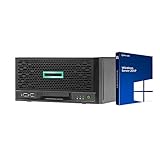
- HP MicroServer Gen10 Plus Tower Server for Business with Microsoft Windows Server 2019 OS!
- Intel Xeon E-2224 Quad-Core 3.4GHz 8MB CPU, Up To 4.6GHz Turbo
- 32GB (2 x 16GB) DDR4 PC4-21300 2666MHz Unbuffered Memory
- 16TB (4 x 4TB) 7.2K 6Gb/s SATA 3.5" HDDs in RAID
- Hard drives and memory upgrades included separately NOT installed, installation required.
Set up the encoder on the VPS
- Confirm prerequisites. Verify channel live-stream eligibility, provider permission, the monthly transfer allowance, and outbound connectivity to the intended YouTube ingest endpoint.
- Choose the workload. Looping an already encoded recording is different from encoding or transcoding live video. Size CPU or GPU capacity for the actual software, codec, resolution, frame rate, and any filters; there is no universal vCPU requirement.
- Configure the encoder. Enter YouTube’s stream URL and stream key, select a codec and settings supported by the encoder, and use RTMPS where supported. Match resolution, frame rate, bitrate, and keyframe interval to YouTube’s current encoder settings.
- Protect the stream key. Treat it like a password. Do not put it in public scripts, screenshots, or logs. Limit who can read configuration files and rotate the key if it is exposed.
- Test the complete path. Start a private or otherwise appropriate test stream and check YouTube’s stream health, audio/video output, and stability before relying on a continuous broadcast. Confirm the VPS can sustain the configured bitrate for a meaningful period.
- Automate recovery and monitoring. Use process supervision to restart a stopped encoder, alert on failures, and document how to restore the stream. YouTube recommends monitoring stream quality and testing backup-encoder failover for event workflows; continuous streaming needs an equivalent operational plan.
Plan for interruptions and archives
A VPS does not remove network failure risk
A provider outage, route problem, transfer cap, or stopped encoder can interrupt the broadcast. Monitoring and a restart procedure help you detect and recover from failures, but they do not guarantee uninterrupted viewing. If continuity matters, decide who receives alerts and what action to take when YouTube reports a problem.
Do not assume one multi-day stream will be archived
YouTube’s encoder guidance says streams under 12 hours are automatically archived; the cited guidance does not promise an archive for one stream that runs longer than 12 hours. If you need a complete recording, arrange a separate recording plan or evaluate controlled, shorter sessions, and check YouTube’s current archive behavior before depending on it.
Rank #4
Compare the practical ways to keep the channel live
For Indian creators, the decision is not simply VPS versus local computer. Compare the recurring cost and operational work for the actual bitrate and number of outputs, and decide who will monitor failures and maintain an archive.
| Approach | What to verify | Main operational trade-off |
|---|---|---|
| StreamNeo — first option to consider | One flat price per slot for any uploaded quality up to 4K 60fps; the first day is free. | Cloud looping avoids keeping a home computer online; YouTube drops trigger automatic recovery. It is a managed option rather than a VPS you administer. |
| Self-managed Indian VPS | Provider permission, sustained egress, monthly transfer, route and protocol access, and server capacity for the workload. | You control the encoder, but also own setup, monitoring, restart, and archive arrangements. |
| Always-on local computer | Reliable home power and internet, upload capacity, and the computer’s ability to run continuously. | A local machine can host the encoder, but the broadcast depends on the home system and connection staying available. |
NIC’s 2–4 Mbps dedicated-bandwidth figure applies to its described webcast workflow, not as a YouTube-wide threshold. Likewise, the StreamNeo 4.5 Mbps data estimate above is an estimate, not a VPS requirement. For a provider-specific decision, the material facts are the provider and plan, codec and bitrate, number of outputs, transfer allowance, and applicable terms.
Best Value
Or let it run in the cloud
With StreamNeo, upload a recording or build a playlist, add your YouTube stream key once, and go live. StreamNeo loops uploaded videos from the cloud; it does not stream from a camera and supports YouTube only. Nothing has to stay on at home. Every slot streams your upload as made, up to 4K 60fps, at one price per slot; StreamNeo automatically recovers if YouTube drops the stream. The first day is free with no card. Monthly pricing is $9.99 per month. See StreamNeo for details, or start the free first day.
Quick Recap
Product prices and availability are accurate as of the date/time indicated and are subject to change. Any price and availability information displayed on Amazon at the time of purchase will apply.

