
Yes—but as a case study, not a ready-made blueprint. London’s Michaela Community School combines demanding behaviour expectations and traditional teaching with a distinctive school ethos. Its first GCSE results were strong, but those figures do not prove that its policies caused the results or that the same approach would work in Canada. Canadian educators can examine the model while weighing student experience, religious accommodation, provincial law and local conditions.
What is the Michaela model?
Michaela Community School is a London free school that opened in 2014 and became known for strict behaviour expectations. The Guardian reported that pupils could receive demerits or detention for conduct such as forgetting a pen or talking in corridors. A 2024 legal analysis describes an ethos built around consistent expectations and routines, alongside duties to the school community and integration among pupils. (The Guardian, 2019; 2024 legal analysis)



A 2025 Atlantic feature describes additional practices: merits and demerits, memorized poetry, shared vegetarian lunches and formal speaking opportunities. These details help illustrate the school’s culture; they do not establish that any particular practice improves academic outcomes. (The Atlantic, 2025)
What do Michaela’s results show?
In August 2019, The Guardian reported results for Michaela’s first GCSE cohort. Fifty-four per cent of grades were at level 7 or above, compared with 22 per cent nationally; 18 per cent were at grade 9, compared with 4.5 per cent nationally. These figures indicate that the cohort performed strongly against the reported national comparisons. They do not isolate the effect of the school’s rules or teaching, account for every difference between pupils and schools, or predict what would happen if another school adopted similar policies. (The Guardian, 2019)
The Atlantic’s 2025 feature also reports high attainment and progression to post-secondary study. Those are figures reported in that feature, not a substitute for current official statistics or a causal evaluation. (The Atlantic, 2025)
What might Canadian schools learn—and what should they test?
The useful question is not whether Canada should copy Michaela wholesale. It is which elements, if any, could be adapted to a particular school or province, and how their effects would be evaluated. The debate around the school points to several distinct issues:
Rank #2

- Keep track of everything from attendance to test scores
- Spiral bound
- Measures 8-1/2" x 11"
- Attainment and causation: The 2019 comparison is a reason to investigate the school’s approach, not proof that strict rules, memorization or another single feature produced the results.
- Consistency and student experience: Clear routines may appeal to families and staff, but a policy’s value also depends on how pupils experience it and whether it is applied fairly.
- Shared ethos and religious difference: Community-building practices need to be considered alongside the rights and needs of pupils whose beliefs differ from the school’s norms.
- Governance and context: Michaela operates as an English free school. Canadian education is organized through provincial systems, so legal responsibilities, governance and local circumstances matter when considering any adaptation.
What are the criticisms of the approach?
The Atlantic feature includes critics’ concerns about the emphasis on test scores and memorization, limited differentiation and constraints on teacher discretion. It also reports classroom observations and Michaela staff members’ defense of consistent expectations. These are attributed views in a debate, not evidence of a settled consensus among educators. (The Atlantic, 2025)
One teacher, James Sibley, told The Atlantic: “I think children are most unhappy not when there’s pressure on them, but with inconsistency.” That view helps explain the school’s argument for firm routines, but it does not resolve whether its rules are appropriate for every pupil or school. (The Atlantic, 2025)
Why does religious accommodation complicate the comparison?
A 2024 law review article compares Michaela’s response to pupil prayer in 2023 with litigation involving Calgary’s Webber Academy. The UK High Court sided with Michaela, while Alberta’s Court of Appeal upheld a finding against Webber Academy. The authors point to differences in institutional context, legal tests and conceptions of religion as reasons the outcomes diverged. The cases therefore illustrate why a school’s rules cannot be assessed apart from the law and context that govern it; they do not establish a simple rule for Canadian schools generally. (2024 legal analysis)
Independent reader supportYour contribution helps us test, update, and keep practical guides available for everyone.Could the Michaela model hold lessons for education reform in Canada?
It could prompt useful questions about consistent expectations, school culture and academic ambition. But the available attainment comparisons do not establish that the model causes better results, and the legal comparison shows that institutional settings and rights obligations matter. For Canadian policymakers and school communities, the productive approach is to examine specific practices against local evidence and provincial requirements—not to treat one London school as a universal template.
Quick Recap
Best Value
Rank #4
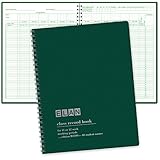
- 8 1/2" x 11" Teacher Record Book with Teacher's daily schedule
- Special duties
- Supplementary data sheets
- Grade recording sheets for 40 weeks with shading every other two lines
- All grade recording sheets are perforated - write the class list only once
Product prices and availability are accurate as of the date/time indicated and are subject to change. Any price and availability information displayed on Amazon at the time of purchase will apply.

