
Recommended Free Tools
A small contractor can face serious exposure after a jobsite injury even if the injured worker is employed by another company. Under federal OSHA’s multi-employer policy, more than one employer may be citable for a hazardous condition that violates an OSHA standard. Which employers OSHA may cite depends on what each did, what authority each had, and the facts at the site—not simply on company size or job title.
“Liability” can also mean workers’ compensation, a private injury claim, insurance coverage, or responsibility allocated by contract. Those are separate questions; an OSHA citation does not decide them. The applicable rules for those issues can depend on the state or territory and the particular contracts and facts.
Why can an employer other than the worker’s direct employer be cited?
Construction sites often involve several employers working in the same area. OSHA’s Multi-Employer Citation Policy allows the agency to consider the role each employer played in relation to a hazardous condition. OSHA’s July 20, 2012 interpretation states that “more than one employer may be citable for a hazardous condition that violates an OSHA standard.” OSHA’s interpretation on multi-employer worksites explains that possibility; it does not mean every employer on a site is automatically responsible for every injury.
OSHA describes a two-step assessment: first determine an employer’s role in relation to the hazard, then assess whether it took adequate steps for that role. The agency says its evaluation turns on the actual facts of the worksite. Its Multi-Employer Citation Policy is an enforcement directive, while OSHA interpretation letters explain how requirements apply to particular circumstances and do not create additional obligations.
What’s actually slowing this PC down?
Pick the symptom - the matching free tool is one click away.
#1 Best Overall
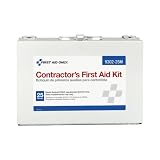
- Contractor First Aid Kit: Emergency kit includes adhesive fabric and plastic bandages, antibiotic ointments, BZK antiseptic towelettes, burn cream packets, gauze roll and pads, gloves, scissors, tweezers, and other multi-use first aid items
- Convenient Packaging: An ideal jobsite and office first aid kit, home first aid kit, or car first aid kit, this set comes in a durable wall mountable metal case with an easy-to-carry handle for transporting first aid kit supplies
- Easy Access: This construction first aid kit features an easy-to-release latch that make accessing first aid supplies quick and easy
- Versatile: Ideal for homes, offices, construction sites, construction vehicles, and more, this home and workplace first aid box helps you stay prepared for potential emergencies
- HSA Eligible and FSA Eligible First Aid Kit: Stay prepared and prioritize your safety with this convenient FSA and HSA eligible first aid kit
What roles does OSHA assess?
An employer may occupy more than one role for the same condition. The categories help explain why a subcontractor’s direct responsibility is not the only issue OSHA may examine.
| Role | What it means in the policy | What OSHA examines |
|---|---|---|
| Creating | The employer caused the hazardous condition. | Whether it created a hazard that violated an OSHA standard and what it did to address it. |
| Exposing | The employer’s own employees were exposed to the hazard. | Whether the employer’s employees faced the condition and whether the employer met its obligations to protect them. |
| Correcting | The employer was responsible for correcting the hazard. | Whether it took the required steps to correct the condition. |
| Controlling | The employer had general supervisory authority over the worksite, including authority to correct violations itself or require others to do so. | Whether its authority arose from a contract or actual practice, and whether it exercised reasonable care to prevent and detect violations. |
The categories and role-sensitive assessment come from OSHA’s Multi-Employer Citation Policy. A controlling employer’s duty is not necessarily identical to the duty of an employer protecting its own employees: OSHA’s directive says a controlling employer is not normally expected to inspect as often or to have the same level of standards knowledge and trade expertise as the employer it hired.
Rank #2

- OSHA Compliant Emergency Kit: Includes adhesive fabric and plastic bandages, antibiotic ointments, BZK antiseptic towelettes, burn cream packets, gauze roll and pads, gloves, scissors, tweezers, and other multi-use first aid items
- Convenient Packaging: An ideal office first aid kit, home first aid kit, or car first aid kit, this set of safety-oriented office essentials comes in a durable wall mountable plastic case complete with easy slide latches
- Easy Access: This convenient and versatile work, home and car emergency kit features a clear cover and individual compartments that keep supplies neatly organized and easy to locate
- Dimensions: This home, office, and car emergency kit measures 3.25 x 11.5 x 13 inches, compact enough to store easily while keeping you well-stocked on emergency supplies
- 100-Person First Aid Kit: This versatile kit contains enough supplies to address minor emergencies for up to 100 people, making it ideal for home, school, office, vehicle, and construction sites; Please note that the color of this case may vary
When can a small contractor be a controlling employer?
Control is about actual supervisory authority, not just a label such as “prime contractor,” “general contractor,” or “subcontractor.” A contract can give an employer authority to oversee worksite activity or require hazards to be corrected. OSHA’s directive also describes control that may be established through combined contractual rights or broad control exercised in practice, even without an express contract provision spelling it out.
That makes the details of the arrangement important. A small prime contractor may have authority to require another firm to fix a hazard; a subcontractor may have authority over its own work area or employees; and a company’s actual practices may matter alongside contract language. OSHA’s November 9, 2017 interpretation cautions that an employer’s duties depend on its role and the circumstances, rather than job title alone. Read OSHA’s interpretation of the Multi-Employer Citation Policy.
Do these 3 things before closing this tab:
1Repair Windows errors before they cause bigger problems2Fix the driver behind crashes, sound loss and screen glitches3Clear out junk files and repair common Windows errorsRank #3
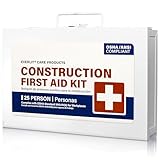
- ✅Commercial-Grade Metal First Aid Kit, Wall-Mountable: Built for demanding environments such as construction sites, contractor workspaces, and DOT trucks or commercial vehicles. The durable metal cabinet is wall-mountable for quick access and meets OSHA workplace first aid requirements for up to 25 people.
- ✅Comprehensive First Aid Coverage: Equipped with 185 essential medical supplies to handle cuts, scrapes, burns, minor wounds, hypothermia, and acute injuries. The kit includes cleansing wipes, assorted adhesive bandages, ointment, gauze pads, burn gel, and a thermal Mylar blanket, along with essential medical tools such as scissors and tweezers for effective on-the-spot care.
- ✅Compact and Easy to Carry: Measuring 11" x 7.5" x 2.5" and weighing only 3.85 lbs, this metal first aid kit is easy to transport and access when needed. It features an integrated carry handle for portability and dual secure latches that keep contents protected while allowing quick, hassle-free opening in emergencies.
- ✅OSHA 1910.151(b) Compliant Safety Within Reach: An essential first aid solution for job sites, commercial trucks, businesses, and industrial environments, ensuring reliable, OSHA-compliant safety and preparedness wherever it is needed.
- ✅Veteran-Owned, California-Based: We stand behind our quality and provide reliable customer support to ensure confidence in every purchase.
How is an OSHA citation different from other forms of liability?
An injury may raise several legal and financial questions, but the OSHA sources address only the federal workplace-safety enforcement framework. They do not settle every claim or decide which party ultimately bears a cost.
| Issue | What it concerns | What the cited sources establish |
|---|---|---|
| OSHA enforcement | Whether an employer may be cited for a violation of an OSHA standard associated with a hazardous condition. | OSHA may consider employers in certain policy roles, including creating, correcting, or controlling, even when their own employees were not exposed. |
| Workers’ compensation | Coverage, benefits, and employer obligations after a worker is injured. | The applicable requirements need to be checked for the relevant state or territory and the employment and contracting facts. The Department of Labor provides a directory of state workers’ compensation officials. |
| Private injury claim or contract allocation | Whether a party may owe damages or must bear costs under a contract. | OSHA interpretations do not decide state-law tort remedies or contractual questions. OSHA says contract questions such as who bears the cost of floor-hole covers are outside its authority. See OSHA’s floor-hole interpretation. |
Do not assume that an OSHA citation proves a particular civil claim, or that the absence of a citation resolves one. The reviewed OSHA materials do not establish a nationwide outcome for private claims, insurance coverage, or contract disputes. Those questions can require state-specific legal and policy review. Federal OSHA’s framework also does not, by itself, resolve whether a state-plan rule or other jurisdiction-specific requirement applies.
Rank #4

- DIY and Contractor First Aid Kit: Emergency kit includes adhesive fabric and plastic bandages, antibiotic ointments, BZK antiseptic towelettes, burn cream packets, gauze roll and pads, gloves, scissors, tweezers, sting wipes and other first aid items
- Convenient Packaging: An ideal jobsite and office first aid kit, home first aid kit, or car first aid kit, this set comes in a durable wall mountable metal case with an easy-to-carry handle for transporting first aid kit supplies
- Easy Access: This construction first aid kit features easy-to-use latches that make accessing first aid supplies quick and easy
- Versatile: Ideal for homes, offices, construction sites, construction vehicles, and more, this home and workplace first aid box helps you stay prepared for potential emergencies
- Personal and Professional First Aid Solutions: First Aid Only offers a full line of first aid kits, cabinets, and stations, Emergency Response Care, individual first aid products, Spill Clean Up kits, CPR care and more
What can a small contractor do before an injury?
Practical preparation starts with knowing who is doing each task and who has authority to act when a hazard appears. For construction employers, OSHA’s general safety and health provisions include accident-prevention requirements. See 29 CFR 1926.20.
- Map responsibility to the work. Identify which employer performs each activity, who may be exposed to its hazards, and who is expected to correct unsafe conditions.
- Understand site authority. Review what contracts authorize each party to oversee, stop, or correct work, and make sure actual practice is consistent with the intended division of responsibility.
- Address hazards your company creates. Do not leave a hazardous condition unresolved merely because another employer’s workers may encounter it.
- Act when your role gives you responsibility or authority. If your company is responsible for correction or can require it, use that authority to get the condition addressed.
- Do not treat paperwork or outside help as a transfer of duties. A written agreement or safety consultant does not, by itself, establish that an employer has shed obligations OSHA assigns based on its role and conduct.
What facts matter after a worker is hurt?
For a specific incident, separate established facts from conclusions about fault or liability. OSHA warns against deciding hypothetical worksite scenarios because the real circumstances may be different. A useful factual record addresses:
Quick wins for a faster PC:
Scan for outdated or missing drivers - takes under a minuteDriver Scan →Repair Windows errors before they cause bigger problemsFix Now →Best Value

- Complete Contractor First Aid Kit: Includes adhesive fabric bandages, burn cream, gauze rolls and pads, gloves, scissors, and other multi-use first aid items; helps address minor cuts, skin abrasions, and scrapes for up to 25 people
- Durable Packaging: Stay prepared and prioritize safety compliance with this convenient OSHA compliant car emergency kit for work vehicles and construction trucks; comes in a strong, wall-mountable plastic case
- Efficient Kit: Easy-to-release latches for quick and easy access to items when minor injuries occur; keep first aid supplies within reach for worksites, DIY projects, and home improvement tasks
- Versatile Care: Ideal for construction sites, homes, offices, and work vehicles; features a built-in carry handle for easy portability
- First Aid Only: Since 1988, First Aid Only has kept people and businesses safe with cost-effective, innovative first-aid solutions; full line includes first aid kits, cabinets, and stations, Spill Clean Up kits, CPR care, and more
- Which company employed the injured worker, and what work was underway?
- What was the hazardous condition, and which employer may have created it?
- Who was exposed, and which employers had responsibility or authority to correct the condition?
- Who could stop the work, remove the hazard, or require another company to act?
- What do the relevant contracts say, and what steps did each company actually take?
- Which state, territory, or other jurisdiction governs workers’ compensation and any potential private claim?
OSHA’s May 20, 2010 interpretation concerning electrical cords illustrates why specific site facts matter when deciding which employer may have authority to act. Read OSHA’s multi-employer interpretation on electrical cords.
Quick Recap
Product prices and availability are accurate as of the date/time indicated and are subject to change. Any price and availability information displayed on Amazon at the time of purchase will apply.

