
Crashes, No Sound, or Screen Glitches?
Random freezes, missing sound and display glitches usually trace back to one bad driver. Find and replace yours safely.Free scan · under a minutePC Slower Than It Used to Be?
A free scan shows the junk files, broken settings and background clutter dragging Windows down - then fixes them in one click.Free scan · Windows 10 & 11Delhi’s newly approved Intelligent Traffic Management System (ITMS) is intended to give ambulances and other emergency vehicles priority through congested stretches by coordinating adaptive traffic signals. The Union Cabinet approved the project on 30 September 2026, but the official announcement does not yet specify how an ambulance will be detected or exactly how a signal will be cleared for it. The system’s goal is confirmed; its detailed ambulance workflow is not.
What Delhi approved
The Cabinet Committee on Economic Affairs approved Delhi Police’s ITMS on 30 September 2026 at an estimated cost of ₹1,789.52 crore, inclusive of taxes. The Press Information Bureau says the project will cover 42 identified traffic corridors in three phases over 24 months, followed by five years of operation and maintenance. Delhi Police will choose a Master System Integrator through competitive bidding, while C-DAC will provide technical support as Project Management Consultant. The Press Information Bureau’s announcement describes the project as a citywide traffic-management platform, not just a set of ambulance signals.
The planned infrastructure includes 1,092 adaptive traffic-control locations and 1,029 enforcement locations, according to the Press Information Bureau. The announcement also cites around 71 lakh active registered vehicles in Delhi as context for the project. These are announced project figures, not independently measured post-deployment results.
How adaptive signals could help an ambulance
Adaptive traffic control adjusts signal timings to prevailing traffic conditions and coordinates signals along identified corridors. In principle, an emergency-vehicle priority function could use that network to prepare a clear route through successive intersections rather than treating each signal in isolation. The government says the ITMS will facilitate “green corridors and priority movement for emergency vehicles,” enabling faster passage through congested stretches.
#1 Best Overall

- Red Blue Amber White 12V Police Flashing Light Stroboscopes Ambulance car flash lights Fire Engines LED Strobe Lamps
- High Brightness. Imported high-brightness lamp beads, no color difference, ultra-high lumen output, ultra-long indication distance
- waterproof performance, strong light transmission, provide high visibility during the day, midnight, rain or fog, improve driving safety and prevent accidents from traffic
- Easy to Install, Plug and play and can be installed in various places. installed on the head of the vehicle to be an emergency hazard warning,the design does not will destroy the structure of the original car
- Wide Application, Very suitable for emergency vehicles, ambulances, police cars, postal service vehicles, technical vehicles, boats, motorcycles, etc
That wording states an intended benefit, not a demonstrated reduction in ambulance travel time. The official announcement does not explain whether the ITMS will identify an ambulance through an onboard transponder, a GPS or automatic vehicle-location feed, a dispatch-system connection, siren detection, operator input, or another method. It also does not publish the authorization process, safety interlocks, treatment of conflicting pedestrian or cross-traffic movements, or the behavior when an ambulance is beyond a detection range.
What is known—and not known—about the signal sequence
Hindustan Times reported an explanation from S. Velmurugan, senior adviser of the National Council of Applied Economic Research: emergency vehicles could carry sensors that communicate with traffic signals; after detection, a signal could turn green and remain so until the vehicle clears the intersection, with the sequence repeating at later signals. This is expert commentary describing a possible mechanism, not a published ITMS specification. The report also says what happens when a vehicle is outside the stipulated detection range remains to be worked out by Delhi Traffic Police and implementers. Read the Hindustan Times report.
Rank #2

- Red Blue Amber White 12V Police Flashing Light Stroboscopes Ambulance car flash lights Fire Engines LED Strobe Lamps
- High Brightness. Imported high-brightness lamp beads, no color difference, ultra-high lumen output, ultra-long indication distance
- waterproof performance, strong light transmission, provide high visibility during the day, midnight, rain or fog, improve driving safety and prevent accidents from traffic
- Easy to Install, Plug and play and can be installed in various places. installed on the head of the vehicle to be an emergency hazard warning,the design does not will destroy the structure of the original car
- Wide Application, Very suitable for emergency vehicles, ambulances, police cars, postal service vehicles, technical vehicles, boats, motorcycles, etc
As the system is implemented, the details that will show how the stated priority works in practice include which vehicles and routes qualify, how priority requests are verified, how signals safely manage conflicting movements, and how the traffic platform connects with police control rooms and emergency dispatch. The Cabinet announcement does not settle those questions.
How the ITMS differs from Delhi’s existing green-corridor service
Delhi Traffic Police already describes a Green Corridor service for dedicated traffic management during emergency organ transportation, specifically for heart, liver, and kidney transport. That is an existing service and should not be confused with the new citywide ITMS or treated as evidence of its ambulance-detection method. Delhi Traffic Police’s Green Corridor page describes the service.
Rank #3

- Light Functions: 12 high intensity LEDs output pronounced bright light, send out an adequate warning signal coming from the dark tinted window. Visible in daylight, midnight, rainy, foggy or snowy days. The light is widely used in all 12V-24V vehicles including law enforcement, first responders, emergency vehicles and tow trucks, construction vehicles, police or snowplows etc.
- Flashing Patterns: Features 18 unique patterns selectable, including steady on, alternating blinking, fast blinking etc., to indicate direction information, and emergency strobe light patterns to generally capture attention and notify other drivers. The unique integrated shroud design prevents dizziness caused by light exposure during driving
- Easy Installation: The emergency dash light bar has 4 strong and stable suction cup brackets that can be mounted on the front windshield or rear windshield without drilling. The suction cups are strong enough to hold the lights in place and are easy to use on vehicles without tools
- Upgraded Quality: The light is made of high-quality aluminum housing for a better outlook and durable use, quality aluminum material for premium heat dissipation and service life of up to 50,000 hours
- Cigar Lighter Power Cord: Equipped with a 9.94FT heavy-duty power cord from light to cigarette lighter, plug and play. Dual switch design for power on/off and patterns switching with last pattern memory recall can retain the strobe mode used last time, and there is no need to adjust it when it is used again
A separate Delhi Traffic Police release dated 12 February 2016 documented a manually coordinated ambulance movement for a critically ill patient travelling from Domestic Airport Terminal 1D toward Medanta Hospital. Police said staff were deployed along the route and reported covering 10.5 km to the Rajokari border in nine minutes. This is a historical example of human-coordinated traffic management, not a performance result for the new ITMS. Read the 2016 Delhi Traffic Police release.
Independent reader supportYour contribution helps us test, update, and keep practical guides available for everyone.What to watch as the project rolls out
The project is planned in three phases, with each later phase to follow evaluation against prescribed testing, commissioning, acceptance, and performance parameters, according to the Press Information Bureau. Those milestones matter because an announced capability becomes an operational service only after equipment, software, procedures, and coordination are implemented and accepted.
Rank #4
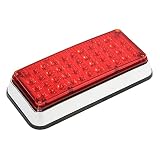
- High quality, low power consumption.
- Easy to install, long-lasting and durable.
- Reliable and safe.
- Please make sure the size before purchasing.
- These can be used for side marker lights, rear lights, etc.
Useful evidence of progress will include the corridors and junctions brought online, the method used to detect and authorize ambulance priority, safeguards for cross-traffic and pedestrians, integration with dispatch and police operations, and measured clearance or travel-time outcomes. The approval announcement sets out the intended function and deployment scale; it does not provide live-system performance results.
For the project’s scope and official intended benefits, see the Press Information Bureau announcement of 30 September 2026.
The Tool Desk
Outbyte PC Repair FREEClear out junk files and repair common Windows errorsFree Scan →Outbyte Driver Updater FREEScan for outdated or missing drivers - takes under a minuteDriver Scan →Quick Recap
Best Value

- ESSENTIAL EMERGENCY LIGHTING: The Lithonia Lighting Basics emergency light is ideal for stairways, hallways, and egress paths; It provides 90 minutes of backup power with built-in test switch and status indicator; Includes rechargeable Ni-Cad battery
- HIGH-QUALITY OPTICS: The hallway light features dual adjustable 1W LED lamp heads with 5000K CCT; Delivers clear, focused illumination along 3' to 6' paths; Designed for consistent brightness in critical situations; LED lifespan rated up to 10 years
- DURABLE CONSTRUCTION: Crafted with injection-molded, flame-retardant thermoplastic housing; Impact-resistant design with snap-fit components for easy installation; Swivel-track lamp system ensures optimal light placement; Durable for typical indoor use
- INSTALL: Wall-mount only; Universal J-box compatibility; Operates at 120V or 277V with 50/60Hz input; Rated for indoor damp locations (50°F–104°F); Self-diagnostic version performs regular auto-testing for convenience; Professional install recommended
- SPECIFICATIONS: Measures 10-1/8” W x 5-3/8” H x 3-3/4” D; UL Listed, NFPA 101, OSHA, FCC, NEC, and CEC Title 20 compliant; Hardwired to 120/277V AC power; Ni-Cad battery automatically charges and activates only during power loss; 2-year limited warranty
Product prices and availability are accurate as of the date/time indicated and are subject to change. Any price and availability information displayed on Amazon at the time of purchase will apply.

