
What’s actually slowing this PC down?
Pick the symptom - the matching free tool is one click away.
AI can manage a network only when it has a usable view of what that network is doing. That view comes from telemetry: measurements and state data generated by network devices and systems, exported, collected, interpreted, and used to guide decisions. Telemetry is not AI management by itself. Reliable automation also needs feedback on whether an action worked, safeguards around what an agent may change, and limits on what data is collected.
What network visibility means
The IETF defines network visibility as the ability of management tools to see a network’s state and behavior. Its RFC 9232, Network Telemetry Framework, describes telemetry as an end-to-end process: configure data sources, instrument devices, render or encode measurements, export them, collect them, and make them available to applications.

The data can describe network devices and the forwarding, control, and management planes. The framework covers different ways to acquire and measure data; it does not require one particular technology or mean that every network needs every method. Packet capture is one possible source of evidence, not a synonym for visibility.
Telemetry gives management software evidence about conditions and behavior. It can support service assurance and security analysis, and it can feed automated applications. It does not, on its own, decide what a network should do or prove that an automated change is safe.
Free tools Windows power users keep installed
One-click scans. No signup required.
#1 Best Overall
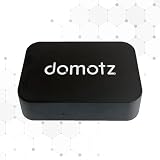
- FAST 15-MINUTE DEPLOYMENT – Provision and configure in just 15 minutes (down from 40+ minutes with previous models). Perfect for field technicians who need to get sites up and running quickly without deep networking expertise.
- UPGRADED PERFORMANCE – Powered by the Allwinner H618 processor with 1GB LPDDR4 RAM (double the previous generation). Enables accurate speed tests on gigabit connections and supports SNMP v3 encryption for enhanced security monitoring.
- PLUG-AND-PLAY SIMPLICITY – No complex configuration required. Simply connect to your network via the Gigabit Ethernet port, power up with the included USB-C cable, and start monitoring. Multi-VLAN support with just a few clicks in the interface.
- RISK MITIGATION FOR MSPs – Domotz maintains the operating system and security updates, transferring liability concerns away from your organization. Eliminates the security risks of deploying monitoring software on customer-managed servers or domain controllers.
- UNIVERSAL CONNECTIVITY – USB-C power port (more durable and universal than previous micro USB), Gigabit Ethernet port, and USB 2.0 port for future expansion. Premium casing designed for rack mounting or standalone deployment in professional environments.
What an AI manager needs to see
The useful view depends on the task. A system diagnosing a slow application may need flow behavior, device metrics, and the path across internal and external networks. A system responding to a fault may also need recent changes, relevant alarms, and a way to verify recovery. The aim is not to collect everything; it is to collect enough relevant, interpretable evidence to make and check a decision.
- Flow behavior: Which traffic is moving, where it is going, and how its behavior changes.
- Infrastructure metrics: Measurements that help identify conditions in network devices and services.
- Path and domain coverage: Evidence across the route traffic takes, including unmanaged segments such as an ISP or public-cloud network when relevant.
- Security signals: Data that can help identify suspicious conditions or assess security posture.
- Audit trails and validation: Records of what was observed and changed, plus ways to check a path hop by hop or test service behavior synthetically.
These are practical dimensions, not a mandatory checklist. In a 2026 report from Broadcom presenting Dimensional Research’s 2025 survey, respondents selected real-time flow monitoring (47%), real-time infrastructure metric monitoring (46%), increased network security (45%), broader visibility into unmanaged network performance (39%), auditability (38%), and real-time hop-by-hop path validation (38%) as capabilities needed for AI operations. The report says 98% selected at least one visibility or observability capability. These are respondent selections, not proof that every operator has the same needs or that a particular tool performs effectively; the cited report extract does not state the survey’s sample size or methodology.
Rank #2

- Hardware Controller with Professional Network Management-Centralized management for up to 100 Omada devices including Omada access points, Omada Security Gateways and Jetstream switches.
- Premium Hardware Design-Industry-leading flexible Rackmount/Desktop design with a powerful chipset, durable metal casing, 2 fast ethernet ports and 1 USB 2.0 port for auto backup.
- Dual power selection-Support PoE (802.3af/802.3at) and micro USB for flexible installations.
- Easy Network Monitor & Maintenance-The easy-to-use dashboard makes it simple to see your real-time network status and improve network maintenance for peace of mind.
- Cloud Access with No License Fee-Enjoy cloud service with no license fee with the use of OC200. Remote Cloud access and Omada app brings centralized cloud management of the whole network from different sites—all controlled from a single interface anywhere, anytime.
Why visibility must feed a closed loop
A management system cannot establish that an intervention helped merely by issuing it. It needs to observe the result and decide whether to keep, adjust, or reverse the action. Standards work describes this as a feedback loop: gather data, normalize and analyze it, form a decision, apply that decision to the network, then monitor the outcome.
From measurements to action
ETSI’s ENI work describes gathered data passing through an optional API, being normalized and analyzed by AI analysis blocks, and informing an actionable decision sent back to the network. The result is then monitored. Normalization matters because raw measurements from different devices or domains may not use the same formats or context; an agent needs a sufficiently consistent interpretation before comparing conditions or acting on them.
Rank #3
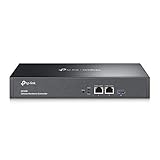
- 【Hardware Controller with Greater Network Management】Latest Omada SDN hardware controller provides centralized management for up to 500 Omada devices including Omada access points, Omada switches and Omada routers.
- 【Premium Hardware Design】Industry-leading flexible Rackmount/Desktop design with a powerful chipset, durable metal casing, 2 * gigabit ports and 1 * USB 3.0 port for auto backup.
- 【Easy Network Monitor & Maintenance】The easy-to-use dashboard makes it simple to see your real-time network status and improve network maintenance for peace of mind.
- 【Cloud Access with No License Fee】Enjoy cloud service with no license fee with the use of OC300. Remote Cloud access and Omada app brings centralized cloud management of the whole network from different sites—all controlled from a single interface anywhere, anytime.
- 【SDN Compatibility】For SDN usage, make sure your devices/controllers are either equipped with or can be upgraded to SDN version. OC300 work only with SDN APs, Switches and Gateways. For devices that are compatible with SDN firmware, please visit TP-Link website.
ITU-T Recommendation Y.3177 describes an AI-based architecture for resource and fault management in future networks, including IMT-2020. Its purpose includes continuous network monitoring and using AI/ML to determine resource adaptation or fault recovery. These documents describe architectures and standards work, not evidence that every deployed network or AI agent implements such a loop.
Measure whether the intervention worked
Operationally, a useful loop ties each proposed change to the condition it is meant to address and to observations that can show whether that condition improved. If the measurements remain abnormal, the system should not treat the command’s successful delivery as proof of recovery. A human operator may need to review ambiguous results, especially when the action could affect multiple services or domains.
Network visibility is not agent oversight
Infrastructure telemetry answers questions such as what the network is doing and whether a path or device appears healthy. Agent oversight answers different questions: what action did the AI take, what information informed it, what authority did it have, and how can an operator stop or correct it?
An IETF document by Q. Ma, D. Ceccarelli, Q. Wu, and L. M. Contreras proposes requirements for observability, control, and intervention for network-management agents. The document, published as an Internet-Draft on 19 July 2026, identifies risks including hallucination and unreliable execution, and discusses runtime intervention across multi-vendor environments. It remains a draft in progress, not an adopted RFC or finished standard. Its central distinction is useful: making the network observable does not automatically make an AI agent’s behavior governable.
Best Value
Related industry work also remains developmental. ETSI ZSM describes work on agent-based network and service management, predictive cross-domain assurance, and network digital twins, including its May 2026 study, ZSM Framework from Automation to Autonomy. These are work-program goals, not evidence that end-to-end autonomy or “100% automation” has been achieved.
Independent reader supportYour contribution helps us test, update, and keep practical guides available for everyone.How to assess whether a visibility approach is fit for AI management
There is no universally best telemetry method established by the cited standards. Assess a proposed approach against the operational problem and the limits of the data it can supply.
| Assessment area | Question to ask |
|---|---|
| Coverage | Does it cover the relevant devices, forwarding, control, and management planes, plus cloud or external network segments that affect the service? |
| Timeliness and granularity | Are flow and infrastructure measurements frequent and detailed enough for the task? Can the system validate a path or test service behavior where needed? |
| Interoperability and context | Can data from different vendors and domains be normalized and understood in a common operational context? |
| Feedback and control | Can observations be connected to policy, action, and outcome monitoring? Can an operator intervene in an agent’s runtime behavior? |
| Governance | Are collection purpose, access, retention, auditability, and privacy boundaries defined? |
Standards and industry groups are working on parts of this problem, but their publication does not establish that a product or deployment meets every need. For example, ETSI ENI lists GS ENI 059 V4.1.1 (September 2026), titled AI Agent Interface and Protocol Specification for Next-Generation Mobile Communication System. TM Forum’s publisher record identifies IG1343 v2.3.0 as its current production version, published 31 March 2026 and approved 22 May 2026; the guide concerns transition to network observability and service assurance. Those records show ongoing standardization and industry guidance, not universal implementation.
Privacy is part of making a network visible
More telemetry is not automatically better. RFC 9232 warns that large-scale data collection can threaten privacy. Its framework is not intended for identifiable end-user data or characterization of an individual’s behavior without consent. Operators should therefore define the operational purpose of each collection, limit access and retention, and avoid treating user-level surveillance as a prerequisite for network management.
Do these 3 things before closing this tab:
1Repair Windows errors before they cause bigger problems2Scan for outdated or missing drivers - takes under a minute3Clear out junk files and repair common Windows errorsA visibility design is useful when it gives the management system enough evidence to understand relevant network conditions while keeping collection proportionate and governed. That means documenting what is collected and why, who can access it, how long it is retained, and how resulting actions are recorded and supervised.
Quick Recap
Product prices and availability are accurate as of the date/time indicated and are subject to change. Any price and availability information displayed on Amazon at the time of purchase will apply.

