
The Tool Desk
Outbyte PC Repair FREEClear out junk files and repair common Windows errorsFree Scan →Outbyte Driver Updater FREEScan for outdated or missing drivers - takes under a minuteDriver Scan →Yes—but as an evolution, not a clean-sheet fix. AMD’s FX-8350 improved on the FX-8150 with higher clocks, better per-cycle performance and lower measured workload power, making it a stronger choice for heavily threaded tasks. It still lagged contemporary Intel processors in single-threaded work and power efficiency, so Piledriver narrowed Bulldozer’s shortcomings without eliminating them.
What the FX-8350 was—and how its “eight cores” worked
Launched in October 2012, the FX-8350 was the flagship desktop processor in AMD’s Vishera family, built around the Piledriver update to Bulldozer. Tom’s Hardware listed it at a $195 launch price, with a 4.0 GHz base clock, up to 4.2 GHz turbo, 125 W TDP, 8 MB of L2 cache, 8 MB of L3 cache and an unlocked multiplier. Its die measured 315 mm² and contained 1.2 billion transistors, the same headline figures reported for the preceding Zambezi design. Tom’s Hardware’s FX-8350 review
AMD marketed the FX-8350 as an eight-core, eight-thread processor. Those eight integer cores were arranged in four modules, however, rather than as eight wholly independent cores: each module paired two integer cores with shared resources, including front-end and floating-point components. “Eight-core” is the product’s core count, but the module design matters when comparing it with processors whose cores have a different internal organization. Tom’s Hardware’s Vishera architecture overview
What Piledriver changed from Bulldozer
Piledriver kept the broad module-based architecture and manufacturing process rather than replacing Bulldozer with an entirely new core design. AMD made refinements to load/store handling and address-generation units, while circuit and timing changes improved the design’s power characteristics. AnandTech described a revised flip-flop design intended to reduce active power, which helped AMD raise desktop clock speeds without increasing the processor’s 125 W TDP class. AnandTech’s Vishera architecture analysis
#1 Best Overall
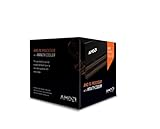
- Frequency: 4.0 ghz / 4.2 ghz (base/max turbo)
- Cores: 8 unlocked
- Cache: 8 mb / 8 mb (l2/l3)
- Socket type: am3+
- Thermal solution: Wraith cooler
Tom’s Hardware estimated that Piledriver could be “as much as 15% faster” than Bulldozer per core and per clock. That is an upper-end architectural estimate, not a promise that every application would gain 15%; actual results depended on the workload. The FX-8350 also ran at least 400 MHz faster than the FX-8150, which compounded the per-cycle improvements in workloads able to use the available cores. Tom’s Hardware’s Vishera architecture overview
How much faster was it than the FX-8150?
There is no single percentage that describes the FX-8350’s advantage across all software. Its clearest gains appeared when applications could keep many integer threads busy; lightly threaded work benefited from the higher clock, but remained constrained by the architecture’s weaker single-thread performance. Tom’s Hardware found the FX-8350 could beat Core i5 processors in many demanding desktop applications while still performing poorly in single-threaded work. Tom’s Hardware’s performance analysis and conclusion
Rank #2

- Platform: Desktop
- Frequency: 4.0/4.2ghz (base/overdrive)
- Cores: 8
- Cache: 8/8mb (l2/l3)
- Socket type: am3Plus
- Rendering, compression and media work: These are the kinds of heavily threaded tasks in which the FX-8350’s eight integer cores could make its strongest case.
- Lightly threaded apps and period games: The higher clock helped relative to the FX-8150, but it did not erase the single-thread deficit against contemporary Intel processors.
- Responsiveness: A high clock and many threads do not automatically make a processor fast in tasks that depend mainly on one or a few threads.
Tom’s Hardware’s overall verdict was that the FX-8350 was faster, more efficient and cheaper than the FX-8150 it replaced. That is a comparison with its AMD predecessor—not a claim that it led its generation in every workload or matched Intel’s efficiency. Tom’s Hardware’s performance analysis and conclusion
Power use, cooling and overclocking
In Tom’s Hardware’s measured test suite, the FX-8350 system used 10 W less power than the FX-8150 system despite the newer processor’s higher clocks and better performance. Both systems idled at about 92 W. These are system-level measurements from that review’s test configuration, not a universal measurement of CPU-only power or a guarantee for every motherboard and workload. Tom’s Hardware’s power-consumption measurements
Free tools Windows power users keep installed
One-click scans. No signup required.
Rank #3

- Fx-8350 desktop CPU including Wraith cooler
- AM3+ socket - 8-Core
- 4. 0GHz - Turbo Speed up to 4. 2GHz
- 16MB L2 cache
- AMD black edition
The 125 W TDP and unlocked multiplier made motherboard power delivery and cooling important, particularly for overclocking. Tom’s Hardware tested overclocking with closed-loop liquid cooling; that test does not establish what every FX-8350, board or cooler can achieve. For a stock system, choose a cooler rated for a 125 W AM3+ processor and verify that the board’s VRM and firmware support the chip. Overclocking results depend on the individual processor, motherboard, firmware and cooling.
Is an FX-8350 worth buying now?
It made the most sense in its own era as a sub-$200 processor for a budget workstation, especially when the workload used many threads. It could also be a reasonable low-cost upgrade for a compatible AM3+ system. The old launch price is historical, not a guide to current used-market value.
Rank #4

- Socket AM3+ CPU
- Requires 125W CPU power support
- CPU Only FD8350FRW8KHK
- Enhance your computer's capabilities by replacing the cpu
- Smooth operation, ensuring smooth and efficient operation of the computer during use, and improving user experience
For a new build today, the FX-8350 is difficult to justify if single-thread speed, energy use or room to upgrade are priorities. It belongs to a 2012 platform and should be considered only when its low cost and a compatible system outweigh those limits. Before buying a used chip or board, confirm the exact motherboard model’s FX-8350 BIOS support, VRM suitability, cooler mounting compatibility and the condition of the parts. AM3+ uses DDR3 memory, so account for that platform requirement as well.
Independent reader supportYour contribution helps us test, update, and keep practical guides available for everyone.Verdict: a meaningful correction, not a cure
Piledriver delivered where Bulldozer had struggled: the FX-8350 combined a useful per-clock improvement with higher clocks and lower measured workload power than the FX-8150. That made it a more credible option for heavily threaded desktop work. The persistent single-thread and efficiency disadvantages meant it was not a universal fix, and its value today is mainly as a carefully checked legacy AM3+ upgrade rather than the foundation of a modern build.
Do these 3 things before closing this tab:
1Fix the driver behind crashes, sound loss and screen glitches2Clear out junk files and repair common Windows errors3Scan for outdated or missing drivers - takes under a minuteQuick Recap
Best Value

- High-performance processor for gaming and multitasking
- 8 cores and 8 threads for smooth and efficient
- 4.0GHz clock speed for fast and responsive computing
- 125W power consumption for optimal energy efficiency
- Compatible with Socket AM3+ motherboards for easy installation
Product prices and availability are accurate as of the date/time indicated and are subject to change. Any price and availability information displayed on Amazon at the time of purchase will apply.

