
Do these 3 things before closing this tab:
1Clear out junk files and repair common Windows errors2Scan for outdated or missing drivers - takes under a minute3Repair Windows errors before they cause bigger problemsA hybrid DSP/MCU device combines signal-processing capability with the control functions and peripherals of a microcontroller, so one chip can run numeric workloads and coordinate them with the rest of an embedded system. The term describes a goal, not one standard architecture: digital signal controllers, automotive MCUs and audio or radar SoCs implement the combination in different ways.
What a hybrid DSP/MCU device does
A digital signal processor (DSP) is designed to handle repeated numeric operations efficiently; a microcontroller (MCU) typically supplies the control flow, interrupts and peripherals that connect embedded software to sensors, actuators and communications. A hybrid device brings both kinds of work into one coordinated architecture.
That can be useful when a system must process data and respond to it on a deadline. For example, a motor-control application can calculate a control loop while using timers, PWM outputs and ADC interfaces to interact with the motor and its sensors. The precise performance and peripherals depend on the selected part.
Vendors use different names and designs. Microchip describes its dsPIC digital signal controllers as combining “the performance of a Digital Signal Processor (DSP) with the ease of use of an MCU for time-critical embedded applications.” NXP describes the 56F826 in its 56800 family as combining DSP processing with MCU functionality and peripherals. These are vendor descriptions, not a universal definition that guarantees identical features across products.
#1 Best Overall

- Advanced ADAU1467 DSP core for superior processing capabilities.
- Compact design suitable for embedded systems and applications.
- Supports various formats and provides sound output.
- Ideal for developers and engineers seeking to enhance projects.
- Easy integration with existing systems and various devices.
How vendors combine the architectures
“Hybrid” does not mean every device has a separate DSP and MCU core, or uses the same memory design. Some place DSP-oriented functions in a controller architecture; others use multicore or system-on-chip designs.
| Family or approach | How the combination is described | Positioning or distinguishing detail |
|---|---|---|
| Microchip dsPIC33A | DSP functionality within a high-performance MCU architecture, with a 32-bit CPU, floating-point unit and multiple data-memory buses. | Microchip positions dsPIC digital signal controllers for time-critical embedded applications. It states CPU operation up to 200 MHz for dsPIC33A; verify the exact part’s specifications. |
| NXP 56800 / 56800E | A digital signal controller architecture with DSP processing and MCU peripherals. NXP describes the 56800E as dual-Harvard-style, with parallel execution units. | A 2025 NXP product brief states that the 56800E architecture can perform up to six operations per instruction cycle. Treat this as an architecture claim, not a guarantee for every workload or device. |
| Infineon AURIX TriCore | A design combining a RISC processor core, MCU and DSP. | Infineon positions TriCore MCUs for automotive and industrial control. Its application list includes vehicle control systems, connectivity, ADAS and radar. |
| Texas Instruments audio and radar SoCs | Some products combine ARM cores with proprietary DSP technology and integrated DSP and MCU resources. | For a specific device, check its core arrangement, accelerators, streaming interfaces and memory bandwidth; capabilities are product-specific. |
The table compares vendor-described approaches, not measured performance across devices. Core count, instruction execution, memory organization, peripherals and available software differ by part.
Rank #2

- Complete ADAU1401 Single-Chip Module: Built around the ADAU1401 with embedded 28 / 56-bit processing, analog-to-digital and digital-to-analog conversion, microcontroller-style control interfaces — all on compact board for quick prototyping
- Self-Booting from Onboard Storage: The module loads its program independently from onboard non-volatile storage at power-up and can save current parameters back to storage on shutdown, eliminating the need for an external main controller in standalone setups
- Expandable via I2C and 4-Wire Ports: All function ports are out, including digital I2S input / output, push-button inputs, drive, auxiliary analog inputs for volume controls, and rotary — letting users extend the board as needed
- 98.5 Dynamic Range for Clear Sound Output: Two analog input channels and four output channels deliver 98.5 of analog-to-analog dynamic range, with digital input and output ports for linking additional conversion in the chain
- Stable Across Wide Temperature Range: for a working span from minus 40 to 105 degrees Celsius, this board suits both casual desktop use and more demanding environments where temperature stability is important
Why combine DSP processing with MCU control?
Signal-processing tasks often involve repeated numeric calculations, such as filtering, transforms, motor-control loops, audio processing or radar workloads. DSP-oriented execution and memory organization can help support this work. MCU functions provide the control flow and interfaces needed to move data, respond to interrupts and manage system state.
Integrating these capabilities can reduce the need to divide control and signal processing between separate chips. Whether that improves a particular design depends on the workload, timing, power budget, peripheral requirements and software support; integration alone does not establish that a device is the best or fastest choice.
Rank #3
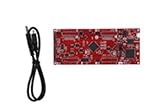
- DEVELOPMENT PLATFORM: Texas Instruments C2000 MCU F280025C LaunchPad development kit for rapid prototyping and evaluation
- CONNECTIVITY: Features USB connection cable for programming, debugging, and power supply
- PROCESSOR: Built around the F280025C microcontroller, ideal for real-time control applications and digital signal processing
- DESIGN FEATURES: Red PCB board with comprehensive development capabilities and expansion headers for additional functionality
- COMPATIBILITY: Supports TI's development ecosystem with Code Composer Studio and other programming tools
How to choose a DSP/MCU architecture
Start with the actual algorithm and interfaces, then compare candidate devices against the constraints of the complete system. A compact digital signal controller may suit time-critical embedded control; automotive and industrial designs may need additional safety and lifecycle evidence; audio and radar systems may depend more on specialized DSP resources and streaming bandwidth.
- Execution model: Check which cores or execution units run the control code and signal-processing workload, and how they coordinate.
- Numeric behavior: Match fixed- or floating-point needs, precision, and support for saturation and rounding to the algorithm.
- Memory and data movement: Examine buses, memory organization, DMA support and bandwidth. These determine how efficiently samples and intermediate results move through the system.
- Real-time control: Check interrupt latency and the timers, PWM channels and ADC interfaces needed to meet control-loop deadlines.
- Application-specific resources: For audio or radar, investigate the DSP instruction set, accelerators and streaming I/O. For motor control, focus on the control peripherals and timing requirements.
- Power, package and cost: Compare the exact device against the product’s power budget, physical constraints and bill of materials.
- Software and product lifetime: Confirm compiler and development-tool support, security and functional-safety features where required, qualification evidence, and the manufacturer’s lifecycle information.
Vendor specifications establish stated capabilities, not a universal ranking. Confirm the exact part number and revision, then assess whether its documented features and supported tools meet the design’s requirements.
Rank #4

- Fully programmable ADAU1467 DSP core board with 32-bit and 64-bit processing capabilities, ideal for multimedia and applications.
- User-friendly SigmaStudio software allows for drag-and-drop system creation without coding, enabling easy development of custom processing systems.
- Supports various applications including digital frequency dividers, mixers, and equalizers, making it perfect for professional setups.
- Includes multiple interfaces such as , SPI, and IIC for seamless integration and real-time tuning, ensuring optimal performance in any project.
- Comes with comprehensive documentation including schematics, PCB size charts, and application routines to facilitate easy implementation and .
A development-board path: NXP MC56F80000-EVK
The NXP MC56F80000-EVK is an evaluation board documented for the MC56F80748 controller, which the manual describes as having unified DSP/MCU functionality. The NXP user manual lists 100 MIPS at 100 MHz, 64 kB of on-chip Flash and 8 kB of on-chip RAM. Its document date is not stated in the available passage, so check the current manual and exact board revision before relying on those figures for a project.
An evaluation board offers a concrete way to explore a digital signal controller’s software workflow and interfaces. Before choosing it for a prototype, check that the board exposes the peripherals, signal connections and debugging support your application needs.
Recommended Free Tools
Best Value

- Multi-Channel Signal Acquisition Based on ADS1299 for high-resolution raw signal data collection and analysis.
- WiFi UART Wireless Communication Supports stable wireless serial data transmission for development and testing.
- Complete Development Resources Includes SDK package, communication protocol, and PC software source code.
- Open Hardware Design Provides schematic files and supports secondary development and customization.
- STM32 Development Kit Supports rapid integration with STM32 platforms and embedded applications.
What to establish before design-in
Choose the exact device based on its documented behavior and the system it must serve, not just the “hybrid” or “digital signal controller” label. Confirm the part-level specifications, tools, safety or security evidence, and availability that apply to the intended region and product lifetime. Family-level and architecture-level claims should not be assumed to apply identically to every member.
Quick Recap
Product prices and availability are accurate as of the date/time indicated and are subject to change. Any price and availability information displayed on Amazon at the time of purchase will apply.

