
Day two of Embedded World 2023 connected four practical embedded-systems concerns: deploying IoT devices, protecting them, building out the RISC-V ecosystem and running AI at the edge. Its most eye-catching demo previewed STMicroelectronics’ STM32N6, but the event’s performance figures were demonstrations—not universal benchmarks.
What was covered on day two?
Embedded World 2023 took place in Nuremberg, Germany, from 14 to 16 March. Embedded’s day-two report covered IoT deployments and security, RISC-V ecosystem activity, and a preview of STMicroelectronics’ forthcoming STM32N6 microcontroller. The conversations and demonstrations pointed to connected questions: how to secure devices, limit their energy use and run more capable workloads locally.

IoT deployment and system design
Silicon Labs discussed IoT trends, deployments and security. NXP focused on analog system design and energy optimization. Infineon’s event announcement also grouped sensors, actuators, microcontrollers, connectivity and robust security in its IoT demonstration portfolio. Together, these themes put security and energy use alongside connectivity as design concerns, rather than treating them as afterthoughts.
Security across hardware and software
The report included GreenWaves audio work, Codasip hardware security and TrustInSoft software security. These are different parts of the problem: a secure processor or hardware root of trust does not, by itself, establish that application software is safe, while software analysis does not replace hardware protections.
Do these 3 things before closing this tab:
1Repair Windows errors before they cause bigger problems2Scan for outdated or missing drivers - takes under a minute3Clear out junk files and repair common Windows errors#1 Best Overall
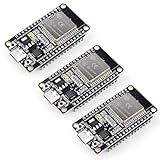
- Dual-Core Performance Up to 240 MHz: Run sensor processing, wireless communication, automation logic and connected-device tasks on a 32-bit dual-core ESP32 platform designed for responsive embedded and IoT projects
- Built-in Wi-Fi and Bluetooth 4.2: Connect to 2.4 GHz Wi-Fi networks or use Bluetooth Classic and BLE for wireless sensors, smart devices, remote controls, home automation and other connected projects
- Flexible Power-Saving Modes: ESP32 power-management features support dynamic clock scaling and low-power operating modes, helping developers reduce energy use in compatible sensing, monitoring and connected-device applications, suitable for battery-powered Internet of Things (IoT) devices.
- USB-C Programming with CP2102: Connect through USB-C for power, sketch uploads and serial monitoring, while GPIO, UART, SPI and I2C interfaces support sensors, displays, motor drivers and other modules (USB-C cable not included)
- Over-the-Air Update Support: Configure OTA functionality through a compatible ESP-32 software framework to update deployed firmware over Wi-Fi without reconnecting the board by USB for every revision
What did the STM32N6 AI MCU demonstration show?
ST previewed the STM32N6 using a custom neural network derived from YOLO to detect and locate multiple people in each video frame. The event report gave a result of 314 frames per second. That is a figure for this event demonstration; the report does not fully specify the model, input, firmware or measurement conditions needed to reproduce it or compare it with other systems.
ST’s later retrospective describes a side-by-side run of the same network on an STM32H747 Discovery kit and the upcoming STM32N6 Discovery board. In that demonstration, the STM32N6 processed 75 times more frames than the STM32H7 while running at less than twice the maximum frequency. This is a comparison of that particular demonstration, not a general performance ranking of the two MCU families.
Rank #2

- Certified & Future-Ready: Espressif-certified ESP32-WROOM-32E ensures full hardware compatibility and lifetime firmware support. Upgraded 8MB Flash handles IoT data and OTA updates.
- Dual-Core Speed: 240MHz dual-core processor runs Wi-Fi/BLE and sensors 2x faster. 38 GPIO pins (10 RTC) support SPI/I2C/UART for LCDs, motors, and industrial sensors.
- Plug & Play Dev: USB-C driver pre-installed: upload code instantly on Windows/Mac/Linux. Works with Arduino IDE, MicroPython, and Espressif IDF.
- All-Environment Ready: Run Wi-Fi smart switches (Home Assistant) and BLE tracking on one board. Industrial-grade stability (-40°C~85°C) for outdoor/automated systems.
- Advantages: The ESP32 development board offers high performance, low power consumption, and rich wireless connectivity, making it suitable for developers of all levels, especially beginners.
What ST later said about STM32N6
In a 2023 ST Blog post, Miguel Castro, responsible for Product and Architecture teams in ST’s AI solutions business line, described it as “our upcoming general-purpose microcontroller with our Neural-Art Accelerator™, a Neural Processing Unit.” ST’s 10 December 2024 product release later described the STM32N6 as its first MCU with the proprietary Neural-ART Accelerator NPU. The release claimed 600 times more machine-learning performance than a high-end STM32 MCU of that time; that is ST’s company comparison, not an independent cross-platform benchmark.
ST said selected customers had access beginning in October 2023, ahead of high-volume availability. That timeline describes the product’s rollout as reported by ST; it does not establish present-day stock or availability from a particular seller.
What’s actually slowing this PC down?
Pick the symptom - the matching free tool is one click away.
Rank #3
Which board can developers use to try STM32N6?
ST’s performance documentation identifies the STM32N6570-DK Discovery kit as the hardware setup for STM32N6 deployment. The documented STM32N6x7 combines an Arm Cortex-M55 processor, a Neural-ART NPU rated at 600 GOPS and 4.2 MB of embedded RAM. The documentation was updated in 2025.
Those specifications describe the STM32N6x7 platform; they are not the conditions behind the event’s 314-fps result. Anyone planning a project should check current marketplace listings and ST documentation for the exact board revision, software support and availability before purchasing or committing to a design.
Rank #4

- 2.4GHz Dual Mode WiFi + Bluetooth Development Board
- Support LWIP protocol, Freertos
- SupportThree Modes: AP, STA, and AP+STA
- Ultra-Low power consumption, Compatible with Arduino IDE
- ESP32 is a safe, reliable, and scalable to a variety of applications
How did RISC-V address embedded security at the show?
RISC-V International’s booth program and recap presented an ecosystem, not a single new chip or one security architecture. Participants included OpenHW Group and SiFive, as well as Green Hills Software and Syntacore. Security examples covered different layers:
- Tiempo Secure presented TESIC RISC-V secure-element IP and a secure enclave aimed at certification-ready integration.
- ZAYA presented a PSA-certified RISC-V Security Monitor and hypervisor, along with Microcontainers intended to isolate applications and services on MMU-less MCUs.
These presentations illustrate possible approaches; the event material does not establish that every RISC-V implementation includes these protections or has achieved a particular certification. A RISC-V design still needs to be assessed by its actual silicon, security implementation and intended use.
Best Value
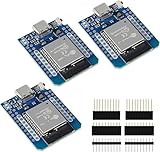
- D1 Mini NodeMCU Type-C ESP32 WLAN WiFi Bluetooth IoT Development Board 5V Compatible for Arduino
- Designed with ultra-low power technology, it offers the full range of performance and features of the ESP32 chip. The pin arrangement provides compatibility with the modules developed for the D1 Mini ESP8266 while also offering fast WLAN, enhanced GPIO, Bluetooth functionality, and with its higher performance, a wider range of applications.
- 100% compatible with Arudino IDE, Lua and Micropython, it shows robustness, versatility, and reliability in a wide variety of applications and power scenarios.
- All I/O pins have interrupt, PWM, I2C and one-wire capability, except the pin DO.
- Designed with ultra-low power technology, it offers the full range of performance and features of the ESP32 chip. The pin arrangement provides compatibility with the modules developed for the D1 Mini ESP8266 while also offering fast WLAN, enhanced GPIO, Bluetooth functionality, and with its higher performance, a wider range of applications.
How should teams evaluate an embedded RISC-V option?
The event sources do not provide a controlled head-to-head benchmark. For a real project comparison, assess the complete platform rather than inferring suitability from the ISA or a show-floor presentation alone:
Quick Recap
- ISA, IP and licensing: clarify which parts are open, which require a license and what implementation rights apply to the specific core or IP.
- Security root and certification: identify how secure boot, key storage, isolation and any required certification are implemented on the target device.
- Toolchain and RTOS support: verify that the compiler, debugging tools, operating system and middleware support the specific silicon and are maintained for the project’s lifetime.
- Compute and power envelope: compare performance and energy use under the intended workload, memory configuration and operating conditions.
- Silicon and board availability: confirm that the target chip and a usable development board can be obtained, and that the supplier’s roadmap fits the project schedule.
Product prices and availability are accurate as of the date/time indicated and are subject to change. Any price and availability information displayed on Amazon at the time of purchase will apply.

