
Yes—but not inside an ordinary flash drive. A custom USB-stick-shaped enclosure built by Binh houses a Raspberry Pi Zero W that runs a local language model with llama.cpp. The Pi does the computing; the USB connection gives the host computer a file-based way to submit prompts and collect answers.
What is inside the USB-stick-sized LLM?
Hackaday’s February 17, 2025 report describes a custom 3D-printed enclosure containing a Raspberry Pi Zero W. It is a small embedded computer packaged to look and connect like a USB stick, not a conventional flash drive that performs inference on its own.
| # | Preview | Product | Price | |
|---|---|---|---|---|
| 1 |

|
Freenove Raspberry Pi Pico 2 W Board Pre-Soldered Header, Dual Arm Cortex-M33 and Dual Hazard3... | $18.95 | Buy on Amazon |
| 2 |
|
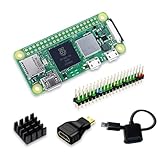
SANOOV Raspberry Pi Zero 2W Kit | $111.99 | Buy on Amazon |
The Pi runs llama.cpp and a local language model. Because the model runtime and computation are on the device, the design is intended to work offline once set up; the host computer serves as the interface rather than the machine running the model.
How does the file-based USB interface work?
The device is configured as a composite USB device that presents a filesystem to the connected computer. Instead of opening a chat app, a user creates an empty text file and gives it a filename containing the prompt. The LLM generates text and writes the response into a file.
Do these 3 things before closing this tab:
1Fix the driver behind crashes, sound loss and screen glitches2Repair Windows errors before they cause bigger problems3Scan for outdated or missing drivers - takes under a minute#1 Best Overall
- Latest Version: Higher core clock speed, double memory, more powerful Arm cores, optional RISC-V cores (compared to the 1 series) (This W version has onboard wireless LAN and Bluetooth)
- Switchable Cores: Allows users to choose between dual industry-standard Arm Cortex-M33 cores and dual open-hardware Hazard3 cores
- Compatibility: Delivers a significant performance boost, while retaining software- and hardware-compatible with the 1 series
- Detailed Tutorial: Provides step-by-step guide with MicroPython, C and Processing (Java) Code (The download link can be found on the product box) (No paper tutorial)
- Example Projects: Each project has schematics, wiring diagrams, complete code and detailed explanations (Need extra items)
This file-drop approach is intended to avoid installing drivers or a dedicated application on the host. It is still a purpose-built computer and software setup: the familiar USB-storage appearance is the interaction method, not evidence that the device is a standard plug-and-play flash drive.
Why did the Pi Zero W need a software modification?
The Pi Zero W uses the ARMv6 instruction set, while current versions of llama.cpp target ARMv8 optimizations. Binh modified the source to remove newer-architecture optimizations so the runtime could work on the older board. Hackaday reported that this adaptation took about a week.
That compatibility work is central to the build. It is not simply a matter of copying a model file onto a USB drive: the chosen hardware architecture must be supported by the inference software, and in this case the builder had to adjust the runtime.
Rank #2
- Powerful Performance: Equipped with a quad-core 64-bit ARM Cortex-A53 processor, the Raspberry Pi Zero 2 W delivers a significant performance boost compared to its predecessor. And built-in Wi-Fi and Bluetooth support enable easy wireless communication and Internet access for your projects, five Times Faster.
- SANOOV Basic Starter Kit for Pi Zero 2 W Include: 1. Raspberry Pi Zero 2 W Board 2.Mini HDMI to Standard HDMI adapter 3.Micro-USB to Standard USB OTG Adapter 4.Aluminum Heatsink 5.40 Pin Header.NOTICE: The kit does NOT include , supply power, case, SD card, keyboard, mouse or monitor.
- SANOOV for Raspberry Pi Zero 2 W features: 1GHz quad-core, 64-bit ARM Cortex-A53 CPU VideoCore IV GPU 512MB LPDDR2 DRAM 802.11b/g/n wireless LAN Bluetooth 4.2 / Bluetooth Low Energy (BLE) MicroSD card slot Mini HDMI and USB 2.0 OTG ports Micro USB power HAT-compatible 40-pin header Composite video and reset pins via solder test points CSI camera connector.
- Video Output & Efficient Cooling: Supports 1080p30 video output via the mini HDMI port, making it ideal for multimedia applications and streaming.The aluminum heatsink helps dissipate heat, ensuring stable performance even under heavy workloads.
- Compact Size: The tiny size of the Raspberry Pi Zero 2 W makes it perfect for space-constrained projects and embedded applications.Ideal for a variety of uses, including IoT projects, home automation, media centers, educational tools, and more.
Is it practical as an offline LLM?
The project demonstrates that a Raspberry Pi Zero W can host a local language-model setup in a compact, file-driven package. Its strengths are portability, offline operation, and a host interaction that does not require a conventional chat application. Its trade-off is speed: Hackaday describes it as “not blindingly fast.”
The report does not publish the model name, parameter count, tokens-per-second rate, response latency, storage capacity, or power consumption. Those omissions mean the build cannot be assessed from the report as a substitute for a faster local-LLM computer or compared quantitatively with other devices.
Can you reproduce the build?
The report identifies the Pi Zero W, the modified llama.cpp runtime, a custom 3D-printed case, and the composite-USB filesystem concept. It links to a demonstration video, but does not provide a complete repository or bill of materials. As a result, the available details explain the approach but do not establish a complete, step-by-step recipe for reproducing the hardware and software.
Quick Recap
Product prices and availability are accurate as of the date/time indicated and are subject to change. Any price and availability information displayed on Amazon at the time of purchase will apply.

