
If an AIoT dashboard does not match what you see at a device, compare one sensor observation at three points: the device or raw output, the platform’s received or stored record, and the dashboard value for the same observation. Align the sensor, time, unit, and calculation at each point. The differences often reveal whether the issue is a clock, a delivery delay, a data transformation, or the sensor itself.
How to check one reading from sensor to dashboard
Pick one sensor and one recent observation—not a whole day’s trend. Record the value and timestamp at the device or in its raw output, then find the corresponding platform record and dashboard point. This is a diagnostic comparison, not a guarantee that every product exposes the same fields.
- Identify the exact sensor and measurement. Match the device, property, and measurement meaning. A room temperature reading, for example, is not comparable to a calculated building average.
- Record the raw observation. Note its value, unit, and timestamp as shown at the device or raw output.
- Find the platform record for that observation. Compare its value and timestamp. If both event/business time and receipt, processing, or storage time are available, record both: they describe different stages.
- Find the matching dashboard point. Check the selected time range, time zone, interval, unit, and whether the visualization shows a raw value or a calculation.
- Compare the stages in order. The first point where the reading changes, goes missing, or shifts in time narrows where to investigate.
EPA guidance recommends checking timestamps and time zones when matching datasets, while SAP’s ingestion monitoring documentation distinguishes the time an observation occurs from the time it reaches the platform. See EPA quality assurance guidance for air sensors and SAP monitoring of time-series ingestion delay.
Why the dashboard and sensor can disagree
The time or time zone does not line up
A value can appear old, shifted, or attached to the wrong interval if the dashboard range or time zone differs from the timestamp used by the device or platform. Check what the timestamp represents and whether the device clock is synchronized. Microsoft Defender for IoT describes time drift in its product context as a lack of UTC synchronization and advises configuring an NTP server; the exact settings depend on the product and deployment. Microsoft’s sensor troubleshooting guidance covers that context.
Recommended Free Tools
#1 Best Overall
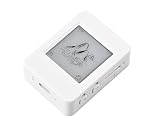
- The ESP32-S3-ePaper-1.54 is an e-Paper AIoT development board, equipped with ESP32-S3 microcontroller, adopts high-performance Xtensa 32-bit LX7 dual-core processor, up to 240MHz main frequency. Suitable for Voice Interaction and e-Reader, etc
- Supports 2.4GHz Wi-Fi (802.11 b/g/n) and Bluetooth 5 (LE), with onboard antenna. Built-in 512KB Static RAM, 384KB ROM, with integrated 8MB Flash and 8MB PS-RAM.
- Onboard 1.54inch e-paper display, 200 × 200 resolution, features high contrast and wide viewing angle. Onboard audio codec chip, supports voice capture and playback, enabling AI voice interaction applications. Supports AI Speech Interaction: Allows access to online large model platforms such as DeepSeek, Doubao, etc.
- Onboard PCF85063 RTC chip and SHTC3 temperature & humidity sensor for accurate RTC management and environmental monitoring. Onboard TF card slot for external storage of images or files. Onboard programmable PWR and BOOT side buttons for customized function development. Reserved 2 × 6 2.54mm pitch pin header for convenient external expansion.
- Supports ESP-IDF, Ardui IDE: Comprehensive SDK, dev resources, and tutorials to help you easily get started, please check: n9.cl/tseakv
The reading arrived late
Observation time and arrival or storage time are not interchangeable. Their gap can expose ingestion delay even when the value itself is correct. SAP lists poor connectivity, sensor malfunction, and device transmission problems as possible causes of delayed ingestion. Check whether the raw observation exists and whether the platform record was received later than its event time. SAP’s delayed-data-ingestion documentation explains this distinction.
Messages arrived out of order or calculations changed
Some systems recalculate derived values when readings arrive out of order. As a result, a historical point can change after later processing, or records can appear to share a timestamp without representing the same processing event. Check whether the dashboard is showing a derived series and whether the platform has updated past values. SAP documents this behavior for its product; its configuration details should not be assumed to apply to other platforms. SAP’s out-of-order data documentation describes the product-specific handling.
Rank #2
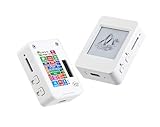
- This is is 1.54inch e-Paper AIoT development board. Onboard 1.54inch e-paper display, 200 x 200 resolution, features ultra-low power consumption and ambient light readability, suitable for portable devices and long-battery-life scenarios. Supports 2.4GHz Wi-Fi (802.11 b/g/n) and Bluetooth 5 (LE), with onboard antenna.
- Integrated with an RTC chip, SHTC3 temperature and humidity sensor, TF card slot, low-power audio codec chip circuit, and Lithium battery recharge management circuit. Reserved interfaces including USB, UART, I2C, and GPIO for easy functionality expansion and sensor connectivity, providing a flexible and reliable development platform for IoT terminals, electronic tags, portable displays, and other applications.
- Supports AI Speech Interaction: Allows access to online large model platforms such as ChatGPT, DeepSeek, Doubao, etc. Onboard audio codec chip, supports voice capture and playback, enabling AI voice interaction applications.
- Built-in 512KB Static RAM, 384KB ROM, with integrated 8MB Flash and 8MB PS RAM. Onboard PCF85063 RTC chip and SHTC3 temperature & humidity sensor for accurate RTC management and environmental monitoring.
- Onboard TF card slot for external storage of images or files. Onboard programmable PWR and BOOT side buttons for customized function development. Reserved 2 × 6 2.54mm pitch pin header for convenient external expansion.
The payload does not match the expected schema
A device may send data that the platform cannot interpret or associate with the expected template. This is distinct from whether the sensor measures accurately. Azure IoT Central lists template-to-device mismatches and invalid JSON among reasons data may not appear, and documents validation commands for telemetry and property updates. Use your platform’s own validation and device diagnostics rather than assuming Azure’s commands apply elsewhere. Azure IoT Central troubleshooting gives examples.
The sensor reading or its time series has a quality problem
Inspect the series for gaps, outliers, drift, stuck values, implausible range, or abrupt rates of change. Compare against the device or application’s requirements and a measured baseline; there is no universal acceptable error or delay for all AIoT systems. EPA recommends combining automated checks with manual review, since automated rules can miss subtle problems or flag a real event. For a temperature measurement, a suitable independent reference instrument may help check the physical reading, but the EPA guidance does not endorse a particular brand or model. EPA air-sensor quality assurance guidance discusses validation approaches.
Windows Errors? Fix Them Before They Spread
Repair common Windows errors and clear accumulated junk for a smoother, more stable PC - no reinstall needed.Free scan · no reinstallCrashes, No Sound, or Screen Glitches?
Random freezes, missing sound and display glitches usually trace back to one bad driver. Find and replace yours safely.Free scan · under a minuteRank #3

- The product requires a 3.7V MX1.25 Lithium battery for use, which is not included. Please purchase it separately.
- Powerful ESP32-S3 Microcontroller: Equipped with the high-performance Xtensa 32-bit LX7 dual-core processor (up to 240MHz), the ESP32-S3-ePaper-1.54 offers efficient processing power for your AIoT projects, ensuring smooth operation across various tasks.
- Wi-Fi & BLE Connectivity: Supports dual-mode communication with 2.4GHz Wi-Fi (802.11 b/g/n) and Bluetooth 5 (LE), featuring an onboard antenna for seamless wireless connectivity, ideal for IoT applications that require stable and flexible communication.
- 1.54" e-Paper Display with Ultra-Low Power: The onboard 1.54-inch e-paper display features a 200 × 200 resolution, high contrast, and wide viewing angles, while maintaining ultra-low power consumption. It's perfect for portable devices and long-lasting battery use in outdoor environments with sunlight readability.
- Integrated Sensors & Components: Includes a PCF85063 RTC chip, SHTC3 temperature & humidity sensor, low-power audio codec chip, and a TF card slot for external storage. These built-in features offer a complete solution for environmental monitoring, voice interaction, and data logging.
An edge or cloud stage transformed the value
AIoT systems can distribute work across devices, edge infrastructure, and cloud services. Local preprocessing or cloud processing may filter, aggregate, or derive a value before it reaches the dashboard. Confirm whether the displayed series is raw telemetry, a filtered stream, an interval aggregate, or a derived measurement. ITU-T’s AIoT reference model describes this distributed device-edge-cloud structure. ITU-T Recommendation Y.4618 was approved on 2026-06-29.
A broader connectivity or service issue affects the data path
If multiple sensors or stages show gaps or delays, examine the system path rather than assuming the dashboard is at fault. Monitoring device, network, edge, ingestion, storage, and visualization components can help isolate a common failure. AWS recommends monitoring across the IoT solution and retaining historical monitoring data so current performance can be compared with baselines. AWS IoT monitoring guidance describes its service context.
Rank #4

- ESP32-S3 1.54inch e-Paper AIoT development board adopts high-performance 32-bit LX7 dual-core processor, up to 240MHz main frequency. Supports 2.4GHz Wi-Fi (802.11 b/g/n) and Bluetooth 5 (LE), with onboard antenna
- Onboard 1.54inch e-paper display, 200 × 200 resolution, black/white display color, 0.3s partial refresh time, 2s full refresh time, features ultra-low power consumption and ambient light readability
- Onboard audio codec chip, supports voice capture and playback, enabling AI voice interaction applications. Onboard PCF85063 RTC chip and SHTC3 temperature & humidity sensor for accurate RTC management and environmental monitoring
- Built-in 512KB Static RAM, 384KB ROM, with integrated 8MB Flash and 8MB PSRAM. Onboard TF card slot for external storage of images or files
- Onboard programmable PWR and BOOT side buttons for customized function development. Reserved 2 × 6 2.54mm pitch pin header for convenient external expansion
What to compare when two readings differ
- Identity: same device, sensor, and property.
- Time: same observation or event time, aligned time zone, and dashboard interval; distinguish event time from receipt or processing time.
- Meaning: same unit and measurement definition, and raw value versus aggregate or derived value.
- Completeness: missing periods, duplicates, and out-of-order records.
- Validity: payload shape and schema, plus plausible range, rate of change, drift, or stuck behavior against the device’s requirements or a measured baseline.
These checks separate a display or pipeline mismatch from a sensor-accuracy question. A value can be correctly transmitted yet shown on a different time basis, or a well-aligned dashboard can faithfully display a bad measurement.
Quick Recap
Best Value
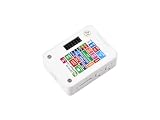
- ESP32-S3 1.54inch E-Paper AIoT Development Board.Supports AI Speech Interaction, Temperature And Humidity Monitoring, And DIY Creative Function, Etc.
- Onboard Audio Codec Chip.Supports High-Quality Audio Processing, Providing Clear And High-Quality Audio Input And Output
- Supports AI Speech Interaction.Allows Access To Online Large Model Platforms Such As DeepSeek, Doubao, Etc
- Application Scenarios.Suitable For Voice Interaction And E-Reader, Etc
- Supports ESP-IDF, Arduino IDE.Comprehensive SDK, Dev Resources, And Tutorials To Help You Easily Get Started
Product prices and availability are accurate as of the date/time indicated and are subject to change. Any price and availability information displayed on Amazon at the time of purchase will apply.

