
Edge AI can make AI systems faster and less dependent on network transfers by processing data near the devices and sensors that produce it. It can also support more sustainable computing, but it is not automatically greener than cloud AI: the result depends on the model, hardware use, electricity mix, network demands and the equipment’s full lifecycle. For many real-world systems, a hybrid design—local inference for time-critical tasks, with cloud services for coordination or heavier work—is the practical middle ground.
What edge AI changes
In a cloud-centered design, a device sends data to a remote service for processing and receives a result. With edge AI, some or all inference happens closer to where data is generated: on a device, a nearby gateway or another local system. Some designs also support learning or collaboration among edge nodes, but local inference is the core distinction.
Keeping a decision close to its source can reduce the time spent sending data back and forth, lower network traffic and let a system continue operating when connectivity is limited. The European Innovation Council (EIC) identifies reduced latency, lower energy consumption, lower network congestion, and improved privacy and security among edge AI’s potential benefits. These are potential benefits, not guarantees: they depend on how a particular system is built and used.
Is edge AI more sustainable than cloud AI?
There is no universal winner. Edge AI can avoid some data transfers and cloud processing, but it also puts computing equipment in the field. A fair comparison needs to account for the entire workload and lifecycle rather than treating “local” as synonymous with “low carbon.”
#1 Best Overall
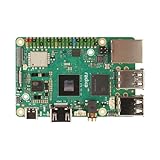
- POWERFUL COMPUTING: Advanced single board computer featuring high-speed LPDDR5 memory for superior processing capabilities and edge AI computing performance
- CONNECTIVITY: Multiple USB ports, HDMI output, and Ethernet connectivity provide versatile interface options for various applications
- COMPACT DESIGN: Space-efficient circuit board layout integrates powerful computing components in a single compact form factor
- DEVELOPMENT READY: Ideal platform for edge AI development, programming, and prototyping with comprehensive hardware interfaces
- EXPANDABILITY: Features multiple GPIO pins and standard connectors enabling extensive hardware expansion possibilities
Where edge can help
- Less data movement: Processing locally can reduce the amount of raw data sent over a network, which may lower bandwidth use and the associated network load.
- Less centralized processing for some tasks: If local inference replaces a remote request, it can reduce the cloud computation required for that task.
- Better fit for constant, local decisions: A sensor or machine that needs frequent responses may avoid repeated round trips to a remote service.
What can offset those gains
- Device production and replacement: Manufacturing, shipping, replacing and disposing of edge devices contribute to lifecycle impacts. Those impacts belong in the sustainability accounting.
- Underused hardware: Dedicated devices that spend most of their time idle can make a local architecture less efficient than expected.
- Model and hardware demands: A larger or poorly optimized model may use substantial energy and exceed an edge device’s memory or power limits.
- Electricity and workload placement: The carbon impact depends partly on the electricity used where computation happens. Moving a workload from one location to another does not, by itself, establish an environmental benefit.
A 2025 IEEE comparative analysis reports up to 28% energy savings, 35% latency reductions and 60% bandwidth reductions in analyzed deployments. “Up to” matters: these are upper-bound findings from those deployments, not guaranteed results for a new system or a direct comparison that applies to every edge workload.
How edge, cloud and hybrid designs compare
The right placement depends on what a task needs: a rapid response, broad context, strong connectivity, local data handling or elastic computing capacity. The table summarizes typical architectural trade-offs; actual results depend on implementation.
| Design | Best fit | Main advantages | Main trade-offs |
|---|---|---|---|
| Edge-first | Time-critical decisions, limited connectivity, bandwidth-constrained settings or data that should remain local | Can reduce response time and data transfers; may continue working during some connectivity interruptions | Limited device capacity; fleet operations, upgrades and security must be managed across deployed equipment |
| Cloud-first | Workloads needing global aggregation, elastic resources or computation beyond local hardware capacity | Centralized resources can simplify access to shared data and heavy computation | Remote requests rely on connectivity and incur data-transfer demands; response time depends on the network and service path |
| Hybrid | Systems needing immediate local responses as well as shared context, fleet management or heavier processing | Can keep time-sensitive inference local while sending selected data or updates to cloud services | Requires clear division of work, reliable coordination and a lifecycle spanning both edge and cloud components |
These are architectural inferences from trade-offs described by IEEE, EIC and EU project sources, including VERGE’s work on a multi-site edge-cloud continuum and an integrated AI/ML lifecycle. A hybrid approach is often useful when a task has both a local response requirement and a need for fleet-wide coordination; it is not automatically the cheapest or most efficient option.
Rank #2

- [High performance] Quad-core ARM SoC up to 1. 8GHz with 3GB RAM- The Tinker Edge R features the Rockchip RK3399Pro SoC and Mali - T764 GPU along with 2GB of Dual Channel LPDDR4 memory for system, 1 GB LPDDR3 memory for NPU and 16GB eMMC flash
- [Gigabit Class networking]Tinker Edge R features a high speed GB LAN port for true Gigabit Class networking throughput along with 3x USB3.2 Gen1 Type-A. It also features onboard Wi-Fi & Bluetooth for robust IoT & Network connectivity
- [Open-source]The board will come with fully open-source kernel and support for multiple APIs, including OpenGL, Vulkan, OpenCL, OpenVX, TensorFlow Lite, Android NN, and Caffe
- [HD Audio & UHD video support] It supports 192/24bit HD Audio playback with automatic Audio jack detection as well as accelerated HD & UHD ( 4K ) video playback and supports HDMI CEC for seamless power on & off configurations
- [WiKi]For more information please refer to the product description, any technical issues after purchase please contact with our tech-support team: click "WayPonDEV" and ask a question. Package Content: 1x Tinker Edge R (3GB+16G eMMC); 2x Wi-FiVBT antenna cable; 1x Stand offset(4xScrew+4xHex); 2x Camera MIPI Convert cable (22P to 15P); 1 x Shielding bag; 1 x Quick start guide
What hardware and software do you need?
There is no single hardware specification for edge AI. Requirements follow from the model, the input data, the response-time target, the environment and how many devices must be operated. A prototype may run on a general-purpose device, while a production deployment may need dedicated acceleration or rugged equipment; no particular model, vendor, price or minimum specification is established here.
Free tools Windows power users keep installed
One-click scans. No signup required.
Define the workload before choosing a device
- Model and accuracy: Identify the inference task and the accuracy the application needs. Optimization should preserve acceptable results, not just shrink the model.
- Compute, memory and power envelope: Check whether the chosen model fits the device’s available resources under real operating conditions.
- Timing and connectivity: Set a response target and determine whether the system must keep working when the network is slow or unavailable.
- Data handling: Decide what stays local, what may be sent elsewhere and what the system needs to retain.
- Operations: Plan for monitoring, updates, security, recovery and eventual equipment replacement—not just the initial installation.
Fit the model to the device
Quantization and pruning can reduce model demands; compilation can target a particular runtime or accelerator; and hardware-aware scheduling can help work fit within memory and power limits. These techniques are not interchangeable guarantees of better performance: teams need to verify their effects on accuracy, energy and latency for the actual workload.
How can edge AI scale beyond a pilot?
Adding more devices is only one part of scale. A production fleet may contain heterogeneous hardware and must keep models reliable, secure and maintainable across sites. The EU EdgeAI-Trust project targets standardized interfaces, interoperability, upgradeability, reliability and security across heterogeneous systems. Its project description says it aims to develop a domain-independent architecture for decentralized edge AI, along with hardware and software solutions and tools for collaborative AI and learning at the edge.
Rank #3

- Supports access to online large model platforms and includes Edge Impulse object detection demo for real-time multi-object recognition
- Equipped with Xtensa dual-core LX7 processor (up to 240MHz), 8MB PSRAM, 16MB Flash, and dual-mode WF + BT LE
- Dual-microphone array with noise reduction and echo cancellation for high-quality voice processing
- Integrated audio input and output module, supporting AI speech interaction and voice recognition applications
- Onboard camera interface (DVP) and SPI / QSPI display interface for image capture, recognition, and external display connection
Build a repeatable fleet lifecycle
- Standardize interfaces. Define consistent device, model and telemetry interfaces so teams can deploy across different hardware rather than binding each model to one device.
- Optimize against actual constraints. Use appropriate model optimization and hardware-aware scheduling, then measure accuracy, energy use and response time on target devices.
- Secure deployment and recovery. Use signed updates, monitor deployments and provide a rollback path if an update fails or degrades behavior.
- Monitor production behavior. Track system health and model performance, and use drift detection to identify when real-world data or behavior has shifted.
- Plan for end of life. Decide how devices will be replaced and how data and equipment will be handled when hardware is retired.
- Keep cloud coordination where it helps. Use centralized services for fleet management, training or aggregation when local resources are insufficient or coordination across sites is needed.
The IEEE analysis also identifies limited hardware capacity, scalability constraints, integration complexity and lifecycle concerns as challenges. VERGE’s edge-cloud-continuum approach reflects why scaling commonly requires coordinated lifecycle tooling rather than treating each edge device as a standalone deployment.
Independent reader supportYour contribution helps us test, update, and keep practical guides available for everyone.How to judge whether a deployment is working
Measure the same workload across candidate designs and state the conditions of comparison. A useful evaluation records:
Recommended Free Tools
- Latency: Measure response time for the application’s real request path, including network time where applicable.
- Energy per inference: Measure energy for the task on the hardware and under the operating conditions that matter.
- Bandwidth: Record how much data is sent, how often, and whether raw data or selected results are transferred.
- Accuracy: Compare model results against the application’s required standard, especially after optimization.
- Reliability: Check how the system behaves during network interruption, device failure and update recovery.
- Operational and lifecycle costs: Include hardware, integration, maintenance, replacement and end-of-life handling in the comparison.
Report the workload, device, network conditions, measurement boundary and time period alongside results. Without those details, an energy or latency figure may not transfer to a different deployment.
Rank #4
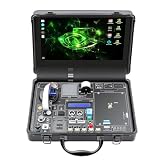
- 30-in-1 No-Solder Sensor Board, Plug and Play: Integrates 30 functional sensors including temperature & humidity, ultrasonic ranging, gas and motion sensors. Innovative common board design requires no soldering or complex wiring, and comes with a full set of accessories like 128G SD card, adapter board and acrylic mounting plates for zero-threshold experiments
- 8MP Gimbal Camera & Dual Servos for Professional Visual AI: The Starter Kit is equipped with an IMX219 8MP monocular camera and a dual-servo gimbal, supporting face and target tracking, and is ideal for AI edge computing scenarios such as intelligent monitoring, robot navigation, and automated recognition
- 38 Step-by-Step Python Tutorials, From Beginner to Practical Application: The Jetson Orin Nano Starter Kit comes with 38 well-designed Python tutorials progressing from basic programming to vision practice, covering all key knowledge of sensor control, embedded development and AI visual recognition for both beginners and advanced learners
- 11.6-inch IPS HD Screen & AI Voice Interaction System: Built-in 1366*768 resolution IPS screen eliminates the need for an external monitor, enabling one-device experimentation and visual feedback. The exclusive AI voice interaction system supports intelligent Q&A and voice command control for natural human-computer dialogue
- Rich Expansion Interfaces & Portable All-in-One Design: Features 2x I2C, 1x UART and 2 IO expansion interfaces to meet personalized experiment expansion needs; a custom carrying case integrates all components (11.81×7.87×3.94 inch), allowing AI experiments and demonstrations anytime and anywhere
Why the sustainability question is growing
Edge AI is part of a broader shift in where AI computation happens, not a substitute for all centralized computing. The World Economic Forum wrote in 2025 that global data-centre electricity use could exceed 1,200 TWh by 2035, nearly triple 2024 levels. That projection concerns global data centres, not edge AI specifically; it underscores why efficiency and workload placement matter across the whole system.
Google reported that its data-centre energy emissions were 12% lower in 2024 despite a 27% increase in electricity demand, and that it had more than 8 GW of contracted clean-energy generation. These are Google infrastructure figures, not edge-AI benchmarks. Google AI’s 2026 sustainability page also reports over three times more compute performance per unit of energy than five years earlier and nearly 30× TPU power efficiency versus its first Cloud TPU. Those figures describe Google’s hardware and should not be generalized to edge devices.
The broader lesson is that efficiency improvements and cleaner electricity can help manage growing demand, but they do not eliminate it. Sustainable edge AI requires measuring the whole workload and lifecycle, including the cloud services and networks that remain part of a hybrid system.
Quick wins for a faster PC:
Repair Windows errors before they cause bigger problemsFix Now →Scan for outdated or missing drivers - takes under a minuteDriver Scan →Clear out junk files and repair common Windows errorsFree Scan →Quick Recap
Product prices and availability are accurate as of the date/time indicated and are subject to change. Any price and availability information displayed on Amazon at the time of purchase will apply.

