
Renesas announced the RZ/V2N on March 11, 2025, as a mid-range addition to its RZ/V embedded-AI MPU family. It combines an AI accelerator rated for up to 15 TOPS with two camera interfaces in a 15 × 15 mm package, targeting products such as AI cameras, driver-monitoring systems and mobile robots. Renesas says mass production began in March 2025; the company lists an active RZ/V2N evaluation kit.
What is the Renesas RZ/V2N?
The RZ/V2N is a vision-focused microprocessor unit (MPU) for embedded devices that analyze camera images locally. Its processing mix includes four Arm Cortex-A55 application cores, a Cortex-M33 microcontroller core, a Mali-C55 image signal processor (ISP) and Renesas’ DRP-AI3 accelerator. The combination is intended to handle application software, real-time control, image processing and AI inference within one system.
Renesas positions it between the lower-performance RZ/V2L and higher-performance RZ/V2H. The V2N is aimed at mid-range endpoint systems where camera processing and AI matter, but where a top-end accelerator may not be necessary.
How much AI performance does it offer?
Renesas rates the DRP-AI3 in the RZ/V2N at up to 15 TOPS of AI inference and 10 TOPS/W. These are manufacturer-stated peak performance and efficiency figures; the supplied specification does not identify a workload, precision, measurement setup or operating conditions for the efficiency rating. TOPS is a throughput rating, not a promise that a particular application will run at that speed. Actual results depend on the model, its optimization, image pipeline and system configuration.
Crashes, No Sound, or Screen Glitches?
Random freezes, missing sound and display glitches usually trace back to one bad driver. Find and replace yours safely.Free scan · under a minuteWindows Errors? Fix Them Before They Spread
Repair common Windows errors and clear accumulated junk for a smoother, more stable PC - no reinstall needed.Free scan · no reinstall#1 Best Overall
![Arduino® UNO™ Q 2GB[ABX00162] - Hybrid Board, Qualcomm Dragonwing QRB2210 microprocessor (MPU) & STM32U585 Microcontroller(MCU), AI Vision, Voice, IoT, Robotics, Linux Debian OS, Wi-Fi 5, USB-C](https://m.media-amazon.com/images/I/51cl4xygwGL._SL160_.jpg)
- Dual-Brain Hybrid Power: Combines the Qualcomm Dragonwing QRB2210 MPU (Quad-core Arm Cortex-A53 @ 2.0 GHz CPU, Adreno GPU, AI acceleration) and the real-time, low-power STM32U585 MCU for advanced applications like object recognition, voice commands, and motion detection.
- AI & Linux Capabilities: Unlocks AI-powered vision and sound solutions; runs Linux Debian OS for coding in Python and supports the Arduino ecosystem with libraries and Sketches; quick start with Arduino App Lab.
- Advanced Features: Equipped with 2 GB LPDDR4 RAM, 16 GB eMMC built-in storage, ideal to develop in PC-connected mode, running the OS, Python scripts, and basic network services (SSH) without a demanding GUI or heavy multitasking; great for lightweight AI and memory-optimized TinyML applications, needing local storage for basic OS and core libraries. Dual-band Wi-Fi 5 (2.4/5 GHz), Bluetooth 5.1, and high-speed headers for vision, audio, and display peripherals.
- Seamless Expansion & Connectivity: Features the classic UNO form factor for shields compatibility, an 8x13 LED matrix, and a Qwiic connector for easy expansion with Modulino nodes; power and connect via the USB-C connector.
- Intended Use & Development: The perfect platform for prototyping robotics or IoT projects, empowering innovators with a unified development experience to mix Arduino Sketches, Python scripts, and containerized AI models in a single interface.
Renesas says its pruning technology reduces unnecessary computation during inference. Its software environment also uses hardware-software co-optimization and includes more than 50 AI use cases, according to the company’s 2025 announcement. The white paper describes support for PyTorch and TensorFlow workflows and an AI-MAC paired with dynamically reconfigurable processing.
What makes it suitable for two-camera applications?
The RZ/V2N has two four-lane MIPI CSI-2 camera interfaces and a Mali-C55 ISP. Two camera feeds can support stereo vision or simultaneous views from different angles. Renesas identifies motion analysis, fall detection, parking-lot vehicle counting and license-plate recognition as examples of applications that can benefit from this configuration.
Its target workloads extend beyond those examples to AI cameras, traffic and congestion analysis, industrial visual inspection, driver monitoring, mobile robots, retail, logistics, surveillance and vision-AI gateways. Two interfaces make a dual-camera design possible; they do not by themselves establish supported sensor combinations, frame rates for every mode or application-level accuracy. Those depend on the camera modules, software and system design.
Rank #2
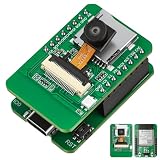
- Stop Struggling with External Flashers: The Ultimate Plug-and-Play Solution: Tired of messy wiring and unreliable external programmers? Our ESP32-S3 CAM features a unique dual-layer design with an Integrated USB Debugger (CH340) and physical buttons. Flash, debug, and power your AI Camera Development Board directly via a single USB cable. Experience the seamless development workflow you deserve—get your project running in minutes, not hours
- Eliminate Memory Bottlenecks: Pro-Grade Performance for Edge AI: Frustrated by memory overflow when running complex vision algorithms? Powered by the ESP32-S3-WROOM-1 module with N16R8 (16MB Flash + 8MB PSRAM), this board provides the massive headroom needed for high-resolution image processing and local data logging. Perfect for AI Edge Computing Engineers seeking rock-solid stability for face detection and object recognition projects. Upgrade to pro-spec hardware today
- Crystal Clear Vision & Massive Storage: Your All-in-One IoT Hub: Why settle for low-quality visuals or limited storage? Equipped with an GC2145 Camera and an integrated TF Card Slot, our ESP32-S3 CAM kit enables high-definition image capture and extensive local storage. Whether you are a Smart Home Controller R&D Engineer or a hobbyist, this AI Camera Development Board is your gateway to advanced vision-based automation. Capture every detail and store it with ease
- Dual Antenna Options for Maximum Flexibility: Features a high-gain onboard PCB antenna for compact builds, plus an IPEX connector for external 2.4G antennas to ensure stable long-range connectivity
- Accelerate Learning & Deployment: The STEM Educator’s Choice: Struggling to find a reliable platform for your IoT curriculum? This ESP32-S3 CAM kit is fully compatible with Ar duino and MicroPython, backed by detailed tutorials and open-source libraries. Educational IoT Curriculum Developers can now provide students with a professional-grade AI Camera Development Board that bridges the gap between classroom theory and real-world AI applications. Empower the next generation of innovators now
RZ/V2N compared with RZ/V2L and RZ/V2H
Renesas’ current product catalog, accessed in 2026, places the portfolio between 0.5 TOPS and up to 80 TOPS. The table distinguishes published portfolio-level AI ratings from details not established in the cited announcement, product catalog or white paper.
What’s actually slowing this PC down?
Pick the symptom - the matching free tool is one click away.
| Specification | RZ/V2L | RZ/V2N | RZ/V2H |
|---|---|---|---|
| AI performance | 0.5 TOPS (Renesas current product catalog, accessed 2026) | Up to 15 TOPS; 10 TOPS/W rated efficiency (Renesas, 2025) | Up to 80 TOPS (Renesas current product catalog, accessed 2026) |
| Camera count / interfaces | Not stated in the cited material | Two four-lane MIPI CSI-2 interfaces | Not stated in the cited material |
| CPU and memory interfaces | Not stated in the cited material | Four 1.8 GHz Cortex-A55 cores, one 200 MHz Cortex-M33; 32-bit LPDDR4/4X-3200 interface | Not stated in the cited material |
| Package and mounting area | Not stated in the cited material | 840-pin, 15 × 15 mm FCBGA; Renesas says its mounting area is 38% smaller than RZ/V2H | Not stated in the cited material; used as the RZ/V2N mounting-area comparison |
| Video capability | Not stated in the cited material | H.264/H.265 encode and decode at 4K/30 fps | Not stated in the cited material |
| Power efficiency | Not stated in the cited material | 10 TOPS/W, a Renesas rating; test conditions are not stated | Not stated in the cited material |
| Development cost | Not stated in the cited material | Not stated in the cited material | Not stated in the cited material |
These figures support a broad positioning comparison, not a complete performance or cost ranking. The cited sources do not provide matching camera, CPU, memory, video, efficiency or price details for all three processors, so those differences cannot be quantified here.
Independent reader supportYour contribution helps us test, update, and keep practical guides available for everyone.What are the RZ/V2N’s other hardware specifications?
Beyond its CPU, ISP and AI accelerator, the published specification lists Mali-G31 3D graphics, two Gigabit Ethernet ports, one USB 3.2 Gen 2 port, one USB 2.0 port, six CAN-FD channels and PCIe Gen3. Memory is LPDDR4/4X-3200 on a 32-bit interface. Video encoding and decoding are specified for H.264 and H.265 at 4K/30 fps.
Rank #3
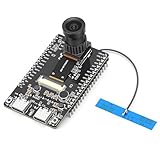
- 【Main Functions】BW21-CBV-Kit is a local AI vision recognition development board capable of independently running object recognition models
- 【Camera Specifications】Equipped with a 1920 x 1080 resolution, 2MP, 30fps wide-angle camera, a condenser microphone, and support for 2TB memory card storage
- 【Strong Communication Capabilities】Based on the RTL8735B chip, it supports dual-band 2.4GHz/5GHz WiFi and Bluetooth 5.1, providing high-performance wireless transmission capabilities for smoother image transmission
- 【Development Method】Utilizes the Arduino development approach, allowing you to easily implement your ideas, such as face recognition, gesture recognition, object recognition, component defect detection, people counting, pet recognition, etc
- 【Rich Interfaces】Two sets of 18-pin headers provide 30 programmable I/Os, facilitating project expansion. Combined with AI recognition, it unlocks limitless possibilities
The 840-pin FCBGA package measures 15 × 15 mm. Renesas says the RZ/V2N’s mounting area is 38% smaller than the RZ/V2H’s; that comparison concerns mounting area, not a stated 38% reduction in package dimensions or total system size.
How can developers evaluate the RZ/V2N?
Renesas lists an active product called the RZ/V2N Quad-core Vision AI MPU Evaluation Kit with an “Order Now” path. Availability, price and shipping depend on the seller and region, so check Renesas or its authorized distributors for current ordering details.
Quick wins for a faster PC:
Scan for outdated or missing drivers - takes under a minuteDriver Scan →Clear out junk files and repair common Windows errorsFree Scan →Fix the driver behind crashes, sound loss and screen glitchesFind Drivers →The development environment includes AI SDK samples, DRP-AI TVM and DRP-AI Translator. Renesas partners also offer system-on-modules (SOMs), single-board computers (SBCs) and camera modules. For a project, confirm that the chosen kit or partner hardware supports the required camera sensors, interfaces and software workflow before committing to a design.
Who should consider the RZ/V2N?
The RZ/V2N is a candidate for teams building embedded vision products that need local AI inference and may use two camera inputs, such as surveillance devices, driver-monitoring systems, inspection equipment or mobile robots. Its portfolio position suggests a middle option between the lower-rated V2L and higher-rated V2H, but the published TOPS figures alone cannot establish which MPU is the best fit. Compare the target model’s measured performance, camera and video requirements, memory needs, thermal and power budget, software support and total system cost before selecting a processor.
Quick Recap
Product prices and availability are accurate as of the date/time indicated and are subject to change. Any price and availability information displayed on Amazon at the time of purchase will apply.

