
The Tool Desk
Outbyte Driver Updater FREEFix the driver behind crashes, sound loss and screen glitchesFind Drivers →Outbyte PC Repair FREEClear out junk files and repair common Windows errorsFree Scan →IEC 61000-4-2 is a useful, repeatable way to evaluate how electrical and electronic equipment responds to electrostatic discharge—but a pass does not prove that a standalone component is universally ESD-safe. The standard defines an equipment-immunity test framework. A result is only as meaningful as its controlled test conditions, calibration, operating state and pass/fail criteria; protection components need evaluation in their final application.
What IEC 61000-4-2 can establish
The current edition is IEC 61000-4-2:2025, the third edition, published on March 7, 2025. The 163-page standard specifies the ideal discharge-current waveform, test levels, equipment, setup, procedure, calibration and measurement uncertainty. IEC describes its objective as establishing a common and reproducible basis for evaluating equipment exposed to electrostatic discharges from operators or nearby objects.
That is a framework for evaluating equipment immunity, not a universal certification of every component inside the equipment. Product committees determine which test severity applies to a particular type of equipment, and the standard is not intended to prescribe tests for every apparatus or system. The previous edition, IEC 61000-4-2:2008, was withdrawn on March 7, 2025. IEC lists a stability date of 2027 for the 2025 edition; that date is not a guarantee that no later revision or local adoption will occur.
Why a component pass does not prove product-level safety
The standard excludes tests intended to assess a device’s ESD sensitivity during handling and packaging. It also does not, by itself, characterize the performance of an ESD-protection circuit. Those are different questions from whether assembled equipment maintains its required performance during the specified immunity test.
#1 Best Overall
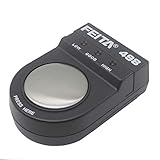
- √ ESD wrist strap tester is widely used and can be connected to all ESD-compliant wired wrist straps with a banana jack.
- √ Many wrist straps work well together, have tight contacts, low contact resistance, good connectivity, long life, and good oxidation resistance.
- √ FEITA 498 tester eliminate product damage caused by static electricity and ensure the safety of every employee.
- √ Various grounding systems can be quickly and easily inspected from any location.
A protection device can tolerate a bench discharge yet behave differently once mounted in a product. Board layout, return paths, enclosure geometry, attached cables, software state and nearby circuits can change how a transient couples into the system. Nexperia’s ESD Handbook says that protection components mounted in a product must be tested in their final application environment. Treat a component-level result as evidence about the tested setup—not as a promise about every product, installation or discharge scenario.
Keep IEC 61000-4-2 immunity testing distinct from device-specific handling qualifications such as HBM or CDM. A result under one method does not substitute for the other. No universal percentage for how much IEC 61000-4-2 testing improves component reliability or reduces field failures is established by the cited sources.
Rank #2

- VISUALLY KNOW YOU ARE CONNECTED TO EARTH GROUND: Is the outlet you are using for connecting your table mat or wrist strap correctly wired? Our anti-static ground tester tells you at a glance if everything is set up properly before you start a repair or open ESD sensitive devices. It is very easy to use the kit for your static safe field work.
- ACCURATE CIRCUIT TESTING: Tests for correct wiring, open ground, reverse polarity, open hot, open neutral, hot on neutral, hot and ground reversed with open hot in 3 wire, 120 VAC circuits. This ideal fault detector shows exactly what you have, making your task easier, safer, and more efficient. Resistant high polymer is ultrasonically welded for added protection.
- EASY CHECK TESTER: Made with premium neon lamps to prevent false readings. Ultra easy to read for quick reference. Also, the ESD wrist strap outlet tester is easy to plug into a banana plug terminated wriststrap. That is why professionals from various industries prefer to use such a fault detector. Checking with our tester won’t be a problem, even if you are doing it for the first time.
- DURABLE CONSTRUCTION: The STI-61-038 ESD Kit for common ground point features tough, impact-resistant casing to ensure a long life of the tester. It is one of the most reliable test equipment accessories due to its durability.
- PRODUCT DETAILS: Circuit tester for use on 120 VAC circuits. Features Easy Check label for easy-to-read results. The LED indicator lights, which are highly visible, provide visual proof of correct ground or any common ground faults. Also, indicator lamps have wrap-around lens covers for high visibility from all angles. The product makes receptacles/workers/field service kits grounded appropriately.
Contact discharge and air discharge are not interchangeable
Both are methods in the test framework, but the choice depends on the test point. STMicroelectronics and Nexperia describe controlled contact discharge for accessible conductive points and air discharge where direct contact cannot be applied. A comparison is useful only when the method and the point tested are stated.
| Test method | Where it is used | What to control and report |
|---|---|---|
| Contact discharge | Accessible conductive points where the discharge tip can make direct contact. | Identify the points, pulse count, test level and generator calibration evidence. The 2025 edition adds informative Annex E guidance on test-point selection and direct-contact pulse counts. |
| Air discharge | Points where direct contact cannot be applied. | Identify the points, test level and number of applications, and document the generator and tip calibration. The 2025 edition adds a calibration requirement for generators with an air-discharge tip. |
The exact applicable test levels and procedures depend on the product’s test plan and the standard’s requirements. Do not infer a test level or equivalence between methods from a component’s pass label.
Rank #3

- [STABLE]: Esd wrist straps monitor microcomputer chip control, debugging - free, plug and play, easy to use and can correctly judge the contact between the ground wire on the ground and the ground wire on the workbench, and the standard safety certification power supply is configured to ensure safety.
- [SENSITIVE]: ESD monitor will give an alarm when the wristband electrostatic discharge path fails for 0.1 seconds or more. Good reliability and strong anti-interference ability.
- [WIDE APPLICATION]: Test parameters can be set as required, generally 1.068 - 2.0 mq ( plus or minus 5 % ), conforming to the specifications, or set monitoring parameters freely. The sensitivity of the alarm is easy to adjust, and can be used by most of the electrostatic wristbands on the market, with a wider range.
- [WIDE APPLICATION]: Test parameters can be set as required, generally 1.068 - 2.0 mq ( plus or minus 5 % ), conforming to the specifications, or set monitoring parameters freely. The sensitivity of the alarm is easy to adjust, and can be used by most of the electrostatic wristbands on the market, with a wider range.
- [ENHANCED SAFETY]: With real-time monitoring capabilities, this esd monitor provides constant supervision of the operator's electrostatic wrist strap wear and grounding status, promptly alerting users to any abnormalities for enhanced safety protocols.
What makes results repeatable
A reliable result is reproducible enough that another operator or laboratory can understand what was tested and why the outcome counts as a pass or failure. Control the variables that shape the applied transient and the way the product responds:
- Discharge method and points: State whether contact or air discharge was used and identify the exact test locations.
- Generator evidence: Record the generator identification and calibration evidence, including the relevant air-tip calibration where applicable. IEC 61000-4-2:2025 improves the current-calibration procedure.
- Test severity and applications: Specify each test level and the number of pulses or discharge applications at each point. Use the applicable product committee requirements; do not present an unspecified test as a general pass.
- Setup and return paths: Document equipment arrangement, grounding and return-path geometry. Setup is part of the test, not incidental laboratory detail.
- Operating state: Define how the equipment was configured and operating during the test, including the functions being exercised and the conditions under which effects were observed.
- Performance criteria: State the observable behavior that counts as acceptable, degraded or failed. A pass/fail label without criteria cannot tell a reader what the equipment actually did.
- Uncertainty: Document how measurement uncertainty was considered. The 2025 edition adds improved uncertainty considerations and example uncertainty budgets.
These details help explain whether a result can be compared across setups. Different test points, grounding, operating modes or performance criteria can produce results that are not directly comparable, even when both reports cite IEC 61000-4-2.
Rank #4

- Desoldering: The ALL-NEW & improved desoldering station provides a significantly faster through-hole component desoldering experience without any jam. This desoldering tool is especially suitable for frequent through-hole desoldering work for in-line sockets, LCD displays, LED Nixie tubes, and more
- Soldering: The soldering station's 110W heating element can heat up fast during use. Temperature is adjustable from 392~896°F. When heating, the built-in PID program will detect and compensate for the temperature loss every 20 milliseconds to achieve fast temperature recovery. This soldering iron station can apply to most soldering situations, even for larger solder joints
- 2-IN-1: This multi-station allows you to use a soldering station and desoldering station at the same time. When the solder joints require slightly more heat, you can use the soldering iron and desoldering gun together to heat up the solder joint fully before extracting the melted solder with the desoldering tool
- Complete set of accessories: The package includes 3 interchangeable soldering sucker nozzles (1.0mm/1.2mm/2.0mm), 3 soldering tips (Type-I/B/K), 100% metallic soldering & desoldering holder, 5 ceramic filters, 10 filtration adsorbers, a set of cleaning pins, a solder residue storage chamber, a vacuum receptacle cover, 2 solder residue filter spring
- This 2 IN 1 soldering and desoldering tool is covered by our exclusive 1-year USA technical support, with 24-hour assistance from our dedicated team. Note: This product is rated for 110-127V USA specifications. Do not connect this iron to a 220V power socket
What changed in the 2025 edition
For readers comparing reports or test plans across editions, IEC identifies these significant changes in IEC 61000-4-2:2025:
- A calibration requirement for generators with an air-discharge tip, plus an improved current-calibration procedure.
- A normative annex for test setups for particular equipment, and informative guidance for wearable devices.
- Informative Annex E guidance on test-point selection and the number of direct-contact pulses.
- Improved treatment of measurement uncertainty, including example uncertainty budgets.
- Clause 9 was moved to informative Annex K; post-installation testing was moved to informative Annex G because the environment cannot be fully controlled.
EMC Partner also summarizes the revision as aiming to support more reliable compliance assessments. When reading an older test report, check which edition it cites rather than assuming the 2025 additions were applied.
Do these 3 things before closing this tab:
1Scan for outdated or missing drivers - takes under a minute2Repair Windows errors before they cause bigger problems3Fix the driver behind crashes, sound loss and screen glitchesBest Value

- 【Rapid Static Removal】This 70kHz High-Frequency Ionizing Air Gun comes with a built-in 2.5kV generator, removing static electricity in just 1.5 seconds—ideal for time-sensitive applications that demand quick response.
- 【Durable Performance】Featuring corrosion-resistant alloy needles designed to endure long-term ionization use. They ensure consistent ion emission, excellent ion balance, and reliable, maintenance-free operation over time.
- 【Safe to Use】Runs on a safe 24V low voltage and includes a clear indicator light that alerts you instantly if ion output is abnormal or the generator fails—providing both safety and peace of mind.
- 【Air Compressor Requirements】This ionizing air gun must be used with a compatible air compressor. Key specs: 6mm air inlet diameter; compressor pressure needs to be 58-116 PSI (0.4-0.8 MPa); air output ≥ 40L/min. General household type can meet).
- 【Application】Suitable for the elimination of static electricity in a variety of situations. Widely used in electronic assembly, printing, coating equipment, automatic conveying equipment, plastic metal shell dust-free spraying line and other industries.
How to specify and review a test
- Define the claim. Decide whether the question is equipment immunity, component handling sensitivity or protection-device behavior in an application. IEC 61000-4-2 addresses the equipment-immunity framework.
- Set the applicable severity and criteria. Use the requirements applicable to the product, and document the selected test levels and pass/fail criteria. IEC leaves the choice of severity for particular equipment to product committees.
- Map the test points and methods. List the accessible conductive points for contact discharge and the points requiring air discharge. Define the pulse count at each relevant point.
- Record the setup and operating conditions. Capture the equipment configuration, grounding and return paths, operating state, and functions monitored during the test.
- Verify calibration and uncertainty treatment. Retain generator calibration evidence and state how measurement uncertainty was considered.
- Run the test and report observations. Describe each observed effect against the defined criteria, rather than recording only “pass” or “fail.”
- For a protection component, test the intended product implementation. Evaluate it in the final application environment, where layout, enclosure, cabling and system behavior are present.
What a useful report should say
A report that can support engineering decisions should let a reader reconstruct the scope of the result without turning a narrow test into a broad safety claim. At minimum, include:
- Standard edition and the equipment or configuration tested.
- Discharge method, locations, test levels and pulse counts.
- Generator calibration evidence and treatment of measurement uncertainty.
- Equipment operating state, setup and return-path geometry.
- Performance criteria and observed behavior at each relevant test point.
- Any limits on applying the result to other configurations or to a standalone component.
A statement such as “IEC 61000-4-2 compliant” without these boundaries does not tell a reader which conditions were evaluated or whether a component was tested in the product where it will be used.
Quick Recap
Product prices and availability are accurate as of the date/time indicated and are subject to change. Any price and availability information displayed on Amazon at the time of purchase will apply.

