
At the 2000 Microprocessor Forum, STMicroelectronics announced three x86-based STPC system-on-chip products and a separate set-top-box chip built around Hitachi’s SuperH SH-4 RISC core. The STPC line targeted inexpensive connected devices such as internet appliances and Web TVs; ST40-STB1 was aimed at interactive digital set-top boxes.
Which processors did STMicroelectronics announce?
EE Times reported the announcement on 9 October 2000 from the Microprocessor Forum in San Jose. ST’s x86 family comprised STPC Atlas, STPC Consumer-II and STPC Elite. Its RISC product was ST40-STB1, built around Hitachi’s 32-bit SuperH SH-4 core.
How did the x86 STPC products differ?
All three STPC products were designed for low-cost systems, including internet appliances, set-top boxes and Web TVs. Each combined a 64-bit, 133-MHz processor core with system functions that would otherwise require separate components: ISA and PCI controllers, an IDE port, an SDRAM memory controller and JTAG. They supported up to 128 Mbytes of synchronous DRAM using 16-, 64- or 128-Mbit SDRAM chips.
| Product | Integrated features called out in the announcement | Announced price |
|---|---|---|
| STPC Atlas | Graphics and video; Super I/O; PS/2 keyboard and mouse controllers; two UARTs; dual-port USB host hub; PCMCIA controller | Less than $38 per unit in 10,000-unit lots |
| STPC Consumer-II | Graphics and video | Less than $33 per unit in 10,000-unit lots |
| STPC Elite | 16-bit general-purpose I/O block | Less than $26 per unit in 10,000-unit lots |
The prices were 2000 OEM volume terms reported by EE Times, not current retail prices or evidence of present-day availability.
#1 Best Overall

- ESP32-P4-NANO development board based on ESP32-P4 chip, high-performance MCU with RISC-V 32-bit dual-core and single-core processors. 128 KB HP ROM, 16 KB LP ROM, 768 KB HP L2MEM, 32 KB LP Static RAM, 8 KB TCM. 32MB PSRAM in the chip's package, with onboard 16MB Nor Flash
- Onboard ESP32-C6-MINI module to extend 2.4GHz Wi-Fi 6 and Bluetooth 5/BLE for ESP32-P4, using SDIO interface protocol for communication, stable connection and efficient transmission. Reserved PoE Module header, more flexible for Power Supply
- Commonly used peripherals such as MIPI-CSI, MIPI-DSI, USB 2.0 OTG, Ethernet, SDIO 3.0 TF card slot, microphone, speaker header and RTC battery header, etc. Adtaping 2*2*13 GPIO headers with 28 x programmable GPIOs
- Powerful image and voice processing capability. Provides image and voice processing interfaces including JPEG Codec, Pixel Processing Accelerator, Image Signal Processor, H264 encoder
- Security features: Secure Boot, Flash Encryption, cryptographic accelerators, and TRNG. Additionally, hardware access protection mechanisms help to enable Access Permission Management and Privilege Separation
What was ST40-STB1?
ST40-STB1 was a distinct RISC-based product for interactive digital set-top boxes and related devices. Its processor core was Hitachi’s 32-bit SuperH SH-4, rather than an x86 core. ST offered it in 150-, 166- and 200-MHz speed grades.
The chip integrated a 66-MHz PCI interface, memory interface, peripheral bus, two UARTs, parallel I/O, timers, DMA and clocks. It came in a 372-pin BGA package. The announcement characterized it as the first product in a new generation of ST devices based around the SuperH RISC engine being co-developed with Hitachi. STMicroelectronics executive Robert Krysiak called the ST40 family “of strategic importance for the next-generation of interactive consumer devices.”
Rank #2
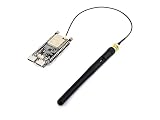
- Adopts ESP32-C5-WROOM-1U series module with RISC-V 32-bit processor, up to 240MHz main frequency. Integrated with 384KB Static RAM, 320KB ROM, and 32MB Flash, 8MB PSRAM, enables stable handling the concurrent tasks of multiple protocol stacks and running medium-load applications.
- Supports dual-band Wi-Fi 6 /BLE 5 / Thread / Zigbee: Integrated 2.4GHz and 5GHz dual-band Wi-Fi, Bluetooth 5 (LE), and IEEE 802.15.4 (Zigbee 3.0 and Thread) wireless communications, with outstanding RF performance.
- Onboard batt. recharge management module, with reserved 3.7V MX1.25 Lithium batt. header for external batt. power supply. Dual USB Type-C ports, easier to use.
- Castellated module allows soldering directly to carrier boards, with rich peripheral interfaces. Supports multiple low-power operating modes, enabling flexible adjustment of the balance between communication range, data rate, and power consumption to meet the power requirements of various application scenarios.
- Developers can leverage mature development frameworks such as ESP-IDF and Ardui for rapid prototyping and product implementation, making it suitable for IoT scenarios such as smart gateways and multi-protocol device integration.
How did the two lines differ?
| Aspect | STPC Atlas, Consumer-II and Elite | ST40-STB1 |
|---|---|---|
| Processor architecture | x86; 64-bit, 133-MHz processor core | Hitachi SuperH SH-4; 32-bit RISC core |
| Target devices | Internet appliances, set-top boxes, Web TVs and other low-cost applications | Interactive digital set-top boxes and related products |
| Integration emphasized | PC-oriented interfaces and memory control, with graphics/video on Atlas and Consumer-II; Atlas also had an extensive set of PC peripherals | PCI, memory and peripheral interfaces, serial and parallel I/O, timers, DMA and clocks |
| Clock or core specification | 64-bit core at 133 MHz | 150-, 166- or 200-MHz speed grades |
| Memory and package details | Up to 128 Mbytes of synchronous DRAM; package not stated in the EE Times report | Memory interface; 372-pin BGA package |
| Announced OEM terms | Less than $38, $33 or $26 per unit in 10,000-unit lots for Atlas, Consumer-II or Elite, respectively | Price not stated in the EE Times report |
The announcement described complementary approaches to connected consumer hardware, not four general-purpose desktop CPUs. STPC incorporated PC-style interfaces and, in two models, graphics and video; ST40-STB1 paired a SuperH core with interfaces and peripherals for set-top-box designs.
What were the announced availability plans?
These were forward-looking schedules reported in 2000. ST planned samples of Consumer-II and Elite for November 2000 and volume production for December 2000. Atlas was planned for two months later. Those historical plans do not establish whether or when the products ultimately reached production, nor whether they can be obtained today.
Rank #3

- ESP32-C6 1.47inch LCD Display Development Board supports 2.4GHz Wi-Fi 6 and Bluetooth BLE 5, integrates 4MB Flash. Onboard 1.47inch LCD screen can smoothly run GUI programs such as LVGL. Combined with various peripheral interfaces, suitable for the quick development of the HMI and other ESP32-C6 applications
- Equipped with a high-performance 32-bit RISC-V processor with clock speed up to 160 MHz, and a low-power 32-bit RISC-V processor with clock speed up to 20MHz
- Supports 2.4GHz Wi-Fi 6 (802.11 b/g/n) and Bluetooth 5 (LE), with onboard antenna, Built in 320KB ROM, 512KB of HP Static Random-Access Memory, 16KB LP Static Random-Access Memory and 4MB Flash memory
- Onboard 1.47inch LCD display, 172×320 resolution, 262K color. Built-in RGB LED with clear acrylic sandwich panel for cool lighting effect
- Adapting multiple IO interfaces, integrates full-speed USB port. Onboard TF card slot for external TF card storage of pictures or files. Supports accurate control such as flexible clock and multiple power modes to realize low power consumption in different scenarios
How does this fit STMicroelectronics’ later portfolio?
The 2000 announcement belongs to a specific period in ST’s product history. ST’s current portfolio page, for example, lists SPC5 PowerPC-based MCUs and Stellar Arm Cortex-R52 devices: STMicroelectronics microcontrollers and microprocessors. These later families provide context for how the portfolio evolved; they are not successors identified in the 2000 announcement.
Quick Recap
Best Value

- Equipped with a high-performance 32-bit RISC-V processor with clock speed up to 160 MHz, and a low-power 32-bit RISC-V processor with clock speed up to 20MHz
- Supports 2.4GHz Wi-Fi 6 (802.11 b/g/n) and Bluetooth 5 (LE), with onboard antenna
- Built in 320KB ROM, 512KB of HP SRAM, 16KB LP SRAM and 4MB Flash memory. Onboard 1.47inch LCD display, 172×320 resolution, 262K color
- Adapting multiple IO interfaces, integrates full-speed USB port. Onboard TF card slot for external TF card storage of pictures or files
- Supports accurate control such as flexible clock and multiple power modes to realize low power consumption in different scenarios. Built-in RGB LED with clear acrylic sandwich panel for cool lighting effect
Rank #4

- ESP32-C6-LCD-1.47,Integrates LCD display, onboard TF card slot and multiple peripheral interfaces
- ESP32-C6 Suitable For AIoT Applications,Powered By A High-Performance 32-Bit RISC-V Processor And A Low-Power 32-Bit RISC-V Processor, The Main Frequency Is Up To 160 MHz, Powerful AI Computing Capability & Reliable Security Features
- WIFI 6 And BLE 5 Support,ESP32-C6 Integrates 2.4 GHz Wi-Fi 6 (802.11 Ax/B/G/N) With 40 MHz Of Bandwidth Support, Its Bluetooth Low Energy Subsystem Supports Bluetooth 5 (LE) And Bluetooth Mesh
- Supports Multiple Peripherals,Supports The Expansion Of Multiple Peripherals Via GPIO Header
- Display control chip:ST7789
Product prices and availability are accurate as of the date/time indicated and are subject to change. Any price and availability information displayed on Amazon at the time of purchase will apply.

