
To estimate how much space a NAS will have for files, start with the drives’ advertised capacity, account for the RAID or pool layout, then subtract platform reservations, filesystem metadata, and any model-specific volume limit. The result is an estimate—not one universal “usable capacity” number—because vendors report different stages of the calculation.
Keep the four capacity figures separate
NAS capacity is easier to calculate when you distinguish what each figure represents. Vendor interfaces may use different labels, so check what stage a displayed number describes.
- Raw capacity: The sum of the drive capacities advertised by their manufacturers.
- Post-layout or pool capacity: An estimate after accounting for parity or mirroring.
- Volume capacity: Space assigned to a filesystem, subject to system reservations and model limits.
- File-available capacity: Space remaining for files after filesystem metadata and other usage.
Do not assume that a calculator’s “available” figure means the final space available for files. For example, Synology says its RAID calculator estimates capacity available to create volumes; it also identifies later reductions for system space and filesystem metadata. Synology RAID Calculator
Calculate capacity in stages
- List the drives. Record each drive’s advertised capacity and the number of drives. With equal-size drives, raw capacity is the drive count multiplied by capacity per drive. For mixed sizes, enter each drive separately in the NAS vendor’s calculator.
- Choose the layout and account for redundancy. As planning approximations for equal-size disks, one-disk parity (such as RAID 5 or RAIDZ1) provides about
(N−1) × Dbefore other overhead; two-disk parity (such as RAID 6 or RAIDZ2) provides about(N−2) × D; two-way mirrors provide about half the raw capacity. Here,Nis the number of drives andDis the capacity of each drive. These shortcuts do not account for every implementation, minimum drive count, mixed-size layout, hot spare, or platform-specific rule. TrueNAS describes RAIDZ1 as single-disk fault tolerant, RAIDZ2 as double-disk fault tolerant, and mirrors as 50% capacity efficient. TrueNAS ZFS Capacity Calculator and Synology RAID guidance - Subtract system and RAID reservations. Their size and calculation method depend on the NAS platform. Synology says, “Each drive in the RAID must reserve approximately 10 GB of system space.” Synology RAID Calculator
- Account for filesystem metadata. Use the figure for the platform and filesystem you plan to use; do not apply one vendor’s percentage to another NAS.
- Check volume limits and confirm the actual result. A pool estimate may be larger than the maximum size of a single volume supported by a particular model. After configuration, check the NAS’s storage manager for the capacity it reports.
Why the final estimate differs by NAS platform
Synology
Synology’s calculator estimates capacity available for creating volumes, not the final capacity available for files. It says each drive in a RAID reserves approximately 10 GB for system space, and lists metadata reservations of 4% for Btrfs volumes and 2% for ext4 volumes. Synology recommends SHR or SHR-2 when combining different drive capacities to reduce wasted space. Check that the precise NAS model supports the drive sizes, RAID type, filesystem, and volume size you intend to use. Synology RAID Calculator
The Tool Desk
Outbyte PC Repair FREERepair Windows errors before they cause bigger problemsFix Now →Outbyte Driver Updater FREEScan for outdated or missing drivers - takes under a minuteDriver Scan →#1 Best Overall
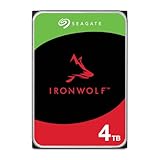
- IronWolf internal hard drives are the ideal solution for up to 8-bay, multi-user NAS environments craving powerhouse performance
- Store more and work faster with a NAS-optimized hard drive providing ultra-high capacity up to 16TB and cache of up to 256MB
- Purpose built for NAS enclosures, IronWolf delivers less wear and tear, little to no noise/vibration, no lags or down time, increased file-sharing performance, and much more
- Easily monitor the health of drives using the integrated IronWolf Health Management system and enjoy long-term reliability with 1M hours MTBF
- Three-year limited warranty protection plan included and three year Rescue Data Recovery Services included
QNAP
QNAP says QTS and QuTS hero automatically reserve space for system operation and metadata. Its FAQ, last modified August 27, 2026, gives these approximate examples for its documented context:
- Storage-reserved space: about 70 GB per storage pool or 20 GB per static volume.
- RAID metadata: about 1% of each RAID group’s capacity, up to 150 GB per group.
- ext4 metadata: roughly 0.8%–1.8% of volumes over 100 GB.
These are QNAP-specific examples, not general NAS allowances. QNAP FAQ: Why can’t I use the full disk capacity?
Rank #2

- Store more, compute faster, and do it confidently with the proven reliability of BarraCuda internal hard drives
- Build a power house gaming computer or desktop setup with a variety of capacities and form factors
- The go to SATA hard drive solution for nearly every PC application from music to video to photo editing to PC gaming. Ax. Sustained transfer rate OD: 190MB/s
- Confidently rely on internal hard drive technology backed by 20 years of innovation
- Frustration Free Packaging - This is just an anti-static bag. No cables, no box.
TrueNAS and ZFS
The TrueNAS ZFS capacity calculator accounts for redundancy and ZFS overhead and exposes assumptions such as vdev type and width, spares, record size, ashift, disk swap size, and reservation. Its guidance describes RAIDZ1 as single-disk tolerant, RAIDZ2 as double-disk tolerant, and mirrors as 50% capacity efficient. The calculator page was last modified March 2, 2026. TrueNAS ZFS Capacity Calculator
Compare layouts on more than capacity
Capacity is only one part of choosing a configuration. Compare file-available space with fault tolerance, documented performance differences, and whether your NAS supports the intended RAID type, filesystem, and single-volume size. Synology frames RAID selection as a tradeoff among capacity, protection, and performance; TrueNAS’s calculator lets you examine ZFS layout assumptions. Synology RAID guidance and TrueNAS ZFS Capacity Calculator
Rank #3

- IronWolf internal hard drives are the ideal solution for up to 8-bay, multi-user NAS environments craving powerhouse performance.date transfer rate:6.0 gigabits_per_second
- Store more and work faster with a NAS-optimized hard drive providing 8TB and cache of up to 256MB
- Purpose built for NAS enclosures, IronWolf delivers less wear and tear, little to no noise/vibration, no lags or down time, increased file-sharing performance, and much more
- Easily monitor the health of drives using the integrated IronWolf Health Management system and enjoy long-term reliability with 1M hours MTBF
- Three-year limited product warranty protection plan and three year Rescue Data Recovery Services included
Check model and volume-size limits
Supported RAID types, filesystems, and maximum volume sizes vary by NAS model and software. Synology’s DSM 7.4 specifications list supported storage options. As one model-specific example, the RS822RP+ datasheet states a 108 TB maximum single volume and warns that usable capacity is lower based on filesystem and metadata; that limit does not apply to NAS models generally. Synology DSM 7.4 technical specifications and RS822RP+ product specifications
Independent reader supportYour contribution helps us test, update, and keep practical guides available for everyone.Use a calculator, then verify the NAS display
Enter the exact drive sizes and intended layout in the calculator for your platform, and use the result as a planning estimate. Synology’s calculator, QNAP’s FAQ, and TrueNAS’s ZFS calculator describe different reservations and calculation assumptions, so their figures are not interchangeable. Once the storage pool and volume are configured, check the displayed capacity in the NAS storage manager to see what that system actually makes available.
Quick Recap
Rank #4

- Available in capacities ranging from 2 to 22TB(1) | (1) 1GB = 1 billion bytes and 1TB = 1 trillion bytes. Actual user capacity may be less depending on operating environment.
- For RAID-optimized NAS systems with unlimited number of bays
- Rated for 550TB/yr workload rate(2) | (2) Annualized Workload Rate = TB transferred x (8760 / recorded power-on hours). The maximum rated workload is specified for operating at typical temperature of 40C. Workload Rate will vary depending on your hardware and software components and configurations.
- Designed to handle the demands of high-intensity 24x7 multi-user NAS environments
- Western Digital partners with a wide range of NAS system vendors for extensive testing to ensure compatibility with most NAS enclosures
Product prices and availability are accurate as of the date/time indicated and are subject to change. Any price and availability information displayed on Amazon at the time of purchase will apply.

