
Secure mission-critical IoT and edge AI across their full lifecycle: establish device and model identity, control configuration and access, protect communications and data, verify updates and suppliers, monitor operations, and rehearse recovery. Tailor each control to the consequences of failure. A generic checklist cannot account for the different safety, availability, latency, and physical-exposure needs of a hospital, factory, utility, or other critical operation.
Why do mission-critical IoT and edge AI need a different security approach?
IoT devices and edge systems are not simply smaller versions of cloud servers. Devices may be physically accessible, installed for years, or dependent on constrained links. Edge deployments distribute computing and security-sensitive interfaces across multiple sites and connectivity conditions. A connection to a central network therefore does not make an edge node trustworthy.
AI adds assets and failure modes beyond the device itself: data used for training or inference, models, software and hardware components in the AI supply chain, and actions taken from model outputs. ENISA’s 2020 analysis of AI cybersecurity challenges maps threats across AI assets and lifecycle stages and emphasizes protecting the whole supply chain. In a mission-critical setting, an inaccurate or manipulated output can matter as much as loss of system availability.
Threats also change. ENISA’s Threat Landscape 2025 describes criminal marketplaces formalizing around skills to scale campaigns through AI integration and IoT exploitation, with critical sectors among those targeted. Its report analyzes 4,875 incidents from 1 July 2024 through 30 June 2025 across the threat landscape as a whole; that is not a count of IoT or edge-AI incidents alone.
Recommended Free Tools
#1 Best Overall

- 𝐄𝐚𝐬𝐲 𝐒𝐞𝐭𝐮𝐩 𝐈𝐧𝐝𝐨𝐨𝐫/𝐎𝐮𝐭𝐝𝐨𝐨𝐫 𝐂𝐚𝐦𝐞𝐫𝐚 — 2.5K HD video, vibrant color night vision and IP66, ensuring you never miss a moment, day or night,rainy or sunny. With dual-band 2.4G/5G WiFi & Plug and play setup of the cameras for home security - just download app and scan QR code! No tools needed for tabletop use, mounting screws included for walls
- 𝟐.𝟓𝐊 𝐐𝐇𝐃 & 𝐂𝐨𝐥𝐨𝐫 𝐍𝐢𝐠𝐡𝐭 𝐕𝐢𝐬𝐢𝐨𝐧 — Experience crystal-clear visibility day and night with full-color night vision enhanced by a built-in white light. Perfect as a baby monitor, pet camera, or security camera to monitor your home inside and out
- 𝐒𝐦𝐚𝐫𝐭 𝐀𝐈 𝐃𝐞𝐭𝐞𝐜𝐭𝐢𝐨𝐧 & 𝐀𝐥𝐞𝐫𝐭𝐬 — Stay informed about what matters most with human/motion/sound detection up to 33 feet away. The camera deters intruders with flashing lights and a siren while sending instant alerts to your phone — keeping you one step ahead of any suspicious activity. Call +1 (978) 437-5767 for expert support with setting up and optimizing Vimtag cameras, available Monday to Friday, 9:00 AM - 6:00 PM (ET)
- 𝐄𝐧𝐡𝐚𝐧𝐜𝐞𝐝 𝐓𝐰𝐨-𝐖𝐚𝐲 𝐀𝐮𝐝𝐢𝐨 - Communicate effortlessly with guests or check in on pets using the upgraded two-way audio feature of this indoor camera, allowing you to see, hear, and speak from anywhere
- 𝐓𝐰𝐨 𝐑𝐞𝐜𝐨𝐫𝐝𝐢𝐧𝐠 𝐎𝐩𝐭𝐢𝐨𝐧𝐬 & 𝐑𝐞𝐚𝐥-𝐓𝐢𝐦𝐞 𝐒𝐡𝐚𝐫𝐢𝐧𝐠 - With the mobile app, you can access the baby camera's video anytime, anywhere, view real-time footage, and even share monitoring content with family, keeping you informed about your home dynamics while you're away.Enjoy secure cloud recording with Vimtag Cloud (subscription required) for detecting people, sounds, motion. Alternatively, you can insert a microSD card (sold separately) for local video storage
How should an organization set security requirements?
Start with the operation that must remain safe and available, then work backward to the devices, networks, data, models, suppliers, and people that can affect it. Record what failure would mean before choosing controls. A requirement that is suitable for a low-impact sensor may be inadequate for a controller or an edge model whose output influences a high-impact action.
- Map the mission and failure consequences. Identify safety hazards, service disruption, unacceptable latency, recovery needs, and any actions that must remain possible during loss of connectivity.
- Inventory the system and its dependencies. Record devices, firmware, edge nodes, interfaces, models, data sources, suppliers, administrative paths, and support lifetimes. Include physical locations and links between sites.
- Set requirements before acquisition. Specify identity, configuration, update, vulnerability-support, data, model, logging, and recovery needs in procurement and design decisions, rather than treating them as a post-installation checklist.
- Assign owners and evidence. Name who approves configuration changes, accepts residual risk, handles vulnerabilities, and can authorize recovery. Define what evidence demonstrates that controls work within operating and safety constraints.
- Reassess when the system changes. Revisit the risk when devices, firmware, models, suppliers, data sources, connectivity, or intended use change.
NIST’s IoT guidance supports this lifecycle view. The SP 800-213 series addresses selection, acquisition, deployment, and use of IoT devices in federal systems and aligns requirements with the Risk Management Framework and related controls. The NISTIR 8259 series covers manufacturer activities and technical and non-technical support capabilities across IoT development and support. These materials can inform other organizations, but the federal scope of SP 800-213 should not be mistaken for a universal legal requirement.
Rank #2
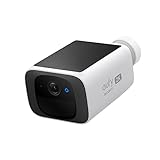
- Continuously Powered by Solar: Just 3 hours of sunlight is enough to keep the camera running. The tiny size and wire-free design allow it to be installed anywhere.
- Day and Night Clarity: Enjoy clear black-and-white night vision thanks to infrared LEDs and an f/1.6 aperture. Please note that spotlight color night vision is not supported.
- Easy Installation: Use anywhere thanks to its tiny size and wire-free design. Drill one hole, once.
- Human Detection: Al alerts you to anyone in your yard, whether family, a courier, or a stranger. Connect to HomeBase 3 for individual facial recognition.
- No Monthly Fee: One-time purchase. No monthly fees or hidden costs. On-device storage and AI for complete security and transparency.
Which frameworks help, and what do they not do?
| Framework or guidance | What it helps organize | Important qualification |
|---|---|---|
| NISTIR 8259A (2020) | A core baseline of IoT device cybersecurity capabilities. | NIST describes it as a starting point, not a mandatory universal checklist; organizations should tailor it to device and use-case context. |
| NISTIR 8259 series (updated 2026) | Manufacturer activities and technical and non-technical capabilities that support IoT development and device support. | Use it to frame lifecycle expectations, not as proof that a particular product is secure. |
| NIST SP 800-213 series (2021–2022) | IoT requirements through selection, acquisition, deployment, and use, with federal RMF alignment. | Its stated focus is federal systems; applicability elsewhere depends on the organization’s obligations and chosen approach. |
| NIST AI RMF 1.0 (2023) | Trustworthiness considerations in AI design, development, use, and evaluation. | NIST describes the framework as voluntary; it is a risk-management structure, not a certification or a substitute for operational safeguards. |
| ENISA AI cybersecurity challenges (2020) | AI assets, lifecycle stages, threat actors, and supply-chain security. | Use its lifecycle perspective alongside device and operational controls. |
| ENISA Threat Landscape 2025 | A view of evolving threats, including AI-enabled criminal scaling, IoT exploitation, critical-sector targeting, and the EU Cyber Resilience Act’s security-by-design direction. | Its incident total covers the broader threat landscape, not mission-critical IoT or edge AI alone. |
NISTIR 8259A explicitly says the baseline is intended to give organizations a starting point and that implementing every capability is not mandatory. That qualification matters: a baseline can expose omissions, but only a context-specific risk decision can determine which controls are needed and how they can be operated safely.
What should be protected across the device and edge estate?
Devices, firmware, and administration
- Give each device a distinct identity. Avoid shared default credentials or identities that make it difficult to isolate one compromised unit. Authenticate administrative access and limit it to the people and services that need it.
- Control configuration and stored secrets. Harden settings, restrict changes, protect credentials and sensitive data at rest, and keep an auditable record of authorized changes.
- Require trustworthy updates and support. Establish how firmware authenticity is checked, how vulnerabilities are disclosed and handled, and how long the supplier supports the device. Plan for devices that can no longer receive fixes.
- Plan decommissioning. Remove or revoke device identities and credentials, erase stored sensitive material where appropriate, and account for the device’s connections and data when it leaves service.
Networks, gateways, and edge nodes
- Segment by function and consequence. Limit paths between devices, enterprise systems, edge nodes, and management networks so compromise in one area does not automatically grant broad access.
- Authenticate links at both ends. Use mutually authenticated communications where supported, restrict exposed interfaces, and harden management planes separately from operational traffic.
- Do not equate local presence with trust. Protect edge hardware against plausible physical access, restrict local administration, and monitor for unauthorized changes.
- Design for interrupted connectivity. Define what continues safely when an edge site loses its upstream link, what must stop, how local decisions are bounded, and how state is reconciled after reconnection.
- Centralize visibility without centralizing trust. Collect useful logs and health signals across sites, while retaining local protections that still work during network loss.
AI data, models, and outputs
- Track data provenance. Record where training and inference data came from, who can modify it, and what checks detect unexpected or untrusted inputs.
- Protect model and artifact integrity. Control access to models and deployment artifacts, verify approved versions, and keep a way to restore a known-good version.
- Protect access and secrets. Restrict who can query, update, deploy, or inspect models and associated systems; avoid embedding credentials in model artifacts or exposed edge configurations.
- Monitor behavior as well as uptime. Watch for anomalies and drift in inputs, outputs, and system behavior, with thresholds and escalation paths suited to the use case.
- Bound high-impact actions. Decide when a human must review an output, what actions a model may trigger autonomously, and what independent safeguards prevent a single bad output from causing unacceptable harm.
How can security controls avoid breaking safety or availability?
Security changes can themselves create operational risk if they interrupt control loops, consume scarce connectivity, or trigger an unplanned restart. Treat patching, authentication changes, monitoring, and recovery as changes to an operational system, not merely IT maintenance.
Rank #3

- High-definition pan and tilt camera: Capture every detail in pristine 1080p HD quality, from any angle, with the Energizer Connect security camera's 355-degree horizontal and 48-degree vertical pan and tilt capabilities.
- Night Vision Equipped: Camera has 4 led lights and 4 IR lights that switch automatically depending on the lighting conditions, allowing you to see color at night or black and white in total darkness.
- Two-Way Audio: Allowing you to listen and talk to the person in the video, using the built-in microphone and speaker, or siren alarm to deter intruders.
- Flexible Storage Options: Choose cloud storage with a complimentary 30-day trial or utilize a micro SD card (up to 128GB, not included) for local recording.
- 2.4GHz Wi-Fi Compatible: Connects to your 2.4ghz wifi network, which is the most common wifi frequency. It does not support 5ghz wifi networks.
- Set change windows and exception rules. Coordinate patches with operational owners, document when a fix cannot be applied immediately, and put compensating measures and a review date on each exception.
- Test the real operating path. Validate updates, rollback, failover, identity changes, and monitoring under representative latency and link-loss conditions before broad rollout.
- Keep recovery independent of the failed component. Preserve trusted configurations and model versions, recovery credentials, and procedures that remain accessible if a device, edge node, or central service is compromised.
- Exercise incident playbooks. Rehearse containment choices that preserve safe operation, including how to isolate a site, revoke credentials, switch to a fallback mode, and restore service with verified components.
- Make risk acceptance explicit and auditable. Record the operational reason for a temporary gap, the person authorized to accept it, interim safeguards, and the conditions that close the exception.
How should suppliers and security options be evaluated?
Compare options against the operating consequences and evidence they can provide, not feature counts alone. A supplier’s claims should be tested against your deployment conditions, support needs, and ability to recover.
- Safety and mission impact if a device, network path, model, or management service fails.
- Latency, availability, and recovery requirements, including operation during isolation.
- Device identity, authenticated administration, secure configuration, update authenticity, and support lifetime.
- Protection and monitoring for model artifacts, data provenance, access, drift, and anomalous behavior.
- Supplier transparency about components, vulnerability handling, support boundaries, and dependencies across the AI and IoT supply chains.
- Monitoring depth, integration with incident response, and evidence that alerts are actionable at remote sites.
- Applicable regulatory obligations, deployment geography, physical exposure, and the ability to demonstrate that controls work without violating operational constraints.
For monitoring or lifecycle tools, ask whether they can maintain a useful inventory, identify unsupported or vulnerable assets, show configuration and update status, and preserve visibility when sites disconnect. For model-security or AI risk-management tools, ask how they handle model and data provenance, access, artifact integrity, anomaly monitoring, and rollback. Tooling can improve evidence and coordination, but it does not replace clear ownership, safe operating procedures, or supplier accountability.
Quick Recap
What is a practical first implementation sequence?
- Prioritize by consequence. Start with assets whose compromise or failure could cause safety harm, major service loss, or an unacceptable operational decision.
- Close identity and exposure gaps. Inventory devices and edge nodes, remove shared or default access where possible, restrict management paths, and segment high-impact assets.
- Establish update and support rules. Record firmware and model versions, verify update mechanisms, agree on patch and exception windows, and identify assets without a viable support path.
- Protect data and AI artifacts. Assign owners for training and inference data, models, secrets, deployment permissions, and approved rollback versions.
- Build detection and response around operations. Define which signals are collected, who responds, what containment preserves safe operation, and how recovery is verified.
- Test the plan under failure conditions. Exercise a lost link, compromised credential, suspect update, anomalous model output, and recovery from a known-good state, then revise requirements based on the results.
Product prices and availability are accurate as of the date/time indicated and are subject to change. Any price and availability information displayed on Amazon at the time of purchase will apply.

