
Do not treat a prompt as permission. An AI agent may propose an action, but the component that executes it—such as a tool wrapper, policy service, API, or downstream system—must independently decide whether that action is authorized. Reliable guardrails combine narrow permissions, checks at every side-effecting tool, human review for high-impact actions, adversarial testing, and runtime monitoring.
Put the security boundary outside the model
An agent combines model decisions with tools, data, and sometimes memory. It may read an email, document, web page, or API response and encounter instructions that conflict with the user’s goal. Those instructions can influence what the model proposes, even if the agent’s system prompt says to ignore them. OWASP describes the risk of giving an agent excessive agency: a mistake or manipulation can reach connected systems when the agent has more functionality, permission, or autonomy than its task requires. OWASP LLM06:2025 Excessive Agency
Use the model to interpret requests and suggest actions; use ordinary authorization logic to grant or deny them. A prompt can communicate policy and help steer behavior, but it cannot enforce access control. The effective boundary is the last trusted component before a read, write, message, payment, deletion, or other consequential operation takes effect.
Reduce the agent’s available capabilities
Start by listing the tools, operations, data, identities, and systems an agent can reach. Remove anything the task does not require. Limiting the available actions reduces the damage a confused or manipulated agent can cause; OWASP’s agent guidance recommends scoping tools and permissions rather than granting broad authority. OWASP AI Agent Security Cheat Sheet
#1 Best Overall
![Arduino® UNO™ Q 4GB [ABX00173]- Hybrid Board, Qualcomm Dragonwing QRB2210 microprocessor (MPU) & STM32U585 Microcontroller(MCU), AI Vision, Voice, IoT, Robotics, Linux Debian OS, Wi-Fi 5, USB-C](https://m.media-amazon.com/images/I/51cl4xygwGL._SL160_.jpg)
- Dual-Brain Hybrid Power: Combines the Qualcomm Dragonwing QRB2210 MPU (Quad-core Arm Cortex-A53 @ 2.0 GHz CPU, Adreno GPU, AI acceleration) and the real-time, low-power STM32U585 MCU for advanced applications like object recognition, voice commands, and motion detection.
- AI & Linux Capabilities: Unlocks AI-powered vision and sound solutions; runs Linux Debian OS for coding in Python and supports the Arduino ecosystem with libraries and Sketches; quick start with Arduino App Lab.
- Advanced Features: Equipped with 4 GB LPDDR4 RAM, 32 GB eMMC built-in storage, ideal for single-board computer (SBC) mode, running multiple simultaneous high-level processes, more complex AI or ML models, extensive logs. Dual-band Wi-Fi 5 (2.4/5 GHz), Bluetooth 5.1, and high-speed headers for vision, audio, and display peripherals.
- Seamless Expansion & Connectivity: Features the classic UNO form factor for shields compatibility, an 8x13 LED matrix, and a Qwiic connector for easy expansion with Modulino nodes; power and connect via the USB-C connector.
- Intended Use & Development: The perfect platform for prototyping robotics or IoT projects, empowering innovators with a unified development experience to mix Arduino Sketches, Python scripts, and containerized AI models in a single interface.
- Expose narrow operations. Prefer a function such as “add a comment to this ticket” over a generic shell, database console, or unrestricted HTTP client.
- Separate reads from writes. A tool that retrieves an invoice should not also be able to approve or pay it.
- Scope identity and resources. Use credentials with only the permissions required for the current user and task. Limit which accounts, records, projects, or environments are reachable.
- Limit duration and autonomy. Avoid persistent credentials or long-running permissions when a task-specific grant will do. Require an explicit gate before expanding the task or taking consequential actions.
Least privilege is a blast-radius control, not a guarantee that the remaining permitted actions will be used correctly. The permissions still need to be checked against each request at execution time.
Keep untrusted content separate from privileged instructions
Treat retrieved pages, email, documents, and tool responses as data to process—not as new policy. Indirect prompt injection occurs when hostile instructions are embedded in otherwise ordinary content an agent reads. NIST’s CAISI describes evaluating this kind of agent hijacking, while OWASP’s prompt-injection guidance recommends layered defenses rather than assuming a prompt boundary will stop every attack. NIST CAISI: Strengthening AI Agent Hijacking Evaluations; OWASP LLM Prompt Injection Prevention Cheat Sheet
- Mark retrieved content and tool output as untrusted input, and keep it distinct from system policy and user instructions.
- When a task needs only specific facts, extract them into a constrained schema rather than passing an entire document into a privileged planning step.
- Where practical, separate content-reading from execution: one component can summarize or extract, while a separately checked tool call performs any requested change.
- Evaluate an action against the user’s original request. Do not let an instruction found in a document silently redefine the task or expand its scope.
These techniques reduce opportunities for content to steer an action; they do not make prompt injection impossible. The execution component must still authorize the proposed action.
Rank #2
- Dual-Brain Hybrid Power: Combines the Qualcomm Dragonwing QRB2210 MPU (Quad-core Arm Cortex-A53 @ 2.0 GHz CPU, Adreno GPU, AI acceleration) and the real-time, low-power STM32U585 MCU for advanced applications like object recognition, voice commands, and motion detection.
- AI & Linux Capabilities: Unlocks AI-powered vision and sound solutions; runs Linux Debian OS for coding in Python and supports the Arduino ecosystem with libraries and Sketches; quick start with Arduino App Lab.
- Advanced Features: Equipped with 2 GB LPDDR4 RAM, 16 GB eMMC built-in storage, ideal to develop in PC-connected mode, running the OS, Python scripts, and basic network services (SSH) without a demanding GUI or heavy multitasking; great for lightweight AI and memory-optimized TinyML applications, needing local storage for basic OS and core libraries. Dual-band Wi-Fi 5 (2.4/5 GHz), Bluetooth 5.1, and high-speed headers for vision, audio, and display peripherals.
- Seamless Expansion & Connectivity: Features the classic UNO form factor for shields compatibility, an 8x13 LED matrix, and a Qwiic connector for easy expansion with Modulino nodes; power and connect via the USB-C connector.
- Intended Use & Development: The perfect platform for prototyping robotics or IoT projects, empowering innovators with a unified development experience to mix Arduino Sketches, Python scripts, and containerized AI models in a single interface.
Validate every action where it takes effect
Put deterministic checks in each tool or service that can cause a side effect. In a multi-agent workflow, a check on the first agent’s input or the final agent’s output may not cover every intermediate tool call. OpenAI’s guardrails guidance likewise distinguishes agent-level checks from checks that belong with the custom tool that creates the side effect. OpenAI: Guardrails and human review
What’s actually slowing this PC down?
Pick the symptom - the matching free tool is one click away.
- Establish the actor. Resolve the user or service identity from trusted authentication context, not a value supplied by the model.
- Normalize and validate the request. Parse structured arguments, reject malformed or unexpected fields, and apply allowlists and bounded values where appropriate.
- Check the target and operation. Confirm the actor may perform this specific operation on this specific resource, in this environment and scope.
- Check intent and policy. Compare the requested change with the user’s original goal and the applicable policy. Treat intermediate content as untrusted evidence, not authority.
- Apply any required approval gate. Verify that approval exists for the exact action and parameters before proceeding.
- Execute and record the result. Perform only the authorized operation, then record the decision and outcome.
Schema validation answers whether arguments have an acceptable shape; authorization answers whether this actor may perform this action on this target. One is not a substitute for the other. If a policy check is unavailable or returns an ambiguous result, do not execute the consequential action.
Match human review to the action’s impact
Define risk categories in system policy rather than asking the model to decide when its own actions deserve oversight. A deployment may allow scoped, low-risk reads without interruption while pausing irreversible or high-impact operations—such as deletion, payments, privilege changes, external messages, or production changes—for review. The appropriate threshold depends on the system and the consequences of error.
Rank #3
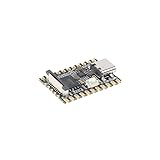
- Single core ARM Cortex-A7 32-bit core, integrated with NEON and FPU
- Built in Micro's self-developed 4th generation NPU, with high computational accuracy and support for mixed quantization of int4, int8, and int16. Among them, int8 has a computing power of 0.5 TOPS and int4 has a computing power of up to 1.0 TOPS
- Built in self-developed 3rd generation ISP3.2, supports 4 million pixels, and supports various image enhancement and correction algorithms such as HDR, WDR, and multi-level denoisin
- It has powerful encoding performance, supports intelligent encoding, adapts to save bit rates according to the scene, and saves more than 50% of the bit rate compared to conventional CBR mode, making the captured images high-definition, smaller in size, and doubling the storage space
- The design with built-in RISC-V MCU supports low-power fast startup, 250ms fast capture, and simultaneous loading of AI model library, enabling facial recognition to be completed within 1 second
Make approval specific and enforceable: show the reviewer the normalized operation, target, and arguments; bind approval to those exact details; expire it; and prevent it from being replayed for a different action. If the action changes after review, require a new approval. A human approval is an additional gate, not a replacement for checking whether the user’s identity is authorized to perform the action. OWASP recommends approval for sensitive actions, and OpenAI documents approval interruptions for tool use. OWASP AI Agent Security Cheat Sheet; OpenAI: Guardrails and human review
Evaluate the complete workflow against attacks
Test the system that users will actually operate: agent, retrieved content, tools, authorization checks, approval flow, and downstream effects. Include realistic tasks with malicious instructions placed in the messages, pages, or documents the agent may encounter. Measure whether the attack succeeds at the task level, inspect the resulting tool calls and arguments, and repeat attempts rather than judging a defense from one run.
PC Slower Than It Used to Be?
A free scan shows the junk files, broken settings and background clutter dragging Windows down - then fixes them in one click.Free scan · Windows 10 & 11Outdated Drivers Are Slowing You Down
One free scan finds every outdated or missing driver and matches the right update for your exact hardware.Free scan · exact hardware matchNIST CAISI’s described evaluation used simulated Workspace, Travel, Slack, and Banking environments. Those examples illustrate ways to study hijacking; they are not a complete coverage of real deployment contexts. The CAISI blog also emphasizes adaptive, task-specific evaluation and multiple attempts as useful evaluation practices, not as a reported vulnerability rate. NIST CAISI: Strengthening AI Agent Hijacking Evaluations
Rank #4

- 【POWERFUL ESP32‑S3 CONTROLLER】Built‑in Xtensa 32‑bit LX7 dual‑core processor, 512KB SRAM, 8MB PSRAM, 16MB Flash for stable AI voice computing and multitask processing.
- 【Preloaded Dual AI Platforms】Comespre-installed with complete Deepseek and OpenAI voice dialogue projects.Experience intelligent voice interaction instantly. (Note: OpenAI functionality requires your own API key.)
- 【STABLE WIRELESS & CLEAR AUDIO】Integrated 2.4GHz Wi‑Fi + Bluetooth 5 (LE); dedicated audio decoding module for natural, responsive voice interaction.
- 【USER‑FRIENDLY VISUAL & PLUG‑AND‑PLAY】2” TFT‑SPI color screen shows real‑time chat; modular design, no extra wiring, ready to use after setup.
- 【FULL LEARNING SUPPORT】45 programmable GPIOs, rich interfaces, online web tutorials, free technical support for beginners & developers.
- Test direct attempts to override instructions as well as indirect attacks embedded in content the agent is asked to read.
- Verify that disallowed actions are blocked at the execution boundary, including when the model produces valid-looking arguments.
- Exercise approval expiry, changed parameters, replay attempts, and unavailable policy or review services.
- Review traces and tool-call arguments, not only the final response shown to the user.
- Add attack cases when tools, permissions, workflows, or defenses change.
Monitor and constrain behavior in production
Record policy decisions and execution outcomes so operators can investigate what the agent attempted and what the system allowed. Monitor for unusual tool use, unexpected targets, repeated denials, abnormal action volume, and changes in guardrail behavior. Protect audit records and avoid storing secrets unnecessarily.
Apply rate and resource limits, bounded retries, and controls against unbounded loops. Define what happens when a critical authorization or approval dependency fails; for consequential operations, fail closed rather than silently bypassing the check. Monitoring and limits can help detect or contain problems, but they do not replace preventive authorization. OWASP’s agent security guidance discusses operational controls including logging and rate limiting. OWASP AI Agent Security Cheat Sheet; OWASP LLM06:2025 Excessive Agency
Review a guardrail design by its enforcement points
When reviewing an architecture, ask where each control is enforced—not just whether a prompt or framework advertises a guardrail. These are design questions, not a benchmark of particular products.
Free tools Windows power users keep installed
One-click scans. No signup required.
| Review area | Question to ask | What a strong design makes explicit |
|---|---|---|
| Enforcement location | Which trusted component can block an action immediately before it takes effect? | Checks at the tool wrapper, policy service, API, or downstream system—not only in model instructions. |
| Permission granularity | Can access be limited by actor, operation, arguments, target, and duration? | Task-appropriate scopes and distinct read and write permissions. |
| Untrusted-data handling | Can retrieved content redefine policy or trigger execution without an independent check? | Clear separation of content, privileged instructions, and executable actions. |
| Action-risk handling | How are sensitive or ambiguous actions reviewed? | Defined risk categories, approval bound to exact parameters, expiry, replay protection, and fail-closed handling. |
| Isolation | What can the agent reach if a tool call is misused? | Scoped filesystem, network, credentials, and project boundaries appropriate to the task. |
| Evaluation and operations | Can teams find failures and verify defenses as workflows change? | Direct and indirect attack tests, repeated attempts, trace review, protected logs, alerts, rate limits, and recovery plans. |
The practical test is whether a proposed action can be denied by a trusted component even when the model is confident, its prompt says the action is allowed, or untrusted content urged it to proceed.
Quick Recap
Product prices and availability are accurate as of the date/time indicated and are subject to change. Any price and availability information displayed on Amazon at the time of purchase will apply.

