
What’s actually slowing this PC down?
Pick the symptom - the matching free tool is one click away.
Qualcomm’s Snapdragon Ride Flex is an automotive system-on-chip family designed to run digital-cockpit, advanced driver-assistance (ADAS) and automated-driving workloads on one chip. Its main idea is to consolidate computing that might otherwise be split across separate vehicle systems, while using hardware and software isolation to keep safety-related work apart from less critical applications.
What Snapdragon Ride Flex is designed to do
Ride Flex combines cockpit computing and driving functions on a shared automotive platform. That can include the digital instrument cluster and infotainment screens alongside driver monitoring, parking assistance and perception workloads that process sensor data. The goal is a centralized computer for software-defined vehicles, rather than a collection of separate computers for every domain.
Combining workloads does not mean treating them as one undifferentiated application. Qualcomm describes mixed-criticality operation: workloads with different safety and timing needs share the SoC, but run in isolated domains with quality-of-service controls intended to manage access to computing resources.
Which features can run on Flex?
Qualcomm’s documented examples span cabin displays, audio and entertainment, driver-assistance functions and sensor processing. Bosch’s CES 2024 demonstration illustrated how these can be brought together in a central vehicle computer.
#1 Best Overall
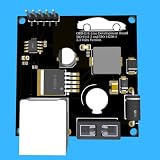
- Includes OBD2 Cable & Fuse – Comes with a ready-to-use OBD2 cord and a built-in automotive fuse for safe, reliable vehicle connection.
- 3.3V or 5V Logic Compatible – Works seamlessly with ESP32, Arduino, Raspberry Pi, STM32, Teensy, and more.
- Automotive-Grade Protection – Built-in power regulation, reverse-polarity protection, and noise filtering ensure stable, safe readings from any 12V vehicle.
- Supports Major OBD-II Protocols – Works with ISO9141, ISO14230 (KWP2000) for K-Line vehicles and ISO15765-4 CAN for modern CAN Bus systems (11-bit & 29-bit IDs).
| Workload area | Documented examples |
|---|---|
| Driver-facing displays | Digital instrument clusters with immersive graphics; multiple-display control |
| Cabin experience | Infotainment, gaming displays, rear-seat entertainment, premium audio, voice assistance and personalized navigation |
| Driver and parking assistance | Driver-monitoring systems, park assist, automated parking, and detection of objects, traffic lights and lanes |
| Perception inputs | Camera, radar and ultrasonic data in Bosch’s demonstration; Qualcomm describes Ride Vision scaling to systems with multiple cameras, radars, lidars and maps |
The Ride Vision stack is pre-integrated, according to Qualcomm. The company describes a path from a front-camera configuration to multimodal setups, with perception feeding vehicle-control algorithms. That describes supported system configurations; it does not establish that every listed feature or sensor combination is present in every Flex-based vehicle.
How safety-related workloads share the chip
Qualcomm’s architecture uses a dedicated ASIL-D safety island, hardware isolation, freedom-from-interference measures and quality-of-service controls. The safety island is a component of the design; its presence alone should not be read as proof that the complete SoC, a vehicle system or a production car has received ASIL-D certification.
Rank #2

- The CAN-BUS Shield compatible with arduino or Redboard can be provided with CAN-BUS capabilities and allows you to hack your vehicle.
- This shield allows you to poll the ECU for information including coolant temperature, throttle position, vehicle speed, and engine rpms. You can also store this data or output it to a screen to make an in-dash project.
- The CAN-BUS Shield Features: CAN v2.0B up to 1 Mb/s. High speed SPI Interface (10 MHz) Standard and extended data and remote frames. CAN connection via standard 9-way sub-D connector. Power can supply to Arduino by sub-D via resettable fuse and reverse polarity protection.
- It uses the Microchip MCP2515 CAN controller with the MCP2551 CAN transceiver. CAN connection is via a standard 9-way sub-D for use with OBD-II cable. Ideal for automotive CAN application. The shield also has a uSD card holder, serial LCD connector and connector for an EM506 GPS module.
- Note: A DB9 Cable is not included with this shield.----Note: This product is a collaboration with SK Pang Electronics. A portion of each sales goes back to them for product support and continued development.
The company’s technical description also identifies a safe hypervisor for separating domains into virtual machines. Supported software environments include Linux, Android and QNX; AUTOSAR Classic can host safety functions. Qualcomm also identifies SOME/IP and DDS as supported service-oriented middleware. This combination is meant to let different software stacks coexist while preserving boundaries between their workloads.
What automakers and partners have demonstrated
Bosch central vehicle computer
At CES 2024, Qualcomm and Bosch introduced a Bosch platform based on Snapdragon Ride Flex. They described it as the automotive industry’s first central vehicle computer capable of running infotainment and ADAS on one SoC. The demonstration brought together cabin functions, navigation, voice, displays, automated parking and perception tasks. It is evidence of a partner demonstration, not by itself evidence that a particular production vehicle was shipping with the platform.
Hyundai Mobis collaboration
On January 6, 2025, Qualcomm and Hyundai Mobis announced an end-to-end solution combining Ride Flex, Qualcomm’s Snapdragon Ride Automated Driving Stack, and Mobis software and sensors. Qualcomm said Flex was available at that time and described support for integrated clusters, driving and parking solutions, and ADAS. The announcement does not name a specific vehicle model or establish a production-car launch date.
Availability and production status
When Qualcomm announced Ride Flex on January 4, 2023, it said the first SoC was sampling and expected production to begin in 2024. That was a forward-looking expectation at launch, not confirmation that production began on schedule. Qualcomm’s January 2025 statement that Flex was available is a later status update, but the announcements described here do not establish which named consumer vehicles are in production with it.
Rank #4
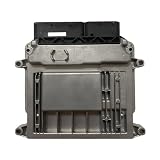
- Engine Management Systems
What to compare when evaluating Flex
For an automaker, the choice is not simply whether one chip has enough compute. The relevant evaluation is whether the system meets the vehicle’s safety, software, sensor and deployment requirements.
- Consolidation: Assess whether combining cockpit and ADAS compute suits the vehicle architecture better than separate domain controllers.
- Safety separation: Examine isolation mechanisms and the safety case for the complete system; the safety-island specification is only one part of that assessment.
- Compute and sensor scaling: Match the intended workload and sensor configuration to the selected implementation rather than assuming every platform supports every combination identically.
- Software ecosystem: Check fit with the operating systems, hypervisor, AUTOSAR functions and middleware required by the vehicle program.
- Vehicle tiers: Qualcomm describes a scalable family, but an automaker still needs configuration-specific evidence for its target vehicle and feature set.
- Production maturity: Separate announced availability and partner demonstrations from a confirmed production program and named vehicle deployment.
The announcements and technical materials described here do not provide an independent head-to-head performance benchmark against competing automotive SoCs. They establish Qualcomm’s architecture and partner activity, not comparative test results.
Quick Recap
Best Value

- Support CAN V2.0B technical specification, communication rate 1Mb/S.
- 0~8 bytes long data field, standard frame, extended frame and remote frame.
- Module 5V DC power supply, SPI interface protocol control, 120 ohm terminating resistor, impedance matching, guaranteed drive capability, long-distance data transmission to prevent signal emissions.
- Module size: 44mm x 28mm, centering distance of the positioning screw hole: 23mm x 38mm.
- Operating current: typical value 5mA, standby current 1 microamperes, except for the power indicator. Working temperature: industrial grade -40 ° C to 85 ° C.
Product prices and availability are accurate as of the date/time indicated and are subject to change. Any price and availability information displayed on Amazon at the time of purchase will apply.

