
Recommended Free Tools
To estimate a cloud GPU cluster’s total cost, define the workload and architecture, calculate the hours each resource will be billed, and price the complete configuration in the provider’s calculator. Include the host if it is billed separately, plus storage, networking, licensing, and—if you are estimating total cost of ownership (TCO)—the people and processes needed to operate it. Treat the first estimate as a model to validate against a representative run, not as a guaranteed bill.
1. Define the workload and cluster before looking at rates
Start with the work the cluster must complete. Record whether it is training, fine-tuning, batch inference, or continuously served inference; the model and data assumptions; and the target completion time, request volume, or throughput. Then specify the GPU type and count, node or instance shape, region, and expected operating schedule.


For an existing deployment, use historical consumption as the baseline. For a new one, make the projections explicit and plan a representative test deployment. Microsoft’s cloud cost-estimation guidance recommends historical usage for existing workloads and projected usage plus test deployments for new workloads.
2. Convert the workload into billed resource hours
For each configuration, estimate provisioned instance-hours: node count multiplied by the number of hours those nodes are expected to be allocated. Use the hours the cloud provider will bill, not just the time the GPUs are actively calculating.
The Tool Desk
Outbyte Driver Updater FREEScan for outdated or missing drivers - takes under a minuteDriver Scan →Outbyte PC Repair FREERepair Windows errors before they cause bigger problemsFix Now →#1 Best Overall

- [Local AI Inference & 70B Model Ready] Equipped with the AMD Ryzen 7 PRO 8845HS processor, NEXUS is engineered for heavy local AI workloads. With a full-size GPU bay, it runs 70B LLMs natively without an internet connection. Ideal for AI developers and tech enthusiasts who need private environment for coding and model testing.
- [132TB Mass Storage with ZFS Integrity] Features a hybrid storage architecture (3×NVMe + 4×3.5" HDD) supporting up to 132TB. Utilizing the enterprise-grade ZFS file system and ECC memory, it prevents data corruption and bit rot—a must-have for professional photographers and video editors safeguarding 4K/8K RAW footage.
- [OpenClaw-Driven Automation Workflow] The built-in OpenClaw execution layer allows complex automated tasks to be processed locally. Even when offline, your backup schedules and AI file organization continue seamlessly. Say goodbye to monthly cloud subscriptions and high latency.
- [Dual 10GbE & USB4 Ultra-Connectivity] Experience server-class speeds with dual 10GbE ports and a 40Gbps USB4 interface. It enables multi-user real-time collaboration on large project files directly from the NAS, ensuring zero-lag editing for creative studios and production teams.
- [Open-Source ZimaOS for Total Privacy] Running on the fully open-source ZimaOS, NEXUS ensures your data stays physically on-premise with no backdoors. It acts as a "Digital Fortress" for privacy-conscious families and small businesses who demand absolute data sovereignty.
- Include setup and data preparation, checkpointing, evaluation, and shutdown or cleanup time where resources remain allocated.
- Include idle periods when instances stay running, and the capacity needed to keep an inference service available.
- If runtime is uncertain, create low, expected, and high cases. Replace projected runtimes with measured throughput and duration after a test run.
There is no universal utilization percentage or runtime that makes an estimate reliable across AI workloads. Use measured performance from work similar to yours when available; otherwise, label assumptions rather than presenting them as facts.
3. Price the complete compute configuration
In the provider calculator, select the actual accelerator or GPU instance, host shape, region, operating system, usage hours, and pricing plan. Check whether the GPU is metered separately or included in the instance price. The distinction matters: Google Cloud says GPUs attached to standard VMs add cost beyond the machine type, while prices for its accelerator-optimized machine types include the attached GPU. GPU availability is limited to certain regions and zones. See the Google Cloud GPU pricing page for the current configuration and regional details.
For example, Google’s price table lists an NVIDIA T4 GPU at $0.35 per hour per GPU in USD. That is a listed GPU rate, not a complete VM or cluster price: the page excludes VM instance, disk, and networking charges. Confirm the applicable region, SKU, and current price in the calculator before using this figure in a budget.
Do not compare GPU-only rates when one option includes the host and another does not. Keep currency, region, billed hours, operating system, and commitment assumptions aligned. Azure’s pricing calculator varies unit prices with the selected product configuration and applies the quantities entered; estimates may also reflect account-specific negotiated pricing. AWS estimates can include the effects of discounts and purchase commitments through its Pricing Calculator.
4. Add storage, networking, licenses, and operating costs
A GPU rate is only one line in the estimate. Build separate entries for the supporting services your architecture actually uses:
- Compute: GPU or accelerator charges and host/VM charges, taking care not to count an included GPU twice.
- Storage: persistent disks, local or attached storage, images, snapshots, and the capacity and performance required for the workload.
- Networking and data movement: applicable transfer and network charges, including egress or inter-zone traffic where relevant to the selected architecture.
- Licenses: operating-system or software charges that apply to the chosen configuration.
- Operations, for a broader TCO: engineering, support, training, tooling updates, and process changes needed to run the service.
Google’s standalone GPU price page excludes disk and images, networking, sole-tenant node pricing, and VM instance pricing. Its Quick TCO Estimator separates estimates into compute, storage, network, operation, and OS license categories. Microsoft’s cost-estimation guidance also calls out skills, training, process changes, and tooling updates when estimating target service-model costs. A cloud invoice estimate and a broader TCO estimate are therefore not the same scope.
Rank #4
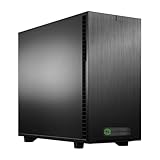
- Ryzen Threadripper 9960X 4.2GHz (Up To 5.4GHz Turbo) 24 Core
- 256GB DDR5 ECC Reg (4x64GB)
- GeForce RTX 5090 32GB GPU
- 10G + 2.5G Networking + WiFi 7
- Onboard AQtion AQC113C 10GbE LAN
5. Treat discounts as separate, conditional scenarios
Use on-demand or pay-as-you-go pricing as a transparent baseline. Then model reservations, savings plans, committed-use discounts, or spot/preemptible capacity as separate cases only when their eligibility and operational conditions fit the workload.
For example, Google says GPU resource-based committed-use discounts require attaching a reservation, and Spot GPU resources do not receive sustained-use discounts. Google Cloud advertises up to 57% committed-use savings for certain Compute Engine resources, including machine types or GPUs; this is a maximum for eligible resources, not a predicted reduction for an arbitrary cluster. Check the actual configuration, region, account conditions, and terms on Google’s pricing overview. Azure supports pay-as-you-go and reservation or savings-plan options through its calculator. AWS calculator estimates can account for discounts and purchase commitments.
Do these 3 things before closing this tab:
1Fix the driver behind crashes, sound loss and screen glitches2Repair Windows errors before they cause bigger problems3Scan for outdated or missing drivers - takes under a minuteBest Value

- 4K@120Hz HDMI-Compatible Dummy Plug allows your PC to activate the GPU and create a virtual display. It simulates high resolutions for remote control and computing tasks. Supports up to 4K@60Hz/120Hz, and is also compatible with 1440p@60Hz/120Hz, 1080p@60Hz/120Hz, and more. ⚠️ Notice: The graphics card must support HDMI 2.1 to achieve 4K@120Hz refresh rate.
- HEADLESS OPERATION FOR SERVERS & PCS – Run your computer without a physical monitor. Ideal for servers, hosting farms, SOHO setups, and remote headless PCs.
- KEEP GPU AT FULL PERFORMANCE – Prevents your GPU from dropping to low resolution or power-saving mode, keeping acceleration (CUDA/OpenCL/DirectX) fully enabled.
- SUPPORTS 4K@120HZ REMOTE DESKTOP – 3840X2160@120HZ,2560X1440@120HZ,1920X1080@120HZSimulates high resolution and refresh rate, ensuring sharp and smooth remote desktop experience for work and gaming.
- PLUG & PLAY, WIDE COMPATIBILITY – Compact adapter, no drivers required. Works instantly with Windows, Linux, macOS, and industrial PCs.
For interruptible capacity, account for the possibility that work may be interrupted and must be resumed or retried. For commitments, check the term, reservation or capacity requirements, and whether the workload will use enough hours to benefit. Do not apply an advertised maximum discount to the baseline without verifying those conditions.
Independent reader supportYour contribution helps us test, update, and keep practical guides available for everyone.6. Compare options by work completed, not hourly price alone
Model each candidate configuration with the same workload amount, geography, schedule, and discount assumptions. Compare the resulting cost alongside the service each option delivers:
| Comparison area | What to align or compare |
|---|---|
| Work completed | Throughput, completion time, tokens or examples processed, and reliability—not just the hourly rate. |
| Compute scope | GPU model and count, host CPU and memory, whether the GPU is bundled or separately priced, and billed hours. |
| Location and capacity | Region and zone pricing and whether the required GPU is available there. |
| Supporting services | Storage capacity and performance, data movement, licensing, and operating costs. |
| Pricing risk and flexibility | On-demand versus committed or interruptible capacity, commitment term, reservation requirements, and fit with the workload schedule. |
Calculator outputs are only meaningfully comparable when those assumptions match. AWS estimates may include discounts and purchase commitments, and Azure estimates may reflect account-specific negotiated prices, so note those differences when comparing providers.
7. Validate the estimate and keep it current
- Run a representative test: use a workload and configuration that resemble the intended deployment.
- Record actual usage: capture GPU hours, supporting-resource consumption, throughput, and the resulting bill.
- Reconcile the model: compare measured values with the assumptions and update the expected runtime, resource quantities, and line items.
- Revisit material changes: recalculate when the architecture, region, SKU, schedule, or budget projection changes.
Provider prices, regional availability, and discount terms can change. Check the calculator output for the exact configuration when making a budget or purchase decision; Azure’s calculator documentation was last updated July 21, 2025, and Google states that GPU prices are in USD and vary by region.
What a useful estimate should show
Keep the estimate auditable: list the workload assumptions, configuration, region, hours, supporting services, pricing plan, and the source or calculator output for each price. The reviewed official provider sources do not establish a comparable, cross-provider end-to-end AI cluster total. Without the GPU SKU, region, hours, storage, network, pricing plan, and measured workload performance, a single monthly cluster figure would conceal too many assumptions.
Quick Recap
Product prices and availability are accurate as of the date/time indicated and are subject to change. Any price and availability information displayed on Amazon at the time of purchase will apply.

