
Quick wins for a faster PC:
Scan for outdated or missing drivers - takes under a minuteDriver Scan →Clear out junk files and repair common Windows errorsFree Scan →Fix the driver behind crashes, sound loss and screen glitchesFind Drivers →Vicinity Technologies demonstrated an end-to-end software-defined radio (SDR) system at Mobile World Congress Barcelona 2026, with both a 5G base station and user equipment (UE) operating in an open, multi-vendor architecture. The company calls the platform “6G-ready” because it is designed to evolve toward future terrestrial and non-terrestrial networks; the demonstration was not a commercial 6G network, and Vicinity’s performance figures remain vendor-reported rather than independently verified.
What did Vicinity show at MWC 2026?
Vicinity announced the demonstration on February 3, 2026, ahead of Mobile World Congress Barcelona, held March 2–5. The company listed Hall 7, Stand 7A12. Its live setup paired a 5G base station with user equipment in an open, multi-vendor SDR architecture, showing both network-side and device-side elements rather than a radio component in isolation.
The announcement’s central idea is programmability: software-defined radios can be adapted as network requirements and hardware platforms change, instead of relying on one fixed-function radio design. Vicinity presents that approach as a way for operators, enterprises, integrators, and technology partners to reuse a radio foundation across different deployments and reduce dependence on a single hardware configuration.
Is Vicinity’s SDR platform really 6G-ready?
“6G-ready” is Vicinity’s positioning, not evidence that the demonstration was a 6G system or that a finished 6G service is available. The announcement describes a platform intended to support future evolution, including 3GPP Release 19 and later work, across terrestrial and non-terrestrial networks. Release 19-and-beyond compatibility should be understood as a direction for development, not proof of certification or a specific 6G feature set.
What’s actually slowing this PC down?
Pick the symptom - the matching free tool is one click away.
#1 Best Overall

- Turn your computer, phone or tablet into a radio scanner/ham radio receiver that can receive nearly all RF signals! Compatible with Windows, Mac OS, Linux, and Android
- NESDR SMArt RTL-SDR v5 can be used for the reception of broadcast AM radio, broadcast FM radio, shortwave radio, CB radio, public security radio, trunked radio, air traffic control, ACARS (plane-ground communications), ADS-B (plane tracking), AIS (ship tracking), POCSAG (pagers), NOAA and GOES weather satellites (weather images), weather balloons, radiosondes, DAB radio, DVB-T video, Inmarsat, Iridium, and so much more!
- The best-performing low-cost RTL-SDR available anywhere! Compared with RTL-SDR v3, HF SNR is improved by up to 15dB, VHF & UHF SNR is improved by up to 6dB, tuning accuracy is improved by an average of 4x, and the frequency range is expanded all the way down to 100kHz
- v5 has a frequency capability of 100kHz to 1.75GHz and up to 3.2MHz of instantaneous bandwidth. HF reception below 25MHz is accomplished with direct sampling and requires a suitable antenna. We recommend using a Balun One Nine to make a DIY long wire or dipole antenna (sold separately, product ID B08HGSYB7R or B00R09WHT6)
- Though the direct sampling implementation of NESDR SMArt v5 is much better than any other RTL-SDR, we still recommend using an upconverter like the Ham It Up for a more fulfilling HF experience (sold separately, product ID B076CYK8XZ)
The distinction matters because an SDR platform can be designed to change through software and support emerging network requirements without itself being a deployed 6G network. Qualcomm separately said on March 2, 2026, that industry partners were working toward commercial 6G systems beginning in 2029. That broader roadmap does not establish that Vicinity’s platform is a commercial 6G network.
Which NXP hardware does the platform use?
Vicinity’s MWC demonstration used NXP i.MX 8 processors alongside NXP Layerscape LA12xx and LA9310 SDR platforms. The company says its wider ecosystem also supports the following processor, ASIC, and FPGA options:
Rank #2

- Turn your computer, phone or tablet into a radio scanner/ham radio receiver that can receive nearly all RF signals! Compatible with Windows, Mac OS, Linux, and Android
- NESDR SMArt RTL-SDR v5 can be used for the reception of broadcast AM radio, broadcast FM radio, shortwave radio, CB radio, public security radio, trunked radio, air traffic control, ACARS (plane-ground communications), ADS-B (plane tracking), AIS (ship tracking), POCSAG (pagers), NOAA and GOES weather satellites (weather images), weather balloons, radiosondes, DAB radio, DVB-T video, Inmarsat, Iridium, and so much more!
- The best-performing low-cost RTL-SDR available anywhere! Compared with RTL-SDR v3, HF SNR is improved by up to 15dB, VHF & UHF SNR is improved by up to 6dB, tuning accuracy is improved by an average of 4x, and the frequency range is expanded all the way down to 100kHz
- v5 has a frequency capability of 100kHz to 1.75GHz and up to 3.2MHz of instantaneous bandwidth. HF reception below 25MHz is accomplished with direct sampling and requires a suitable antenna. We recommend using a Balun One Nine to make a DIY long wire or dipole antenna (sold separately, product ID B08HGSYB7R or B00R09WHT6)
- Though the direct sampling implementation of NESDR SMArt v5 is much better than any other RTL-SDR, we still recommend using an upconverter like the Ham It Up for a more fulfilling HF experience (sold separately, product ID B076CYK8XZ)
| Hardware family | Role or scope stated by Vicinity |
|---|---|
| NXP i.MX 8 | Processor used in the MWC demonstration |
| NXP Layerscape LA12xx | SDR platform used in the demonstration |
| NXP Layerscape LA9310 | SDR platform used in the demonstration |
| NXP i.MX 9 | Supported by the broader ecosystem; not identified as demonstration hardware |
| EnSilica ASIC SoCs | Supported as an ecosystem option |
| Lattice and AMD FPGA platforms | Supported as ecosystem options |
That list indicates a stated range of hardware choices, not that every option was tested in the MWC setup or that each can be swapped without engineering work. The announcement does not provide a full compatibility matrix, product SKUs, or public pricing.
What does URLLC-MAX do for drones and robots?
Vicinity describes URLLC-MAX as its software stack for deterministic control, precise timing and positioning, and low-jitter wireless performance. For drones, robots, and other autonomous systems, these capabilities target control links and real-time information exchange where predictable response and continuity matter. The software also underpins use cases Vicinity identifies in industrial automation, smart cities, and mission-critical communications.
Recommended Free Tools
Rank #3

- Includes 1x RTL-SDR Blog brand R860 RTL2832U 1PPM TCXO HF Bias Tee SMA Dongle (V3) (Dongle Only)
- Several improvements over other brands including use of the R860 tuner, improved component tolerances, a 1 PPM temperature compensated oscillator (TCXO), SMA F connector, aluminum shielded case with thermal pad for passive cooling, and an activatable bias tee circuit.
- Can tune from 500 kHz to 1.7 GHz and has up to 3.2 MHz of instantaneous bandwidth (2.4 MHz stable). (HF reception below 24 MHz in direct sampling mode with reduced performance). Please note RTL-SDR dongles are RX only.
- Please follow the quickstart guide linked in the included the manual for installation of the drivers and free software. Please feel free to contact us via Amazon messaging for technical support - we're happy to help
Vicinity reports deterministic 1-ms round-trip control cycles and sub-millisecond control performance, as well as “wire-like reliability” for command-and-control and real-time video. These are claims in the company’s announcement, not independently verified results: the published material does not give a test protocol, sample size, operating conditions, or laboratory validation. The figures therefore should not be treated as guaranteed performance in a particular deployment.
How native MESH networking fits
Vicinity says MESH networking is implemented natively in its user-equipment stack. The described functions include multi-hop relaying, distributed routing, local decision-making, and rapid topology changes. In a mobile group of drones or robots, a mesh can let devices relay traffic through other nodes as links or positions change, rather than relying only on a fixed direct path to infrastructure. Actual coverage and reliability would still depend on deployment conditions and the implementation.
Rank #4
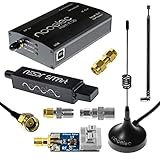
- A full, wide-band RF solution for those interested in getting started with software defined radio and with a keen interest in HF bands
- The NESDR SMArt HF Bundle utilizes a well-designed upconverter--the Ham It Up--to receive HF, NOT direct sampling hacks. This results in a vastly different HF experience--much better performance, and no loss of gain controls
- Included is a Ham It Up v1.3 upconverter, installed in a custom black aluminum enclosure; an NESDR SMArt RTL-SDR, 3 antennas, an impedance matching balun for longwire and dipole antennas, and interconnect adapters
- Proudly manufactured by NooElec in the USA and Canada, with a full 2 year product warranty on all bundle components and 24/7 technical support availability. Please contact our support team any time if you have questions!
- Amazon-exclusive bundle! Only available for a limited time
Can it connect terrestrial and satellite networks?
The platform is positioned for both terrestrial networks (TN) and non-terrestrial networks (NTN). Vicinity names satellite links, airborne networks, and ground deployments among the intended settings, so the stated scope extends beyond conventional terrestrial infrastructure. Its identified applications span drones, robotics, autonomous systems, industrial automation, smart cities, and mission-critical communications.
This is a platform-level capability claim, not confirmation that a satellite service, airborne network, or complete end-to-end deployment is currently available. The announcement does not specify satellite operators, supported bands, link budgets, terminal certifications, or deployment schedules. Those details would be necessary to assess a particular TN/NTN integration.
PC Slower Than It Used to Be?
A free scan shows the junk files, broken settings and background clutter dragging Windows down - then fixes them in one click.Free scan · Windows 10 & 11Outdated Drivers Are Slowing You Down
One free scan finds every outdated or missing driver and matches the right update for your exact hardware.Free scan · exact hardware matchBest Value
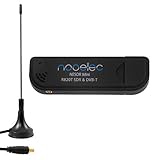
- Included: Nooelec USB dongle & antenna
- RTL2832U interface IC & R820T tuner IC on USB dongle
- These are custom USB devices tuned for SDR and include much better components than generics
- Full 1-year warranty & installation support available!
Can I buy the Vicinity platform on Amazon?
No verified Amazon retail SKU for the announced Vicinity platform is established in the available announcement details. Public pricing and product SKUs were not disclosed. Generic USB SDR receivers or FPGA/SoC development boards may help someone prototype radio concepts, but they are adjacent development tools—not the Vicinity platform or a confirmed substitute for its software, hardware integration, and networking capabilities.
What the announcement establishes—and what it does not
- Demonstrated: Vicinity showed a 5G base station and user equipment together in a multi-vendor SDR setup at MWC Barcelona 2026.
- Named hardware: The demonstration used NXP i.MX 8 processors and Layerscape LA12xx and LA9310 platforms; the broader ecosystem list includes i.MX 9, EnSilica ASIC SoCs, and Lattice and AMD FPGA platforms.
- Described software capabilities: URLLC-MAX targets deterministic control and timing, while native MESH networking provides multi-hop and distributed network functions in the UE stack.
- Positioned for: Terrestrial and non-terrestrial deployments, including ground, airborne, and satellite-linked scenarios.
- Not established by the announcement: Independent validation of latency or reliability claims, a commercial 6G network, deployment-ready satellite service, public pricing, or an exact retail product listing.
Dr. Eric Tsang, CEO of Vicinity Technologies, said: “Future wireless systems will be defined by software rather than fixed infrastructure,” and said the MWC demonstration showed how “SDR, URLLC, TN/NTN, and MESH networking can already enable advanced autonomous and industrial applications using technology that is ready for deployment today.” That is the company’s characterization of the demonstration; the performance evidence described above remains vendor-reported.
Quick Recap
Product prices and availability are accurate as of the date/time indicated and are subject to change. Any price and availability information displayed on Amazon at the time of purchase will apply.

