
Huawei’s Kunpeng 920 is a 7-nm Arm-based server processor announced on January 7, 2019. Its headline launch configuration had 64 cores running at 2.6 GHz, eight-channel DDR4 memory, and PCIe Gen4 and CCIX interfaces. Huawei designed it for enterprise servers—not as a conventional desktop or laptop CPU.
What is the Huawei Kunpeng 920?
The Kunpeng 920 is a server CPU designed by Huawei under an Arm architecture license. HiSilicon’s product page describes it as an Arm-based server processor designed independently by Huawei. Huawei launched it alongside the TaiShan server family, positioning the systems for big data, distributed storage, and applications built for Arm.
The announcement was made on January 7, 2019. Huawei’s 2018 annual report also records the Kunpeng 920 and TaiShan unveiling.
What are the Kunpeng 920’s specifications?
| Specification | Launch information |
|---|---|
| Architecture | Arm-based; designed by Huawei under an Arm architecture license |
| Manufacturing process | 7 nm for the core chiplets; the chiplet design also uses a 16 nm I/O die, according to Huawei researchers |
| Cores and frequency | 64 cores at 2.6 GHz in Huawei’s headline launch configuration |
| Memory | Eight-channel DDR4 support |
| I/O and interconnects | PCIe Gen4 and CCIX interfaces |
| Multi-processor systems | Two- or four-processor symmetric multiprocessing, according to Huawei researchers |
“7 nm” refers to the process used for the core chiplets; it does not mean every part of the processor, including the I/O die, was made on that process. Huawei researchers describe the design as chiplets connected by a coherent interconnect.
Quick wins for a faster PC:
Clear out junk files and repair common Windows errorsFree Scan →Scan for outdated or missing drivers - takes under a minuteDriver Scan →Repair Windows errors before they cause bigger problemsFix Now →#1 Best Overall
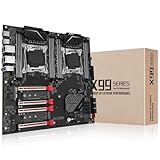
- Intel dual CPU sockets: This C612 server chip motherboard is designed with dual CPU sockets, which can support Intel Core i7 5th/6th generation processors and Xeon E5 V3/V4 series processors on LGA 2011-3 socket. (Note: If only one CPU is installed, please install it in the right slot, and the graphics card needs to be installed in the bottom two slots.)
- DDR4 4-channel memory slot: The memory slot of the LGA 2011-3 motherboard is designed with four channels, which can install 8 memory. It supports effective frequencies of 2133/2400MHz, and the maximum capacity is 256GB. (Non-ECC memory is not compatible when using E5 V4 series processors)
- PCIe 3.0 protocol standard: Equipped with 4 PCIe 3.0 X16 graphics card slots (with steel case). The transfer rate can reach 15.754 GB/s using one graphics card, and the performance can be improved by at least 50% by using two graphics cards. Equipped with dual M.2 hard disk slots, it can achieve fast reading even if multiple programs are running
- Stable power supply: use 24+8+8pin standard power supply interface (need to use a dedicated power supply for dual server motherboards), 12 (CPU) + 4 (memory) + 1 (C612 chip) phase power supply. Precise modularization provides good heat dissipation and makes the program run more stably
- Strong expandability: The X99 motherboard is equipped with multiple expansion interfaces to ensure that the motherboard has more room for improvement. These include 4*USB 3.0 ports, 4*USB 2.0 ports, 10*SATA 3.0 ports, 4*3pin sys fan, 2*4pin CPU fan. Besides, dual network ports allow your computer to do more things
Is Kunpeng 920 really 7 nm?
Huawei announced the Kunpeng 920 as a 7-nm processor, and its product materials identify the CPU with that process. The more detailed chiplet description from Huawei researchers specifies 7 nm for the core chiplets and 16 nm for the I/O die. So “7-nm Arm server CPU” is accurate shorthand for the launch product, but it is not a claim that every die in the package uses a 7-nm process.
How fast is it, and how should Huawei’s performance claims be read?
For the 64-core, 2.6-GHz configuration, Huawei reported a SPECint®_rate_base2006 score above 930 and claimed 30% higher power efficiency than competitors. These are figures reported by Huawei, not independent comparisons established by the cited launch material. The efficiency claim does not identify a particular competing processor in the available information, so it should not be treated as a universal result against every Intel Xeon or AMD EPYC model.
Rank #2

- Micro-ATX (9.6"x 9.6")
- Support AMD Ryzen 7000 series Processors
- 4 DIMM slots (2DPC), supports DDR5 ECC/non-ECC UDIMM
- 1 PCIe5.0 x16, 1 PCIe5.0 x4, 1 PCIe4.0 x1
- Supports 1 M.2 (PCIe5.0 x4)
A benchmark score is meaningful only with its test configuration, software, power measurement method, and comparison system. The available launch information does not provide a controlled, like-for-like Kunpeng 920 versus Xeon or EPYC result. It therefore does not support declaring one processor family the overall performance or efficiency winner.
What systems and workloads use Kunpeng 920?
Huawei introduced the CPU with its TaiShan server family. The stated target scenarios were big data, distributed storage, and Arm-native applications. Huawei’s later board material lists server boards supporting Kunpeng 920 variants including 5230, 5250, and 7260, with PCIe 4.0 expansion on the listed boards. Those documents establish an associated server platform, but not that the processor is sold as a retail upgrade or that every listed board is currently available in every market.
PC Slower Than It Used to Be?
A free scan shows the junk files, broken settings and background clutter dragging Windows down - then fixes them in one click.Free scan · Windows 10 & 11Crashes, No Sound, or Screen Glitches?
Random freezes, missing sound and display glitches usually trace back to one bad driver. Find and replace yours safely.Free scan · under a minuteRank #3
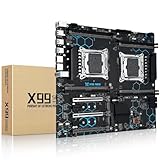
- Intel Dual CPU Sockets: This C612 chipset server motherboard is designed with dual CPU sockets, which can support Xeon E5 V3/V4 series processors. (Note: Core i7 not support Dual-CPU mode, if only one CPU is installed, please install it in the left slot)
- DDR4 Memory Slots: The memory slots of the LGA 2011-v3 motherboard is designed with 8-channel, which can support DDR4, DDR4 ECC, DDR4 RECC RAM. It supports effective frequencies is 2133/2400MHz, and the maximum capacity is 256GB. (Note: When use E5 v4 CPU, can not support Desktop DDR4 RAM)
- PCIe 3.0 Protocol: Equipped with 2 PCIe 3.0 X16 graphics card slots (with steel case), and 1 PCIe 3.0 X8, 2 PCIe 2.0 X1. The transfer rate can reach 15.754 GB/s. Equipped with 2 M.2 hard disk slots, which can achieve fast reading even if multiple programs are running
- Stable Power Supply: The X99 Dual CPU motherboard use 24+8+8pin standard power supply interface, 8-phase power supply. Precise modularization provides good heat dissipation and makes the program run more stably
- Strong Expandability: The X99 gaming motherboard is equipped with multiple expansion interfaces to ensure that the motherboard has more room for improvement, include 4*USB 3.0 ports, 2*USB 2.0 ports, 8*SATA 3.0 ports, 2*network ports
How does Kunpeng 920 compare with Intel Xeon or AMD EPYC?
The clearest architectural distinction is instruction-set ecosystem: Kunpeng 920 is Arm-based, while the Xeon and EPYC server families use x86. That difference affects whether existing operating systems, applications, libraries, and deployment tools will run as-is or require an Arm build, port, or compatibility work.
- Software compatibility: Check that the specific operating system and application versions you need support the target Arm server environment. A high core count does not compensate for software that cannot run or is not supported.
- Workload performance: Compare the exact processor configurations on the work your service actually performs. Core counts alone do not establish per-core performance or application throughput.
- Memory and I/O: Assess memory-channel and bandwidth requirements, plus the devices and expansion cards supported by the server platform. Kunpeng 920’s launch configuration specifies eight-channel DDR4 and PCIe Gen4/CCIX interfaces.
- Power and support: Compare measured system-level power under equivalent workloads, and confirm the vendor and integrator support available for your deployment.
- Procurement: Verify the availability and terms for the complete server or board in your region. CPU documentation by itself does not establish an authorized retail channel or current inventory.
Can you buy a Kunpeng 920 on Amazon?
The available Huawei board documentation confirms compatible server boards, but it does not establish current Amazon listings, worldwide retail availability, authorized sellers, prices, or product condition. Treat any listing as something to verify directly: confirm the exact CPU or board model, seller authorization, included components, region-specific support, and return terms. For enterprise deployment, a TaiShan system or a supported Kunpeng integration may be more relevant than a standalone processor listing.
Rank #4

- LGA 2011-3 Dual CPU Motherboard: Intel series LGA 2011-3 socket and dual CPU design. And it supports Intel Xeon E5-2XXX-V3, E5-2XXX-V4 series processors. (Note: Please use two CPUs of the same model. Intel Core i7 series processors do not support dual CPU)
- Maximum memory 256GB: The X99 server motherboard supports 8-channel DDR4 ECC/RECC/Desktop memory up to 256GB(8X32GB), 2133/2400MHZ effective frequencies. (Note: The Server RAM can't work with the Desktop RAM. When using E5 V4 CPUs, only ECC or RECC memory is supported, not desktop memory)
- PCIe 3.0 Protocol Standard: Equipped with 2 PCIe 3.0 X16 slots, 1 PCIe 3.0 X8 slot, 2 PCIe 2.0 X1 slots. Equipped with dual M.2 (PCIe 3.0 X4 bandwidth) hard disk slots, it can achieve fast reading even if multiple programs are running
- High-performance Motherboard: The X99 DDR4 motherboard is equipped with C612 chipset, 6-layer PCB material design. Assemble the diagnostic card, you can quickly find the fault location. Besides, dual network ports allow your computer to do more things
- Heat Dissipation and Power Supply: The X99 gaming motherboard is equipped with 3 VRM heat sinks, to realize rapid heat dissipation. And equipped with 24pin+8pin+8pin power interface, using the 6-phase power supply to ensure stable power supply. (Please use a power supply greater than 600W)
What Huawei said at launch
Huawei’s launch release attributes this statement to William Xu, Huawei Director of the Board and Chief Strategy Marketing Officer: “Huawei is continuously innovating in the computing field to create value for customers.”
Quick Recap
Best Value
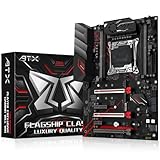
- Intel LGA 2011-3 socket: The Intel xeon motherboard supports Intel Core i7 5th/6th generation processors and XEON E5 V3/V4 series processors. (Eg. Core i7-5960X, Core i7-6850K, Xeon E5-2650 V3, Xeon E5-2690 v4)
- 4 channels DDR4: The X99 gaming motherboard has 4 DDR4 memory slots, designed by 4 channels, compatible with ECC and non-ECC memory. The supported effective frequencies are 2133/2400MHz, and the maximum capacity is 128GB
- Dual M.2 slots: This ATX motherboards are equipped with NVME M.2 and SATA M.2 slots. The NVME M.2 slot adopts PEIe channel, and the maximum transmission speed is 32Gb/s
- 5 PCIe graphics card slots: Equipped with 3 PCIe X16 slots (two of which are protected by a steel case), 1 PCIe X4 slot and 1 PCIe X1 slot. Using the PCIe 3.0 protocol, the effective transfer rate can reach up to 15.754 GB/s
- More functions: Assembled with aluminum alloy VRM cooling fan, one-key "boot" and "restart" buttons, buzzer and diagnostic card, etc. Including 3*USB 3.0(1*front), 7*USB 2.0(1*front), 2*PS/2, 4*SATA 3.0, 2*SATA 2.0. Size: 215mm x 303mm
Product prices and availability are accurate as of the date/time indicated and are subject to change. Any price and availability information displayed on Amazon at the time of purchase will apply.
What’s actually slowing this PC down?
Pick the symptom - the matching free tool is one click away.

