
Quick wins for a faster PC:
Scan for outdated or missing drivers - takes under a minuteDriver Scan →Repair Windows errors before they cause bigger problemsFix Now →Fix the driver behind crashes, sound loss and screen glitchesFind Drivers →A classic magneto makes electricity by turning a permanent magnet relative to a coil. The crank supplies the mechanical energy; electromagnetic induction converts it into electrical current. That can provide a ringing or signaling pulse without a battery, but it does not mean the device produces free energy or that every old telephone operated entirely without batteries.
How a classic magneto generates electricity
A magneto is a mechanically driven generator that uses a permanent magnet. Turning its crank rotates the magnet relative to coils of wire. As the magnetic field through a coil changes, it induces an electric current. In the 1832 machine built by Hippolyte Pixii, a crank and gear system rotated a large magnet beneath coils mounted on an iron yoke. The Florida State University Magnet Academy describes Pixii’s hand-cranked device as the first practical generator of electrical current; Museo Galileo calls it an ancestor of machines that convert mechanical energy into electricity.
The crank is the energy source. Your hand does work to turn the mechanism, and the magneto converts some of that mechanical input into electrical output. The current is typically intermittent, and its output depends on factors such as crank speed, magnetic field, coil winding and the connected load. The museum records document how classic magnetos worked but do not establish one universal wattage, voltage or efficiency figure for them.
Did old crank telephones work without batteries?
Not necessarily. In many early telephones, a local battery supplied the current for speech, while the hand-cranked magneto generated alternating current to ring a bell or alert the operator. The Science Museum Group summarizes the division: “Early telephones used batteries for producing the speech currents and a hand-cranked magneto for generating the alternating current needed to ring the bells.” Angelo State University’s Museum of Telephony likewise describes customers cranking to signal while dry-cell batteries powered talking.
The Tool Desk
Outbyte Driver Updater FREEFix the driver behind crashes, sound loss and screen glitchesFind Drivers →Outbyte PC Repair FREEClear out junk files and repair common Windows errorsFree Scan →#1 Best Overall

- Fitment:Hisun UTV 500 700,Massimo MSU 500 MSU 700,Alligator 500 700,Bennche Bighorn 500 700,Cowboy 500 700,Outfitter 500 700,Challenger 500 700,Axis 500 700
- Compatible:Hisun UTV 500 and 700 Stator assy
- Note:Not for Massimo T-Boss series,Massimo Buck series and Bennche T-boss series
- OEM part number:31120-007G00-0000 P007G0031120000
- Package List:You will receive it as picture shown
So a crank telephone could send its ringing signal without a battery, even though its complete conversation circuit generally relied on batteries. A caller typically cranked several times, lifted the handset and waited for an exchange operator to connect the call. London Museum’s circa-1892 skeleton telephone, for example, had magnets integrated into its feet and a crank used to call the switchboard and signal the end of a call.
How magnetos developed and what they were used for
- 1832: Pixii’s machine. Florida State University Magnet Academy and Museo Galileo document Hippolyte Pixii’s crank-operated magneto-electric machine.
- 1854–1890: Davis magneto-electric machines. The Science Museum Group records hand-cranked machines sold for electrotherapy. The museum characterizes the medical claims associated with this use as quackery.
- 1892–1920: Ericsson magneto telephone. The Science Museum Group records a telephone that used a crank generator for ringing.
- Late 19th and early 20th centuries: signaling and ignition. Magnetos appeared in telephones and ignition systems. Florida State University notes that automotive magnetos produced high-voltage pulses for spark plugs.
Classic magneto, hand-crank generator or battery?
A modern hand-crank generator is the closest practical product category if you want to demonstrate the same basic conversion process. The comparison below describes the general operating principles; it is not a standardized performance comparison. The historical sources do not publish directly comparable wattage figures.
Rank #2

- YAMAKATO 3A Quality coil kit for Champion 196cc 224cc 3500 4000 4375 watts generators, log splitters. Note that less than 40% of the mentioned Champi0n equipment uses this coil.
- For Briggs Stratton 590603 797343 CR 950 CR 750 6.5hp 208 cc engines' (model 13R232-0001-F1, 13R232-0002-H1 - 13R232-0012-F1, 13R232-0010-H1; 106232-0005-H1 - 106232-0045-H1; )
- For 30-40% equipments that have 163cc 196cc 208cc 212cc engines.
- Compatible with 20-30% generator that are 3250 3500 3600 3750 4000 4375 4500 watt.
- The high standard coil comes with 1 spark plugs and an air gap gauge in bubble bag package.
| Feature | Classic magneto | Modern hand-crank generator | Battery system |
|---|---|---|---|
| Energy source | Mechanical work applied to a crank or other drive. | Mechanical work applied by hand to a crank. | Energy stored chemically in cells or a battery pack. |
| Output continuity | Generated while driven; output varies with the mechanism and load. | Generated while cranked; output varies with speed and connected equipment. | Supplies power without ongoing cranking until depleted or otherwise unavailable. |
| Voltage regulation | Not established as standardized for classic magnetos in the cited historical records. | Depends on the particular product; check its specifications and whether it regulates output. | Depends on the battery chemistry and any power-management circuitry in the system. |
| Intended load | Historical uses include telephone signaling and ignition pulses; particular loads differ. | Depends on the product’s rated output and supported connections. | Depends on the battery system’s voltage, capacity and supported load. |
| Mechanical effort | Required while generating output. | Required while generating output. | Not required during discharge; charging or replacement is needed to replenish energy. |
| Maintenance | Depends on the device’s age, condition and construction. | Depends on its design and use. | Depends on battery type, service life and charging requirements. |
| Portability | Depends on the particular machine. | Depends on the particular product. | Depends on battery size and capacity. |
What to check before buying a hand-crank generator
For a demonstration of battery-free, hand-powered generation, search for a hand-crank generator. That phrase describes the function without suggesting that an antique magneto is a convenient or standardized modern power source. Before buying, check the product’s own specifications rather than assuming all crank generators can power the same devices.
Quick Recap
Best Value

- For 63CC 64CC 2HP 2-Cycle Engine Motor Gas Generator
- For ETQ 900 1000 1200W 63CC 950 IN1000i TG1200 Generator
- For Tail Gator 63025 63024 900W 2HP Gas Generator
- For All Power America APG3004 APG3004A APG3004D Generator
- For Storm CAT 63CC 2HP 800 900W 60338 66619 69381
Rank #4

- Part Name: 5.1 Inches Diameter Stator Coil Magneto Generator
- Part Number: P007G00311200200, 31120-007G-0200
- Application: For HiSun UTV Stator assy. 2017ish & UP, Approx. 5" Diameter (Not 4.5"), Fits for New Wiring Plug from HiSUN 550 AND 750 UTV'S
- Note: Not for AXIS 750 CREW 3-Wire is too Short
- Package includes: 1× Stator Coil Magneto Generator
Rank #3
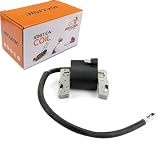
- IGCLINIC 492341 495859 Magneto Armature Ignition Coil Replaces 5600 watt generator with Briggs and Stratton 10HP engine
- Easier to install on the engine and stable operation
- 90 days warranty protects you after your purchase.If you have a problem, we will take every measure to assist you, contact us for a replacement
- Please carefully confirm our pictures with your original parts number before purchasing, make sure they can be applied to your machine
- Output and supported loads: Confirm the rated voltage, current or power and whether the product supports the device you intend to connect. A crank generator is not automatically suitable for household appliances or sensitive electronics.
- Regulation and connections: Check whether output is regulated and what connectors or adapters are included. Variable output can matter when crank speed changes.
- Safety: Follow the manufacturer’s connection and operating instructions. Do not connect a generator to equipment unless the product documentation says the combination is supported.
- Effort and duration: Hand generation requires continued work while power is produced. Decide whether you need a brief demonstration or a practical source for a specific device.
- Condition for antiques: If you want an antique magneto telephone, check its condition and restoration needs. A collectible telephone’s ability to crank a signal does not by itself establish that it can be used on a modern telephone service.
Product prices and availability are accurate as of the date/time indicated and are subject to change. Any price and availability information displayed on Amazon at the time of purchase will apply.
Free tools Windows power users keep installed
One-click scans. No signup required.

