
For a browser-based offline POS, start by evaluating IndexedDB if your records and known queries fit object stores and indexes. Choose SQLite compiled to WebAssembly when SQL and relational queries make the application materially simpler—but validate its specific persistence mode, browser support, worker requirements and multi-tab locking. Neither database handles synchronization or protects sales if local device data is lost; those require separate design.
What the comparison actually means
IndexedDB is a browser storage API. SQLite is a database engine; in a browser it typically runs through a WebAssembly and JavaScript implementation and needs a browser storage backend to persist data. That means the practical comparison is between native IndexedDB and a particular SQLite implementation and persistence configuration, not between two interchangeable browser APIs. See the SQLite WebAssembly documentation, the SQLite persistence documentation, and the W3C Indexed Database specification.
When IndexedDB is a good fit
IndexedDB is a sensible first option when the POS has a manageable set of record types—such as catalogue entries, configuration and queued sales—and the application can retrieve them using keys and indexes. It is part of the browser platform, so there is no separate SQL engine to ship. The trade-off is that the application must work with IndexedDB’s object-store and index model, asynchronous transactions and schema upgrades. MDN provides a developer overview of IndexedDB.
For a register whose queries are known in advance, object stores and indexes may be enough. This is an architectural fit, not a promise that IndexedDB is faster or more reliable: the cited sources do not establish a general performance winner for POS workloads.
Free tools Windows power users keep installed
One-click scans. No signup required.
#1 Best Overall

- iPad to POS in Minutes: Slide in an iPad and download the included Square point of sale app to get started. No training or service visits needed.
- Your entire business in one place: Power every part of what you do, all on one device. That’s payments, your website, daily reporting, and so much more.
- No extra readers required: Super fast built-in payments mean far fewer cords, zero fears of disconnecting, and a cleaner counter from here on out.
- Keep selling, even offline: Keep taking payments with offline payments even when your Wi-Fi or connectivity is down. Just reconnect to the internet within 24 hours to upload transactions. Terms and conditions apply.
- Stay powered even without power: if you need to unplug or if you lose power, Square Stand can run off a full iPad battery. iPad-powered mode only on USB-C compatible version.
When SQLite in WebAssembly is worth evaluating
SQLite is a stronger candidate if SQL, relational joins or complex filtering materially simplify the POS, or if sharing a SQLite data model with a native application is valuable. The official implementation offers low-level and higher-level APIs, including Worker-oriented options, and can persist databases through browser storage APIs. Its capabilities depend on the selected persistence backend, so “SQLite in the browser” is not one uniform configuration.
SQLite’s Origin Private File System (OPFS) integration is intended to run in a Worker, not on the main UI thread. SQLite documents support for the necessary OPFS APIs in Chromium-derived browsers, Firefox and Safari, but each virtual file system (VFS) has its own compatibility details. For example, the documented current OPFS VFS is incompatible with Safari versions earlier than 17; alternatives may work with Safari 16.4 or later. Check the current SQLite persistence guidance against the precise VFS and browser versions on your managed POS devices.
Rank #2

- 【Streamlined Transaction Processing】Equipped with intuitive controls, this cash register for small businesses accelerates checkout operations while reducing customer wait times. The dual-display system features an employee-facing LCD panel showing transaction details and a customer-facing screen for transparency. Four currency slots with protect clips and a dedicated check compartment keep cash register drawers organized, enabling swift access during peak hours.
- 【Multi-Format Payment Compatibility】Supporting cash, credit cards, and dual foreign currency modes, this caja registradora para negocio adapts to diverse customer needs. The integrated card slot and tax/VAT calculation functions simplify complex transactions, while offline operation via TF card ensures uninterrupted service. Compatible with thermal printers and POS systems through RS232/USB ports for seamless retail workflow integration.
- 【Optimized Currency Management】Featuring four partitioned coin trays and a removable cash register drawer, this system maintains orderly separation of bills/coins across denominations. The spring-assisted tray automatically elevates for quick change access, reducing physical strain during extended use. Durable stainless steel dividers withstand frequent operation in high-traffic caja registradora setups.
- 【User-Focused Interface Design】Color-coded 39-key layout with tactile buttons minimizes training time for new staff. Programmable department keys (32 presets) and clerk accounts (10 users) enable detailed sales tracking. Eight-digit customer display shows transaction totals clearly, while anti-dust keycaps preserve button responsiveness in busy environments.
- 【Comprehensive Sales Analytics】Generate real-time Z/X reports and daily/monthly summaries directly from this cash register for small businesses. Track 1,000+ PLU items across multiple payment types while maintaining secure local data storage. Pre-loaded templates support price adjustments and returns processing, making it essential for caja registradora para negocio operations needing detailed financial oversight.
OPFS configurations and deployment trade-offs
The standard OPFS VFS uses SharedArrayBuffer support for some concurrency handling, which requires the site to send COOP and COEP response headers. Those headers may affect how the site works with other resources, so account for them in deployment planning. SQLite recommends the Storage Access Handle (SAH) pool for applications that prioritize performance or cannot set those headers, while describing OPFS or OPFS with Web Locks as options when multi-tab concurrency is required. The SAH pool has limited simultaneous-connection behavior; match the configuration to the actual register workflow rather than choosing by name alone.
SQLite’s persistence documentation also describes fallback storage options such as localStorage and sessionStorage, but these are limited alternatives, not equivalent substitutes for an OPFS-backed database. Confirm the behavior and durability of the exact configuration you intend to ship.
Recommended Free Tools
Rank #3
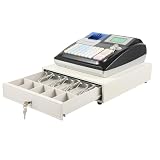
- ✅ 【Easy-to-Use & Clean Setup】Even new staff can learn this cash register quickly thanks to the clear LCD employee screen and large 8-digit customer display.
- ✅ 【Organized Cash & Speedy Checkout】Speed through rushes with a cash drawer that auto-pops open. It has 4 clamped bill slots and 5 coin compartments.
- ✅ 【No Internet, No Problem】This offline point-of-sale system avoids network crashes and keeps sales data secure on the device. Set up to six staff permissions with physical keys, giving you peace of mind in multi-employee shops.
- ✅ 【Connects to Your Shop’s Gear】Hook up your barcode scanner, kitchen printer, or PC using the two RS232 ports and USB interface. The built-in ther-mal printer supports custom logos on receipts, helping you brand every customer interaction.
- ✅ 【Built Tough & Saves Energy】Made with a sturdy ABS body and steel cash drawer, this POS terminal can handle daily use. It uses only about as much power as a light bulb, helping lower your store’s operating costs over time.
How to choose for a POS workflow
| Decision factor | IndexedDB | SQLite in WebAssembly |
|---|---|---|
| Data model and queries | Object stores and indexes suit records accessed through known keys and query patterns. | Useful when SQL, joins or relational queries materially help; validate against the actual workload. |
| Browser integration | Native browser API, specified by W3C. | Separate engine running through WebAssembly and JavaScript; persistence depends on the chosen backend. |
| Execution and deployment | No SQLite OPFS Worker requirement. | OPFS implementations require a Worker; some configurations need COOP/COEP headers. |
| Multi-tab access | Plan and test the application’s transaction and coordination behavior for the target browser. | VFS choice matters; file locking and simultaneous connections constrain the design, and concurrent designs may need to handle SQLITE_BUSY. |
| General POS performance winner | Not established by the cited sources. | Not established by the cited sources. |
Use this decision sequence to narrow the choice:
- List the real queries. If object stores and indexes express them cleanly, begin with IndexedDB. If relational joins or SQL make essential operations substantially clearer, prototype SQLite.
- Fix the device and browser matrix. Include the actual managed browsers, embedded browser contexts and operating systems used at registers; test exact versions rather than assuming broad browser-family support.
- Decide the concurrency model. Establish whether the POS runs in one tab, multiple tabs or workers, and whether those contexts need concurrent access to the same database.
- Check deployment constraints. For SQLite, verify that the selected VFS works on the target matrix, that database work can run in a Worker, and that any required response headers fit the site’s hosting and resource setup.
- Test recovery and sync separately. A successful local database prototype does not establish that sales will be safely retried, reconciled or recovered after device loss.
Design offline sales so a network failure does not lose them
The core POS requirement is that an accepted sale survives disconnection. A robust application should write a sale and its line items together in a database transaction, then create a durable task for synchronization. On reconnection, send queued tasks with stable idempotency identifiers, retry safely, reconcile server acknowledgements and show staff which sales remain pending or have failed to sync. Retain the local sale until the server acknowledges it and the business’s recovery policy permits cleanup. These are application-design recommendations; neither database specifies a POS replication protocol.
Local browser storage is not a backup. A sale still needs a recovery path if browser data is cleared or the register is replaced, and server reconciliation is a separate concern from the choice of database.
Rank #4

- 【All-in-One Electronic Cash Register with Offline Stability】This advanced Electronic Cash Register operates without internet dependency, ensuring stable performance even during network outages. Built with a high-speed thermal printer and dual displays, it supports sales tracking, receipt printing, and real-time transaction visibility—ideal for retail stores, restaurants, and busy checkout environments.
- 【Efficient Data Management & Reporting Electronic Cash Register】Manage your business seamlessly with this Electronic Cash Register, featuring 10,000 PLU storage, 36 departments, and support for membership and temporary sales. Print daily, monthly, or itemized reports with ease, helping you analyze sales trends and optimize inventory without complexity.
- 【Versatile Connectivity Electronic Cash Register with Multiple Ports】Equipped with RS232, RS-485, and USB interfaces, this Electronic Cash Register connects effortlessly with barcode scanners, computers, and external printers. Expand your point-of-sale system with compatible devices to create a smooth and integrated checkout experience.
- 【Secure & Organized Electronic Cash Register with Locking Cash Drawer】Keep cash safe with the lockable 4-bill and 5-coin compartment cash drawer. This Electronic Cash Register includes an emergency manual switch for power-off access and features anti-slip feet and a durable steel-reinforced body for long-term security and organization.
- 【User-Friendly Electronic Cash Register with Easy Setup】Get started right out of the box! This Electronic Cash Register comes with thermal paper, power adapter, and all necessary cables. The waterproof keyboard, removable keycaps, and intuitive interface make it accessible for staff of all experience levels—no IT expertise required.
Plan for storage restrictions and concurrency
Browser storage is not guaranteed to behave identically in every browsing context. SQLite’s documentation warns that private or guest browsing may reduce storage quotas or remove persistence, and that limits vary by browser. Its project documentation puts the concern plainly: “Most browsers offer ‘incognito’ and/or ‘guest’ browsing modes which intentionally change or disable certain capabilities of the browser.” If staff can use private or guest modes, test them on the actual supported browsers and decide how the POS should respond when durable storage is unavailable.
Multiple tabs or register contexts sharing a browser origin are another design constraint. SQLite’s OPFS documentation cautions that “desktop-grade concurrency is not a real thing in browser environments.” Some access handles require exclusive file access, long-open transactions can lock the file, and concurrent designs need to account for SQLITE_BUSY. Treat multi-tab operation as a requirement to test, not an incidental detail; consult the SQLite OPFS and persistence guidance for the selected VFS’s locking behavior.
Quick Recap
Best Value

- 【 Durable Material 】 It features a high-quality ABS material shell, which is sturdy and durable. Desktop installation saves space. The product measures 14.2x13.2 inches, has a compact structure and is easy to install, making it suitable for use in various supermarket and retail environments.
- 【 Dual-screen Display 】 Equipped with a 2.8-inch main display screen and an 8-digit LED customer display screen, transaction information is clearly visible. It is equipped with a built-in 2.28-inch thermal printer, which features fast printing speed and low noise, and can efficiently handle receipt printing tasks.
- 【 Powerful Memory 】 Equipped with 8M RAM, it supports the management of up to 1,000 product PLUs, 200 departments, and 50 employees. It also features VIP and desk management functions, and can flexibly build a cash register system according to business needs.
- 【 Rich Interfaces 】 It provides RS-232 serial port and USB interface, which can be easily connected to various peripheral devices such as barcode scanners, electronic scales, and kitchen printers. It has strong expandability and can flexibly build a cash register system according to business needs.
- 【 Complete Accessories 】 Standard equipped with a US-spec plug power adapter, with a wide range compatible input voltage of AC 100-240V and a stable output of DC 12V/4A power. The package contains the main unit, power cord, adapter, USB cable and an English manual, which are ready to use right out of the box.
What to test before deploying
- Terminate the browser abruptly during checkout and verify whether the accepted sale and its line items remain consistent.
- Test low-storage conditions and, where relevant, private or guest browsing; verify that the POS clearly handles unavailable or non-durable storage.
- Test browser upgrades and database schema migration on the managed device matrix.
- Exercise repeated sync delivery and confirm that idempotency prevents duplicate server-side sales.
- Open the application in the number of tabs or workers the real workflow permits, and test contention and recovery.
- Restore service or replace a device and verify that pending sales can be reconciled under the business’s recovery policy.
Product prices and availability are accurate as of the date/time indicated and are subject to change. Any price and availability information displayed on Amazon at the time of purchase will apply.

