
Quick wins for a faster PC:
Fix the driver behind crashes, sound loss and screen glitchesFind Drivers →Repair Windows errors before they cause bigger problemsFix Now →Scan for outdated or missing drivers - takes under a minuteDriver Scan →JSignPdf is free, open-source Java software for adding cryptographic signatures to PDF documents. You can sign through its JavaFX desktop interface or automate signing from the command line, using a PKCS#12 or JKS keystore or a PKCS#11-connected smartcard, token, or compatible hardware provider. A private key is required; a self-signed key is suitable for testing, while production trust depends on a certificate issued by a trusted certificate authority.
What JSignPdf does—and what a PDF signature means
The JSignPdf project describes the program as “an open-source application that adds digital signatures to PDF documents.” A digital signature uses a private key to bind a signer’s certificate to the signed PDF content. It can help recipients verify the document’s integrity and evaluate the certificate, but the software alone does not make a signer or certificate publicly trusted.

JSignPdf offers a JavaFX desktop interface with PDF preview, page navigation, zoom, and drag-to-place visible signature boxes. A legacy Swing interface is also available. The command-line interface supports repeatable and batch workflows, exposing the same core signing capabilities as the GUI.
A signature can be invisible or shown as a visible block on a page. The visible appearance is not a substitute for cryptographic validation: the signature’s certificate, integrity, and any validation evidence still matter.
What’s actually slowing this PC down?
Pick the symptom - the matching free tool is one click away.
#1 Best Overall

- Instant E-Signatures, One Click Away – Seamlessly send your handwritten signature to your computer with just one tap. Fully compatible with PDF, Word, Excel, JPG, PNG, and TIFF formats.
- Your Paperless Office Hero – Sign quotes, contracts, insurance forms, and internal approvals without ever printing a page. Complete documents quickly and securely—100% digitally.
- Built-in Timestamp & Printed Name – Every signature includes a timestamp and your printed name for enhanced credibility and traceability—ideal for business and legal use.
- Smart Sticky Notes, Digitally Delivered – Jot down memos and upload them instantly to your Outlook Calendar or desktop. Your personal assistant for smart, organized scheduling.
- Effortless Visual Collaboration – Sketch workflows, wireframes, or brainstorm ideas in real time. Perfect for teams that move fast and think visually.
Choose a signing method and key
| Option | What it is for | What you need |
|---|---|---|
| PKCS#12 or JKS keystore | Signing with a software-held private key | A keystore file, its password, and the key alias. A .p12 or .pfx file is a common PKCS#12 choice. |
| PKCS#11 provider | Signing with a smartcard, USB token, or compatible HSM-style provider | The hardware or provider, its PKCS#11 configuration, and any required reader and authentication details. A reader is relevant to this hardware path, not to an ordinary .p12, .pfx, or .jks file. |
| Desktop GUI | Interactive signing, previewing a PDF, and placing a visible signature | JSignPdf installed on a supported system and access to the signing key. |
| CLI | Scripted or batch signing | A JSignPdf distribution and command-line options configured for the key and signing choices. |
For local experimentation, the project guide demonstrates creating a test keypair with Java keytool. Do not treat a self-signed certificate as equivalent to a certificate trusted by recipients: for production documents, obtain an appropriate certificate from a trusted CA and protect the private key.
Install JSignPdf
The project’s releases page lists JSignPdf 3.2.0 artifacts published on 2026-09-14. Native installers are offered for supported Windows, Linux, and macOS targets and bundle Java 21. Cross-platform ZIP packages require Java 21 or newer installed separately. The project also documents Homebrew installation for macOS and Linux. Check the release page for the current package and platform availability.
Rank #2
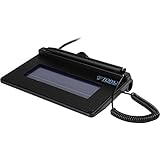
- USB interface, (Non-Backlit)
- Cost Efficient
- High-Quality Capture Techniques
- This model series shows the signature on the computer screen.
- Compatibility: T-S460-HSB-R, T-S460-BSB-R, T-S460-B-R
For a ZIP installation, extract the archive and launch the script for your operating system:
- POSIX systems:
bin/jsignpdf.sh - Windows:
binjsignpdf.cmd
Native packages create standard desktop launchers. Installation details and supported targets are documented in the JSignPdf releases and project repository.
Recommended Free Tools
Rank #3

- 【Signature tool 1】: SMAJAYU electronic signature pad works with “SMAJAYU document(s) Signer” a Sign Tool for pdf,word,excel documents digital signature. Pdf,Excel,word documents will be save as pdf after signature on sign tool.
- 【Signature tool 2】: Second sign tool named “demo tool” which is for getting signature picture to past on excel,word.edited files.
- 【Signature tool 3】: 430S SDK is available to integrate with programmable flatform, like website, app. Contact SMAJAYU support team for support.
- 【Apply Windows OS】SMAJAYU Signature pad and Signer tool only compatible with Windows OS, Windows 7,8,10,11, don’t support apple PC.
- 【How to sign documents】Install “ SMAJAYU document(s) Signer” on computer, run this app and create certification for first installation which for signature encryption and safety. Then insert Signature pad by USB and open files to start sign.
Sign a PDF in the GUI
- Install JSignPdf using a native package or extract a ZIP distribution.
- Prepare a keystore containing the private key you intend to use. For a test, the project guide shows a Java
keytoolworkflow; for production use a suitable CA-issued certificate. - Open the PDF in JSignPdf. Select the keystore type, keystore file, key alias, and password. If signing through PKCS#11, configure the hardware provider and its authentication instead.
- If needed, preview the PDF and place a visible signature box. Configure its text or image appearance and location.
- Choose any applicable certification level, timestamp, encryption, or revocation-information options.
- Sign the document and inspect the resulting PDF. The quickstart says the GUI saves the output beside the input file with
_signedappended to the filename.
The project’s quickstart documents the GUI and command-line workflow and the available placement options.
Sign from the command line
The quickstart gives this PKCS#12 example pattern:
bin/jsignpdf.sh
  -kst PKCS12 -ksf keystore.p12 -ksp mypassword
  mydocument.pdf
Replace the example keystore name, password, and input filename with your own values. Avoid putting a real keystore password directly into a script or command history where other users or processes could read it; use an appropriate secret-handling method for your environment. For Windows, invoke the corresponding binjsignpdf.cmd script. Consult the quickstart for exact options, including RFC 3161 timestamp configuration and the -V coordinates used to place a visible signature.
Rank #4

- Support English: The software download for this pad is not only in Chinese, you can change it into English by setting.
- Provide SDK for enterprise to integrate into OA system
- Pay Attention: If you need to use it on Mac OS, please contact us in advance
- Sign directly on PDF, Word, Excel, and PowerPoint files with precision—no printing, scanning, or hassle required. You can also choose that each signature is automatically stamped with the date and your printed name for added professionalism and record-keeping
- Instant E-Signatures, One Click Away – Seamlessly send your handwritten signature to your computer with just one tap.Fully compatible with PDF, Word, Excel, PowerPoint
Configure appearance, permissions, and validation evidence
Visible signature and certification
A visible signature adds a displayed block to the page; an invisible signature carries cryptographic signature data without that on-page appearance. JSignPdf also supports PDF certification levels that define which changes may be permitted after signing. Select a level that fits the document’s intended workflow, since later edits can affect validation or violate the restrictions represented by the certification.
Timestamping and revocation data
JSignPdf can request an RFC 3161 timestamp from a timestamp authority (TSA) and embed OCSP or CRL revocation information. A trusted timestamp can provide evidence about when a signature was made, while revocation data can help a validator assess certificate status. These mechanisms support later validation, but they do not guarantee that every future validator will trust the certificate or have all the information needed. Trust still depends on the CA, TSA, key protection, and the recipient’s validation policy.
Best Value
PAdES signing levels and engines
The default signing engine is OpenPDF. The bundled EU DSS engine adds selectable PAdES signing levels. Choose the engine and profile appropriate to the recipient’s requirements rather than assuming every PDF signature is automatically a particular PAdES level. The user guide describes the signing options and validation-related settings.
Encryption
JSignPdf exposes PDF encryption settings alongside signing options. Encryption controls access to the PDF; it is separate from the cryptographic signature and does not replace certificate trust or signature validation.
Is JSignPdf free for commercial use?
JSignPdf is open source and the project identifies MPL/LGPL licensing. The software itself is free; using it in a commercial workflow does not make external trust infrastructure free. A production certificate, smartcard or token, reader, and timestamp service may have separate costs or terms. Review the project’s license information and the terms for any external certificate or timestamp provider you choose.
Quick Recap
Practical security checks before you send a signed PDF
- Protect the private key and restrict access to the keystore or hardware token.
- Use a certificate chain that matches the trust expectations of the people or systems receiving the document.
- For documents that may need validation later, consider an RFC 3161 timestamp and OCSP/CRL evidence, and confirm the recipient’s requirements.
- Open the signed output in a PDF validator and check that the signature covers the intended content and that the certificate status is understood.
- Keep the unsigned source and manage signed copies deliberately; subsequent changes to a PDF can affect signature validity or certification permissions.
Product prices and availability are accurate as of the date/time indicated and are subject to change. Any price and availability information displayed on Amazon at the time of purchase will apply.

