
On a Windows 10 PC, the simplest way to check Windows 11 eligibility is to open PC Health Check, select Check now in the Windows 11 section, and read the result and any reasons shown. You can also check eligibility through Windows Update. Neither route guarantees that an upgrade offer is available immediately.
Check eligibility with PC Health Check
- Search the taskbar for PC Health Check and open the app. If it is not installed, use Microsoft’s PC Health Check guidance to find the app.
- In the Windows 11 section, select Check now.
- Review the eligibility result and any specific reasons the app lists. Use those reasons to decide what, if anything, needs attention.
Microsoft describes PC Health Check as a comprehensive eligibility check for Windows 10 PCs; it also provides information about why a device does or does not qualify and what to do next. It does not assess graphics-card or display requirements, so check those separately against Microsoft’s Windows 11 specifications if you need to confirm every item. (Microsoft Support)
Other ways to check
| Method | What it tells you | Who should use it | Does it confirm an upgrade is available now? |
|---|---|---|---|
| PC Health Check | Overall eligibility and, when applicable, reasons the PC does not qualify. | People checking a Windows 10 PC themselves. | No. Eligibility does not guarantee an immediate offer. |
| Windows Update | An eligibility assessment and information about upgrade availability. | Consumers checking through Windows settings. | No. Compatibility safeguards or rollout timing may delay an offer. |
| Organization’s IT process | The organization’s assessment and upgrade process. | People using a work- or school-managed device. | Ask the IT administrator; the organization controls its process. |
To use Windows Update, open Settings > Update & Security > Windows Update on Windows 10 and check for updates or eligibility information. For a managed device, contact your IT administrator rather than changing settings or starting an upgrade outside the organization’s process. Microsoft identifies both PC Health Check and Windows Update as consumer assessment routes, while advising users of managed PCs to check with their administrator. (Microsoft Support)
What Windows 11 hardware requirements does the check cover?
Microsoft’s published minimum requirements include a compatible 64-bit processor or system on a chip running at 1 GHz or faster with at least two cores, 4 GB of RAM, a storage device of at least 64 GB, UEFI firmware that is Secure Boot capable, and TPM 2.0. Windows 11 also has compatible graphics-card and display requirements. See Microsoft’s full specifications for the complete list. (Microsoft Support)
#1 Best Overall

- 1.1 GHz (boost up to 2.4GHz) Intel Celeron N5030 Quad-Core
- 4GB DDR4 System Memory; 128GB Solid State Drive
- 11.6" HD (1366 x 768) Multi-Touch Display
- Combo headphone/microphone jack - Noble Wedge Lock slot - HDMI; 2 USB 3.1 Gen 1
- Windows 11 Pro
PC Health Check does not test graphics or display compatibility. Its eligibility result therefore is not a confirmation of every published specification. If you need to verify those two items, compare the PC’s graphics hardware and display with the specifications page.
What to do if PC Health Check says your PC is not eligible
Start with the exact failed requirement shown in the result; the possible remedy depends on the component and the PC model.
Rank #2

- Everyday Performance for School and Light Work: A Core M3 2-core, 4-thread processor with a 1.1GHz base frequency and up to 3.0GHz turbo supports online classes, homework, documents, spreadsheets, email, web browsing and video calls for everyday study and entry-level office tasks.
- Crisp 15.6-Inch FHD IPS Display: The 1920x1080 Full HD IPS screen provides a clear, spacious view for homework, notes, presentations, online lessons, web research and streaming at home, school or work.
- 128GB SSD with Room to Grow: The M.2 2280 SATA SSD supports fast startup and everyday file access, with storage expansion up to 2TB. The laptop includes 4GB DDR3 1333MHz memory in two SO-DIMM slots with one slot currently in use.
- Versatile Ports and Wireless Connectivity: Connect accessories and displays through two USB 3.0 Type-A ports, USB-C for charging and USB 2.0 data, HDMI 1.4, a 3.5mm audio jack and a MicroSD card slot, plus dual-band Wi-Fi and Bluetooth 5.0.
- Lightweight for Study and Work: At 3.46 lbs and 0.76 inch thin, the DGBook is easy to carry between home, school and work. A 7.7V 5000mAh lithium-ion polymer battery, 2.0MP webcam, dual microphones and dual speakers support everyday portable use and video calls.
- RAM or storage: Some PCs allow these components to be upgraded, but options depend on the device. Check the manufacturer’s documentation for your exact model before buying parts.
- Processor: Adding memory or storage will not make an unsupported processor compatible. Microsoft says processor clock speed and core count are inherent to the processor as manufactured and are not considered upgradable components. (Microsoft Support)
- TPM or Secure Boot: Review Windows Security > Device security and consult your PC or motherboard manufacturer before changing firmware settings or buying a TPM module. Windows 11 requires TPM 2.0 by default; module support and compatibility depend on the device. Microsoft explains TPM’s security role in its Windows 11 specifications and TPM overview.
After a hardware change, run PC Health Check again and allow Windows to refresh its assessment. A newly eligible PC may still not show an upgrade offer immediately. (Microsoft Support)
Eligibility is not the same as an upgrade offer
An eligibility result means the PC meets the requirements assessed by that check; it does not promise that Windows 11 can be installed immediately through Windows Update. Microsoft says compatibility issues can temporarily delay an upgrade, and hardware changes may require a new assessment. If Windows Update does not offer the upgrade, use the assessment information and follow Microsoft’s guidance rather than assuming the PC failed the hardware check.
Outdated Drivers Are Slowing You Down
One free scan finds every outdated or missing driver and matches the right update for your exact hardware.Free scan · exact hardware matchWindows Errors? Fix Them Before They Spread
Repair common Windows errors and clear accumulated junk for a smoother, more stable PC - no reinstall needed.Free scan · no reinstallRank #3

- 14" diagonal, 1366x768 resolution, HD BrightView LED, Glossy NON-TOUCH Display
Windows 10 support status
Windows 10 support ended on October 14, 2025. Microsoft says PCs running Windows 10 continue to work, but free Windows Update software updates, technical assistance, and security fixes ended on that date. Check Microsoft’s PC Health Check guidance for its current support information.
Quick Recap
Best Value

- 14” Diagonal HD BrightView WLED-Backlit (1366 x 768), Intel Graphics,
- Intel Celeron Dual-Core Processor Up to 2.60GHz, 4GB RAM, 64GB SSD
- 3x USB Type A,1x SD Card Reader, 1x Headphone/Microphone
- 802.11a/b/g/n/ac (2x2) Wi-Fi and Bluetooth, HP Webcam with Integrated Digital Microphone
- Windows 11 OS, Dale Blue
Rank #4
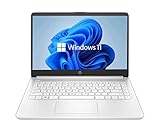
- 14” Diagonal HD BrightView WLED-Backlit (1366 x 768), Intel Graphics
- Intel Celeron Dual-Core Processor Up to 2.60GHz, 4GB RAM, 64GB SSD
- 1x USB Type C, 2x USB Type A, 1x SD Card Reader, 1x Headphone/Microphone
- 802.11a/b/g/n/ac (2x2) Wi-Fi and Bluetooth, HP Webcam with Integrated Digital Microphone
- Windows 11 OS
Product prices and availability are accurate as of the date/time indicated and are subject to change. Any price and availability information displayed on Amazon at the time of purchase will apply.

