
CES 2025 put AI in the physical world at the center of its announcements. NVIDIA presented tools for training and simulating robots and autonomous vehicles; Qualcomm emphasized AI processing on devices and previewed automated-driving technology; and vehicle partnerships illustrated how software-defined vehicles depend on software as well as computing hardware. The show ran January 7–10 in Las Vegas and drew more than 141,000 attendees, according to the Consumer Technology Association (CTA).
What were the biggest AI announcements at CES 2025?
The most consequential theme was not one new chatbot or device. It was the effort to connect AI models with the machines and systems that act in the physical world: robots, vehicles, and products that can process AI locally. Much of this was a development platform or company roadmap, rather than a finished product available to consumers.
NVIDIA introduced a development stack for physical AI
NVIDIA announced Cosmos, a world-foundation-model platform that includes generative models, tokenizers, guardrails, and accelerated video processing. The company said the platform is intended for developers working on robots, autonomous vehicles, and vision AI. NVIDIA described the goal this way: “We created Cosmos to democratize physical AI and put general robotics in reach of every developer.” That is NVIDIA’s stated ambition; the announcement does not establish that general-purpose robots are now ready for broad deployment.
NVIDIA also expanded its Omniverse blueprints for digital twins, synthetic data, and closed-loop autonomous-vehicle simulation. These tools address a practical challenge: physical AI systems need ways to learn from and be evaluated against situations that are costly, difficult, or unsafe to reproduce repeatedly in the real world.
Outdated Drivers Are Slowing You Down
One free scan finds every outdated or missing driver and matches the right update for your exact hardware.Free scan · exact hardware matchPC Slower Than It Used to Be?
A free scan shows the junk files, broken settings and background clutter dragging Windows down - then fixes them in one click.Free scan · Windows 10 & 11#1 Best Overall
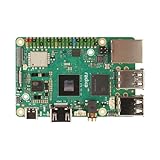
- POWERFUL COMPUTING: Advanced single board computer featuring high-speed LPDDR5 memory for superior processing capabilities and edge AI computing performance
- CONNECTIVITY: Multiple USB ports, HDMI output, and Ethernet connectivity provide versatile interface options for various applications
- COMPACT DESIGN: Space-efficient circuit board layout integrates powerful computing components in a single compact form factor
- DEVELOPMENT READY: Ideal platform for edge AI development, programming, and prototyping with comprehensive hardware interfaces
- EXPANDABILITY: Features multiple GPIO pins and standard connectors enabling extensive hardware expansion possibilities
Qualcomm emphasized AI processing on devices
Qualcomm framed edge AI as a shift of more AI processing into products such as PCs, automobiles, smart-home devices, and enterprise equipment. President and CEO Cristiano Amon said, “In 2025, we will continue to see AI processing move to the edge, enabling and enhancing AI-first experiences.” Qualcomm also previewed Snapdragon Ride software and hardware for automated driving. Those statements describe the company’s outlook and announced capabilities, not a guarantee that every listed device category will receive the same AI functions.
Blackwell brought a consumer product into the AI-PC conversation
NVIDIA positioned its Blackwell GPUs for gamers, creators, and developers. The clearest consumer product announcement was the GeForce RTX 5090 graphics card: the Associated Press reported a January 2025 availability window and a $1,999 launch price. That is a reported launch price and availability window, not a statement about current stock or later retail pricing.
What does “physical AI” mean?
Physical AI refers here to AI developed for systems that perceive or act in the physical world, rather than software that only generates or classifies digital content. A robot may need to interpret camera footage and choose a movement; an autonomous vehicle needs to perceive its surroundings and respond. The term appeared in vendor announcements at CES, so it is best understood as a broad label for this work—not as one specific model, product category, or guarantee of autonomous capability.
Rank #2

- [High performance] Quad-core ARM SoC up to 1. 8GHz with 3GB RAM- The Tinker Edge R features the Rockchip RK3399Pro SoC and Mali - T764 GPU along with 2GB of Dual Channel LPDDR4 memory for system, 1 GB LPDDR3 memory for NPU and 16GB eMMC flash
- [Gigabit Class networking]Tinker Edge R features a high speed GB LAN port for true Gigabit Class networking throughput along with 3x USB3.2 Gen1 Type-A. It also features onboard Wi-Fi & Bluetooth for robust IoT & Network connectivity
- [Open-source]The board will come with fully open-source kernel and support for multiple APIs, including OpenGL, Vulkan, OpenCL, OpenVX, TensorFlow Lite, Android NN, and Caffe
- [HD Audio & UHD video support] It supports 192/24bit HD Audio playback with automatic Audio jack detection as well as accelerated HD & UHD ( 4K ) video playback and supports HDMI CEC for seamless power on & off configurations
- [WiKi]For more information please refer to the product description, any technical issues after purchase please contact with our tech-support team: click "WayPonDEV" and ask a question. Package Content: 1x Tinker Edge R (3GB+16G eMMC); 2x Wi-FiVBT antenna cable; 1x Stand offset(4xScrew+4xHex); 2x Camera MIPI Convert cable (22P to 15P); 1 x Shielding bag; 1 x Quick start guide
At CES 2025, NVIDIA connected the idea to Cosmos, Omniverse simulation, and its Isaac GR00T robotics tooling. The relationship is complementary: models and data help train or guide a system, while simulation can help developers generate data and test behavior before or alongside real-world collection. Simulation does not by itself prove that a robot or vehicle will behave safely in every real environment.
Do these 3 things before closing this tab:
1Fix the driver behind crashes, sound loss and screen glitches2Repair Windows errors before they cause bigger problems3Scan for outdated or missing drivers - takes under a minuteHow is edge AI different from cloud AI?
The distinction is where AI processing happens. With cloud AI, a device sends information to remote computing infrastructure for processing; with edge AI, some or all of the work happens on the device or nearby computing hardware. The CES announcements focused on the potential of moving more processing to the edge, but did not establish a single architecture or performance level for every device.
| Approach | Where processing happens | What CES 2025 highlighted |
|---|---|---|
| Cloud AI | Remote computing infrastructure | It provides the contrast for Qualcomm’s stated direction of moving more processing into products; the CES materials summarized here do not specify a particular cloud service or benchmark. |
| Edge AI | On a device or nearby computing hardware | Qualcomm identified PCs, vehicles, smart homes, and enterprise devices as areas where it expects on-device AI processing to expand. |
Edge processing can make a product less dependent on sending every task to a remote service, but the CES announcements do not quantify latency, privacy, cost, or power trade-offs. Those depend on the particular device, model, and task. “Edge” also does not necessarily mean fully offline: a product can split work between local hardware and cloud services.
Rank #3

- Supports access to online large model platforms and includes Edge Impulse object detection demo for real-time multi-object recognition
- Equipped with Xtensa dual-core LX7 processor (up to 240MHz), 8MB PSRAM, 16MB Flash, and dual-mode WF + BT LE
- Dual-microphone array with noise reduction and echo cancellation for high-quality voice processing
- Integrated audio input and output module, supporting AI speech interaction and voice recognition applications
- Onboard camera interface (DVP) and SPI / QSPI display interface for image capture, recognition, and external display connection
What does CES 2025 mean for software-defined vehicles?
A software-defined vehicle (SDV) is built so that software can shape or change more of its functions over time, rather than each function being fixed to a separate, narrowly defined electronic unit. The CES vehicle announcements connected this direction to centralized computing, vehicle operating systems, automated-driving stacks, cockpit experiences, sensors, and over-the-air-style software evolution.
Why centralized compute matters
In a more distributed vehicle architecture, electronics are spread across systems with separate functions. An SDV approach can consolidate more computing and make software updates a more central part of how vehicle features evolve. The trade-off is that integration becomes critical: operating systems, sensors, automated-driving software, and cockpit functions need to work together. CES announcements described the direction, but do not show that all vehicles or manufacturers have adopted one architecture.
Recommended Free Tools
What NVIDIA and Qualcomm announced
NVIDIA highlighted DriveOS and DRIVE work with Toyota and other vehicle partners. Qualcomm previewed Snapdragon Ride capabilities for automated driving. These are vendor announcements about platforms and collaborations; they should not be read as proof that a particular announced system is already shipping in a consumer vehicle. Availability depends on automaker decisions and vehicle programs.
Rank #4
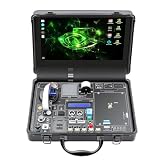
- 30-in-1 No-Solder Sensor Board, Plug and Play: Integrates 30 functional sensors including temperature & humidity, ultrasonic ranging, gas and motion sensors. Innovative common board design requires no soldering or complex wiring, and comes with a full set of accessories like 128G SD card, adapter board and acrylic mounting plates for zero-threshold experiments
- 8MP Gimbal Camera & Dual Servos for Professional Visual AI: The Starter Kit is equipped with an IMX219 8MP monocular camera and a dual-servo gimbal, supporting face and target tracking, and is ideal for AI edge computing scenarios such as intelligent monitoring, robot navigation, and automated recognition
- 38 Step-by-Step Python Tutorials, From Beginner to Practical Application: The Jetson Orin Nano Starter Kit comes with 38 well-designed Python tutorials progressing from basic programming to vision practice, covering all key knowledge of sensor control, embedded development and AI visual recognition for both beginners and advanced learners
- 11.6-inch IPS HD Screen & AI Voice Interaction System: Built-in 1366*768 resolution IPS screen eliminates the need for an external monitor, enabling one-device experimentation and visual feedback. The exclusive AI voice interaction system supports intelligent Q&A and voice command control for natural human-computer dialogue
- Rich Expansion Interfaces & Portable All-in-One Design: Features 2x I2C, 1x UART and 2 IO expansion interfaces to meet personalized experiment expansion needs; a custom carrying case integrates all components (11.81×7.87×3.94 inch), allowing AI experiments and demonstrations anytime and anywhere
Why simulation and synthetic data matter
Robots and autonomous vehicles need training and validation data that covers many situations. Data collected on roads or by operating robots reflects real conditions, but it cannot conveniently provide every rare or hazardous scenario on demand. Simulation and synthetic data offer another route: developers can create virtual environments and scenarios, then use them to train or assess systems.
NVIDIA’s Omniverse blueprints addressed digital twins, synthetic data, and closed-loop vehicle simulation, while its Isaac GR00T robotics tooling and Cosmos platform were presented as parts of a robotics development effort. These approaches can complement real-world data; they do not make real-world testing unnecessary or establish that simulated performance will transfer perfectly to physical settings.
What was a product announcement, and what was a roadmap?
CES combines products, platform announcements, demonstrations, and long-term plans. Keeping those categories separate helps avoid treating a company’s vision as a product already on store shelves.
| Announcement | What was established | How to interpret it |
|---|---|---|
| GeForce RTX 5090 | The Associated Press reported a January 2025 availability window and $1,999 launch price. | A named consumer graphics card with independently reported launch details; those details do not establish current price or stock. |
| NVIDIA Cosmos and Omniverse blueprints | NVIDIA announced a platform and expanded development blueprints for physical-AI workflows. | Developer tools and capabilities announced by NVIDIA, not evidence that robots built with them are generally available. |
| Qualcomm Snapdragon Ride | Qualcomm previewed software and hardware capabilities for automated driving. | A company preview; the announcement alone does not establish deployment in a specific retail vehicle. |
| Vehicle collaborations | NVIDIA named Toyota and other vehicle partners in its DriveOS/DRIVE work. | Partnerships indicate industry activity, but do not by themselves confirm a shipping vehicle, launch date, or feature set. |
Why partnerships mattered at CES 2025
The event’s AI story was also a partnership story. Official materials named companies including Toyota, Aurora, Continental, Accenture, and Microsoft around vehicles, simulation, and enterprise software. That breadth reflects the work required to turn AI platforms into systems: hardware, software, data, vehicle integration, and deployment all involve different participants. A named collaboration is evidence of work together, not proof that every related product or capability has launched.
Quick Recap
Product prices and availability are accurate as of the date/time indicated and are subject to change. Any price and availability information displayed on Amazon at the time of purchase will apply.

