
The Tool Desk
Outbyte Driver Updater FREEFix the driver behind crashes, sound loss and screen glitchesFind Drivers →Outbyte PC Repair FREEClear out junk files and repair common Windows errorsFree Scan →There is no definitive, objectively measured ranking of the hardest RPGs released from 1990 through 1999. This list is an editorial ranking: it weighs player-vote snapshots alongside the kind of challenge each game is known to present, and asks how demanding it is for someone approaching it today. The result is a curated shortlist, not a universal consensus. Difficulty can mean tactical mistakes, opaque systems, demanding exploration, or the preparation needed to make progress.
How this ranking defines difficulty
The ranking considers four things: the demands of tactical planning, the amount of independent exploration or navigation, how much success depends on understanding progression and preparation, and the cost of failure when reliable game-specific evidence establishes it. Those dimensions do not affect every player equally. A game that tests party-building may be manageable for someone who enjoys experimenting with builds, while a labyrinthine dungeon may be the greater obstacle for a player who dislikes mapping.

How Difficult Is It? lists community difficulty votes for games from the 1990s, with a minimum of five ratings. Its numbers are snapshots of its own users’ responses, not a representative survey or an explanation of a game’s mechanics. Where a score is available below, it is presented as supporting context, not proof that one game is objectively harder than another. A broader framework that considers difficulty spikes, complex systems, punishing consequences, and community reputation appears in Displate’s 2025 RPG difficulty feature; that framework is not a decade-specific ranking.
The scope here is RPGs released during 1990–1999, including tactical RPGs, dungeon crawlers, and an online RPG. Region matters: a Japanese original and a later release elsewhere can fall in different calendar years. The year given for each entry is the release year used for the listed game, not a claim that every regional version launched that year. Japanese-only titles are eligible; this is not a list limited to games released in North America. The selection is editorial because the available player-vote pages do not establish an RPG-only top ten for this decade.
#1 Best Overall
What are the hardest RPGs of the 1990s?
1. The 7th Saga (1993)
The 7th Saga is a natural top pick for players who find character progression and preparation more daunting than fast action. It received an 8.5/10 from 12 ratings in How Difficult Is It?’s 2026 player-vote snapshot. That score puts it among the highest-rated eligible RPGs in the cited decade table, but the small, self-selected vote count should not be mistaken for a broad measure of player experience. Its place at number one is this list’s judgment, not a result mechanically dictated by the rating.
Choose it if you want a demanding old-school RPG experience in which planning how to develop a character is central to the challenge. It may be a poor fit if you want a forgiving introduction or expect the game to explain every consequence of a choice.
2. King’s Field (1994)
King’s Field shares the decade table’s highest cited score here: 8.5/10 from 10 ratings in How Difficult Is It?’s 2026 snapshot. Its challenge belongs to a different tradition from party-and-build-heavy RPGs: expect a first-person fantasy adventure where orientation, observation, and deliberate movement are part of the work. That difference is why the score alone cannot tell you whether it will be harder for you than The 7th Saga.
Pick it if you enjoy exploring unfamiliar spaces and learning through observation. Players who need constant signposting may find its approach less welcoming.
Rank #2
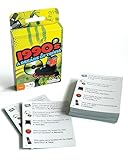
- PARTY GAME: A trivia card game to celebrate all things that we love about the 90's! Oh, snap!
- EASY TO PLAY: Trivia games are easy to play making it a great game for family and friends.
- TRAVEL PACK: This trivia game is conveniently packed in travel sized packaging making it great for long road trips!
- BENEFITS: Playing trivia games can help improve cognitive skills and expand your knowledge.
- FAST-PACED: Trivia is a fast-paced game and can be played in as little as 10 minutes
3. Fire Emblem: Thracia 776 (1999)
Fire Emblem: Thracia 776 earned 8.5/10 from 13 ratings in the 2026 How Difficult Is It? decade snapshot. As a tactical RPG, it tests the player through decisions about positioning, unit use, and the consequences of committing to a plan. Tactical difficulty is cumulative: a weak choice early in a map can leave fewer options later, so success depends on thinking several turns ahead rather than simply choosing a strong attack.
It is a strong fit for players who enjoy careful turn-based planning and can accept that a seemingly small mistake may complicate the rest of a mission. Its Japanese release is within the decade; do not confuse that eligibility with the year of a later regional release.
4. Wizardry VII: Gadeia no Houshu (1992)
Wizardry VII: Gadeia no Houshu received 8.4/10 from 14 ratings in the same 2026 player-vote table. It represents the classic computer-RPG side of this list: a player must be prepared to engage with party construction, exploration, and systems that offer less onboarding than many modern RPGs. The challenge is not one single difficulty spike so much as the combined burden of navigating and making a party capable of handling what lies ahead.
Consider it if you like intricate dungeon-crawling and are willing to keep your own notes or consult a guide. If you want the game to make objectives and party-building choices immediately obvious, its older conventions can feel like an additional hurdle.
Rank #3

- 🎮5.1-inch color screen game console🎮. It has a very rich range of functions, not only for playing games, but also for watching videos, listening to music, and reading e-books. Very suitable for outdoor/indoor/travel leisure and entertainment, and also very suitable as a gift.
- 🎮Supports multiple emulators🎮. Equipped with various retro emulators such as MAME/arcade/MD, players have more choices. Each emulator has many games, and one game console is equivalent to ten game consoles from the past. It is now very cost-effective to purchase.
- 🎮Built in thousands of free games🎮. Built in over 4000 classic nostalgic games (ACT/AVG/RPG/FTG/PUZ/RAC/SLG/SPG/STG) built-in, games can be added or deleted, making it convenient for users to organize game files(portable game console).
- 🎮The game can be saved🎮. When the battery is low or the user cannot continue playing the game, pressing the "ESC" button can save the game progress, and the player can continue playing according to the previous progress without starting over.
- 🎮Support video and audio playback🎮. When users don't want to play games, they can also watch videos, listen to music, and read e-books. It is a great multifunctional portable electronic entertainment device (pocket game console).
5. EverQuest (1999)
EverQuest’s 8.4/10 score from 19 ratings in How Difficult Is It?’s 2026 decade snapshot makes it the online RPG in this ranking. An online game poses a different sort of challenge from a self-contained, single-player campaign: understanding systems and progression is only part of the experience, and the presence of other players changes how the world is approached. Its inclusion broadens the list beyond console and computer games built around solo play.
Choose it if you are interested in an older online-RPG experience and do not mind learning at a slower pace. This entry is included as a 1999 release; the ranking does not treat the full later history of EverQuest as though it belonged to the 1990s.
6. SaGa Frontier 2 (1999)
SaGa Frontier 2 received 8.0/10 from 9 ratings in the decade snapshot. The community score is lower than those of the first five entries, but the ranking is not a sorted transcription of votes. It places the game here because its reputation as a demanding RPG makes it a worthwhile part of a curated decade list, while the cited vote data gives less reason to place it alongside the table’s highest-rated cluster.
It suits players who like learning an RPG’s systems through play rather than relying on a straightforward, steadily signposted path. If you want a frictionless progression curve, it may not be the first game to try from this list.
Recommended Free Tools
Rank #4

- 🎮4.3-inch color screen game console🎮. Whether playing games or watching videos, the picture details are clear. Its functions are very rich; it can not only play games, but also watch videos, listen to music, and read e-books. It's a great gift.
- 🎮Supports multiple emulators🎮. Built-in MAME/Arcade/MD and other retro emulators, giving players more choices. Each emulator has many games. Perfect for outdoor/indoor/travel leisure entertainment.
- 🎮 Thousands of built-in games🎮. 8GB storage includes over 4800 classic 80s and 90s retro games (ACT/AVG/RPG/FTG/PUZ/RAC/SLG/SPG/STG). You can start playing as soon as you get the console. Games can be added or deleted.
- 🎮Game saving function🎮. When the battery is low or the user can no longer continue playing, pressing the "ESC" key saves the game progress. Players can continue playing from where they left off without starting from the beginning.
- 🎮Supports video and audio playback🎮. When users don't want to play games, they can also watch videos, listen to music, and read e-books. It's a fantastic multi-functional portable electronic entertainment device (pocket game console).
7. Final Fantasy Tactics (1997)
Final Fantasy Tactics earned 7.6/10 from 14 ratings in How Difficult Is It?’s 2026 snapshot. Its turn-based battles reward attention to positioning, team composition, and the way units develop. Those are distinct demands from dungeon mapping or online progression, so a lower vote score than the top entries does not make it easy for every player; it suggests only that the responding users rated it lower on that site’s scale.
It is a good choice for players who want a tactical RPG in which preparation and battlefield decisions matter. Its status as a landmark 1990s RPG is discussed in ComicBook.com’s retrospective on ’90s RPGs, which provides context rather than evidence about difficulty.
8. King’s Field II (1995)
King’s Field II extends the first game’s first-person exploration style, making navigation and patient observation central to its demands. It earns a separate spot because it is a distinct 1990s RPG, not simply a substitute name for the original. The decade-vote figures cited above are for King’s Field, not King’s Field II, so they should not be carried over as a score for this sequel.
It may appeal to players who want more of the slow, exploratory challenge associated with the series. The ranking places it below the first game as an editorial comparison, not on the basis of a verified head-to-head player-vote score.
What’s actually slowing this PC down?
Pick the symptom - the matching free tool is one click away.
Best Value

- EXPANDED TRAVEL AND SOCIAL RULES: Discover new strategy mechanics for journeys in Middle earth and engaging with its iconic characters through the Journey and Council systems.
- COMPREHENSIVE LOREMASTER GUIDANCE: This RPG expansion offers thorough advice on bringing the world of Middle-earth to life, including rules for handling magical treasures, the influence of the Shadow, and the ever-watchful Eye of Mordor.
- DETAILED PATRON PROFILES: Explore in-depth The Lord of the Rings RPG information on 6 notable Patrons, such as Bilbo Baggins and Gandalf the Grey, who can sponsor the adventures of the Player-heroes.
- DIVERSE THE ONE RING RPG BESTIARY: Encounter a range of adversaries, from common foes like Orc Soldiers and Highway-robbers to formidable enemies like Cave-trolls and Barrow-wights.
- CREATE YOUR OWN NAMELESS THINGS: Utilize rules to craft unique and mysterious beings from the darkest corners of Middle-earth, adding an element of the unknown to your campaigns.
9. Wizardry 6: Bane of the Cosmic Forge (1990)
Wizardry 6 belongs to a genre with a long tradition of demanding exploration and systems-heavy play. The instruction manual for Bane of the Cosmic Forge describes role-playing as taking on another character and “acting and reacting to situations as he or she would.” That framing captures why older computer RPGs can ask for more than winning battles: players must interpret situations and make decisions with the party they have built.
Game Developer’s historical account of computer RPGs discusses this period and the series’ place in it. The manual quotation is useful context for the game’s role-playing approach, not a direct measurement of difficulty. Choose it if you enjoy classic party-based dungeon exploration and are comfortable with less hand-holding.
10. King’s Field III (1996)
King’s Field III rounds out the list with another entry in the series’ exploratory first-person RPG line. As with King’s Field II, the cited decade-vote table’s 8.5/10 rating applies to King’s Field, not automatically to its sequels. This final placement reflects the series’ relevance to a list of demanding 1990s RPGs and the variety of challenge it offers, rather than a verified score for this particular installment.
Try it if you want another patient, exploration-led option after the first two King’s Field entries. The ranking is least certain at these final positions: no cited game-specific difficulty score establishes a definitive order among all three games.
Free tools Windows power users keep installed
One-click scans. No signup required.
Which 90s RPGs are the most difficult for your play style?
Use the kind of challenge you enjoy to narrow the list. A high player-vote rating is only one signal; it does not tell you whether the challenge is the kind you personally find rewarding.
- For tactical planning: start with Fire Emblem: Thracia 776 or Final Fantasy Tactics. Both make turn-based decisions and battlefield positioning central.
- For exploration and navigation: try King’s Field, its sequels, or Wizardry VII. These choices better suit players who enjoy figuring out where to go and how to prepare.
- For progression and party preparation: consider The 7th Saga or Wizardry VII, where understanding development and assembling a capable party are part of the challenge.
- For online play: EverQuest is the sole online RPG in this selection, and its experience differs from a fixed solo campaign.
The list does not rank every RPG subgenre equally, and the evidence does not support presenting its order as a universal player consensus. The 2026 How Difficult Is It? figures are limited player-vote snapshots; they help identify candidates, but they cannot establish the cause or severity of a game’s difficulty on their own.
Quick Recap
Product prices and availability are accurate as of the date/time indicated and are subject to change. Any price and availability information displayed on Amazon at the time of purchase will apply.

