
DNS security is the set of controls that protect the systems and traffic involved in translating domain names into IP addresses. For a business, it means securing both the DNS data it publishes and the resolvers its people and workloads use, then using DNS queries to help block and detect threats. DNSSEC, encrypted DNS, and Protective DNS address different risks, so they work best as complementary controls rather than substitutes.
Why DNS security matters to a business
The Domain Name System (DNS) translates human-readable domain names into IP addresses. It supports nearly every enterprise network operation, from people reaching business services to workloads contacting other systems. The National Institute of Standards and Technology (NIST) describes DNS as integral to enterprise network architecture and warns that an attack on enterprise DNS infrastructure can threaten every network operation. NIST’s current guide, SP 800-81r3, was published on March 19, 2026.
DNS also has a security role beyond name lookup. A business can apply policy at the resolver and use DNS activity as a signal when evaluating access requests in a zero-trust architecture. That makes DNS both infrastructure to protect and a useful point for enforcing policy and spotting suspicious activity.
A complete program covers three areas: authoritative DNS servers, which publish the organization’s DNS data; recursive resolvers, which answer queries from users and workloads; and the channels that carry DNS traffic between clients and resolvers.
Quick wins for a faster PC:
Fix the driver behind crashes, sound loss and screen glitchesFind Drivers →Repair Windows errors before they cause bigger problemsFix Now →Scan for outdated or missing drivers - takes under a minuteDriver Scan →#1 Best Overall

- Comprehensive Hardware and Service Package: Includes FortiGate-120G appliance with 1 year of FortiCare Premium and FortiGuard Unified Threat Protection (UTP).
- Unified Threat Protection (UTP) Bundle: Protects against sophisticated web and DNS-based threats with advanced filtering and security features including ATP, DNS filtering, URL filtering, video filtering, and anti-botnet services.
- Enhanced Web Security: Offers high-level web security suitable for varied enterprise environments needing strong protective measures against online threats.
- Extended Support and Service: FortiCare Premium provides dependable technical support ensuring seamless operation and efficient issue resolution.
- Optimal for Diverse Deployment: Ideal for organizations with complex network environments looking for comprehensive security solutions.
Which threats can DNS security help address?
Tampering and cache poisoning
If a user receives forged or altered DNS data, a familiar domain can resolve to an attacker-controlled address. The resulting site may imitate a legitimate service to capture credentials or deliver malware. DNSSEC helps a validating resolver detect forged or altered DNS records, while sound administration and resilient infrastructure reduce the risk of compromise.
Phishing and malicious destinations
Protective DNS can analyze a query and block resolution for a domain known to be malicious, preventing a browser or other application from connecting to that destination through the resolver. CISA’s StopRansomware Guide identifies phishing, malware, ransomware, viruses, malicious sites, and spyware among the threats Protective DNS can help mitigate. This is a layer of defense, not a guarantee that every harmful link or destination will be blocked.
Rank #2
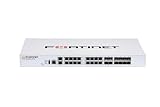
- Comprehensive Hardware and Service Package: Includes FortiGate-120G appliance with 3 year of FortiCare Premium and FortiGuard Unified Threat Protection (UTP).
- Unified Threat Protection (UTP) Bundle: Protects against sophisticated web and DNS-based threats with advanced filtering and security features including ATP, DNS filtering, URL filtering, video filtering, and anti-botnet services.
- Enhanced Web Security: Offers high-level web security suitable for varied enterprise environments needing strong protective measures against online threats.
- Extended Support and Service: FortiCare Premium provides dependable technical support ensuring seamless operation and efficient issue resolution.
- Optimal for Diverse Deployment: Ideal for organizations with complex network environments looking for comprehensive security solutions.
Command-and-control activity and data exfiltration
Threat actors may use domains during command-and-control or data-exfiltration stages. Reviewing DNS queries gives defenders a place to block known threats and investigate unusual patterns that could indicate an infected system or other malicious activity. NSA and CISA describe Protective DNS use cases that include command and control, malware distribution, domain-generation algorithms, and content filtering.
DNS compromise, outages, and weak administration
A compromised or unavailable name server can disrupt broad portions of an organization’s network operations. Misconfiguration and exposed administration add risk: CISA’s 2025 communications-infrastructure hardening guidance recommends placing externally facing DNS in a demilitarized zone (DMZ), and administrative access should use phishing-resistant multifactor authentication (MFA).
Outdated Drivers Are Slowing You Down
One free scan finds every outdated or missing driver and matches the right update for your exact hardware.Free scan · exact hardware matchWindows Errors? Fix Them Before They Spread
Repair common Windows errors and clear accumulated junk for a smoother, more stable PC - no reinstall needed.Free scan · no reinstallRank #3

- Comprehensive Hardware and Service Package: Includes FortiGate-80F appliance with 1 year of FortiCare Premium and FortiGuard Unified Threat Protection (UTP).
- Unified Threat Protection (UTP) Bundle: Protects against sophisticated web and DNS-based threats with advanced filtering and security features including ATP, DNS filtering, URL filtering, video filtering, and anti-botnet services.
- Enhanced Web Security: Offers high-level web security suitable for varied enterprise environments needing strong protective measures against online threats.
- Extended Support and Service: FortiCare Premium provides dependable technical support ensuring seamless operation and efficient issue resolution.
- Optimal for Diverse Deployment: Ideal for organizations with complex network environments looking for comprehensive security solutions.
What DNSSEC, encrypted DNS, and Protective DNS actually do
| Control | Primary objective | What it does | What it does not do |
|---|---|---|---|
| DNSSEC | Integrity and authenticity of DNS data | Adds authentication and integrity protection so a resolver can detect forged or altered DNS records. | Does not encrypt DNS queries or provide confidentiality. |
| Encrypted DNS: DoT, DoH, or DoQ | Privacy and confidentiality of DNS transactions | Protects DNS traffic between the client and its resolver from being exposed in transit. | Does not by itself authenticate DNS records or decide whether a queried domain is malicious. |
| Protective DNS (PDNS) | Threat blocking and detection | Analyzes DNS queries and takes action against malicious destinations; it is a security service, not a replacement DNS protocol. | Does not replace DNSSEC, encrypted transport, or resilient DNS operations. |
The distinction is practical: DNSSEC addresses whether DNS data has been tampered with; encrypted DNS addresses who can observe DNS transactions in transit; and Protective DNS addresses whether a queried destination should be allowed. A business may need all three, depending on its risks and policies.
NSA and CISA’s March 24, 2025 guidance emphasizes that Protective DNS is a security service rather than a protocol. Its effectiveness depends on the service’s threat intelligence, policies, deployment coverage, and operational integration, so assess those capabilities rather than treating the label alone as a guarantee.
Rank #4

- Comprehensive Hardware and Service Package: Purchase includes the FortiGate-90G appliance combined with 3 year of FortiCare Premium and FortiGuard Unified Threat Protection (UTP).
- Unified Threat Protection (UTP) Bundle: Offers robust web security services that protect against web-borne threats, including sophisticated DNS-based threats.
- Advanced Filtering and Security Features: Features ATP, DNS filtering, URL filtering, video filtering, and anti-botnet and C2 communications services, securing your organization against a range of advanced threats.
- Extended Web Security: Effectively blocks malicious URLs and filters content to maintain high security standards and regulatory compliance.
- Ideal for Various Enterprise Environments: Suitable for businesses seeking to enhance their defense against increasingly complex security threats.
How to choose DNS security controls or a provider
Start with the risk you need to address, then check that the option covers the relevant DNS role. A Protective DNS service typically focuses on recursive queries; authoritative DNS hosting is a separate need for publishing your organization’s zones. A provider may offer both, but verify the scope rather than assuming one service covers the other.
| Evaluation area | Questions to ask |
|---|---|
| Security objective | Does the service provide DNSSEC support, encrypted recursive traffic, threat blocking, availability improvements, or a combination? Which risks remain outside its scope? |
| DNS role and deployment | Does it cover authoritative DNS, recursive DNS, or both? Is it self-managed or managed, and what systems or workloads must be configured to use it? |
| Threat coverage and policy | How are malicious destinations handled? Can policies be applied to employees, servers, remote workers, and cloud workloads? How are exceptions and allow-lists reviewed? |
| Logging and response | Can query telemetry be sent to your SIEM or log-analysis platform? Can defenders investigate alerts quickly and distinguish policy blocks from possible infection? |
| Identity and administration | Does the service support least-privilege administration and strong account protection? Can access to registrar and DNS-provider accounts use phishing-resistant MFA? |
| Resilience and operations | What geographic resilience and failover capabilities are available? How are DNSSEC keys managed and rolled over? What recovery and change-control work remains your responsibility? |
Managed services can reduce the amount of infrastructure your team operates, but they do not remove the need to secure accounts, validate configuration changes, establish alert ownership, or test recovery. Self-managed deployments give the organization direct operational control but require staff to maintain resilience, monitoring, and key-management processes.
A practical implementation sequence
- Inventory DNS dependencies. Record every authoritative zone, registrar account, recursive resolver, cloud dependency, and third-party DNS service. Identify which users and workloads depend on each component.
- Reduce exposure and separate roles. Where practical, separate authoritative and recursive functions. Remove unnecessary Internet exposure, place externally facing DNS in a DMZ in line with CISA guidance, and restrict administrative paths.
- Protect administration. Apply least privilege to registrar and DNS-provider accounts and use phishing-resistant MFA. Document who is authorized to change records and how changes are reviewed.
- Enable and validate DNSSEC for public zones. Establish documented key-management and rollover procedures, and confirm that validation works as intended. Avoid treating enablement alone as proof that the configuration is sound.
- Set encrypted DNS policy. Use DNS over TLS (DoT), DNS over HTTPS (DoH), or DNS over QUIC (DoQ) for recursive traffic when required by privacy and policy needs. Decide which resolvers are approved and how clients and workloads will use them.
- Deploy Protective DNS across the environment. Include employees, servers, remote workers, and cloud workloads in the coverage plan. Define how legitimate business needs can be allow-listed, who approves exceptions, and how those exceptions are reviewed.
- Send DNS telemetry to defenders. Forward logs to a SIEM or log-analysis platform. Alert on newly observed domains, algorithmically generated names, unusual query volume, and failed DNSSEC validation; assign a response owner to investigate alerts.
- Exercise resilience and recovery. Test failover and recovery, verify change-control procedures, and ensure staff know how to restore service or respond to unauthorized record changes.
How to tell whether the program is working
Measure operational coverage and response rather than relying on a single headline statistic. Useful checks include whether all known zones and resolvers are inventoried, whether expected users and workloads actually send queries through approved controls, whether DNSSEC validation failures reach responders, and whether Protective DNS alerts are investigated promptly.
- Review unprotected or unexpected DNS paths, including newly added cloud services and remote workloads.
- Test that changes to authoritative records follow the documented approval process.
- Confirm that logs arrive in the SIEM with enough context to identify the affected system and investigate the event.
- Run failover and recovery exercises, then correct gaps in ownership, access, or documentation.
NIST’s SP 800-81r3 provides the current federal guide for DNS deployment and security considerations. CISA and NSA guidance offers additional context on Protective DNS and infrastructure hardening. These sources describe security practices and use cases; they do not constitute an endorsement of a commercial DNS provider.
Quick Recap
Product prices and availability are accurate as of the date/time indicated and are subject to change. Any price and availability information displayed on Amazon at the time of purchase will apply.

