
October lawn care depends on where you live, what grass you grow, and whether it is still actively growing. The useful checklist is to manage leaves, mow as growth continues, address compacted soil, water when needed, seed only within your local establishment window, fertilize only when local guidance calls for it, and keep off frozen turf. October is too late for some fall tasks in some regions and still suitable for others.
1. Clear thick leaves before they smother the grass
A heavy layer of leaves blocks light and can leave turf covered through winter. Rake it off, blow it into piles, or mulch it with a mower if the layer is light enough to break into small pieces without burying the grass. Maryland Extension suggests moving leaves to planting beds, shredding them in place, sharing them for beds, or composting excess leaves: University of Maryland Extension’s lawn maintenance calendar.
A rake is usually sufficient for a small lawn; a leaf blower can save time on a larger one. If you mulch, check that the leaf pieces are dispersed rather than forming a dense mat.
2. Keep mowing while the lawn is growing
Do not stop mowing just because the calendar says October. Continue while the grass is producing top growth, then make the final cut without scalping it. UW-Madison Extension advises mowing until top growth stops and cautions against cutting excessively short as part of winter preparation: Fall Lawn Care and Winter Prep.
Free tools Windows power users keep installed
One-click scans. No signup required.
#1 Best Overall

- OPERATION: Adjustable arm support on this seed, salt and fertilizer spreader helps provide maximum comfort
- HAND-HELD SPREADER: Perfect hand-held fertilizer, salt and seed spreader for small yards
- CAPACITY: A seed, fertilizer and salt spreader that holds up to 1,500 sq. ft. of Scotts lawn products for year-round lawn care
- USAGE: These hand spreaders for lawns are great for year-round use to seed, fertilize, salt and ice melt
- COVERAGE: These salt, fertilizer and seed spreaders for lawns are engineered for smooth, even coverage
Tom’s Guide gives 2.5–3 inches as a target for cool-season turf, but that figure is not a universal height recommendation. Grass species, regional guidance, and the mower’s normal cutting height matter; lower the blade gradually only when appropriate rather than making one drastic cut. See Tom’s Guide’s October checklist for the source of that target.
3. Aerate only where compaction or poor drainage is a problem
Pooling water, hard soil, or difficulty pushing a probe into the ground can indicate compaction. Core aeration removes plugs of soil and can improve drainage; it is also recommended before overseeding in Maryland guidance. UW-Madison Extension favors core-pulling aerators and says October aeration can be appropriate when soil moisture is adequate.
Rank #2

- NO ASSEMBLY REQUIRED: Scotts spreader comes pre-calibrated and ready-to-use; use it year-round including as an ice melt spreader or salt spreader for snow
- CAPACITY: Broadcast spreader holds up to 15,000 sq. ft. of Scotts lawn products, and can be used as a lawn food, salt, ice melt or grass seed spreader
- OPERATION: These fertilizer spreaders for lawns feature a hopper and agitator designed for smooth product funneling and consistent coverage
- SIDE SHIELD: Scotts exclusive EdgeGuard Technology on these broadcast spreaders for lawns keeps lawn product off landscaping, driveways, and sidewalks
- BROADCAST SPREADER: Use the Scotts Turf Builder EdgeGuard DLX Broadcast Lawn Spreader to apply Scotts lawn care products, like grass fertilizer for lawns
Aeration is not a must-do simply because it is October. Check that the soil is moist enough for the equipment to pull cores, and consider the grass type and local timing before disturbing the lawn. Sources: Maryland Extension and UW-Madison Extension.
4. Water according to rainfall, soil, and local restrictions
Cooler air alone is not a reason to stop watering. Check whether rain and soil moisture are meeting the lawn’s needs, and follow any local watering rules. UGA Extension notes that October can be dry in Georgia and gives about 1 inch of water per week as its stated ideal for Georgia turf; that is regional guidance, not a nationwide prescription. Adjust for rainfall and conditions, and consult UGA Extension’s October turf guidance.
The Tool Desk
Outbyte PC Repair FREEClear out junk files and repair common Windows errorsFree Scan →Outbyte Driver Updater FREEFix the driver behind crashes, sound loss and screen glitchesFind Drivers →Rank #3

- LARGE HOPPER CAPACITY: 130 lb hopper covers up to 1/2 acre or 25,000 sq ft with fewer refills, making this pull-behind spreader ideal for larger lawn projects
- UNIVERSAL TRACTOR COMPATIBILITY: Universal hitch design connects easily to most riding lawn mowers and lawn tractors, including Craftsman, Husqvarna, Cub Cadet, and more
- CONSISTENT WIDE SPREADING: Wide 10 ft to 12 ft spread width helps provide more even fertilizer and seed distribution with fewer passes across the lawn
- VERSATILE ALL-SEASON PERFORMANCE: Ideal for spreading grass seed, fertilizer, lawn treatments, salt, and ice melt to help maintain healthy lawns throughout the year
- DURABLE LONG-LASTING CONSTRUCTION: Built with 1 in steel tubing, enclosed gear house, poly hopper, spreader plate, and 13 in x 4 in pneumatic tires for reliable use
5. Overseed thin or bare patches only if your local window is open
Fall seeding can fill thin areas, but the establishment deadline is highly regional. The University of Maryland Extension calendar advises sowing cool-season grass seed by mid-October; it says germination takes about two weeks and notes that November frosts can threaten young seedlings. In most of Wisconsin, UW-Madison Extension recommends finishing fall seeding around September 10–15, so October seeding may be risky.
These dates are local recommendations, not interchangeable national deadlines. Before buying seed, confirm that the species suits your lawn and that your area still has enough time for establishment. Maryland guidance: Lawn Maintenance Calendar. Wisconsin timing: Timing Questions for Fall Lawn Care.
Rank #4
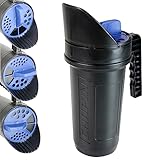
- 64-OUNCE BOTTLE: high-capacity poly bottle with a wide opening and easy screw top, quickly remove the lid to add your preferred seed, salt, fertilizer, etc. and simply screw back into place
- TURF AND SALT: year-round use; for steps, sidewalks and small paths in the winter; grass patches, shaded areas, gardens, and small sections the rest of the year
- 3 OPENINGS IN LID: twist lid to choose small, large and wide openings; each designed to fit different particulates like ice melt, salt, fertilizer, grass seed, sand and most pelletized products
- LARGE HANDLE: easy to grip, scoop and fill; accommodates small and large-sized hands, with or without gloves for use any time of the year
- PORTABLE: keep it on a shelf, in a closet or in the car and pull it out when it’s needed; you can even store it with product inside when not in use
6. Fertilize only when turf type and local rules support it
There is no single October fertilizer schedule. Recommendations vary by grass species and region, and applying nitrogen at the wrong time can encourage vulnerable growth. In Georgia, UGA Extension says warm-season lawns preparing for dormancy do not need additional nitrogen; its cool-season guidance includes fall fertilization beginning mid-month. Wisconsin Extension warns that mid-fall nitrogen can produce lush growth and increase risks of winter injury and snow mold.
Missouri Extension says a second application may be appropriate in mid-October under its stated cool-season conditions, while noting that fertilizer need depends on turf species and other factors. Use soil-test recommendations, the product label, and applicable local fertilizer laws rather than treating any one regional calendar as universal. Sources: UGA Extension, UW-Madison Extension, and University of Missouri Extension. Maryland residents should also note that the Maryland calendar identifies November 15 as its fertilizer deadline: Maryland Extension.
Best Value
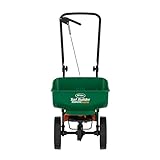
- NO ASSEMBLY REQUIRED: Scotts spreader comes pre-calibrated and ready-to-use with a fold-down handle for easy storage; use it year-round including as an ice melt spreader or salt spreader for snow
- CAPACITY: Broadcast spreader holds up to 5,000 sq. ft. of Scotts lawn products, and can be used as a lawn food, salt, ice melt or grass seed spreader - ideal for treating smaller areas
- OPERATION: These fertilizer spreaders for lawns feature a hopper and agitator designed for smooth product funneling and consistent coverage
- SIDE SHIELD: Scotts exclusive EdgeGuard Technology on these broadcast spreaders for lawns keeps lawn product off landscaping, driveways, and sidewalks
- BROADCAST SPREADER: Use the Scotts Turf Builder EdgeGuard Mini Broadcast Lawn Spreader to apply Scotts lawn care products, like grass fertilizer for lawns
7. Stay off grass when it is frozen or snow-covered
Wait until frost has melted before walking or working on the lawn. Frozen or snow-covered turf is vulnerable to damage, including injury to grass crowns, according to Maryland Extension’s lawn calendar.
Quick Recap
October lawn tasks by region
| Location and turf context | What the cited guidance says |
|---|---|
| Maryland, cool-season seeding | Sow by mid-October; seed takes about two weeks to germinate, and November frosts can threaten seedlings. The calendar also says to continue mowing if grass grows and sets a November 15 fertilizer deadline. Source: University of Maryland Extension. |
| Most of Wisconsin, fall seeding | The suggested seeding cutoff is around September 10–15; October seeding may be risky. Source: UW-Madison Extension, October 6, 2025. |
| Wisconsin, aeration and winter preparation | October core aeration may suit lawns when soil moisture is adequate; keep mowing until growth stops and clear heavy leaves before snow. Mid-fall nitrogen may increase risk of lush growth, winter injury, and snow mold. Source: UW-Madison Extension. |
| Georgia, warm-season turf preparing for dormancy | No additional nitrogen is needed for warm-season lawns preparing for dormancy. Georgia’s stated ideal of about 1 inch of weekly water is conditional on local moisture needs. Source: UGA Extension, October 6, 2020. |
| Missouri, cool-season conditions | A second fertilizer application may be suitable in mid-October under the calendar’s stated conditions; fertilizer needs depend on species and other factors. Source: University of Missouri Extension. |
How to prioritize the work
- First: Remove or mulch a thick leaf cover, and avoid walking on frozen or snow-covered turf.
- Next: Mow only while the grass is growing. Check for compaction or pooling and consider core aeration if those conditions are present.
- Before seeding or feeding: Check local Extension guidance for your grass type and location, then follow soil-test advice, product labels, and local rules.
- As needed: Water based on rainfall and soil moisture rather than the month alone.
Product prices and availability are accurate as of the date/time indicated and are subject to change. Any price and availability information displayed on Amazon at the time of purchase will apply.

