
The Tool Desk
Outbyte PC Repair FREEClear out junk files and repair common Windows errorsFree Scan →Outbyte Driver Updater FREEScan for outdated or missing drivers - takes under a minuteDriver Scan →For a write-intensive or high-reliability design, SLC NAND is generally the safer starting point: it stores one bit per cell and offers wider sensing margins and typically higher write endurance than MLC. MLC stores two bits per cell, providing greater density and usually a lower cost per bit. It can still fit when the exact device and storage system meet the application’s endurance, retention, temperature, and service-life requirements. Choose from part-specific specifications and a workload analysis—not from the SLC or MLC label alone.
What SLC and MLC mean for reliability
SLC and MLC describe how many bits a NAND flash cell stores. An SLC cell represents one bit using two distinguishable states; an MLC cell represents two bits using four states. With fewer states to distinguish, SLC has wider sensing margins. In MLC, narrower margins make noise, cell wear, retention loss, and read or program disturb more consequential. These are tendencies of the technologies, not guarantees about every device.
That distinction is one reason SLC is commonly considered for designs where write endurance and reliability margin matter more than density. MLC’s two bits per cell can provide more capacity from a given amount of NAND, which can reduce cost per bit. The useful comparison, however, is between complete candidate parts and systems: the controller, firmware, error correction, workload, operating conditions, and supplier support all affect whether a design will meet its requirements.
How the options compare
| Design factor | SLC NAND | MLC NAND | What to verify |
|---|---|---|---|
| Bits per cell | One bit in two states. | Two bits in four states. | MLC offers greater density; SLC has fewer voltage states to distinguish. (Micron NAND guidance; Cassidy, EE Times, 2012.) |
| Endurance and sensing margin | Generally higher write endurance and wider sensing margins. | Generally lower endurance and narrower margins, though product specifications vary. | Use the candidate part’s endurance specification and ECC requirements under the intended workload. (Micron NAND guidance; Micron MLC guidance; Cassidy, EE Times, 2012.) |
| Capacity and cost | Lower density and typically higher cost per bit. | Higher density and typically lower cost per bit. | Compare total system costs, including controller, qualification, replacement, and downtime—not just the memory cost. (Cassidy, EE Times, 2012.) |
| Retention and temperature | Generally more tolerant in historical comparisons. | Retention may be more sensitive to temperature and wear. | Apply the device’s specified retention conditions to the product’s actual operating and unpowered storage temperature profile. (Kioxia, 2020; Cassidy, EE Times, 2012.) |
| Management responsibilities | Raw NAND may require an external controller and firmware. | Raw NAND may require external management; managed products integrate a controller. | Establish responsibility for ECC, bad-block handling, wear leveling, and refresh. (Micron NAND guidance; Kioxia, 2020.) |
| Long-term supply | Depends on the exact product and supplier roadmap, not just the cell type. | Confirm longevity support, change notifications, end-of-life terms, and requalification expectations with the supplier. (Micron lifecycle guidance.) | |
Why headline endurance figures are not a lifetime estimate
Charles Cassidy’s 2012 EE Times comparison says SLC NAND endurance is 10–30 times that of MLC and that MLC’s error rate is 10–100 times worse. Treat both as broad historical comparisons, not universal specifications for current parts. The source does not establish a single current endurance or error-rate figure that applies to every SLC or MLC device.
Free tools Windows power users keep installed
One-click scans. No signup required.
#1 Best Overall

- Expand your storage with the W25Q128 NOR Flash Memory Chip Module, offering 128Mbit of reliable data storage. Perfect for high-capacity and high-speed applications, it supports up to 104MHz clock frequency for seamless integration
- Effortlessly integrate the W25Q128 NOR Flash Memory Chip Module into your projects with its SPI Interface, ensuring compatibility and ease of use. Ideal for developers working on STM32-based systems, it comes with included test code for quick setup
- Experience higher efficiency with the W25Q128 NOR Flash Memory Chip Module, supporting four-level L or O and SPI four-wire output and input mode. This module offers faster transfer rates and direct execution via SPI connection (XIP) for quicker startup times
- Reduce pin count and increase efficiency with the W25Q128 NOR Flash Memory Chip Module. The W25Q series provides fewer pin packages compared to parallel flashing, making it a more efficient and compact solution for your data storage needs
- Achieve double the operating frequency with the W25Q128 NOR Flash Memory Chip Module, supporting dual SPI dual input mode. With an operating frequency of 104MHz, it delivers four times the operating efficiency, making it ideal for high-speed and reliable data storage
A program/erase-cycle rating by itself cannot predict how long a product will last. Lifetime also depends on how much the host writes, the write pattern, write amplification in the storage system, capacity utilization, retention time, temperature, and the required service life. A device’s specified endurance and retention conditions must be interpreted together with the application’s actual workload and environment.
National Instruments’ historical guide illustrates how assumptions change an estimate: it gives a 64 GB SLC SSD example of 6,400 TB written for one sequential workload and one-year retention at 40°C, versus 1,000 TB under a 55°C storage assumption. Those are worked examples under their stated conditions, not general ratings for SLC drives, current products, or different workloads.
Rank #2

- 2 Colors 64GB Flash Drive: USB flash drive with 64GB, meet your needs of daily use on work, school, home and travelling for photo, music, files storage and transfer; 2 different color thumb drives can be used to store different files, easy to distinguish
- Sleek and Practical Design: The usb memory stick’s metal swivel cover provides extra protection for the usb connector, no cap to lose; keychain design makes it easier to carry without worrying lose it
- Easy to use: The thumb drive is plug and play without any software installation; Supports Windows 7/8/10 / Vista / XP / Unix / 2000 / ME / NT Linux and Mac OS, also compatible with USB 2.0 and 1.1 ports; Storage is fast, safe and stable
- Wide Compatibility: USB flash drive support TV, desktop, notebook computer, car, audio and other device; It is your great data storage and transfer companion with traveling and working
- What You Get: 2 x 64GB USB Flash Drive Thumb Drive (Black, Green); The default format of the USB stick is exFAT
What the controller changes
Raw NAND does not by itself provide the full management needed by a storage system. It needs a controller and firmware to handle error-correcting code (ECC), bad blocks, and wear leveling. Managed NAND packages a controller with the memory, but the system designer still needs to confirm what the product manages and how it integrates with the host.
- Confirm the ECC requirements and that the selected controller or managed device can meet them.
- Establish how bad blocks are identified and handled.
- Check how wear leveling and any required data refresh are implemented.
- Verify the host interface and which component is responsible for each management function.
These responsibilities matter for both raw SLC and raw MLC. Cell type alone does not tell you whether the controller and firmware are suitable for the application.
Quick wins for a faster PC:
Clear out junk files and repair common Windows errorsFree Scan →Fix the driver behind crashes, sound loss and screen glitchesFind Drivers →Repair Windows errors before they cause bigger problemsFix Now →Rank #3
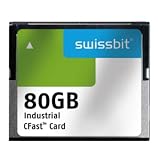
- USHTS: 8523510000 CAHTS: 8523510000
When enterprise MLC or pSLC may fit
Enterprise MLC
MLC is not automatically unsuitable for demanding applications. Micron describes enterprise MLC for write-intensive enterprise applications. That category description is not a substitute for checking the exact part’s specifications against the design’s workload, retention needs, temperatures, ECC, and required service life.
Pseudo-SLC
Pseudo-SLC (pSLC) uses MLC or TLC NAND in a mode that stores one bit per cell in a designated area. Kioxia’s December 2020 white paper describes this as a way to improve endurance and retention in managed NAND, with controller and firmware requirements. In the paper’s described context, partitioning MLC capacity for pSLC reduces available bits by about 50%; partitioning TLC capacity reduces them by about 66.6%. The paper says pSLC can improve write endurance by up to ten times in that context. These are not universal product guarantees; confirm the current product specification.
Rank #4
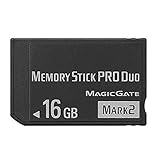
- Compatible with MagicGate copyright protection technology
- Can be used to perfect on the PSP adn digital camera
- Memory Stick PRO-HG Duo is ideal for high-speed data transfer and for continuous shooting
- 16GB capacity Flash memory Ideal for burst shooting with DSLR Up to 30MB/s read/write speed
- Can be used to perfect on the PSP(PSP1000/2000/3000/3000) and digital camera.
Because pSLC uses capacity that could otherwise store more bits, it is a trade-off rather than a free reliability upgrade. It also depends on controller and firmware support, so it does not make every MLC or TLC product equivalent to native SLC.
Independent reader supportYour contribution helps us test, update, and keep practical guides available for everyone.How to choose for a real design
- Set the reliability target. Define the required data integrity and availability, expected service life, and consequences of data loss or device failure.
- Characterize writes. Estimate host writes over time, workload patterns, peak write behavior, capacity utilization, and system write amplification.
- Define retention and temperatures. Record operating and unpowered storage temperatures, plus how long data must remain valid without refresh.
- Compare exact device specifications. Check endurance, retention conditions, ECC needs, bad-block assumptions, and temperature range. Ask the manufacturer for application guidance if an assumption is unclear.
- Choose the management architecture. Decide whether raw NAND with a qualified controller and firmware or managed NAND better fits the host. Verify the interface and responsibility for ECC, wear leveling, bad-block handling, and refresh.
- Assess intermediate options. Consider enterprise MLC or pSLC only after checking their capacity, cost, controller support, and product-specific requirements against the same workload and environmental analysis.
- Plan for supply continuity. For long-lived equipment, confirm product longevity support, change notification, end-of-life terms, and the supplier’s requalification process.
How long-lived products affect the decision
A storage design may remain in service longer than the exact component remains available. Supplier lifecycle support and a workable change-control or requalification plan can therefore be as important as the NAND cell type. Micron describes its Product Longevity Program as aimed at customers whose application lifecycles are 7–10+ years; that describes the program’s target applications, not a guaranteed availability period for every product.
What’s actually slowing this PC down?
Pick the symptom - the matching free tool is one click away.
Quick Recap
Product prices and availability are accurate as of the date/time indicated and are subject to change. Any price and availability information displayed on Amazon at the time of purchase will apply.

