
California’s SB 1246 authorizes courts to impose a civil penalty of up to $10,000 per covered commercial autonomous vehicle when it obstructs or otherwise interferes with an emergency event, emergency operations, or law-enforcement operations for more than 30 minutes after an emergency response official requests a local incident technician. The penalty is a possible maximum, not an automatic ticket. The law’s new provisions take effect July 1, 2028.
What triggers the potential $10,000 penalty?
SB 1246, enacted as Chapter 1021 and approved September 30, 2026, sets a specific clock: the more-than-30-minute period begins when an emergency response official requests a local incident technician. The statute authorizes a court to impose up to $10,000 per commercial autonomous vehicle for qualifying obstruction or other interference with an emergency event, emergency operations, or law-enforcement operations. It does not make $10,000 an automatic or fixed fine. Read the enacted text of SB 1246.
When deciding a penalty, a court may consider the violation’s severity and duration, its consequences, its effect on emergency response or public safety, whether it was repeated, and relevant mitigating or aggravating circumstances.
How the two civil-penalty ceilings differ
The law establishes a separate penalty for failing to meet the local incident technician dispatch and related response requirements in Section 38801. That civil penalty may be up to $5,000 for each violation. The $10,000 ceiling, by contrast, concerns qualifying interference with emergency or law-enforcement activity lasting beyond the specified 30-minute period after an official requests a technician.
Recommended Free Tools
#1 Best Overall

- 【2-in-1 Mopping and Vacuuming】 The ROPVACNIC Robot S1 integrates advanced electronically controlled mopping technology, significantly enhancing both cleaning efficiency and effectiveness, which makes your floors remain free from footprints, dirt, and dust throughout the day. It features an upgraded high-capacity water tank with a four-stage personalized water adjustment system, enabling it to address various stains across different settings according to user requirements.
- 【Comprehensive Intelligent Control】 Multiple Cleaning Modes, combined with personalized settings, allow you to easily accomplish various household cleaning tasks with zero effort from your smartphone. Moreover, by voice commands, you can start your cleaning while kicking back and relaxing (compatible with Alexa or Google Assistant). Enjoy an utterly hands-free cleaning experience.
- 【5200Pa Powerful Suction】A 3-point cleaning system coupled with strong suction ensures your floors are free from all dirt, dust, and crumbs for a thorough, superior clean. The highly passable compact design combined with 3-level suction facilitates cleaning in hard-to-reach areas where you can't, making it suitable for a wide range of surfaces from wood, and hard floors to low pile carpets.
- 【Smarter High Automation & Self-Recharge】 The robot aspiradora is equipped with an advanced high-coverage sensing system and multiple algorithmic data points, enabling autonomous completion of cleaning tasks—from scheduled starting, detecting obstacles, adjusting direction, and switching modes, to automatically returning to recharge. This hassle-free operation ensures a clean home when you return.
- 【Engineered for Pet Owner】 The exclusive no-entanglement design negates the need for your dirty hands to clean up tangled dog or cat hair, unlike traditional roller brushes. Its dual rotating electric side brushes sweep and collect hidden pet hair more efficiently throughout the house, saving you the hassle.
What manufacturers must do
Dispatch and recover vehicles
Manufacturers must ensure a local incident technician is immediately dispatched after notice of specified crashes, immobilizations, obstructions, roadway hazards, or a request from an emergency response official or 911 dispatch center. A technician can coordinate on the manufacturer’s behalf and manually move or tow a vehicle.
If a fleetwide emergency or system failure could create a traffic hazard or impede emergency response, manufacturers must immediately notify affected jurisdictions of fleet location and status. They must deploy technicians where appropriate when vehicles cannot be recovered remotely.
Respond to emergency area directions
Officials may send an emergency geofencing message directing a fleet to leave or avoid an area. Manufacturers must direct their fleet to comply within two minutes. This is distinct from sending a technician to a vehicle: geofencing is a fleet-level direction, while technician dispatch addresses an incident and may involve manual relocation or towing.
Rank #2

- 5000Pa Strong Suction: Robot Vacuum With 5000Pa suction power, it effortlessly removes pet hair, dust, and debris from all types of floors. It can also easily clean on short-pile & medium-pile carpets
- Vacuum & Mop in One Go: G8000 Max robot vacuum is equipped with 450 ml dustbin and 300 ml water tank combo, it supports simultaneous vacuuming and mopping in one go. The innovative design reduces cleaning time by 50%, enhancing household efficiency
- Long Battery Life, Always Ready: Up to 150 minutes in quiet mode, meeting daily cleaning needs and automatically recharging when the battery is low, always ready for the next cleaning task
- 4 Control Ways & 4 Cleaning Modes: Supports 4 control methods: App, Remote, Voice, and Button, making it ideal for wives, seniors, and parents. Choose from 4 cleaning modes(Spot, Edge, Zig-zag, and Manual cleaning) to meet your daily cleaning needs. The Zig-zag mode ensures maximum coverage and cleaning efficiency
- Ultra-Slim Design, Smart Sensors: The robot cleaner is 2.99 inches in height, it easily reaches under beds, sofas, and cabinets for thorough cleaning. With anti-collision and anti-fall sensor technology, it intelligently navigates around obstacles, walls, and stairs
Provide access to a human operator
Emergency lines and in-vehicle two-way communication must provide access to a remote human operator within 30 seconds. Manufacturers must also maintain emergency communications and capacity for concurrent remote-assistance or teleoperations sessions.
PC Slower Than It Used to Be?
A free scan shows the junk files, broken settings and background clutter dragging Windows down - then fixes them in one click.Free scan · Windows 10 & 11Outdated Drivers Are Slowing You Down
One free scan finds every outdated or missing driver and matches the right update for your exact hardware.Free scan · exact hardware matchKeep records and report
The law requires manufacturers to maintain quarterly records, and the DMV to publish quarterly summary statistics.
Remote drivers and remote assistants are different roles
SB 1246 distinguishes a remote driver, who performs real-time parts of the driving task such as steering or braking, from a remote assistant, who may advise or provide revised goals but does not remotely drive. Remote drivers must be in the United States and have a California-valid license of the appropriate class, including required endorsements. This distinction matters because remote assistance is not the same as taking control of a vehicle.
Rank #3
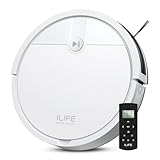
- Fits Pet Owners and Hard Floors: With a tangle-free suction port, V2 robot vacuum focuses on picking up hair without tangle; It also tackles dirt, crumbs and debris effectively on hardwood, tile, laminate, stone and low pile carpet
- Ultra-Slim Design: The 2.99-inch low profile allows the V2 robot vacuum cleaner to easily clean under beds, sofas, and other furniture
- Friendly Remote Control: The V2 vacuum robot equipped a physical remote control, no Wi-Fi connection is required for operation. Start cleaning easily via the remote or one-touch button, simple to operate for all family members
- Multiple Cleaning Modes: The V2 robot vacuum cleaner features multiple cleaning modes including auto clean, spot clean, and edge clean for thorough coverage
- Schedule Cleaning & Automatic Charging: V2 vacuum robot can run routine cleaning automatically based on preset schedule, it cleans up to 120 minutes on a single charge and automatically returns to the charging dock when the battery is low
When does the law take effect, and what is still to be set?
The new provisions become operative July 1, 2028. By that date, the DMV must adopt reasonable response-time guidelines for local incident technicians. The law directs the DMV to account for factors such as geography, incident type and severity, road and traffic conditions, fleet concentration, and public-safety needs. It does not itself set one statewide technician-arrival time; the future guidelines will shape what response times are considered reasonable.
What the reported incidents and company responses establish
TechCrunch reported on October 1, 2026, that the law followed incidents in California in which robotaxis broke down, disrupted traffic, entered crime scenes, or impeded responders. Its report does not give an incident count or rate, so those examples do not establish how frequently such events occur. TechCrunch’s report on the law.
The Tool Desk
Outbyte PC Repair FREEClear out junk files and repair common Windows errorsFree Scan →Outbyte Driver Updater FREEFix the driver behind crashes, sound loss and screen glitchesFind Drivers →The report cites about 4,000 autonomous vehicles in Waymo’s U.S. commercial fleet and about 1,200 in the San Francisco Bay Area; these are reported fleet figures, not numbers stated in SB 1246. It names Waymo, Tesla, and Zoox, and reports that Waymo and Zoox said they would comply. It also says Tesla has publicly described remote operators able to take direct control of its robotaxis. The statute applies through its defined manufacturer and vehicle categories, rather than naming those companies as its scope.
Quick Recap
Product prices and availability are accurate as of the date/time indicated and are subject to change. Any price and availability information displayed on Amazon at the time of purchase will apply.

