
Recommended Free Tools
The best Mac capture card depends on three things: your Mac’s chip and macOS version, the resolution and frame rate you want to record, and the HDMI passthrough signal you need for your display. For most Mac owners, the Elgato HD60 X is the simplest starting point. Choose the Elgato 4K X for higher-resolution capture and faster USB requirements, or the AVerMedia Live Gamer Ultra 2.1 (GC553G2) when HDMI 2.1 passthrough matters more than HDR recording on macOS.
A capture card’s passthrough specification is not its recording specification. A card can send a 4K or high-refresh signal to your monitor while recording a lower-resolution stream to your Mac.
Quick comparison
| Capture card | Mac requirements | Mac recording capability | Passthrough highlights | Important limitation |
|---|---|---|---|---|
| Elgato HD60 X | macOS 11 Big Sur or later; Apple M1 or qualifying Intel processor; 4 GB RAM; built-in USB 3.x port; Apple Silicon listed as compatible | Suitable for Mac recording and streaming workflows; exact mode depends on software and source signal | Designed for modern console capture and display passthrough | Check the recording application separately; not all Elgato Windows software is available on Mac |
| Elgato 4K X | macOS 11 or later; Apple M1 or qualifying Intel processor; 8 GB RAM; USB 3.2 Gen 2 required for full capture resolution | Higher-resolution capture options; USB 3.2 Gen 1 operates with reduced capture resolution | Higher-bandwidth HDMI passthrough modes, depending on source and display | HDR capture is unavailable in some resolution/frame-rate combinations |
| AVerMedia Live Gamer Ultra 2.1 (GC553G2) | macOS 13/14 or later; Apple M1 or 3.6 GHz quad-core Intel Core i7; 16 GB memory; USB 3.2 Gen 2 | Up to 2160p60 recording on macOS | HDMI 2.1 passthrough up to 2160p144 | HDR capture is not supported on macOS; 2160p144 recording is listed for Windows with RECentral, not macOS |
Which Mac capture card should you buy?
Choose Elgato HD60 X for the least complicated Mac setup
HD60 X is the most broadly approachable option in this shortlist. Elgato lists support for macOS 11 Big Sur or newer, Apple M1 and qualifying Intel systems, 4 GB of RAM, and an onboard USB 3.x port. Elgato’s Apple Silicon compatibility information marks the HD60 X as compatible.
It fits a typical workflow in which a console connects to the card, the card passes video to a television or monitor, and a Mac records the USB video feed in a compatible application. Before buying, confirm that your chosen app supports the HD60 X on your particular macOS release. Elgato notes that third-party applications can have requirements different from its own software, and Windows-only Elgato applications should not be assumed to run on macOS.
Do these 3 things before closing this tab:
1Clear out junk files and repair common Windows errors2Scan for outdated or missing drivers - takes under a minute3Repair Windows errors before they cause bigger problems#1 Best Overall

- 【1080P 60FPS Video Capture Card】 This HDMI game capture card is based on USB3.0 high speed transmission port, input resolution up to 4K@30HZ, output resolution up to 2K@30Hz or 1920×1080@60Hz. Type c and USB interface can meet most of the devices in daily life. Easily meet the online capture, real-time recording, online meetings, live gaming and other functions, so you have a better visual enjoyment. Note: For capture use only; requires capture software to function and is not intended for direct screen casting to a monitor or TV
- 【Ultra Low Latency Screen Sharing】 HDMI capture card is made of good quality aluminum alloy with strong heat dissipation, allowing you to enjoy ultra low latency while live gaming or video recording or live streaming, avoiding blue screens and lag. This HDMI to USBC capture card supports easy recording of good quality audio or HD video and transferring it to your computer or streaming platform, allowing you to record 60 fps HD video directly on your hard drive and real-time preview
- 【Plug and Play, Easy to Carry】 This HDMI 1080P video capture card does not require any additional drivers or external power supply, just plug and play for fast capture. The capture card is small and lightweight, so you can put it in your bag for emergencies, making it very portable for outdoor live streaming. It's also a great way to share content in game recording, video conference, video recorder and online teaching
- 【Wide Compatibility USB Capture Card】 Easily streams to Facebook, Youtube or Twitch. With the connection, this HDMI to USB C/3.0 video capture devices can be working on several Operating Systems and various software: Windows 7/ 8/ 10, Mac OS or above, Linux, Android, Laptop, Xbox One, PS3/PS4/PS5, Camera, DVDs, Set Top Box, Webcame, DSLR, Switch/Switch 2, TV BOX, HDTV, Potplayer/VLC, ZOOM, OBS Studio etc.
- 【Package Content & Note】 1x HD Audio Capture Card , 1x USB 3.0 to USB C Adapter (A-side 3.0, B-side 2.0), 1x user manual. Please note that you need to restart the OBS Studio software after the audio setup is complete, otherwise it will result in no sound output. When using an adapter, if the device is recognized as USB 2.0, try using the other side with the USB-C port. Simply flip the capture card and reconnect it to be recognized as USB 3.0
Choose Elgato 4K X when you need more capture headroom
The 4K X is the higher-capability Elgato choice, but it places more demands on the computer connection. Elgato lists macOS 11 or later, an Apple M1 or qualifying Intel processor, 8 GB of RAM, and USB 3.2 Gen 2 for full capture resolution. USB 3.2 Gen 1 can work, but with reduced capture resolution.
The device is listed as compatible with Mac and OBS and uses USB-C 3.2 Gen 2 at 10Gbps. That connector shape alone does not guarantee the required speed: check the port specification on your Mac, dock, or hub and use the supplied or appropriately rated cable.
Match the 4K X mode to both your console output and your recording target. Its passthrough modes can exceed what is recorded to the Mac, and Elgato cautions that HDR cannot be captured at every resolution and frame rate. If HDR clips are essential, verify the exact mode before purchase rather than relying on the product’s maximum passthrough figure.
Rank #2

- 【1080P HD High Quality】Capture resolution up to 1080p for video source and it is ideal for all HDMI devices such as PS4, PS3, Xbox One, Xbox 360, Wii U, DVDs, DSLR, Camera, Security Camera and set top box. Note: Video input supports 4K30/60Hz and 1080p120/144Hz. Does not support 4K120Hz/144Hz. Output supports up to 2K30Hz.
- 【Plug and Play】No driver or external power supply required, true PnP. Once plugged in, the device is identified automatically as a webcam. Detect input and adjust output automatically. Won't occupy CPU, optional audio capture. No freeze with correct setting.
- 【Compatible with Multiple Systems】suitable for Windows and Mac OS. High speed USB 3.0 technology and superior low latency technology makes it easier for you to transmit live streaming to Twitch, Youtube, Facebook, Twitter, OBS, Potplayer and VLC.
- 【HDMI LOOP-OUT】Based on the high-speed USB 3.0 technology, it can capture one single channel HD HDMI video signal. There is no delay when you are playing game live.
- 【Support Mic-in for Commentary】Rybozen capture card has microphone input and you can use it to add external commentary when playing a game. Please note: it only accepts 3.5mm TRS standard microphone headset.
Choose AVerMedia GC553G2 for HDMI 2.1 passthrough
The Live Gamer Ultra 2.1 (GC553G2) is the alternative for a setup built around HDMI 2.1 displays or high-refresh passthrough. AVerMedia’s manual lists macOS 13/14 or later, an Apple M1 or 3.6 GHz quad-core Intel Core i7, 16 GB of memory, and USB 3.2 Gen 2.
Quick wins for a faster PC:
Repair Windows errors before they cause bigger problemsFix Now →Scan for outdated or missing drivers - takes under a minuteDriver Scan →On macOS, the manual lists recording up to 2160p60. It lists HDMI 2.1 passthrough up to 2160p144, but that is the signal sent onward to the display, not the recording file produced by macOS. The manual also states that macOS does not support HDR capture. Windows users may see a different ceiling: 2160p144 recording is listed with RECentral on Windows, so do not apply that figure to a Mac.
What to check before ordering
1. Identify your Mac and macOS version
- Open Apple menu > About This Mac and note whether the computer uses Apple silicon or Intel.
- Record the installed macOS version; the cards in this guide have different minimum versions.
- Check memory as well as the processor. The listed requirements range from 4 GB for HD60 X to 16 GB for GC553G2.
2. Verify USB bandwidth, not just the connector
USB-C describes the plug shape, not necessarily its speed. The 4K X and GC553G2 specify USB 3.2 Gen 2 for their highest modes. A slower Mac port, hub, dock, or cable can force reduced capture modes or cause an unreliable connection. Connect the card directly to a qualifying port while troubleshooting.
Rank #3
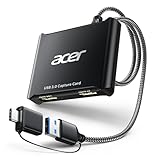
- 【4K Clarity, 1080P Performance】Enjoy stunning clarity with our USB 3.0 Video Capture Card—featuring 4K input and smooth 1080P@60Hz output. Featuring YUY2 technology, it delivers richer colors than MJPEG for lifelike live streaming and recording. Plus, it delivers high-quality video with minimal latency, making it perfect for gamers and content creators.
- 【Mic-in for Easy Commentary】Plug in a headset or mic directly to stream/record voice easily—no extra adapters. Great for real-time gaming commentary, online classes, or vlog dubbing. Paired with its low-latency tech, it keeps voice synced perfectly with video, eliminating post-editing hassle from mismatched audio-visuals. Fits most 3.5mm devices—ideal for gamers, teachers, creators.
- 【Plug and Play, no Extra-Drivers】No extra drivers or external power—just plug in and start capturing instantly. Small and lightweight, it fits easily in your bag for outdoor live streams, on-the-go recordings, or emergencies. Ideal for game capture, video conferences, and online teaching, it saves hassle while delivering smooth results.
- 【Wide Compatibility: Apps & Devices】No extra adapters—works flawlessly with your go-to platforms and gear. It pairs with streaming/recording apps like Twitter, YouTube, Facebook, OBS, XSplit, and VLC, plus devices including Switch/Switch2, PS5/PS4, Xbox, DSLR cameras, PC, macOS, and Android. Whether gaming, streaming, or hosting video calls, it keeps HD quality intact, eliminating "compatibility headaches".
- 【Worry-Free After-Sales Support】We are committed to delivering exceptional quality products that combine sophisticated design with affordable pricing, offering you the best solutions for seamlessly connecting your work and life. Whether you're a newcomer or a seasoned user, feel free to reach out anytime with any questions—your satisfaction is our top priority.
3. Separate recording resolution from passthrough resolution
Decide two independent targets: the file you want to save and the signal your monitor must display. For example, a card may pass 2160p144 to a gaming monitor while recording 2160p60, or less, on macOS. Confirm the card’s mode table for your console output, display refresh rate, and software.
4. Confirm software support
OBS is a common Mac recording choice, but application support is not automatic. Elgato says third-party software can have system requirements different from its own capture utility. OBS also maintains its own macOS version guidance and a certified-device list. Certification indicates testing against OBS criteria; it does not replace checking the card’s detailed macOS requirements and available modes.
The Tool Desk
Outbyte Driver Updater FREEFix the driver behind crashes, sound loss and screen glitchesFind Drivers →Outbyte PC Repair FREERepair Windows errors before they cause bigger problemsFix Now →5. Treat HDR as a separate requirement
HDR passthrough and HDR capture are different features. AVerMedia explicitly says GC553G2 HDR capture is unavailable on macOS. Elgato’s 4K X documentation says HDR capture is not available in every resolution/frame-rate combination. If you need HDR files, verify the exact card, mode, software, and macOS behavior before committing to a workflow.
Rank #4
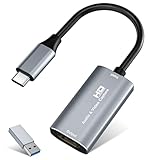
- 【4K HDMI Input, 2K@30Hz Recording】Powered by a true USB 3.0 high-speed interface, the capture card supports up to 4K@30Hz HDMI input and records at 2K@30Hz or 1080P@60Hz. Perfect for gamers, streamers, and professionals who need crisp, smooth video for live streaming, gameplay recording, or online meetings.
- 【Ultra Low Latency Screen Sharing】Built with a premium aluminum alloy shell and advanced chipset for stable heat dissipation, ensuring ultra-low latency transmission. Capture high-quality video and dual-channel audio in real time—no lag, no frame drop—ideal for Twitch, YouTube, or OBS streaming.
- 【Easy Plug and Play, Compact & Portable】No driver or external power required—just plug and play via USB 3.0 or Type-C connection to your Windows or macOS computer. Lightweight and compact design makes it easy to carry for outdoor streaming, live shows, or mobile recording setups.
- 【Wide Compatibility & Multi-Device Support】Compatible with Windows 7 8 10 11, macOS, Linux,Android and supports most popular software such as OBS, Zoom, VLC, Twitch Studio, and more. Works seamlessly with PS4, PS5, Xbox, Switch, DSLR cameras, TV boxes, and other HDMI-output devices for streaming to YouTube, Twitch, etc.
- 【What You Get】Includes: HDMI Capture Card, USB 3.0 to USB-C Adapter, User Manual. Tips: Make sure your tablet’s OTG function is enabled before connecting. Test your HDMI device with a monitor first to confirm video and audio output, then connect to the Video Capture Card for recording.
How to save console gameplay clips on a Mac
- Connect the console to the capture card’s HDMI input. Use the card’s HDMI output for the television or monitor when passthrough is required.
- Connect the capture card directly to the Mac. Use the required USB generation and avoid an under-specced hub during initial setup.
- Install and open a Mac-compatible recording application. OBS is a practical option, but verify its version and device support for your macOS release.
- Add the card as a video-capture source. Select the device’s video and audio input, then choose a canvas and output resolution appropriate for the mode the card can deliver.
- Set the console output deliberately. If the console sends a resolution or refresh rate the card or software cannot capture, lower the console output or select a supported mode.
- Make a short test recording. Check picture, game audio, microphone balance, frame rate, and whether HDR or color changes when recording starts.
- Start and stop recordings from the software. Save clips to a drive with enough free space and review the resulting file before a long session.
Troubleshooting common Mac capture problems
The Mac does not see the card
- Reconnect the USB cable directly to the Mac and try another qualifying USB 3.x or USB 3.2 Gen 2 port.
- Remove a dock or hub temporarily to rule out bandwidth and power issues.
- Confirm that the cable supports data at the speed required by the card.
- Quit and reopen the recording application after reconnecting the device.
The preview is black or the recording stops
- Check that the console’s output mode is supported by the card and application.
- Lower the console’s resolution or refresh rate for a diagnostic test.
- Verify that the Mac is not using a slower USB generation than the selected capture mode requires.
- Test with HDR disabled if the source is HDR; HDR capture limitations differ by card and macOS.
The display works but the saved clip is lower resolution
This is often expected. Passthrough can use a higher resolution or refresh rate than the USB recording path. Compare the recording mode—not the monitor’s signal—to the file’s resolution and frame rate. On the 4K X, USB 3.2 Gen 1 specifically results in reduced capture resolution; on GC553G2, 2160p144 is a passthrough figure while macOS recording is listed up to 2160p60.
Other models worth verifying
OBS’s certified-device list includes the ASUS TUF Gaming Capture Box CU4K30 and FHD120 for macOS. OBS certification covers criteria such as native OBS compatibility, low added latency, mode changes, long-duration audio synchronization, and HDR tone mapping where supported. Those entries make the ASUS models candidates for a Mac OBS setup, but confirm each model’s current Mac requirements, capture modes, USB specification, and HDR behavior before making a purchase.
Final buying advice
Buy the HD60 X when you want a straightforward Mac recording and streaming setup and your target does not require the 4K X’s higher USB and capture requirements. Buy the 4K X when your Mac has USB 3.2 Gen 2 and you need more resolution flexibility. Buy the GC553G2 when HDMI 2.1 passthrough up to 2160p144 is central to your display setup and you can accept macOS recording up to 2160p60 without HDR capture.
Recheck the manufacturer’s current requirements, your exact Mac ports, software compatibility, model revision, price, stock, and return policy before ordering.
Quick Recap
Product prices and availability are accurate as of the date/time indicated and are subject to change. Any price and availability information displayed on Amazon at the time of purchase will apply.

