
Do these 3 things before closing this tab:
1Scan for outdated or missing drivers - takes under a minute2Repair Windows errors before they cause bigger problems3Fix the driver behind crashes, sound loss and screen glitchesSwitching to an electric vehicle is usually worth serious consideration when you can charge at home or work, drive enough miles to use the operating savings, qualify for incentives, and keep the vehicle for several years. It is less attractive when you rely on public DC fast charging, drive very little, face unusually high electricity or insurance costs, or expect to sell soon.
The answer is not “EV versus gas” in the abstract. Compare one specific battery-electric vehicle (BEV) with a similarly sized gasoline or hybrid model over the period you actually expect to own it.
The decision in one sentence
Choose the EV if its net purchase cost plus financing, charging equipment, energy, maintenance, insurance, taxes, fees and depreciation is lower than the comparable gasoline or hybrid vehicle for your ownership period—and if its range, charging speed, cold-weather performance, towing and cargo capacity fit your use.
“Today, electric cars often have a lower total cost of ownership than ICE cars over the vehicle lifetime, due to reduced fuel and maintenance expenses.” — International Energy Agency, Global EV Outlook 2025
Free tools Windows power users keep installed
One-click scans. No signup required.
Special offer. See more information about Outbyte and uninstall instructions. Please review EULA and Privacy policy.#1 Best Overall
 EVDANCE Level 1&2 EV Charger, Electric Vehicle Portable Charger with 25FT Cable, ETL Listed J1772 EVSE for All EVs & PHEVs, 12A 120V/16A 240V(Black, 16A Max | NEMA 5-15&6-20(Standard Home Plug))
- Flex Level 1 EV Charger - The EVDANCE Level 1 electric car charger is compatible with J1772 electric vehicles and plug-in hybrid vehicles (North American Standard). *Tesla requires a SAE J1772 adapter.
- Convenient to Use - This charger has both NEMA 6-20 plug for 16A 240V charging (3.68kW, 10-12 mi/h) and a NEMA 6-20 to 5-15 plug adapter for 12A 120V charging (1.44kW, 2-5 mi/h). The included bag makes it easier to carry on the go. It also has a 25ft cable length, you can use it flexibly from anywhere in the garage or driveway.
- Check Your Outlet Type -This charger works with standard 120V NEMA 5-15/5-20 outlets (2-5 mph charging speed) and 240V NEMA 6-20 outlets (10-12 mph) . It's not compatible with NEMA 6-15/10-30/14-30/14-50/6-50 outlets – you'll need a NEMA 14-50/14-30/10-30/6-50 to 6-20 adapter (sold separately) to connect.
- Compatible EV Models -This EV charger works with most major electric vehicles, including Ford, Chevrolet, Hyundai, Audi, Nissan Ariya, Rivian R1S, Kia, and others. However, it's not compatible with Mini Cooper Electric Hardtop,Toyota Prus Prime/Z4X/RAV4Prime, Porsche Taycan Base/4S/Turbo/Turbo S or Tesla models (Tesla requires a J1772 to Tesla Adapter, sold separately). For a full list of compatible models, check out the Full Compatibility List on our product page.
- Indication Displays - LED display that can tell you the status as well as indicate errors while charging your electric vehicle.
That lifetime statement is an average, not a guarantee for every model or driver. Upfront price, local energy rates, charging access and resale values can reverse the result.
Build a total-cost comparison, not a sticker-price comparison
Use a five-year worksheet or the exact period you intend to keep the car. Compare an EV with a similarly sized gasoline and, where relevant, hybrid alternative.
| Cost or value | What to enter for each vehicle | Why it can change the result |
|---|---|---|
| Net purchase price | Transaction price, destination charges, taxes and incentives | A large EV premium takes longer to recover through operating savings. |
| Financing | Amount financed, interest rate and term | A higher financed balance can outweigh lower running costs during early ownership. |
| Energy | Annual miles, vehicle efficiency, gasoline price, home/work electricity rate and public-charging rates | Most savings come from inexpensive home or workplace charging; frequent fast charging can narrow them. |
| Charging equipment | Level 1 cordset, Level 2 charger, panel upgrade, wiring and installation | Electrical work can be a substantial one-time cost. |
| Maintenance and tires | Scheduled service, brake work, tires and wear items | EVs avoid oil changes and have fewer powertrain parts, but tires and other services still cost money. |
| Insurance | Actual quotes for the VIN or trim in your location | Repair costs, claim history and vehicle value can make EV premiums higher or lower. |
| Taxes and fees | Registration, inspection, road-use charges and utility demand fees, if any | Some jurisdictions add EV-specific charges that reduce fuel savings. |
| Depreciation and resale | Expected sale or trade-in value at the end of the period | Rapid depreciation can erase otherwise favorable operating costs. |
| Battery coverage | The selected model’s battery warranty, exclusions and transfer rules | Coverage affects risk and resale confidence; verify the manufacturer’s current terms. |
Calculate annual energy cost as annual miles × energy used per mile × local energy price. Run low, central and high cases for gasoline prices, electricity prices and resale value instead of relying on one payback number. Include financing and the charger in year one; do not treat a tax credit as certain until you confirm eligibility.
Rank #2
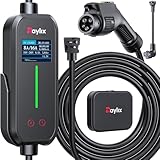
- [2026 INTELLIGENT CHARGING UPGRADE — PRECISION CONTROL MEETS SMART SCHEDULING] After surveying 100K+ U.S. EV owners, the Raylix R&D team found that nearly all drivers recognized the necessity of adjustable current and scheduled charging. Our upgraded J1772 charger features 4-level adjustable current (8A/10A/12A/16A) and a 1–12 hour smart delay timer. Whether you're charging overnight or during off-peak hours, enjoy smarter energy use, lower costs, and total convenience—on your schedule.
- [ONE CHARGER, ALL J1772 EVs/PHEVs READY!] Compatible with all SAE J1772 electric vehicles and plug-in hybrids—whether it’s Ford, GM, Nissan, Audi, BMW, Kia, Hyundai, Honda, Chevy, or more. Perfect for home or on-the-road charging, our 16A Level 1 & 2 charger ensures your EV is always powered and ready for any journey.
- [CHARGE 4× FASTER — NO MORE WAITING] In a rush? Our 16A Level 1 & 2 charger delivers charging speeds up to 4× faster than standard 8A Charger Level 1. Whether it's an early commute, a spontaneous trip, or last-minute errands, your EV will be ready when you are.
- [LEVEL 1 & 2 PORTABLE CHARGER — CHARGE ANYWHERE, ANYTIME] Designed for maximum flexibility, Raylix Level 1 & 2 EV charger features both 5-15 and 6-20 plug compatibility. Whether you're charging in your garage, at a friend's house, or at a roadside motel. NEMA 6-20 plug for Level 2 ev charging (240V, 16A, 3.68kW, 9-12 miles/hr) and a NEMA 5-15 adapter for Level 1 ev charging (120V, 12A, 1.44kW, 3-5 miles/hr) NOTE: In compliance with North American electrical safety standards, the charger automatically limits current to 12A when using a 5-15 outlet—protecting both your vehicle and your home’s electrical system.
- [AT-A-GLANCE CHARGING COMMAND: TOTAL CONTROL, INSTANTLY] While most ev chargers solutions confine vital data to in-car screens, the Raylix tesla charger breaks free with its enhanced TFT color display. This Raylix-exclusive feature delivers crystal-clear, real-time updates—voltage, current, power load, AND critical charging temperature—directly on the unit. Just one glance gives you complete charging insight. It’s not just information; it's the empowering peace of mind and satisfying control that transforms every charge into a masterfully managed experience.
Why an EV can save money
Fuel savings
The U.S. Environmental Protection Agency says switching one of a household’s main cars to an EV could save approximately $500–$1,000 per year on fuel. That is an estimate, not a promise: annual mileage, vehicle efficiency and local prices determine your result. Home charging on a favorable electricity tariff usually delivers the lowest energy cost.
Lower routine maintenance
Battery-electric vehicles do not need engine oil, spark plugs or many engine and transmission services. Regenerative braking can reduce friction-brake wear. They still require tires, cabin filters, coolant or other model-specific service, inspections and repairs. Use the manufacturer’s schedule rather than assuming maintenance is free.
Falling battery costs may narrow purchase gaps
The U.S. Department of Energy’s 2025 analysis models light-duty BEV battery costs at approximately $128–$133 per kilowatt-hour. DOE also reports a roughly 90% decline in light-duty battery-pack cost from 2008 to 2023, reaching $139 per usable kilowatt-hour in 2023 at scale. These industry figures help explain changing vehicle prices; they do not predict the price or warranty risk of a particular car.
Rank #3
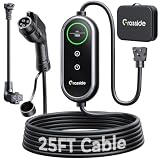
- Universal J1772 Compatibility: Designed with a standard J1772 connector, this J1772 charger works with most J1772 electric vehicles and PHEVs, including BMW, Mercedes-Benz, Hyundai, Kia, Nissan, Rivian, Ford, Chevy, Volkswagen, Toyota and more. Note: Tesla vehicles require a J1772 to Tesla adapter (not included)
- Flexible Outlet Compatibility: This portable EV charger comes with a NEMA 6-20 plug and a NEMA 5-15/5-20 to 6-20 adapter. Supports Level 1 (8–12A) and Level 2 (16A). Max 12A (1.44kW) on 120V NEMA 5-15/5-20 outlets, and full 16A (3.84kW) with a 240V NEMA 6-20 outlet. One charger is designed to cover home, garage, and travel charging needs with reliable performance
- Adjustable Smart Charging Control: Customize charging safely with adjustable current settings (8A/10A/12A/16A) to match different circuits. The 0–12 hour delay timer helps schedule overnight charging during lower electricity rates. Integrated LCD display shows real-time voltage, current, power, and charging status for clear monitoring without apps. Note: Press 'A' or 'T' for 3s to set and confirm.
- Home Charging & Travel Backup: For daily home use while remaining fully portable for travel. This level 1 ev charger includes a durable 25FT ev charging cord, providing flexible reach for garage or driveway charging. Charge overnight to take advantage of lower utility rates—potentially saving up to $500 annually on electricity costs. The included carrying case makes storage easy and keeps a dependable backup charger available in your trunk for road trips or visiting friends
- Engineered For Safety & Durability: Built for dependable daily use, this electric car charger features an IP65 waterproof rating for all weather operation. Equipped with a UL-listed cable, fully rubberized connector, and advanced protection against overcurrent, overheating, and electrical faults. Designed to ensure safe, stable, and long-term charging performance in demanding environments
When charging access decides the answer
Most owners charge at home, with public stations extending daily and trip range. Before buying, identify where the car will routinely charge and how many miles you need between charging opportunities.
| Charging option | What it requires | Typical capability | Best fit |
|---|---|---|---|
| Level 1 | Standard 120-volt outlet and the vehicle’s cordset | Slow charging; suitable for low daily mileage or backup use | A driver who parks for long periods and can replace only a modest number of miles overnight |
| Level 2 | Dedicated 240-volt circuit and compatible equipment | Typically adds 10–30 miles of range per hour | Regular overnight home charging, workplace charging or shared residential parking |
| DC fast charging | Public high-power station and the vehicle’s compatible connector | Can add 100–200 or more miles in 30 minutes, depending on vehicle, charger, temperature and state of charge | Road trips and occasional top-ups, not an ideal sole source of daily energy for many drivers |
If you do not have a garage
Confirm a dependable workplace, apartment or nearby public charging location before purchase. Check station availability at the times you drive, payment requirements, parking limits and whether the site’s power is shared or frequently occupied. A plan that depends on one unreliable station is not equivalent to home charging.
Public fast charging can erase the savings
DC fast-charging prices vary by network, location, membership and time. If nearly all charging is purchased at public rates, recalculate the EV using those rates rather than a residential utility tariff. Include extra travel or parking costs required to reach a station.
Rank #4

- Road-Trip Ready & Apartment-Friendly: Comes with a 20ft heavy-duty cable that easily spans a standard parking space, plus a NEMA 5-15 adapter for plug and play convenience. Whether you're charging at home or hitting the highway, this portable EV Charger is your ultimate travel companion for weekend getaways and camping trips
- Delay Timer & Adjustable Current: Use the built-in timer to delay your start by 1-12 hours and easily harvest off-peak energy savings. Then pick from 6/8/10/12/16A (Level 2) to match your garage grid. It automatically locks in your favorite setting and never forces you to re-adjust. No complicated apps or Wi-Fi needed, just straightforward, reliable control
- Tactile Buttons & LED Screen: No glitchy smartphone apps or finicky touchscreens that lag, freeze, and misfire in winter. Our EV charger is engineered with a high-definition LED display that tracks critical real-time data, including live voltage and current. Tactile buttons deliver direct, satisfying click feedback that remains highly responsive even when wearing heavy winter gloves or operating in torrential downpours—conditions where standard touchscreens completely fail
- ETL Certified Safety & IP65 All-Weather Shield: ETL certified to meet US safety standards for charging. Engineered with a certified IP65 dust-and-waterproof enclosure and a heavy-duty TPE cable that operates reliably across a wide -22°F to 130°F range. An intelligent multi-protection defense system (GFCI, over-voltage, over-current, surge, short-circuit, and over-temp) keeps a 24/7 watch for 100% safe, unattended overnight charging in any weather
- J1772 Compatible + Dual-Level Charging: Works with all J1772 EVs (Tesla requires a separate J1772 adapter). Level 2: built-in NEMA 6-20 plug. Level 1: included NEMA 5-15 adapter fits any standard outlet. Please confirm your outlet is NEMA 6-20 or 5-15 before purchase
A five-year (or intended-hold-period) method
- Choose the vehicles. Match body size, usable cargo, passenger capacity, performance and safety equipment. Include a hybrid if it meets your needs.
- Record your real driving. Use annual miles, weekday commuting, seasonal trips, towing and the longest routine journey—not an optimistic estimate.
- Price charging. Separate home, workplace, public Level 2 and DC fast-charging shares. Add a Level 2 installation or electrical upgrade where required.
- Get insurance quotes. Quote the exact trims in your ZIP or postal code; do not substitute national averages.
- Estimate maintenance and tires. Use manufacturer schedules and local labor and tire prices.
- Apply verified incentives. Confirm buyer income, vehicle assembly or price rules, point-of-sale treatment, filing requirements and expiration dates with the relevant government, state, provincial, local and utility sources.
- Model depreciation. Enter a conservative, central and optimistic resale value for the same ownership date.
- Calculate total cost. Add purchase, financing, energy, charging hardware, maintenance, insurance, taxes and fees; subtract incentives and resale value.
- Stress-test the result. Change energy prices, annual miles, resale value and public-charging use. If a small change flips the winner, treat the decision as close rather than certain.
When an EV tends to win financially
- You have reliable overnight home or workplace charging, so most energy is bought at comparatively low AC rates.
- You drive enough annual miles for fuel and maintenance savings to accumulate.
- The EV’s net price after incentives is close to the gasoline or hybrid alternative.
- You will keep it for several years rather than selling soon after purchase.
- Local electricity is inexpensive or a time-of-use rate lets you charge during cheaper hours.
When a gasoline car or hybrid may be the better choice
- You have no dependable overnight charging and would use public DC fast charging for routine energy.
- Your annual mileage is very low or your ownership period is short.
- The EV has a large net price premium, unusually high insurance or weak expected resale value.
- Electricity is expensive relative to gasoline, or registration and road-use fees offset energy savings.
- Your regular use requires towing, payload, long rural routes or severe cold-weather range that the chosen EV cannot comfortably provide.
Are EVs better for the climate?
Usually, yes over the vehicle life cycle, but the size of the benefit depends on battery production, vehicle size, efficiency and the electricity grid. The IEA’s 2024 outlook estimates that, in its Stated Policies Scenario, a 2035 internal-combustion car produces almost two-and-a-half times the lifetime emissions of a battery EV; in its Announced Pledges Scenario, the difference exceeds three times.
Operational emissions vary by grid. EPA examples estimate about 190 grams of carbon dioxide per mile for charging a typical EV in Grand Rapids, Michigan, versus about 90 grams per mile in Boise, Idaho. Those figures illustrate why local electricity matters; they are not universal ratings for every EV or utility.
A larger SUV with a larger battery generally has more manufacturing impact than a smaller, efficient EV. Compare vehicle size and energy use, not only the powertrain label. Battery materials, manufacturing, electricity generation and eventual recycling all contribute to the life-cycle result.
Quick wins for a faster PC:
Fix the driver behind crashes, sound loss and screen glitchesFind Drivers →Clear out junk files and repair common Windows errorsFree Scan →Best Value

- 【Delay Timer - Adjustable Current】Ev charger can adjust the current (8A/10A/12A/16A) through the physical button of level 1 ev charger. Charging power can reach up to 3.68KW (240V/16A). One-touch switch for ev charger operation. Built-in 2–8 hour delay timer for off-peak charging to save on electricity bills.
- 【NEMA 6-20 Plug & NEMA 5-15 Adapter】Nema 6-20 plug for 240V outlets and 5-15 adapter for standard 120V realize plug-and-charge (With 5-15 adapter, need to adjust the current to 12A or below, otherwise the charger may be demeged). Overall length of ev charger level 2 is 27FT, providing enough charging distance across garages at home or outdoor. Portable storage bag supports you take portable EV Charger during travel, business trip, electric vehicle charging stations anywhere.
- 【ETL/FCC and IP67 Safety】J1772 charger is equipped with advanced safety functions such as overvoltage, overheating, and short-circuit automatic shutdown. IP67 waterproof and dustproof, extreme temperature protection level for withstanding harsh weather conditions from -40°F to 131°F in sunny, rain, snow and sandstorm. Electric car charger has ETL certified, FCC listed, meets UL safety standards. Industrial-grade construction with high-strength TPU-coated cables and 99.95% oxygen-free copper cores.
- 【J1772 Connector】J1772 charger works for all J1772 standard electric vehicles, Ford, GM, Nissan, Audi, Kia, Honda, BMW, Hyundai, Gmc, Chevy, Mercedes, and all PHEV/BEV. [Not fits Tesla cars/Nacs connector]
- 【One-Touch Charging Operation】16A electric car charger supports plug-and-charge functionality and features one-touch scheduled charging and current adjustment. Its intuitive and user-friendly operation allows flexible customization of personalized charging plans. Level 1 ev charger automatically shuts off when your car is fully charged.
Incentives are useful—but date-sensitive
AFDC records that qualifying federal clean-vehicle credits applied to vehicles acquired before September 30, 2025. It also records a residential charging-infrastructure credit covering 30% of eligible cost up to $1,000 for property placed in service by June 30, 2026. Eligibility, geography, income, vehicle and installation rules apply, and policies can change.
Check current AFDC, Internal Revenue Service, state or provincial and utility rules when you buy. Do not include an incentive in your spreadsheet until you know whether it is available where you live, whether the transaction date qualifies and whether you can claim or transfer it.
Use this final checklist before deciding
- Can I charge where the car is parked overnight most nights?
- What percentage of my energy would come from home, workplace, public Level 2 and DC fast charging?
- What is the installed cost of the required charger and electrical work?
- Have I compared the EV with a specific gasoline and hybrid model of similar size?
- What do local insurance quotes, registration fees and tire prices show?
- What happens if electricity prices rise, gasoline prices fall or resale value is lower than expected?
- Can the vehicle handle my cold-weather trips, highway range, towing and payload needs?
- Will I keep it long enough for the ownership-period calculation to matter?
If the EV still wins in the central case and remains acceptable in a conservative case, switching is financially defensible. If it wins only with optimistic fuel prices, a full incentive or heavy reliance on public charging, wait for a better-priced model, improve your charging access or choose a hybrid.
Quick Recap
Product prices and availability are accurate as of the date/time indicated and are subject to change. Any price and availability information displayed on Amazon at the time of purchase will apply.
What’s actually slowing this PC down?
Pick the symptom - the matching free tool is one click away.

