
Taiwan is planning a renewables-led transition, not a settled return to nuclear power. The government’s 2030 target relies on renewables for 30% of electricity, natural gas for 50% and coal for 20%. Nuclear remains a conditional possibility only if safety, nuclear-waste and social-consensus requirements are met. The practical test is whether renewables can grow alongside storage, efficiency and grid upgrades quickly enough to reduce coal use without leaving the island more exposed to imported gas.
What powers Taiwan now?
Taiwan’s 2024 electricity mix was still dominated by fossil fuels. Taiwan Power Company (Taipower), in its 2025 report using 2024 data, reported 47.3% natural gas, 33.4% coal, 11.9% renewables, 4.7% nuclear and 2.7% other sources.
A separate 2025 Climate Change Administration report gives renewables’ 2024 share as 11.6%, with renewable generation of 33.3 terawatt-hours (TWh). The two official sources therefore report slightly different renewable shares. The cited material does not explain the difference, so the figures should be read as each agency’s reported value rather than combined into one supposedly exact share.
Capacity is not the same as electricity produced
At the end of 2024, renewables totalled 21.05 gigawatts (GW) of installed capacity, about 31.1% of Taiwan’s total generation capacity, according to the Climate Change Administration. Yet renewables provided 11.6% of electricity generation in that agency’s 2024 figures. Capacity measures the maximum rated output of installed equipment; generation measures electricity actually produced over time. A high capacity share does not, on its own, show that a source can supply power continuously or replace an equivalent amount of firm generation.
What’s actually slowing this PC down?
Pick the symptom - the matching free tool is one click away.
#1 Best Overall

- COMPREHENSIVE, CURRICULUM-DRIVEN SCIENCE KIT: This state-of-the-art kit, designed for both classroom and home use, explores how renewable energy is generated and consumed through hands-on activities and projects.
- QUALITY COMPONENTS & MODULAR BUILDING SYSTEM: Durable plastic parts designed for long-term use and experimentation include a solar panel, wind turbine parts, and more, enabling kids to build several models such as a windmill, hand-crank generator, LED buzzer, electric car, and beyond. Easy-to-use system allows for pieces to be swapped, combined, and reconfigured in multiple ways.
- HANDS-ON, PROJECT-BASED LEARNING: Visualize and experience different types of energy generation through the models of real-life devices and machines and better understand the concepts related to alternative energy and sustainable living. Also compatible with micro:bit (sold separately) for ease of digital data collection.
- COMPATIBLE WITH NGSS: The 24 experiments align with several Next Generation Science Standards, cross-cutting concepts, and disciplinary core ideas for easy integration into at-home or classroom curricula.
- CLASSROOM RESOURCES AVAILABLE: In addition to the 32-page illustrated manual, printable worksheets to guide student learning are available online.
What is Taiwan targeting?
The near-term targets and the 2030 target describe intended outcomes, not proof that those outcomes have been achieved.
| Horizon | Stated goal | Source and qualification |
|---|---|---|
| 2026 | 20 GW of solar photovoltaic capacity and 20% green electricity | Executive Yuan, 2025; government targets |
| 2030 | 50% natural gas, 30% renewables and 20% coal | Ministry of Economic Affairs (MOEA), 2025; stated target mix |
| 2030 | 30% renewable electricity | MOEA policy page, undated; stated target |
The 2026 goal is a target announced before that year, not a reported 2026 result. The available figures here establish the end-2024 starting point; they do not show whether the 2026 milestones were ultimately met. The 2030 mix also retains a substantial role for gas. It is a plan to shift the balance away from coal while scaling renewables, not a plan to run the grid on renewables alone.
Rank #2

- FIFTH-GENERATION WIND TURBINE KIT: Updated version of the best-selling STEM kit about wind power and energy, kids can make their own wind turbine to explore this renewable energy source.
- OPTIMIZED FOR INDOOR & OUTDOOR USE: Design includes a new blade hub and gear ratio to enhance performance in outdoor wind and with indoor fan setups.
- WHAT YOU LEARN: Dive into the technology behind one of the most promising sources of clean energy, how it has been used it the past, and how it is used today.
- INCLUDES ELECTRIC MODEL CAR: Use your turbine to generate and store electricity to power a model car in just two minutes—no batteries required!
- GUIDED JOURNEY THROUGH WIND POWER: The 32-page, full-color manual provides illustrated step-by-step assembly instructions and easy-to-understand explanations about the scientific concepts at work.
Can renewables replace nuclear in Taiwan?
That question has two meanings. Renewables could increase enough to make nuclear unnecessary in a future generation mix; separately, they would need to provide dependable electricity at the times the grid needs it. The official targets show the government intends to expand renewables, but neither the targets nor the 2024 capacity and generation figures establish that renewables can replace nuclear on a one-for-one basis or meet all future demand without firm generation and balancing resources.
What renewables can contribute
Solar and wind can generate electricity without burning coal or gas at the point of generation. Building more of them can help reduce the share of coal in the mix, consistent with the MOEA’s 2030 target. Taiwan has already built a substantial renewable fleet: 21.05 GW by the end of 2024. But the difference between renewables’ 31.1% share of installed capacity and their 11.6% share of generation in the Climate Change Administration’s figures shows why capacity additions alone do not settle the reliability question.
Rank #3
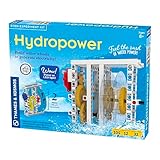
- 12 experiments and building projects
- Harness mechanical energy from water to do physical work
- Generate electricity to light an LED
- Learn the physics of water turnies
- Discover why hydropower is a promising source of energy
What must accompany variable output
Solar and wind output varies with weather and time of day. MOEA policy and Taipower’s 2025 report pair renewable growth with energy storage, deep energy saving and more resilient grids. These measures address different parts of the problem: storage can shift some electricity across time, efficiency can lower demand, and grid improvements can help move and manage power. The official policy framing treats them as part of the transition, not optional extras.
Natural gas provides another balancing and supply component in the stated plan, but it also means Taiwan would continue to depend heavily on an imported fuel. Renewable growth can reduce exposure to fuel imports only to the extent that it actually displaces thermal generation and is supported by infrastructure that can keep electricity available. The available official targets do not establish how quickly Taiwan can reduce gas use while meeting future demand, including demand from semiconductor manufacturing.
Rank #4
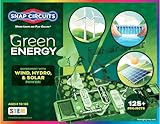
- SO MANY TOYS IN A SNAP: Make dozens of cool electronic gadgets - all from one box! A safe and fun way to introduce children ages 8+ to the basics of electrical engineering and green energy! Build exciting projects and toys using the included colorful instruction book!
- EXPLORE ALTERNATIVE ENERGY IN A SNAP: With 45+ parts build over 125 fun green-energy projects! Make your own solar light clock, mini car powered by wind energy, and even talk to your friends through morse code! Includes THINK GREEN manual to have fun learning about different types of alternative energy, like solar, wind, hand-crank, hydro, and even geothermal power.
- GREAT GIFT Give the gift of learning and fun this holiday season! Snap Circuits kits will keep kids busy and having fun all year round. Combine with other Snap Circuits kits for even more projects!
- NO EXTRA TOOLS NEEDED Elenco Snap Circuit kits include everything you need to start learning immediately - and more. Unlike traditional electronics kits, no soldering or tools are required to build. The numbered and color coded pieces snap easily onto the included plastic grid.
- AWARD WINNING KITS! We're proud to produce high quality products loved by kids, parents,and educators. Snap Circuits kits have won a number of awards - including the Specialty Toy of the Year Award, Seriously STEM! award, Good Housekeeping's Best Toys, Purdue University's Engineering Gift Guide, National Parenting Center's Seal of Approval, Toy Insider's Top Holiday Toys, placement on the Dr. Toy list of 100 Best Children's Products and placement on the Dr. Toy list of Best Educational products, and the "Stem Approved" Trustmark from Stem.org.
Why does nuclear remain a possibility?
Nuclear power can provide firm generation, unlike weather-dependent solar and wind. That makes it relevant to debates about balancing a grid with a larger renewable share. But its potential system role does not mean Taiwan has decided to restart or expand nuclear power.
In Premier Cho Jung-tai’s 2025 oral policy report, the Executive Yuan said: “On the issue of nuclear energy, the government will adhere to three principles—ensuring nuclear safety, resolving nuclear waste and achieving social consensus—and maintain an open attitude on the adoption of new nuclear technologies if they meet these criteria.” In other words, the government’s stated openness to new nuclear technologies is conditional, not an approval of a particular reactor, project or timetable.
Best Value

- 【4 in 1 STEM Kit】These science kits contain a solar powered car, a solar powered fan, a wind powered car and a wooden plane. Each toy is individually packaged.Includes Magnetized Screwdriver and Detailed instructions make it much easier and convenient to assemble the models
- 【Family Stem Activities】This set of science experiments is a good way for parents and children to complete together, can also be used as a classroom STEM project
- 【Unique Gift Idea】Our stem kits designed for kids age 8-12 are cool stuff and very suitable for elementary students to show their talents in a science fair. Packaged in a beautiful gift box, these toys are great gifts for boys and girls for birthday and Christmas
- 【Easy To Assemble】Circuit connection is very simple, NO welding, suitable for kids to complete independently. Includes Magnetic Screwdriver and Detailed instructions make it much easier and convenient to assemble the models
- 【Learn By Playing】Encourage kids to build their own models and enjoy DIY science activities. By playing with these electric kit, children's curiosity and interest in physics will be stimulated, and they'll know how much fun it is to create a circuit by themselves
The trade-offs a nuclear decision would have to confront
- Safety and legitimacy: Safety and social consensus are explicit prerequisites in the government’s framework. A technical case for firm generation alone would not meet those conditions.
- Waste and long-term stewardship: The Executive Yuan says nuclear-waste issues must be resolved. Waste management is therefore part of the policy test, not a side issue to address after a decision to expand.
- Build-out and system fit: Nuclear could supply firm output, but the official material cited here does not provide a project schedule or compare the time needed for new reactors with renewable deployment. It cannot establish which option would deliver new electricity sooner.
- Cost: A fair comparison would include construction, fuel, grid balancing, decommissioning and long-term waste management. The cited policy and generation reports do not provide a complete cost comparison, so a claim that either pathway is definitively cheaper would go beyond them.
Is Taiwan’s grid ready for more offshore wind and solar?
Readiness is not just a question of how many turbines or panels are installed. A grid with more variable generation must be able to balance changes in output, shift or reduce demand when useful, and transport electricity where it is needed. MOEA and Taipower’s emphasis on storage, energy saving and resilient grids acknowledges those requirements.
The documented policy direction is to build those supporting capabilities alongside renewable generation. The official figures given here do not quantify how much storage or grid investment is needed, nor do they amount to a final engineering assessment that the system is ready for any particular level of offshore wind or solar. The gap between renewable capacity and renewable generation also cautions against treating the installation target as a reliability result.
Which path best fits Taiwan’s stated goals?
For now, the clearest answer is a renewables-led transition with gas, storage, efficiency and grid reinforcement doing supporting work, while nuclear stays conditional. That approach matches the MOEA’s stated 2030 mix and the Executive Yuan’s nuclear criteria. It also preserves a real tension: the 2030 target still assigns half of electricity to natural gas, so renewable growth alone does not remove fuel-import exposure.
Whether Taiwan should bring back nuclear power depends on what can be demonstrated, not just which source has the more attractive headline. Renewables must be paired with balancing and transmission capabilities if they are to displace thermal generation reliably. Any nuclear proposal would need to meet the government’s safety, waste and consensus conditions. The official targets set a direction, but they do not by themselves prove that either route can meet future demand at a particular cost or timetable.
Quick wins for a faster PC:
Repair Windows errors before they cause bigger problemsFix Now →Scan for outdated or missing drivers - takes under a minuteDriver Scan →Clear out junk files and repair common Windows errorsFree Scan →Quick Recap
Product prices and availability are accurate as of the date/time indicated and are subject to change. Any price and availability information displayed on Amazon at the time of purchase will apply.

