
Quick wins for a faster PC:
Fix the driver behind crashes, sound loss and screen glitchesFind Drivers →Clear out junk files and repair common Windows errorsFree Scan →You can use Wi-Fi to monitor sensor data in two different ways: send readings from a conventional sensor over a Wi-Fi network, or analyze changes in the Wi-Fi signal itself. The second approach is called Wi-Fi sensing; a documented way to prototype it is to capture channel state information (CSI) with compatible ESP32 hardware.
CSI is not a ready-made reading such as “person present” or “temperature.” It is radio-channel data that software must process for a specific task. If you need measured temperature, humidity, or another physical value, use an appropriate sensor and transmit its readings over Wi-Fi instead.
How can I use Wi-Fi to monitor sensor data?
First decide whether Wi-Fi is the network carrying sensor readings or the signal being measured. For ordinary monitoring, a sensor measures a physical quantity and sends its reading over Wi-Fi to a receiver or application. For Wi-Fi sensing, a receiver analyzes changes in radio propagation—often caused by movement in the space—to infer a target event.
This article focuses on the second meaning, because it is the less familiar one. Espressif’s ESP-CSI documentation describes a practical prototyping route using ESP32 devices. The method can support experiments such as presence or activity detection, but it requires compatible hardware, captured data, and task-specific software.
#1 Best Overall

- 2.4GHz Dual Mode WiFi + Bluetooth Development Board
- Support LWIP protocol, Freertos
- SupportThree Modes: AP, STA, and AP+STA
- Ultra-Low power consumption, Compatible with Arduino IDE
- ESP32 is a safe, reliable, and scalable to a variety of applications
What does Wi-Fi CSI measure?
Channel state information describes characteristics of the wireless channel between a transmitter and receiver. In Espressif’s documented implementation, a receiver estimates channel frequency responses across Wi-Fi subcarriers when packets arrive. CSI samples contain complex values represented by real and imaginary components. The API also exposes reception metadata such as RSSI, RF noise floor, reception time, and antenna information.
Those measurements are not interpretations. A CSI capture does not label a packet “someone entered the room,” identify a person, or report a breathing rate. A sensing application has to filter or transform the measurements and apply an algorithm trained or designed for its particular task.
Rank #2
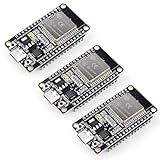
- Dual-Core Performance Up to 240 MHz: Run sensor processing, wireless communication, automation logic and connected-device tasks on a 32-bit dual-core ESP32 platform designed for responsive embedded and IoT projects
- Built-in Wi-Fi and Bluetooth 4.2: Connect to 2.4 GHz Wi-Fi networks or use Bluetooth Classic and BLE for wireless sensors, smart devices, remote controls, home automation and other connected projects
- Flexible Power-Saving Modes: ESP32 power-management features support dynamic clock scaling and low-power operating modes, helping developers reduce energy use in compatible sensing, monitoring and connected-device applications, suitable for battery-powered Internet of Things (IoT) devices.
- USB-C Programming with CP2102: Connect through USB-C for power, sketch uploads and serial monitoring, while GPIO, UART, SPI and I2C interfaces support sensors, displays, motor drivers and other modules (USB-C cable not included)
- Over-the-Air Update Support: Configure OTA functionality through a compatible ESP-32 software framework to update deployed firmware over Wi-Fi without reconnecting the board by USB for every revision
Which ESP32 setup should you use?
Espressif’s ESP-CSI guide describes three collection arrangements. The right choice depends on whether you want a quick prototype using an existing router or a setup with more control over packet transmission and receiver placement.
| Arrangement | Hardware described | Router dependence | Trade-off |
|---|---|---|---|
| Router as transmitter | One ESP32 and a Wi-Fi router | Depends on router location and supported Wi-Fi protocol | Uses fewer dedicated boards; the router’s position and compatibility affect collection. |
| ESP32-to-ESP32 | Two or more ESP32 boards exchanging traffic | Less dependent on router placement | Provides a more controlled transmitter–receiver arrangement, but still depends on protocol support and the environment. |
| Dedicated packet sender with multiple receivers | A packet-sending device and multiple ESP32 receivers | Less dependent on a router | Requires additional sender hardware. Espressif describes it as the most accurate and reliable of these example arrangements; that is implementation guidance, not an independent benchmark. |
Before choosing a board, verify CSI support for the particular chip and the ESP-IDF release you plan to use. Espressif maintains an ESP-CSI guide with sender, receiver, router-based collection, analysis, and human-activity-detection examples. A separate esp_wifi_sensing component registry entry lists ESP-IDF 5.4 or later as a dependency. The cited ESP-IDF driver reference is for release 5.1, so do not assume its API details apply unchanged to every newer chip or release.
Rank #3

- Powerful ESP-32 Board: Unlock the world of Internet of Things (IoT) and advanced electronics with the heart of this kit: the ESP-32 board. It features a powerful dual-core processor, integrated Wi-Fi and Bluetooth 4.2, making it perfect for building connected, smart devices that communicate with your phone or the cloud. It's fully compatible with the Arduino IDE for easy programming.
- Super Starter Kit: This kit contains over 35 different modules and electronic components, including sensors, displays, motors, and input devices. From LEDs and buttons to an OLED screen, servo motor, and keypad, you have everything needed to explore a vast range of projects in one box.
- Step by Step Online Tutorial: Jump right in with our detailed, beginner-friendly tutorial. Access 30+ projects with complete code, clear circuit diagrams, and step-by-step instructions. Learn the fundamentals of electronics, coding, and how to utilize the ESP-32's unique capabilities without any prior experience.
- Hands-on Learning for All Skill Levels: Perfect for students, makers, engineers, and hobbyists. Start with basic circuits and coding, then progress to intermediate and advanced IoT applications. Build practical projects like weather stations, smart home controllers, remote-controlled devices, and interactive gadgets. The skills you learn are the foundation for real-world innovation.
- Quality & Great Support: Elegoo is committed to quality. We provide a clear, detailed tutorial guide, refined code, and a well-organized component kit. All modules are carefully selected for reliability and ease of use. Our dedicated technical support team and active online community are ready to help you succeed in your learning journey.
How do you start collecting CSI?
At a high level, an ESP-IDF capture follows this sequence:
- Enable CSI in the project configuration for the selected target and SDK.
- Register a callback to receive CSI data when packets arrive.
- Set the CSI configuration appropriate to the capture.
- Enable CSI and collect packets from the chosen transmitter arrangement.
The data layout depends on the Wi-Fi protocol and channel width. For example, Espressif’s ESP32 documentation lists 52 total and 48 usable subcarriers for 802.11a/g; 56 total and 52 usable for 802.11n at 20 MHz; and 114 total and 108 usable for 802.11n at 40 MHz. These figures describe the documented ESP32 PHY modes, not every Wi-Fi receiver or Wi-Fi generation. Espressif also warns that, in some cases, an initial word in the capture can be invalid because of an ESP32 hardware limitation.
Rank #4

- Simplify your IoT and DIY projects with the ESP32-CAM Development Board, featuring an automatic download function and a convenient Type-C interface for seamless programming and easy connectivity
- Effortlessly connect and control your camera module with this ESP32-CAM Development Board, which includes a Type-C interface for quick and reliable data transfer, perfect for both beginners and advanced users
- Expand your project's capabilities with the ESP32-CAM Development Board, offering all pins led out for easy connection to external devices, making it ideal for a wide range of IoT and DIY applications
- Enjoy hassle-free setup with the ESP32-CAM Development Board, designed to automatically download and burn code, eliminating the need for manual resets and simplifying the development process
- Boost your productivity with the ESP32-CAM Development Board, featuring a built-in CH340 serial port driver for easy USB to 3.3V TTL serial communication, ensuring smooth and efficient project development
Capturing CSI is only the data-collection stage. To monitor a real event, you still need software that turns the stream into a task-specific result, such as a motion classification. Espressif’s examples include analysis scripts and human activity detection, but an example is not a guarantee that the same model will work in a different room or with different hardware.
Independent reader supportYour contribution helps us test, update, and keep practical guides available for everyone.What affects results in a room?
There is no generally applicable detection range or accuracy figure established for the setups described here. Room layout, receiver and router positions, antenna orientation, packet traffic, and movement during calibration can all affect the radio measurements. Espressif advises testing in an unoccupied environment and avoiding other people’s activity during tests. Its ESP-CSI guide also says external IPEX antennas can perform better than PCB antennas and notes that PCB antennas have directionality.
Outdated Drivers Are Slowing You Down
One free scan finds every outdated or missing driver and matches the right update for your exact hardware.Free scan · exact hardware matchPC Slower Than It Used to Be?
A free scan shows the junk files, broken settings and background clutter dragging Windows down - then fixes them in one click.Free scan · Windows 10 & 11Best Value
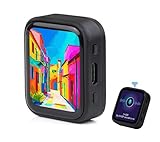
- ESP32-S3R8 Processor--- Equipped with ESP32-S3R8 Xtensa 32-bit LX7 dual-core processor, up to 240MHz main frequency. Supports 2.4GHz W-i-F-i (802.11 b/g/n) and Blue--tooth 5 (LE), with onboard antenna. Built in 512KB of SRAM and 384KB ROM, with onboard 8MB PSRAM and an external 16MB Flash memory.
- AMOLED Touch Screen--- Onboard 1.8inch AMOLED display for clear color picture display, 368 x 448 resolution, 16.7M color, 178° wide viewing angle. Compared to those traditional LCD displays, the AMOLED screen features precise light-control capability, representing more delicate colors, more picture details, and more vivid video image.
- Onboard Audio Codec---Supports high-quality audio processing, providing clear and high-quality audio input and output. Supports Offline Speech recognition and AI Speech Interaction---Allows access to online large model platforms to support more AI application scenarios.
- For Various Smart Devices---Suitable For Various Smart Devices Development, Can Realize Human-Computer Interaction Function. Supports installing ba|tte|ry inside the case for independent operation. (Note: this version doesn't include ba|tte|ry ) Dedicated Black Case---with removable back cover for easy embedded into the projects and DIY design.
- Sensor and Chip---Onboard QMI8658 6-axis IMU (3-axis accelerometer and 3-axis gyroscope) for detecting motion gesture, counting steps, etc. Built-in SH8601 display driver and FT3168 capacitive touch chip, using QSPI and I2C communication respectively, effectively saving the IO resources.
Controlled research illustrates why performance claims should stay tied to the conditions tested. A 2023 study by Marco Cominelli, Francesco Gringoli, and Francesco Restuccia collected 80 GB of Wi-Fi 6 CSI data from three people, in three environments, performing twelve activities; video provided anonymized ground truth. The authors reported that MIMO and higher spectral resolution might benefit sensing more than simply increasing bandwidth, and that environment-independent sensing remained uncertain. This study is evidence about its particular dataset and settings, not a universal consumer-device test.
- Start with the event you want to detect; different tasks require different interpretation algorithms.
- Keep transmitter and receiver placement stable while collecting a baseline and testing.
- Record the hardware, protocol, antenna orientation, room conditions, and software version alongside captures so results can be interpreted in context.
- Test under the conditions where the system will actually be used rather than treating one successful demonstration as proof of general performance.
Is Wi-Fi sensing standardized?
Existing Wi-Fi standards can support some sensing applications, but that does not mean sensing works interoperably across all routers and receivers. The Wireless Broadband Alliance’s page titled “2024 Edition” says technology gaps limit the range of applications and identifies IEEE task group 802.11bf as work on sensing-specific improvements. The page metadata displays “WBA white papers; April 2021,” so its displayed title should not be treated as confirmation of a precise publication date or of the current status or deployment of an 802.11bf amendment.
For a prototype, check the supported chip, protocol, SDK, and example together. For a deployment that must work across devices or locations, do not assume that a standard or a successful ESP32 experiment alone establishes compatibility or performance.
Quick Recap
Product prices and availability are accurate as of the date/time indicated and are subject to change. Any price and availability information displayed on Amazon at the time of purchase will apply.
The Tool Desk
Outbyte Driver Updater FREEFix the driver behind crashes, sound loss and screen glitchesFind Drivers →Outbyte PC Repair FREEClear out junk files and repair common Windows errorsFree Scan →
