
NXP Semiconductors agreed to acquire Freescale Semiconductor in a stock-and-cash merger announced on March 2, 2015. The headline value—just over $40 billion—was the projected enterprise value of the combined company, not the cash price paid for Freescale. The merger closed on December 7, 2015, with the combined business continuing as NXP Semiconductors.
What did the $40 billion figure mean?
NXP’s announcement described the combined company’s enterprise value as just over $40 billion and projected combined revenue above $10 billion. Enterprise value is not the same as the equity value of Freescale or the amount of cash paid to its shareholders.


| Measure | Announced figure and meaning |
|---|---|
| Combined enterprise value | Just over $40 billion, as stated by NXP on March 2, 2015; this was the value attributed to the combined business. |
| Freescale equity value | Approximately $11.8 billion, implied by the merger terms using NXP’s February 27, 2015 closing share price. |
| Freescale enterprise value | Approximately $16.7 billion, calculated using NXP’s February 27, 2015 closing share price. |
| Projected combined revenue | Above $10 billion, according to NXP’s announcement; this was a projection, not a reported post-merger result. |
How was the merger structured?
For each Freescale common share, shareholders were to receive $6.25 in cash plus 0.3521 of an NXP ordinary share. NXP planned to fund the cash portion with $1 billion from its balance-sheet cash and $1 billion of new debt, and to issue about 115 million new NXP shares. Freescale shareholders were expected to own roughly 32% of the combined company.
These terms combined immediate cash with an ongoing stake in NXP. The approximately $11.8 billion equity value and $16.7 billion enterprise value attributed to Freescale were calculations based on NXP’s February 27, 2015 closing share price, rather than fixed cash purchase prices.
What’s actually slowing this PC down?
Pick the symptom - the matching free tool is one click away.
#1 Best Overall
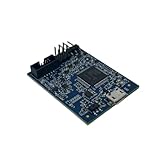
- POWERFUL PERFORMANCE: Featuring an NXP Kinetis K64 MCU with 120 MHz ARM Cortex-M4 core, 128 KB RAM and 1 MB Flash memory for robust processing.
- COMPREHENSIVE CONNECTIVITY: Integrated USB, Ethernet, CAN, UART, I2C, SPI and other interfaces enable seamless communication with various devices and networks.
- USER-FRIENDLY DESIGN: The small form factor board and simple hookup headers make prototyping intuitive on the breadboard or custom PCB. Status LEDs provide debugging assistance.
- BROAD COMPATIBILITY: Works and Mbed development environments for quick coding and testing of IoT, industrial, medical and other embedded applications.
- DURABLE CONSTRUCTION: Rigorously tested components and robust assembly ensure reliable, long-lasting operation in diverse industrial environments and prototypes.
Why did NXP buy Freescale?
NXP presented the deal as a way to strengthen its position in automotive semiconductors and become a leader in general-purpose microcontrollers (MCUs). The companies’ combined capabilities were also framed around growing demand for connectivity, processing and security. NXP CEO Rick Clemmer described the merger as an effort to build an “industry powerhouse” focused on high-growth opportunities and high-performance mixed-signal solutions.
The cost-saving case was a management forecast, not a confirmed outcome: NXP projected $200 million in first-year cost savings and described a path to $500 million in annual synergies. Those figures were expectations made when the deal was announced.
What approvals were required, and when did it close?
The merger needed shareholder approval and regulatory clearances. NXP reported U.S. Federal Trade Commission approval on November 25, 2015, after clearances in Europe, South Korea and Japan. On November 27, NXP announced that China’s Ministry of Commerce (MOFCOM) had given final approval. NXP also said the sale of its RF Power business to Jianguang Asset Management (JAC Capital) was a condition of completing the transaction.
| Date | Milestone |
|---|---|
| March 2, 2015 | NXP and Freescale announced a definitive merger agreement. |
| November 25, 2015 | NXP reported U.S. FTC approval, following European, South Korean and Japanese clearances. |
| November 27, 2015 | NXP announced final approval from China’s MOFCOM. |
| December 7, 2015 | The merger closed; the combined company continued as NXP Semiconductors. |
What was disclosed after the merger?
In its full-year 2015 results, NXP said the merger contributed approximately one month of Freescale revenue. The same report disclosed a $239 million restructuring charge and $49 million in stock-based compensation charges related to employees terminated as a result of the merger. These are reported post-close accounting charges, distinct from the cost-savings projections NXP made at announcement.
The Tool Desk
Outbyte PC Repair FREERepair Windows errors before they cause bigger problemsFix Now →Outbyte Driver Updater FREEFix the driver behind crashes, sound loss and screen glitchesFind Drivers →Quick Recap
Best Value

- RS232 female to TTL Serial Port Bidirectional Transceiver Module, for SST, STC, NXP microcontroller Download. Can also be used for other purposes, such as hard disk repair, write router firmware, GPS signal reading and other functions, but requires users to have a certain level of technology can be achieved.
- This module contains over-voltage protection circuit to better protect your computer and equipment.
- This module contains hard flow control, and the TTL side of the module RTS signal is not dangling, is set to enable bidirectional transceiver function by default. Prevent SP3232 from floating in some pins, causing chip oscillation and introducing high-frequency interference and increasing power consumption, thus affecting the normal operation of the entire chip.
- RS232 communication chip: SP3232. DB9 Interface Type: Female.
- Operating voltage: 3V-5V; with four bidirectional transient suppression diode signal voltage protection.
Rank #4
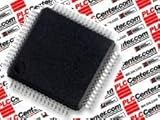
- 8 BIT
- 8MHZ
- HC08
- MICROCONTROLLER MCU
- QFP-64; PRODUCT RANGE:HC08 FAMILY HC08MR SERIES MICROCONTROLLERS; DEVICE CORE:HC08; OPERATING FREQUENCY MAX:8MHZ; PROGRAM MEMORY SIZE:32KB; NO. OF PINS:64PINS; IC CASE / PACKAGE:QFP ROHS COMPLIANT: YES
Rank #3
Product prices and availability are accurate as of the date/time indicated and are subject to change. Any price and availability information displayed on Amazon at the time of purchase will apply.

